

Benefits of plant-based snacks: what UK shoppers should know
Plant-based snacks can genuinely improve your fibre intake, lower your saturated fat consumption, and reduce the energy density of what you eat between meals. The catch is that those benefits apply mainly when you choose whole-food options. Grab a heavily processed vegan bar loaded with salt and you may be swapping one problem for another.
Here is the short version before we go deeper:
- Main health wins: whole-food plant snacks (nuts, seeds, fruit, roasted chickpeas, wholegrain crackers) provide gut-friendly fibre, heart-supportive fats, and lower energy density compared with most meat-based equivalents.
- Main caution: many processed plant-based products contain significantly higher salt and are ultra-processed. The label matters as much as the “vegan” badge.
- Nutrients to check: vitamin B12, vitamin D, iodine, selenium, iron, calcium, zinc, and protein all need attention if plant snacks make up a large share of your daily intake.
The sections below walk you through the mechanisms, a practical snack checklist, UK-specific fortification guidance, label-reading rules, and clear signs that it is time to see a clinician.
Key takeaways
Whole-food plant snacks deliver measurable benefits for fibre, saturated fat, and energy density, but those benefits depend on choosing minimally processed options and addressing key nutrient gaps, particularly vitamin B12 and vitamin D.
| Point | Details |
|---|---|
| Whole foods first | Prioritise nuts, seeds, fruit, legumes, and wholegrain crackers over processed plant-based alternatives. |
| Check labels for salt | Many processed plant-based products contain significantly higher salt than meat equivalents; aim below 0.6g per 100g. |
| Supplement B12 and vitamin D | Include sources of vitamin B12 daily from fortified foods or supplements; consider vitamin D supplements especially in autumn and winter. |
| Pair iron with vitamin C | Eat iron-rich plant snacks alongside a vitamin C source to improve absorption; avoid tea or coffee at the same time. |
| Popcornaa as a treat option | Popcornaa’s vegan popcorn boxes offer a flavourful, convenient snack; use them as occasional additions to a whole-food-first plan. |
What are the real health benefits of plant-based snacks?
The most direct mechanism is fibre. Whole-food plant snacks feed the gut microbiome, slow glucose absorption, and extend satiety, which tends to reduce overall calorie intake across the day. That chain from fibre to gut health to better weight management is well established in nutritional science.
Beyond fibre, the advantages of plant-based snacks stack up in a few specific ways:
- Lower saturated fat: nuts, seeds, and legume-based snacks replace the saturated fat in meat-based options with unsaturated fats, which are linked to improved blood-lipid profiles and reduced cardiovascular risk. Research published in PMC notes that plant-based dietary patterns are associated with lower cardiometabolic disease risk, though lifestyle factors such as physical activity and smoking habits also play a role.
- Lower energy density: a portion of roasted chickpeas or vegetable sticks with hummus delivers volume and nutrients for fewer calories than most crisps or processed meat snacks.
- Phytonutrients: plant foods supply polyphenols, carotenoids, and other compounds absent from animal products, adding a layer of benefit that goes beyond macronutrients.
- Micronutrient variability: this is where the picture gets more nuanced. Plant snacks can be rich in iron, zinc, and calcium, but the bioavailability of these minerals is lower from plant sources than from animal ones. Fortification and smart pairing (more on that below) close much of that gap.
Which plant-based snacks should you prioritise?
Start with minimally processed whole foods. That principle, backed by Food Foundation analysis, consistently outperforms processed alternatives on every key nutrition indicator: lower salt, lower sugar, fewer calories, and higher fibre. For creative plant-based snack ideas that go beyond the basics, Popcornaa’s guide is worth a browse.
When choosing, run through this quick checklist:
- Fibre of at least 3g per portion
- A source of protein or healthy fats (nuts, seeds, legumes, soya)
- Salt below 0.6g per 100g where possible
- Minimal added sugar
- Fortification statements for B12 and calcium if the snack is a significant part of your daily intake
Five easy UK snack ideas:
- A small handful of mixed nuts and pumpkin seeds (iron, zinc, healthy fats)
- Carrot and cucumber sticks with hummus (fibre, protein, folate)
- Roasted chickpeas, lightly spiced (protein, fibre, iron)
- Wholegrain oatcakes with almond butter (slow-release carbohydrate, healthy fats)
- A piece of fruit with a tablespoon of tahini (vitamin C to aid iron absorption, calcium)
Pro Tip: Add a tablespoon of hemp seeds or a splash of fortified oat milk to a smoothie or porridge. According to NHS eating-well guidance for plant-based diets, this kind of practical fortification reliably boosts protein and calories without requiring large portion sizes.
Which nutrients need your attention on a plant-based snacking plan?
Vitamin B12 is the most urgent. It is rarely found in plant foods, and deficiency can cause anaemia and irreversible neurological damage if left unmanaged. The NHS advises that fortified foods or supplements are necessary for anyone following a vegan or predominantly plant-based diet.
BDA guidance gives concrete dosing examples: aim for a modest daily intake of vitamin B12 from fortified foods (such as two servings of fortified plant milk or cereal), or take a regular supplement.
| Nutrient | Reliable plant sources / fortified options | Supplementation note |
|---|---|---|
| Vitamin B12 | Fortified plant milks, nutritional yeast, fortified cereals | 10 mcg daily or 2,000 mcg weekly supplement if fortified foods are insufficient |
| Vitamin D | Fortified plant milks, mushrooms (UV-exposed) | 10 mcg daily supplement recommended for all UK adults in autumn and winter |
| Iodine | Fortified plant milks, seaweed (variable) | Supplement if no fortified foods are consumed regularly |
| Selenium | Brazil nuts (1–2 per day), fortified foods | Supplement only if intake is consistently low |
| Iron | Lentils, pumpkin seeds, fortified cereals | Pair with vitamin C; test if fatigue persists |
| Calcium | Fortified plant milks, tofu, kale, almonds | Supplement if dairy-free and fortified foods are limited |
| Zinc | Pumpkin seeds, hemp seeds, wholegrains, legumes | Soaking and fermenting legumes improves absorption |
Seek testing if you are pregnant, breastfeeding, feeding young children, over 65, or experiencing unexplained fatigue, breathlessness, or paleness. A serum B12 test, full blood count, iron studies, and vitamin D level cover the main risks.
How do you read UK snack labels quickly and accurately?
The quickest cues on a UK label that predict a healthier plant-based snack are fibre above 3g per portion, salt below 0.6g per 100g, a recognisable whole-food ingredient near the top of the list, and a clear fortification statement for B12 or calcium.
Work through this checklist at the shelf:
- Serving size: check whether the portion on the label matches what you will actually eat.
- Fibre: aim for 3g or more per portion; above 6g is high.
- Protein: 5g or more per portion supports satiety.
- Salt: below 0.6g per 100g is low; above 1.5g per 100g is high.
- Fortification: look for “contains vitamin B12” or “source of calcium” rather than just “vegan”.
- Ingredient list length: a shorter list with recognisable ingredients usually signals less processing.
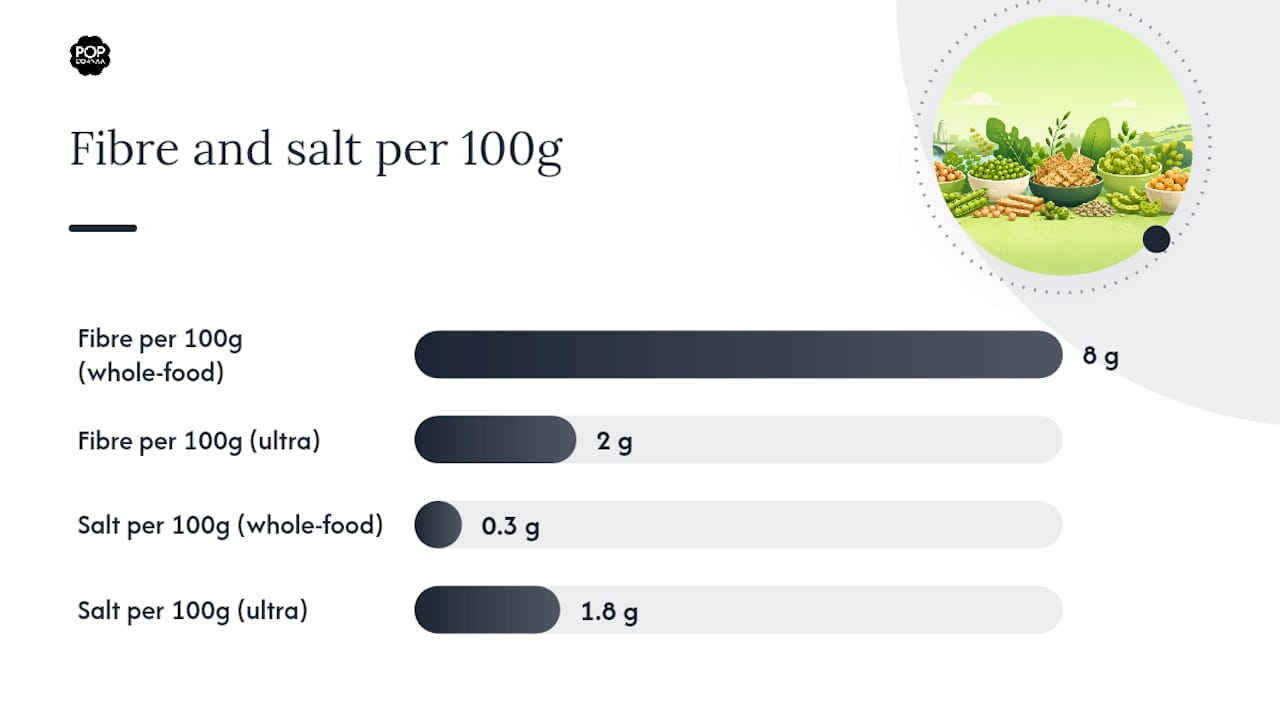
| Label feature | Whole-food snack example | Ultra-processed plant-based snack |
|---|---|---|
| Fibre per 100g | 8g (roasted chickpeas) | 2g (vegan cheese puff) |
| Salt per 100g | 0.3g | 1.8g |
| Ingredient list | Chickpeas, olive oil, smoked paprika | 14 ingredients including emulsifiers and flavourings |
| Fortification | None needed (whole food) | Often absent despite “vegan” label |
For a fuller guide to evaluating what is on the packet, Popcornaa’s vegan snack selection guide breaks down the key claims to trust and the ones to question.
Pro Tip: “Vegan” on a label tells you nothing about salt, sugar, or processing level. Always cross-check the nutrition panel.
Are processed plant-based snacks actually healthy?
The honest answer is: sometimes better, sometimes not. A UK market audit published in the Journal of Nutritional Science found that plant-based meat products generally had lower energy density, less total and saturated fat, and more fibre than standard meat equivalents. Salt, though, was significantly higher in most categories.
The Food Foundation’s analysis is more pointed: minimally processed plant foods score better on every key nutrition indicator than highly processed meat alternatives. Whole-food snacks should come first.
Practical buying rules for processed plant-based products:
- Check salt per 100g before anything else.
- Count the ingredients: more than eight or nine, especially with emulsifiers or flavour enhancers, signals ultra-processing.
- Look for added sugar, particularly in “healthy” bars and protein snacks.
- Favour products that disclose micronutrient content and fortification clearly.
A one-day snack plan and five quick ideas for UK readers
A balanced day of plant-based snacking covers fibre, protein, healthy fats, and at least one source of vitamin C to support iron absorption.
Sample one-day plan:
- Mid-morning: small handful of walnuts and a satsuma (healthy fats, vitamin C)
- Lunch add-on: wholegrain oatcakes with hummus and sliced pepper (fibre, protein, vitamin C)
- Afternoon: fortified oat milk smoothie with a banana and a tablespoon of almond butter (calcium, B12 if fortified, protein)
- Evening: roasted edamame with a pinch of sea salt (protein, iron, zinc)
Five ready-to-make ideas:
- Spiced roasted chickpeas: drain, dry, toss in olive oil and cumin, roast at 200°C for 25 minutes.
- Apple slices with peanut butter and hemp seeds (vitamin C, protein, omega-3).
- Oat and date energy balls with added pumpkin seeds (iron, zinc, slow-release energy).
- Cucumber rounds topped with tahini and a squeeze of lemon (calcium, vitamin C).
- Popcorn with nutritional yeast and smoked paprika (B12 if nutritional yeast is fortified, fibre).
For more portable options suited to the working day, Popcornaa’s healthy vegan snack ideas for work covers batch-prep and on-the-go formats. For seasonal inspiration, Wild Foodz also offers plant-based menu ideas worth exploring.
Batch-prep tip: roast a large tray of chickpeas or mixed seeds on Sunday and portion them into small containers for the week. It takes 30 minutes and removes the temptation to reach for something processed.
When should you see a GP or registered dietitian?
Seek professional advice if any of the following apply to you: you are pregnant or breastfeeding, you are feeding a young child a predominantly plant-based diet, you are over 65, you have a chronic illness affecting absorption (such as Crohn’s disease or coeliac disease), or you have been eating a plant-heavy diet for more than a year without any blood tests.
Alarm signs that warrant a GP appointment soon:
- Persistent fatigue or weakness not explained by sleep or stress
- Breathlessness on mild exertion
- Paleness or yellowing of the skin
- Tingling, numbness, or memory problems (possible B12 deficiency)
- Hair loss or brittle nails (possible iron or zinc deficiency)
Ask your GP for a full blood count, serum B12, iron studies, and vitamin D level. If results are borderline, ask for a referral to a registered dietitian. The BJGP has noted that clinicians are not always well-prepared to give detailed plant-based nutrition advice, so bringing a food diary and your current supplement list to the appointment helps move the conversation forward quickly.
Why whole-food plant snacks come first, and where ready-made options fit
There is a version of plant-based snacking that genuinely supports your health, and a version that just swaps one ultra-processed product for another with a leaf on the packet. The evidence points clearly in one direction: whole-food plant snacks, eaten with attention to fortification and nutrient pairing, deliver real benefits. Processed alternatives can play a supporting role, but they should not be the foundation.
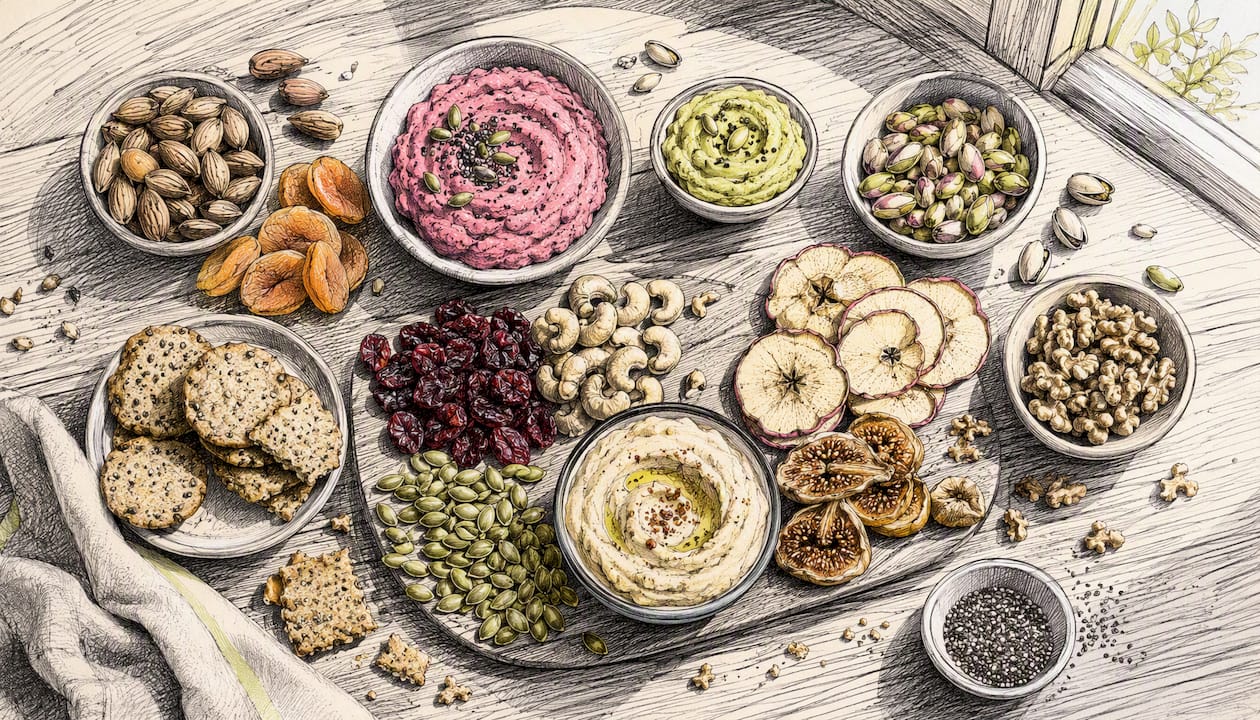
What I find genuinely encouraging is how accessible the whole-food approach is in the UK right now. Roasted chickpeas, mixed seeds, oatcakes, and fortified plant milks are in every major supermarket. The gap between knowing what to eat and being able to buy it has never been smaller.
Ready-made vegan snacks, including gourmet options like those from Popcornaa, fit best as occasional treats or convenient top-ups rather than daily staples. When you do reach for them, the label-reading rules in this guide apply just as much as they do to anything else on the shelf. Transparency about ingredients and portion size is what separates a thoughtful product from a marketing exercise.
Popcornaa’s Asian Fusion Taster Box: a convenient starting point
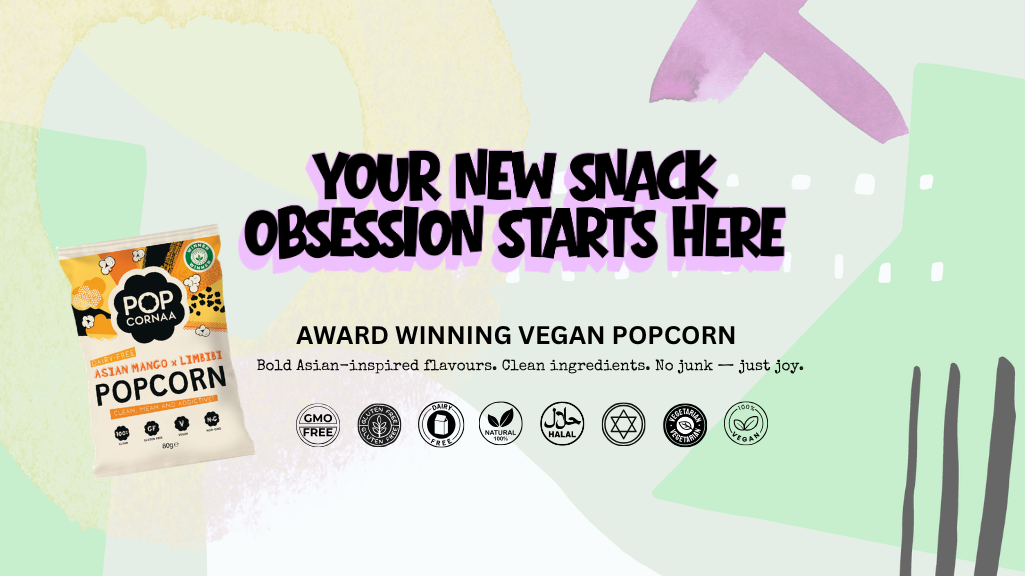
If you want a ready-made vegan snack that is genuinely enjoyable without the guesswork of building a snack box from scratch, Popcornaa’s curated options are worth considering. The brand’s focus on gourmet vegan popcorn means you get bold flavour without artificial nasties, and the portions are designed with snacking in mind rather than mindless grazing.
[ ](https://www.popcornaa.com › pages › asian-fusion-taster-box)
The Newbie Asian Fusion Taster Box is a five-bag selection that lets you try Popcornaa’s Asian-inspired flavours before committing to a larger order. It works well as an occasional treat alongside the whole-food snacks this guide recommends. This is a product suggestion, not medical advice. Check the label for salt and portion guidance before making it a regular part of your snacking routine.
Sources
- Vegan diet puts people at risk of vitamin B12 and other deficiencies | British Journal of General Practice
- The vegan diet - NHS
- Plant-based diets (BDA guidance) | UHSussex
- The Impact of a Vegan Diet on Many Aspects of Health - PMC - NIH
This article is general information, not a substitute for advice from a qualified doctor. Consult a qualified healthcare professional about your own circumstances before acting on anything here.
FAQ
What are the main benefits of eating plant-based snacks?
Whole-food plant snacks tend to be higher in fibre, lower in saturated fat, and lower in energy density than most meat-based alternatives, supporting gut health, blood-lipid levels, and weight management. Benefits are strongest when snacks are minimally processed.
What is the downside of a plant-based diet?
The main risk is nutrient deficiency, particularly vitamin B12, vitamin D, iodine, selenium, iron, calcium, and zinc, if the diet is not carefully planned. The British Journal of General Practice notes that B12 deficiency can cause irreversible neurological damage if left unmanaged.
What happens to your body when you eat mainly plant-based foods?
Most people see improvements in fibre intake, cholesterol levels, and energy density of their diet. Without adequate fortification or supplementation, though, deficiencies in B12, vitamin D, and iron can develop over months or years.
When should I see a doctor about plant-based snacking?
See your GP if you are pregnant, breastfeeding, feeding a young child, over 65, or experiencing persistent fatigue, breathlessness, paleness, or neurological symptoms. Ask for a full blood count, serum B12, iron studies, and vitamin D test.