

Benefits of vegan snacking for energy and well-being
TL;DR:
- Vegan snacking provides sustained energy, reduces disease risks, and aligns with ethical and environmental principles. Combining protein, fibre, and healthy fats in snacks triggers satiety hormones and stabilizes blood sugar. Preparing simple, whole-food plant-based snacks encourages consistent healthy habits and meaningful lifestyle choices.
Vegan snacking is defined as the practice of consuming plant-based foods between meals to support nutrition, satiety, and sustained energy without relying on animal-derived ingredients. The benefits of vegan snacking extend well beyond avoiding meat or dairy. Research from Harvard Public Health confirms that well-planned plant-based snacks deliver complex carbohydrates, plant-based proteins, and unsaturated fats that maintain consistent energy without the metabolic spikes caused by refined snacks. Registered dietitian Sharon Palmer and other plant-based nutrition specialists have long championed this approach, noting that the right snack combinations actively reduce chronic disease risk, support weight management, and align eating habits with compassionate, environmentally aware values.
How do vegan snacks support sustained energy and satiety?
The secret to lasting energy from plant-based snacking lies in three nutrients working together: protein, fibre, and healthy fats. When you combine all three, digestion slows, blood sugar stabilises, and hunger hormones stay in check for hours. This is not a theory. It is a measurable physiological response.

Registered dietitian Sharon Palmer describes this as the pairing formula, a practical approach to building snacks that sustain rather than spike. A classic example is an apple with almond butter. The apple delivers fibre and natural sugars; the almond butter contributes protein and healthy fat. Together, they create a snack that keeps you full and focused rather than reaching for something else twenty minutes later.
High-fibre plant-based snacks also trigger the release of satiety hormones GLP-1 and peptide YY. These hormones signal fullness to the brain and, according to research, reduce subsequent calorie intake by as much as 15% compared to conventional snack choices. That is a meaningful reduction, particularly for anyone managing their weight or trying to avoid afternoon energy crashes.
There is also a lesser-known benefit called the second-meal effect. High-fibre vegan snacks eaten in the afternoon can improve glucose levels after dinner and even into the following morning’s breakfast. Delayed gastric emptying and slowed glucose absorption mean your metabolism stays steadier across multiple meals, not just the one immediately after snacking.
Strong examples of snacks that deliver on all of this include:
- Apple with nut butter (fibre, healthy fat, natural sugars)
- Hummus with sliced cucumber and carrot sticks (protein, fibre, complex carbs)
- Roasted chickpeas (approximately 6g protein and 5g fibre per serving)
- Edamame with a pinch of sea salt (one of the highest plant protein snacks available)
- Chia pudding made with oat milk (omega-3 fats, fibre, and slow-release energy)
Pro Tip: Prepare two or three of these combinations on a Sunday evening and store them in small containers. Having them ready removes the decision fatigue that leads most people to grab something processed instead.
Vegan snacks vs traditional snacking: which is healthier?
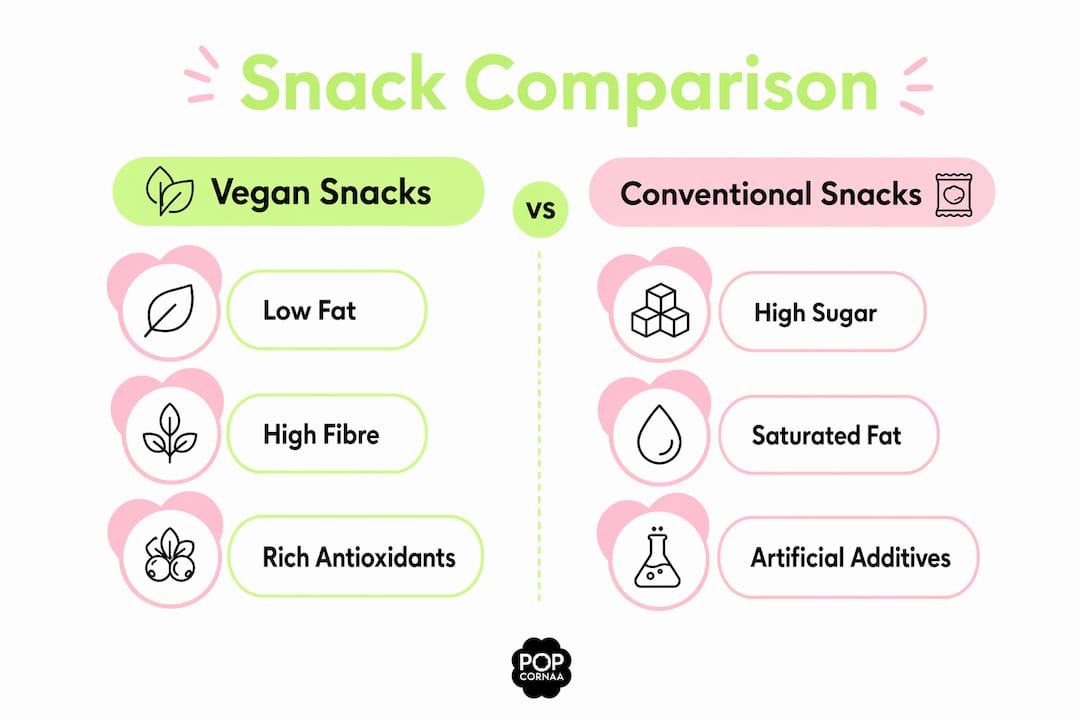
The nutritional differences between vegan and conventional snacks are significant, and they compound over time. Vegan whole-food snacks are naturally lower in saturated fat and contain zero dietary cholesterol. Whole-food vegan snacks reduce the risk of heart disease and type 2 diabetes, two of the most prevalent chronic conditions in the UK. This is not a minor advantage. It is a long-term investment in your health.
The table below compares the typical nutrient profile and health outcomes of vegan snacks against common non-vegan alternatives:
| Feature | Vegan snacks (whole food) | Conventional snacks |
|---|---|---|
| Saturated fat | Low to none | Often high |
| Dietary cholesterol | None | Present in dairy and meat-based options |
| Fibre content | 3 to 6g per serving | Typically under 1g |
| Antioxidant content | High (from fruits, legumes, nuts) | Low in most processed options |
| Chronic disease risk | Reduced with regular consumption | Elevated with frequent processed snacking |
| Blood sugar impact | Stable, slow-release energy | Often causes spikes and crashes |
The antioxidant content in plant-based snacks deserves particular attention. Foods like blueberries, walnuts, and dark leafy vegetables contain polyphenols that actively reduce inflammation. Chronic low-grade inflammation is now understood to be a driver of conditions ranging from cardiovascular disease to cognitive decline. Choosing snacks rich in antioxidants is one of the simplest ways to address this.
That said, not every product labelled vegan earns a health halo. Many vegan snack brands include stealth ingredients such as refined sugars and high sodium levels that can negate the health benefits entirely. A vegan biscuit is still a biscuit. Reading the label matters as much as reading the front of the packet.
Pro Tip: When comparing snack labels, look for products with fewer than five ingredients, at least 3g of fibre per serving, and no added sugars listed in the first three ingredients.
Why choose vegan snacks for ethical and environmental reasons?
The advantages of vegan snacking are not limited to what happens inside your body. Vegan snacking aligns personal values with dietary behaviour in a way that few other food choices can. For many people, this alignment is just as motivating as the health benefits.
Animal agriculture is one of the most resource-intensive industries on the planet. It requires vast amounts of water, land, and energy to produce relatively small amounts of food. Choosing plant-based snacks, even just between meals, reduces your personal contribution to that system. It is a small act with a cumulative impact.
Here are the core ethical and environmental reasons people choose plant-based snacking:
- Reduced animal suffering. Plant-based snacks require no animal farming, slaughter, or exploitation in their production.
- Lower carbon footprint. Producing legumes, nuts, and fruits generates significantly fewer greenhouse gas emissions than dairy or meat-based snack production.
- Less water usage. Growing chickpeas or almonds uses a fraction of the water required to produce equivalent protein from animal sources.
- Support for sustainable agriculture. Buying from brands that source plant ingredients ethically encourages farming practices that protect soil health and biodiversity.
- Alignment with a broader plant-based lifestyle. Vegan snacking complements other choices around meals, clothing, and personal care, creating a consistent ethical framework.
Sharon Palmer has noted that plant-based eating, including snacking, is one of the most accessible entry points for people who want to reduce their environmental impact without overhauling their entire diet overnight. You do not need to be fully vegan to benefit from choosing plant-based snacks more often.
Practical tips for building a vegan snacking routine
Consistency is where most people struggle. Knowing that hummus and vegetables are a good snack is very different from actually having them ready when hunger strikes at 3pm. The practical side of healthy vegan snacking is about reducing friction, not willpower.
Follow these steps to build a routine that actually sticks:
- Apply the pairing formula. Every snack should combine at least two macronutrients. Protein with fibre, or healthy fat with complex carbs. This is the single most effective way to prevent energy dips between meals.
- Batch-prep portable options. Roasted chickpeas, trail mix with nuts and dried fruit, and portioned nut butter sachets all travel well and require no refrigeration. Prepare a week’s worth in one session.
- Use plant-based snacks strategically. High-protein options like edamame (18g protein per cup) and chia pudding (5g protein per serving) are particularly useful before or after exercise.
- Keep snacks visible. Place a bowl of fruit, a jar of mixed nuts, or a container of roasted seeds on your desk or kitchen counter. Visibility drives behaviour more reliably than good intentions.
- Plan for convenience. Stock a few quality store-bought options for days when batch-prepping is not possible. Look for products with whole-food ingredients and no refined sugars.
Pro Tip: Plant-based snacks providing 5 to 10g of protein and 3 to 6g of fibre per serving are the most effective for meeting daily nutritional targets. Use this as your benchmark when shopping.
Common myths about vegan snacking and how to avoid them
The biggest misconception about plant-based snacking is that it cannot satisfy hunger the way conventional snacks can. High-protein plant snacks like edamame, nut butters, and chia pudding dispel this myth directly. These foods fill hunger effectively and provide sustained energy without causing the blood sugar spikes associated with refined snacks.
A second myth is that all vegan snacks are automatically healthy. This is simply not true. Not all labelled vegan snacks are inherently nutritious. Scrutiny of ingredients is non-negotiable if you want to maintain snack quality. Vegan crisps fried in palm oil and coated in salt are technically plant-based. They are not a health food.
Here is what to watch for when selecting vegan snacks:
- Hidden sugars. Ingredients like agave syrup, rice syrup, and fruit concentrate are still refined sugars. They spike blood sugar just as effectively as white sugar.
- Excess sodium. Many processed vegan snacks contain more sodium than a portion of crisps. Aim for under 400mg per serving.
- Artificial additives. Colourings, preservatives, and flavour enhancers have no place in a whole-food snacking strategy.
- Low protein content. A snack with no protein will not keep you full. Check that your snack contains at least 4g of protein per serving.
- Snacking out of habit rather than hunger. The most effective vegan snacking strategy uses snacks to meet daily nutrient targets consciously, not to fill boredom. Ask yourself whether you are genuinely hungry before reaching for something.
The role of vegan snacks in a balanced diet is to complement meals, not replace them. Treat each snack as a small nutritional opportunity rather than an afterthought.
Key takeaways
Vegan snacking delivers sustained energy, reduces chronic disease risk, and aligns daily food choices with ethical and environmental values when built around whole-food ingredients and the protein-fibre-fat pairing formula.
| Point | Details |
|---|---|
| Satiety hormones matter | High-fibre vegan snacks trigger GLP-1 and peptide YY, reducing calorie intake by up to 15%. |
| The pairing formula works | Combining protein, fibre, and healthy fat stabilises blood sugar and prevents energy crashes. |
| Label reading is non-negotiable | Many vegan snacks contain hidden sugars and sodium that negate their health benefits. |
| Ethical benefits are real | Plant-based snacking reduces carbon footprint, water usage, and reliance on animal agriculture. |
| Batch-prepping removes friction | Preparing snacks in advance is the most reliable way to maintain a consistent plant-based routine. |
Why I think vegan snacking deserves more credit than it gets
As someone who has spent years thinking carefully about what goes into the snacks we make at PopCornaa, I have watched the conversation around plant-based eating shift enormously. But vegan snacking still gets dismissed in some circles as rabbit food or a compromise. That stopped me in my tracks when I first heard it, because the evidence tells a completely different story.
What I have found, both personally and through the products we develop, is that the right vegan snack genuinely changes how you feel in the hours after eating it. The afternoon slump that used to feel inevitable became much less frequent once I started pairing fibre-rich foods with a proper protein source. That is not placebo. That is the second-meal effect in action.
The ethical dimension matters to me too, perhaps more than I expected it to. There is a quiet satisfaction in knowing that your snack choices are not costing the planet more than they need to. It does not feel like sacrifice. It feels like alignment. And once you find snacks that taste genuinely good, the whole thing becomes something you look forward to rather than something you endure.
— Emily
Discover PopCornaa’s vegan snack selection
If you are ready to experience the health perks of vegan snacks without compromising on flavour, PopCornaa has something worth exploring.
[ ](https://www.popcornaa.com › pages › asian-fusion-taster-box)
The Newbie Asian Fusion Taster Box is a curated five-bag selection of gourmet vegan popcorn, crafted with whole-food ingredients and inspired by bold Asian and British flavours. Each bag is made without artificial additives, keeping the snacking experience both satisfying and genuinely nutritious. It is an ideal starting point for anyone curious about plant-based snacking who wants variety, quality, and real flavour in one box. Whether you are snacking solo or sharing with someone, it is a straightforward way to make your next snack count.
FAQ
What are the main benefits of vegan snacking?
Vegan snacking supports sustained energy, reduces chronic disease risk, and provides gut-friendly fibre and plant-based protein. It also aligns food choices with ethical and environmental values, making it beneficial for both personal health and the planet.
Can vegan snacks really keep you full?
Yes. High-protein options like edamame, roasted chickpeas, and chia pudding provide 5 to 18g of protein per serving, and high-fibre snacks trigger satiety hormones GLP-1 and peptide YY that reduce subsequent calorie intake by up to 15%.
Are all vegan snacks healthy?
No. Many packaged vegan snacks contain refined sugars, high sodium, and artificial additives that reduce their nutritional value. Choosing whole-food options and reading ingredient labels carefully is the most reliable way to avoid processed pitfalls.
How do I build a sustainable vegan snacking habit?
Apply the pairing formula by combining protein, fibre, and healthy fat in every snack. Batch-prep portable options like roasted chickpeas or trail mix at the start of the week to reduce friction and make plant-based choices the easiest option available.
What is the second-meal effect in vegan snacking?
The second-meal effect describes how high-fibre vegan snacks eaten earlier in the day improve glucose levels after subsequent meals, including dinner and the following morning’s breakfast. This metabolic benefit makes fibre-rich plant snacks particularly valuable for blood sugar management.