

British Popcorn: What It Means and How Britain Snacks
British popcorn is not one product. It is a snacking habit: sweet or salted corn, eaten at the cinema, on the sofa or from a gift box, and shaped by a market that has moved from plain toffee to gourmet flavours. Popcorn itself did not start here, but Britain has made its own tastes. Those tastes lean sweet, and they are now widening to include savoury, spicy and Asian-inspired flavours.
I am a parent and a food entrepreneur, and I came to this question from both sides: what my family actually likes to eat, and what people in the UK are searching for when they type these two words. Here is the honest answer.
TL;DR
- Popcorn came from the Americas, not Britain, but the UK has developed a distinct taste for sweet and toffee styles.
- Sweet variants make up roughly 80% of ready-to-eat and microwave sales, with toffee leading, according to Kantar figures quoted by Lovefood.
- UK sales moved into premium and gourmet territory, growing from £50m in 2010 to £129m in 2015 per Mintel.
- At home, plain kernels are cheap and easy to pop on the hob or in the microwave, and you control the toppings.
- If you want a modern British-and-Asian twist, our vegan boxes start at £17.99.
What people mean by “British popcorn”
When someone searches for British popcorn, they usually want one of three things. Some want to know how Britain eats popcorn compared with America. Some want a British-made or British-style snack to buy. And some want a gift with a British flavour on it.
There is no legal definition and no protected style. Popcorn, as Cambridge Dictionary describes it, is maize seeds heated until they burst open and become soft and light, usually flavoured with salt, butter or sugar. What makes it British is the choice of flavour, the setting and the habit.
That habit is easy to recognise. A tub on the sofa for a film. A paper bag at a fairground or seaside. A bowl at a family gathering on a wet weekend. The same dictionary entry even uses the example of people munching popcorn while they watch TV, which is as British a picture as any.
Did popcorn come from England?
No. BBC Future notes that people in the Americas ate popcorn long before Europeans arrived. The USDA National Agricultural Library says scholars agree that corn and popcorn originated there, and it points to ears found in Bat Cave, New Mexico, dated to about 5,600 years old.
The word itself is younger. Etymonline records “popcorn” as a noun from 1819, and “to pop corn” by 1847.
The snack as we know it on the street and in the cinema owes a lot to machinery. According to The Conversation, a steam-powered automatic popcorn machine was invented by Charles Cretors in Chicago in 1885 and shown at the World’s Fair in 1893. The same article describes popcorn following audiences from fairgrounds into theatres, and becoming less of a noisy distraction once films had sound in 1927.
So Britain did not invent popcorn. What it did was adopt it, sweeten it and make it a fixture.

Why British popcorn leans sweet
The single most useful fact about the UK market is the split between sweet and savoury. Lovefood, quoting Kantar Worldpanel, puts the ready-to-eat and microwave market at about £35m at the time, with roughly 80% going to sweet variants. Toffee took the largest share, at over £14m. That article is from 2011, so treat the figures as a snapshot of how the habit began, not today’s tills.

Toffee corn has a long British pedigree as a cinema and fairground treat. The method is simple: sugar, butter and golden syrup are boiled to a high temperature, popped corn is tossed through while the syrup is liquid, and as it cools the sugar sets into a thin, brittle shell. That crunch is what many people picture when they say British popcorn.
The premium wave
The market did not stand still. The Guardian reported in 2016, citing Mintel, that UK popcorn sales grew from £50m in 2010 to £129m in 2015, driven by the premium end. It also reported that 35% of people ate popcorn, rising to 49% among 16 to 34 year olds. BBC Future, writing in 2017, cited Mintel’s finding that UK popcorn sales had risen 169% in five years.
Lovefood’s earlier coverage already hints at where things were heading: lightly sea salted, sweet and salty, and even sour cream and jalapeno chilli were being described as premium flavours. That is the doorway through which gourmet and global flavours arrived.
Sweet, salted or mixed: how the styles differ
In a British cinema, the choice is usually framed as sweet or salted. Many people also ask for a mix of the two, which is a good guide to how Britons actually like to snack: they rarely want just one note.
Here is a quick way to think about the three styles.
| Style | What it tastes like | When it works best |
|---|---|---|
| Sweet | Caramel, toffee or sugar-dusted, crisp or chewy | Films, sharing, gifts, children’s parties |
| Salted | Light salt, sometimes a little oil or spice | Casual nibbling, drinks, savoury cravings |
| Mixed or sweet and salty | Sugar and salt together, the moreish middle | Anyone who cannot decide, big sharing bowls |
If you want to go deeper on the trade-offs, we have written about sweet or salted popcorn and how to get the salt and sugar balance right at home.
People often map flavour in other categories in a similar way. Coffee fans, for instance, talk about coffee flavour profiles to work out whether they prefer bright, sweet or bold. The same thinking helps with popcorn: decide whether you lean sweet, savoury or somewhere in between, and the shelf becomes easier.
What is popular around the world, and where Britain fits
The Conversation points out that cinema popcorn changes by country. Spicy masala blends are popular in India, seaweed with its umami richness in Japan, and caramel dominates the Chinese market. Britain’s sweet-first tradition sits comfortably in that picture.
This is where I find British popcorn most interesting. Many of us in Britain grew up with toffee at the cinema and with flavours from our families’ kitchens at home. Putting those together is not a gimmick. It is how a lot of people already eat. That is the idea behind our own Asian-inspired and British flavour collections.
Making popcorn at home, the British way
Plain kernels are one of the cheapest snack ingredients there is, and BBC Food notes that dried kernels are readily available from most supermarkets, as are bags made for the microwave.
On the hob
The classic method from BBC Food is to heat a large pan with a tight-fitting lid and a little oil, add the kernels, cover, and cook until the popping dies out. While it is still warm, you can sprinkle it with icing sugar or salt, or drizzle it with honey.
In the microwave
BBC Food’s microwave popcorn recipe uses 35g of kernels in a lidded microwaveable pot, on high for one to three minutes until the popping stops. It suggests optional toppings of cumin, chilli powder and salt, and it is dairy-free, vegan and gluten-free as written. Microwave powers differ, so listen for the pause between pops rather than trusting the clock, and stand clear of the lid when you open it.
A simple flavour idea
Once you have a plain batch, try one of these small changes:
- Toss it with a pinch of salt and a little cumin for a savoury bowl.
- Add a light dusting of icing sugar for a fairground feel.
- Mix a sweet batch with a salted batch for the cinema “mixed” effect.
- Try a gentle chilli powder if you want warmth without heat overload.
If you want more ideas, our guide to popcorn flavour profiles for home cooks walks through how to build them.
Is British popcorn a healthy snack?
Popcorn has a healthy image, and part of that is deserved. BBC Future’s article says its reputation comes from being a whole grain that is low in fat and salt before seasonings go on, and that this image has helped its growth in the UK. The Guardian quotes Dr Frankie Phillips of the British Dietetic Association saying popcorn is a wholegrain with extra fibre and nutrients, but that we tend to eat it with a lot of salt or a lot of sugar, which makes it nutritionally a little messy.
That is useful, practical advice rather than a reason to avoid it. It means the toppings decide the picture. The same Guardian piece gives a 30g serving of one sweet-and-salty brand as 129 calories, which is a handy benchmark for a portion. If you are watching your intake, measure a bowl rather than eating from the bag, and read the label for salt and sugar. If you manage a health condition or have specific dietary needs, a GP or registered dietitian is the right person to ask about portions.
BBC Future also suggests that making popcorn yourself on the hob or in an air popper helps your expectations match reality, compared with packaged products with heavy toppings. We would add that when you do buy ready-made, a short ingredients list is the thing to look for. Our guide on whether popcorn is a healthy snack covers the detail.
What to check when buying ready-made popcorn
When you are choosing a bag or box in the UK, a few checks save disappointment:
- Ingredients list. Shorter is usually easier to understand. Look for recognisable ingredients.
- Allergens. Check the label and any statement about the facility. If you are buying for a child at school or someone with an allergy, read it every time, because recipes change.
- Dietary labels. If you need vegan or dairy-free, check that this is stated clearly, as butter and milk powder are common in sweet and savoury coatings.
- Flavour balance. Sweet-only bags can feel heavy over a whole film. A selection or taster lets you find your pattern.
- Portion size. Single-serve bags help with portion control; larger sharing formats suit a group.
Our perspective: why we make British popcorn differently
When I started PopCornaa, I was thinking as a parent. I wanted a snack I could hand to my own family without second-guessing the label, and I wanted it to taste exciting rather than like a compromise.
Britain’s sweet-first popcorn tradition is lovely, and we respect it. But the country I live in is also shaped by Asian flavours, and many of us eat both without thinking. That is why our collections are built around Asian-inspired and British flavours, and why everything we make is vegan.
Our products are designed to be allergen-friendly and made with clean, natural ingredients, in a facility free of major allergens. We believe snacking should feel inclusive, so a classroom, an office or a movie night can share the same bowl.
The game-changer for me was realising that flavour does not have to come with a long ingredients list. That is the standard we aim for, and it is why we keep exploring new flavours for people who like to try something different.
Emily
Try a British-and-Asian popcorn box
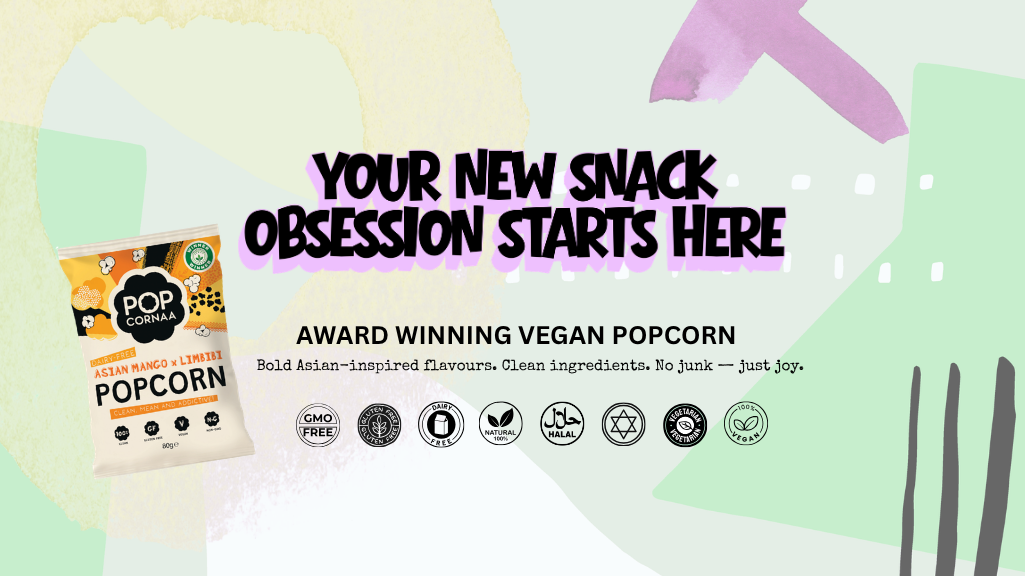
If you would like to taste how these ideas come together, we make vegan gourmet popcorn with Asian-inspired and British flavours. Here is where to start, with prices as published on our site:
- The Newbie Asian Fusion Taster Box has five bags and costs £17.99. It is the easy first step.
- The Asian Sweet Bliss Box has nine bags in a tropical fruit collection and costs £25.95. It suits a sweet tooth.
- The Ultimate Asian Sampler Box has twelve bags and costs £32.95. It is the one for sharing or gifting.
[ ](https://www.popcornaa.com › pages › asian-fusion-taster-box)
If you want to choose your own flavours, you can build your own snack mix. For a present when you are not sure of the taste, digital gift cards start from £10. Businesses interested in snack bags or bulk sharing bags can see our wholesale page.
Popcorn as a British-inspired gift
Popcorn gifts have caught on because they are easy to share and easy to personalise. Hitched, the wedding site, suggests popcorn wedding favours: pop the corn, seal it in containers to keep it fresh, and give guests boxes to fill themselves.
For everyday gifting, think about the person rather than the occasion:
- A film lover. A sampler box with sweet and savoury bags, so they can pick one per film.
- A colleague or client. A taster box is a friendly, low-key gift, and a vegan one avoids awkward dietary questions.
- A family with children. Look for allergen-friendly options and read the label together.
- Someone hard to buy for. A gift card lets them choose the flavours.
For seasonal ideas and new flavours, take a look at our unique popcorn flavours list and our gourmet popcorn flavour list.
Where British popcorn is heading
The pattern since 2010 is clear: more people eating popcorn, more of them spending on premium flavours, and younger adults leading it. The research firm figures cited above relate to 2010 to 2016, but the direction has held, with a market report from Market Data Forecast describing ready-to-eat pouches, microwave bags and kernel packs, with flavours from classic salted butter to spicy variants, and home entertainment making popcorn central to movie nights.
That is why we think the next chapter of British popcorn will be less about one national flavour and more about a mix. If you enjoy keeping up with it, our pieces on popcorn flavour trends and the flavour innovation list track what is new.
FAQ
Did popcorn come from England?
No. Popcorn comes from the Americas, where people ate it long before Europeans arrived, and archaeologists have found ears about 5,600 years old in New Mexico. Britain took to it later, mostly through fairgrounds and cinemas, and made toffee and sweet styles its own.
Do they have microwave popcorn in the UK?
Yes. BBC Food says ready-to-cook kernels in bags for the microwave are widely available, alongside plain dried kernels from most supermarkets. You can also pop kernels in a lidded microwaveable pot, which BBC Food’s recipe does with 35g in one to three minutes.
What is the most popular popcorn flavour in the UK?
Sweet leads. Kantar figures quoted by Lovefood showed an 80/20 split in favour of sweet variants, with toffee the biggest single flavour. Sweet and salty is a popular middle ground, and savoury and spicy flavours are growing at the premium end.
Is British popcorn vegan?
Not automatically, because many sweet and savoury coatings use butter or milk ingredients. Plain popcorn with oil and salt can be vegan, as BBC Food’s microwave recipe shows. Always check the label, or choose a range that is vegan throughout, as ours is.
Sources
- Popcorn, English meaning, Cambridge Dictionary
- How popcorn became a much-loved snack, BBC Future
- Early History, Popcorn: Ingrained in America’s Heritage, USDA National Agricultural Library
- Popcorn, Etymology, Origin and Meaning, Etymonline
- A brief history of popcorn and its cinema snack sidekicks, The Conversation
- Popcorn: The posh new alternative to crisps, Lovefood
- Crunch time for crisps as posh popcorn explodes, The Guardian
- Popcorn recipes, BBC Food
- Microwave popcorn recipe, BBC Food
- Homemade wedding favours, Hitched
- UK popcorn market size, share and growth, Market Data Forecast
- Coffee flavour profiles for every taste