

Craft popcorn explained: flavours, methods, and varieties
TL;DR:
- Craft popcorn is small-batch, handmade popcorn made with quality ingredients focused on flavor and texture. It uses deliberate kernel choices like mushroom or butterfly, with careful moisture control, to produce superior taste and consistency. Making it at home involves air-popping, stovetop, or microwave methods, with flavor layering and timing key to perfect results.
Craft popcorn is defined as small-batch, manually prepared popcorn made with quality ingredients, precise technique, and a deliberate focus on flavour and texture. It sits in a different category from the mass-produced bags you find in supermarket aisles. Where conventional popcorn prioritises volume and shelf life, craft popcorn prioritises the eating experience. Producers like Miss Hannah’s Gourmet Popcorn hand-stir their batches over a kettle, preserving a quality that factory lines simply cannot replicate. If you have ever wondered why some popcorn tastes richer, feels lighter, and holds its coating better, craft popcorn explained is exactly what you need.
What makes craft popcorn different from conventional popcorn?
Craft popcorn, also known as artisan popcorn, is distinguished by three things: production scale, kernel selection, and ingredient integrity. Mass-produced popcorn is made in enormous batches using automated machinery, which often results in uneven popping, brittle textures, and artificial flavourings. Small-batch manual production avoids these pitfalls entirely, delivering superior flavour and texture in every handful.
The kernel type matters more than most people realise. There are two main varieties used in craft production.
- Butterfly kernels pop into irregular, wing-shaped pieces with a large surface area. They are light and airy, which makes them ideal for snacking. Their jagged shape catches seasonings well but makes them more fragile.
- Mushroom kernels pop into round, compact balls with a sturdy structure. They are the preferred choice for coatings and crafting because they resist shattering under the weight of glazes and toppings.
The science behind a good pop is also worth understanding. Optimal kernel moisture sits between 13.5% and 14.5%. Kernels too dry will fail to pop properly. Kernels too moist become sticky and dense rather than fluffy. Craft producers source kernels carefully to stay within this window, which is something mass manufacturers rarely prioritise.
| Feature | Craft popcorn | Conventional popcorn |
|---|---|---|
| Batch size | Small, manual | Large, automated |
| Kernel selection | Deliberate (butterfly or mushroom) | Mixed, unspecified |
| Flavourings | Natural, layered | Artificial, sprayed |
| Texture | Light, even, consistent | Often brittle or uneven |
| Ingredient quality | High, often vegan or clean-label | Variable |
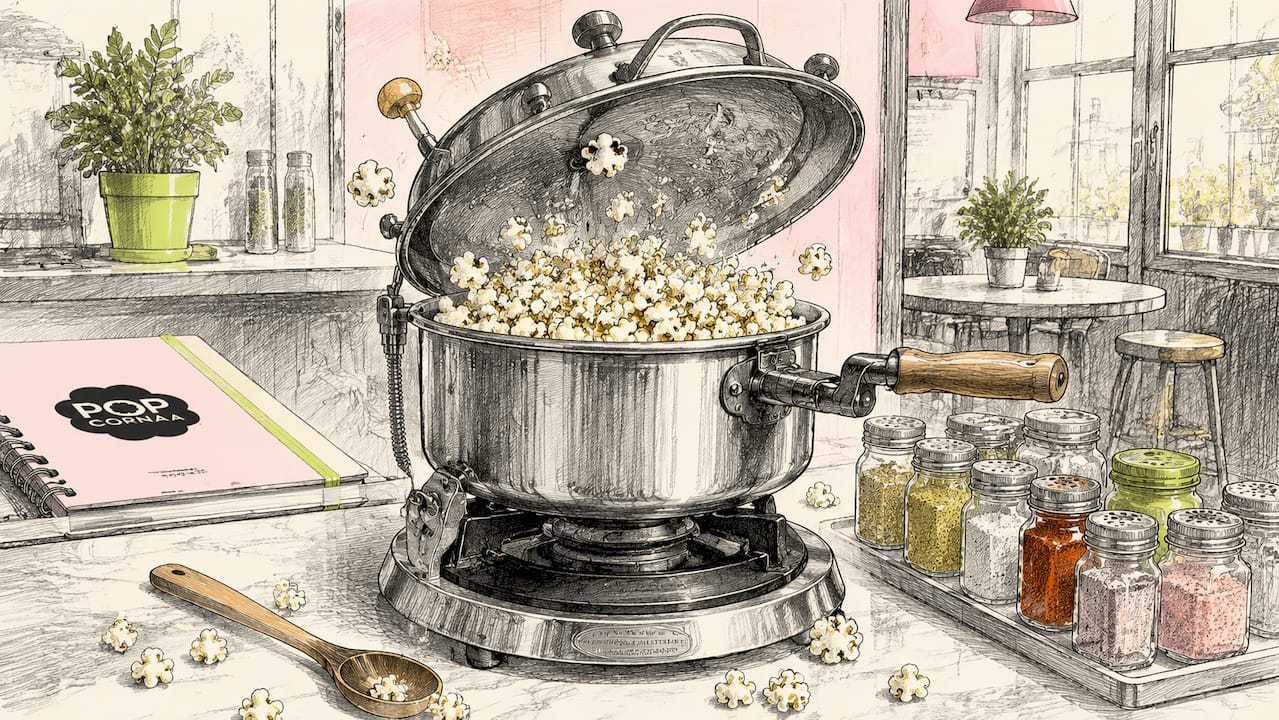
Pro Tip: When buying craft popcorn, check whether the producer specifies the kernel variety. Mushroom kernels in a caramel or chocolate coating signal genuine craft production. Butterfly kernels in a lightly seasoned bag signal a focus on snacking texture.
How is craft popcorn made at home?
Making artisan popcorn at home is more achievable than it sounds. The method you choose shapes the final texture, so it is worth understanding each option before you start.
-
Air-popping. Place kernels in an air popper and run it for roughly 3 minutes. The result is a dry, oil-free kernel with a clean flavour base. Air-popped corn is ideal when you plan to add your own coatings or use the popcorn for crafting, because the dry surface absorbs glazes and seasonings evenly.
-
Stovetop method. Add a neutral, high-smoke-point oil such as peanut oil to a heavy-bottomed pan. Neutral oils prevent off-flavours and ensure even cooking. Heat the oil over a medium flame, then use the test kernel method: drop 2–3 kernels into the pan and wait for them to pop. When they do, the oil has reached the ideal temperature of roughly 175–200°C (350–400°F). Add the remaining kernels in a single layer, cover the pan, and shake gently every 30 seconds.
-
Paper bag microwave method. Place a small handful of kernels in a plain brown paper bag, fold the top twice, and microwave on full power for 2–3 minutes. Listen carefully. Remove the bag when popping slows to 2–3 seconds between pops.
Regardless of method, the timing rule is the same: remove from heat when popping slows to 2–3 seconds apart. Waiting for every last kernel to pop guarantees burnt popcorn and a bitter taste.
Pro Tip: Season your popcorn while it is still warm. The residual heat helps dry seasonings and glazes adhere to the surface without clumping. For sweet coatings like caramel, toss the popcorn immediately after pouring the glaze and spread it on a lined baking tray to set.
Once you have your base, the real craft begins. Layering flavours is what separates a good batch from a memorable one. Start with a fat layer (oil, vegan butter, or coconut oil), then add dry seasonings, then finish with a glaze or drizzle if desired. Each layer serves a different purpose: fat carries flavour, dry spices add depth, and glazes add texture and sweetness.
What are the most popular craft popcorn flavours?
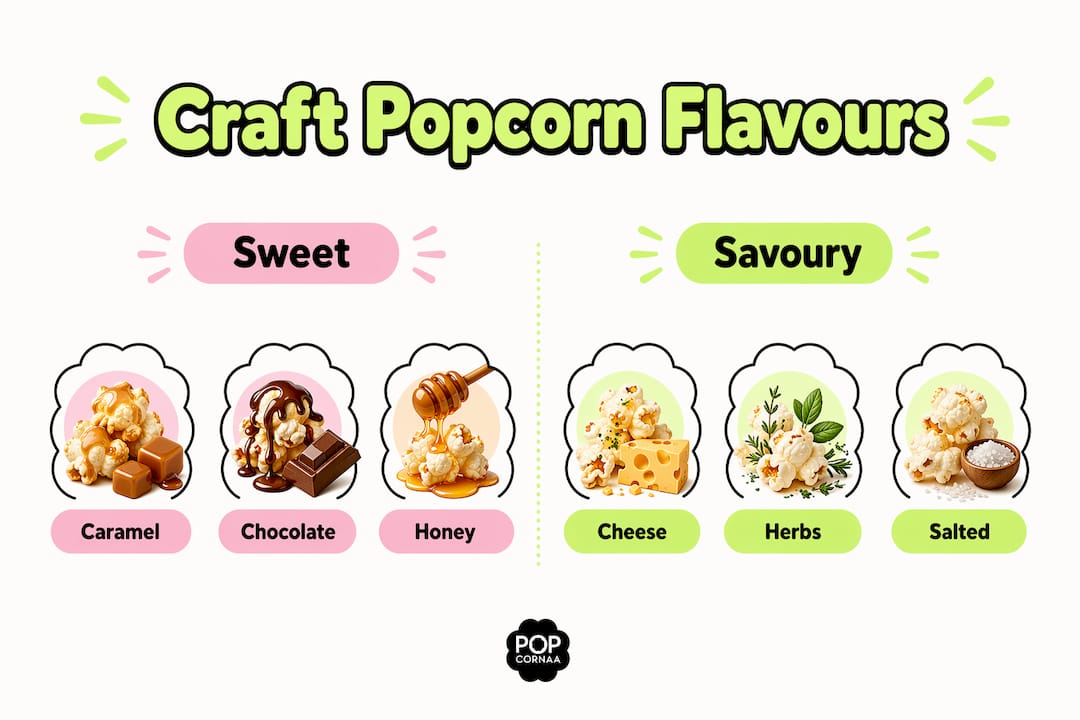
Craft popcorn flavours fall into three broad categories: sweet, savoury, and spicy. The best producers, and the most satisfying home batches, often blend two categories in a single recipe. Think salted caramel, chilli chocolate, or miso butter. These combinations work because contrast keeps your palate engaged.
Sweet flavours are the most widely recognised in craft popcorn. Caramel is the classic, made by cooking sugar, vegan butter, and a pinch of salt to a deep amber before coating the popcorn. The mushroom kernel is the right choice here because its round shape holds the caramel without cracking. Toffee, maple syrup, and white chocolate are other popular sweet bases. For a cleaner option, a light dusting of coconut sugar and cinnamon over air-popped corn delivers sweetness without refined sugar.
Savoury flavours are where craft popcorn truly separates itself from mass-market snacks. Producers like Popcornaa have pushed savoury craft popcorn into genuinely exciting territory, with Asian-inspired flavour profiles that include miso, soy, and sesame alongside British classics like cheese and onion or smoky barbecue. At home, nutritional yeast is a brilliant vegan substitute for cheesy flavour. Smoked paprika, garlic powder, and onion powder form a reliable savoury base that works on both butterfly and mushroom kernels.
Spicy flavours are growing fast in the craft snack space. Sriracha, cayenne, and Korean gochugaru all translate well to popcorn. The key is balancing heat with a fat layer so the spice coats evenly rather than sitting in hot patches. A small amount of agave or maple syrup added to a spicy coating rounds out the heat and stops it from being one-dimensional.
- Caramel and sea salt: the most requested craft flavour, works best with mushroom kernels
- Miso butter: umami-rich, vegan-friendly, and deeply satisfying
- Sriracha lime: spicy, sharp, and refreshing
- Smoked paprika and garlic: a reliable savoury base for home cooks
- White chocolate and raspberry: a sweet option that photographs beautifully for gifting
For a deeper look at how flavour layering works across different popcorn styles, the popcorn flavour profiles guide from Popcornaa is a genuinely useful resource.
Craft popcorn varieties: snacking versus crafting
Choosing the right popcorn variety for your purpose is one of the most overlooked decisions in craft popcorn. The two main types serve very different needs, and using the wrong one leads to frustrating results.
| Variety | Shape | Best use | Durability |
|---|---|---|---|
| Butterfly | Irregular, winged | Snacking, light seasoning | Fragile |
| Mushroom | Round, compact | Glazing, coating, crafting | Sturdy |
Butterfly popcorn is the type most people picture when they think of cinema popcorn. Its large surface area makes it well-suited for threading onto string for festive garlands, where its wings provide better stability than a round kernel. However, it does not hold heavy coatings well. If you pour a thick caramel over butterfly popcorn, the wings tend to break off and the result looks messy.
Mushroom popcorn is the craft producer’s choice for anything involving a coating or a glaze. Its compact, ball-like structure means it can be tumbled in a coating drum or hand-tossed in a glaze without shattering. It also stacks and packs more neatly, which matters for gift boxes and sharing buckets.
For crafting projects like popcorn garlands, air-popped corn is the recommended base because it produces dry, structurally sound kernels that thread without crumbling. Oil-popped corn is softer and more likely to tear when a needle passes through it.
Pro Tip: If you are making a popcorn garland, pop your corn the day before and leave it uncovered overnight. Slightly stale popcorn is firmer and far easier to thread without breaking.
Understanding what makes popcorn gourmet goes hand in hand with understanding kernel varieties. The two are inseparable when you are aiming for a genuinely premium result.
Key takeaways
Craft popcorn is defined by small-batch production, deliberate kernel selection, and quality ingredients that together produce a flavour and texture no mass-market bag can match.
| Point | Details |
|---|---|
| Kernel choice is critical | Mushroom kernels suit glazing and crafting; butterfly kernels suit light snacking. |
| Moisture content matters | Kernels need 13.5%–14.5% moisture to pop evenly and produce a fluffy texture. |
| Method shapes texture | Air-popping gives a dry base for coatings; stovetop adds richness through oil. |
| Flavour layering is the craft | Apply fat first, then dry spices, then glazes for even coverage and depth. |
| Timing prevents burning | Remove from heat when pops slow to 2–3 seconds apart, not when all kernels have popped. |
Why craft popcorn changed how I think about snacking
I will be honest: I did not fully appreciate what craft popcorn was until I tried making it properly at home. I had always assumed popcorn was popcorn. Then I used mushroom kernels for the first time, poured a proper vegan caramel over them, and watched the coating settle into something that looked and tasted genuinely special. That stopped me in my tracks.
What I have come to appreciate is that craft popcorn rewards attention. The test kernel method sounds fussy until you realise it is the single step that prevents a burnt batch. Choosing the right kernel variety sounds like overthinking until you see butterfly wings crumble under a heavy glaze. These details are not obstacles. They are the craft.
I also think the flavour possibilities in artisan popcorn are still largely unexplored by most home cooks. Miso butter popcorn took me completely by surprise the first time I tried it. Gochugaru and sesame oil is another combination that feels genuinely new. The snack category that most people write off as simple cinema food is actually one of the most flexible flavour canvases in the kitchen.
My honest recommendation is to start with stovetop, use peanut oil, and season while the corn is still warm. Get that right, then experiment. The learning curve is short and the results are worth every minute.
— Emily
Discover craft popcorn done properly at Popcornaa
[ ](https://www.popcornaa.com › pages › asian-fusion-taster-box)
If making your own batch sounds appealing but you want to taste what genuinely skilled craft popcorn looks like first, Popcornaa has you covered. The range spans Asian-inspired flavours and British classics, all made with clean, dairy-free ingredients and no compromise on quality. Whether you are after a large sharing bucket for a gathering, a custom snack mix built around your favourite flavours, or a gift for a fellow snack lover, the full Popcornaa gourmet range is the place to start. Every bag reflects the same small-batch thinking this article has been exploring.
FAQ
What is craft popcorn?
Craft popcorn is small-batch, manually prepared popcorn made with quality kernels, natural ingredients, and deliberate flavouring techniques. It differs from mass-produced popcorn in texture, flavour depth, and ingredient integrity.
Which kernel is best for craft popcorn coatings?
Mushroom kernels are best for coatings and glazes because their round, compact shape resists shattering under the weight of caramel, chocolate, or spice blends.
How do I stop my stovetop popcorn from burning?
Remove the pan from the heat when popping slows to 2–3 seconds between pops. Waiting for every kernel to pop causes the batch to scorch and taste bitter.
Can I make craft popcorn without oil?
Yes. Air-popping produces a dry, oil-free kernel in roughly 3 minutes. This base is ideal for adding your own coatings because the dry surface absorbs glazes and seasonings evenly.
What flavours work best for homemade craft popcorn?
Salted caramel, miso butter, smoked paprika and garlic, and sriracha lime are all well-suited to home production. Layering a fat base, dry spices, and a finishing glaze produces the most balanced results.