

Creating custom snack mixes: your complete home guide
TL;DR:
- Making your own snack mix allows precise control over ingredients, portion sizes, and dietary needs. Proper storage and adherence to food safety rules ensure freshness and avoid cross-contamination.
A custom snack mix is a hand-assembled blend of nuts, seeds, dried fruits, and optional treats, combined to match your exact taste preferences, dietary needs, and occasion. This creating custom snack mixes guide covers everything from choosing the right ingredients to portioning, storing, and staying food-safe, whether you are making a batch for yourself, your children, or a party spread. The appeal is straightforward: home-made snack mixes give you precise control over what goes in, producing healthier, less processed results than most shop-bought options. The British Heart Foundation recommends keeping snack portions under 150 kcal and choosing ingredients low in added sugars, salt, and saturated fats. That standard is a useful starting point for building any personalised mix.
What ingredients make up a balanced custom snack mix?
The foundation of any good snack mix is nutrient density. Raw, unsalted nuts such as almonds, cashews, and walnuts supply healthy fats and protein. Seeds, including pumpkin, sunflower, and hemp, add minerals and gut-friendly fibre without loading the mix with calories.
Dried fruit brings natural sweetness and a chewy contrast to crunchy nuts. The key is choosing unsulphured dried fruits with no added sugar, such as unsweetened cranberries, apricots, or raisins. Sulphured fruits often contain preservatives that some people react to, and sweetened varieties push your sugar count up fast.
Optional add-ins are where the fun begins. A small amount of dark chocolate chips, toasted coconut flakes, or a pinch of smoked paprika can shift a mix from ordinary to genuinely exciting. The rule is to keep these additions to roughly 10–20% of the total volume so they enhance rather than dominate.
Coated nuts are a common pitfall. Yoghurt-coated or wasabi-coated nuts contain hidden saturated fats and added sugars that undermine an otherwise healthy mix. Plain, raw, or dry-roasted nuts without coatings preserve the nutritional integrity of your blend.
- Raw, unsalted nuts: almonds, walnuts, cashews, Brazil nuts
- Seeds: pumpkin, sunflower, chia, hemp
- Unsweetened dried fruit: apricots, cranberries, raisins, mango slices
- Wholesome add-ins: dark chocolate chips (70%+ cocoa), toasted coconut, cacao nibs
- Spices and flavourings: cinnamon, smoked paprika, nutritional yeast, sea salt flakes (used sparingly)
- Vegan and allergen-friendly swaps: sunflower seed butter clusters, roasted chickpeas, puffed quinoa for nut-free mixes
Pro Tip: Read every label before adding an ingredient. Look for hidden sugars listed as glucose syrup, dextrose, or maltose, and check sodium levels. A single handful of a coated nut can contain as much salt as a packet of crisps.
How do you customise snack mixes for different diets and flavours?
Personalisation is the real strength of making your own mix. Once you understand the basic ratios, you can adapt any blend to suit a vegan diet, a nut allergy, a gluten intolerance, or a child who refuses anything that looks remotely healthy.
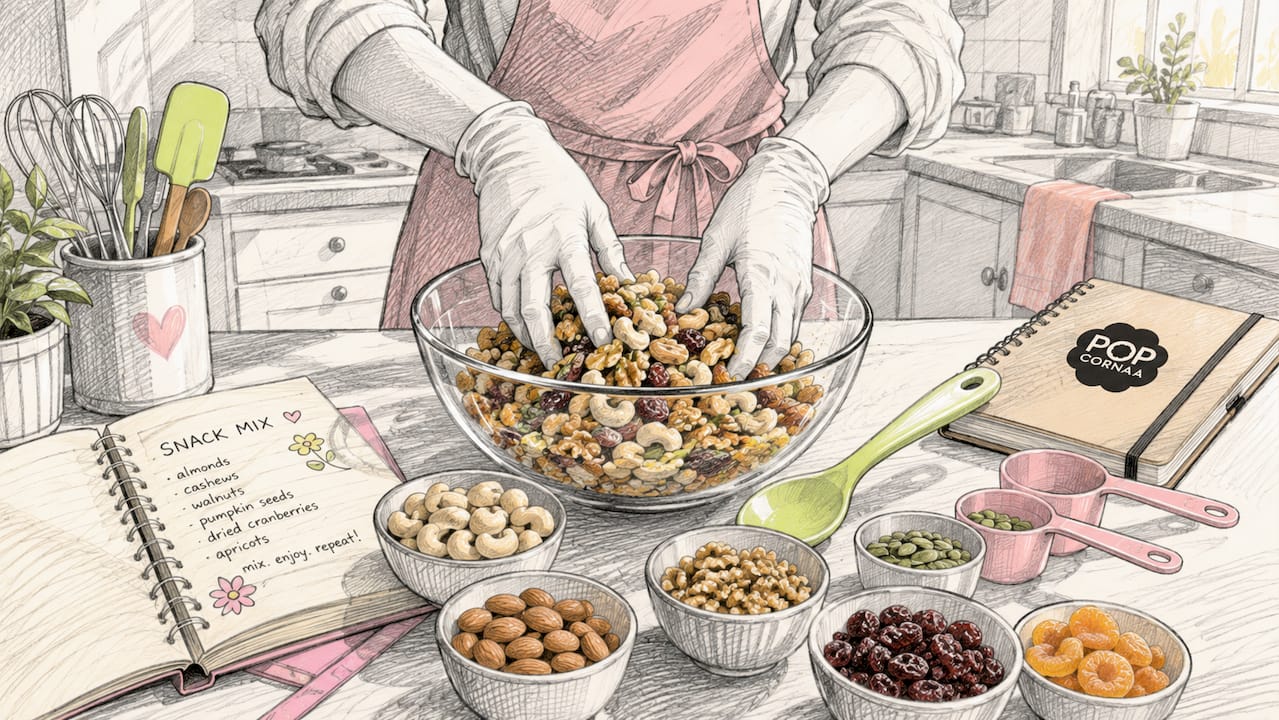
High-protein and fibre-rich bases maximise nutrient density and satisfaction, reducing the temptation to reach for high-sugar snacks between meals. Nutritionists point to nuts and seeds as the best wholefood sources for sustained energy, because protein metabolises slowly and prevents the sugar crashes that follow a biscuit or a cereal bar.
Here are four mix profiles to get you started:
-
Vegan energy mix: Almonds, pumpkin seeds, unsweetened dried mango, dark chocolate chips, and a pinch of cinnamon. This combination delivers protein, healthy fats, and natural sugar in one handful. For more plant-based snack ideas, there is plenty of creative inspiration available for 2026.
-
Nut-free school mix: Roasted chickpeas, sunflower seeds, pumpkin seeds, raisins, and a few dark chocolate chips. Safe for most school lunchboxes and genuinely tasty. Check out allergen-friendly snack alternatives if you need further guidance on building nut-free options.
-
Low-sugar savoury mix: Walnuts, almonds, pumpkin seeds, dried rosemary, sea salt flakes, and a light dusting of smoked paprika. No fruit, no sweetness, and deeply satisfying for adults who prefer a savoury snack.
-
Kid-friendly sweet mix: Cashews, sunflower seeds, unsweetened dried cranberries, coconut flakes, and a small handful of cacao nibs. The colours and textures make it appealing to younger snackers without the refined sugar of most children’s snacks.
Portion size matters as much as ingredient choice. A single serving of around 30g fits neatly into a small reusable bag and keeps the calorie count within the British Heart Foundation’s recommended snack range. For office snacking or travel, pre-portioning into individual bags removes the temptation to overeat directly from a large container. If you want ideas for keeping energy steady throughout the working day, healthy vegan snack ideas for work offer a useful starting point.
What food safety rules apply when making snack mixes at home?
Food safety is non-negotiable, even when you are mixing snacks in your own kitchen. If you are making mixes purely for personal or family use, standard kitchen hygiene applies. If you plan to share or sell your mixes, UK law requires more.
Small food businesses must register with their local authority and implement a documented food safety system such as the Safer Food Better Business (SFBB) pack. Registration is free and must happen at least 28 days before you start trading. This applies even if you are selling at a local market or through social media.
Allergen management is the most critical area for home producers. Creating an allergen matrix means listing every ingredient and its allergen status in a single document, then cross-referencing it against each mix you produce. Dedicated utensils and separate storage containers for allergen-containing ingredients prevent cross-contamination.
Natasha’s Law, which came into force in October 2021, requires clear allergen labelling on any food made and packed on the same premises where it is sold. For home producers, this means every bag you sell must carry a full ingredient list with allergens highlighted in bold.
- Register with your local authority before selling any food product
- Use the SFBB pack to document cleaning schedules, temperature checks, and supplier details
- Maintain an allergen matrix and update it every time an ingredient changes
- Label all sold products with a full ingredient list, with allergens in bold, per Natasha’s Law
- Use dedicated utensils and storage for allergen-containing ingredients
- Keep meticulous records including cleaning logs and supplier information for inspection readiness
Pro Tip: Even if you are not selling, label every batch you make with the date and ingredients. It takes thirty seconds and removes any guesswork if you are sharing with friends who have allergies. For broader guidance on holiday meal prep and food hygiene for home cooks, there are excellent resources available.
How do you prepare, portion, and store snack mixes properly?
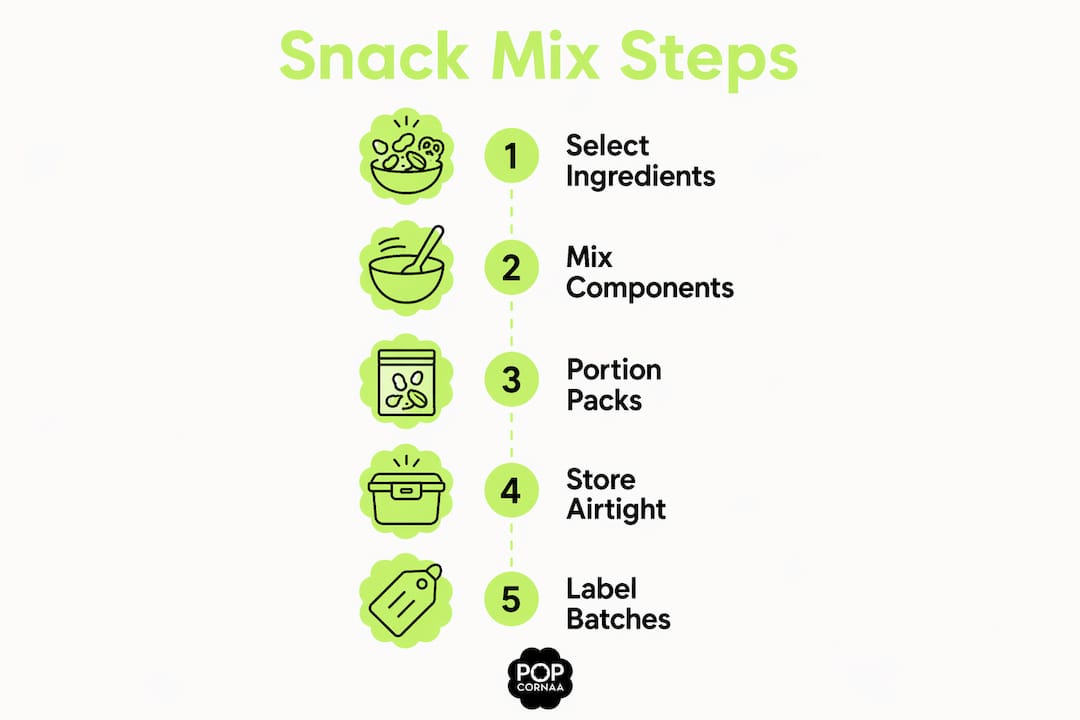
Good preparation technique makes the difference between a mix that stays fresh for weeks and one that turns stale or soggy within days. The process is simple, but the order of steps matters.
-
Lay out all ingredients separately before combining. Check each one for freshness, especially dried fruits, which can clump or ferment if past their best.
-
Combine dry ingredients first. Add nuts and seeds to a large bowl, then fold in dried fruit. Adding fruit last prevents it from sinking to the bottom and clumping together.
-
Add spices or flavourings evenly. Toss the mix thoroughly so every handful carries the same flavour profile. A clean pair of hands or a large spoon works better than a spatula for even coating.
-
Portion immediately after mixing. Portioning into single-serving bags improves usability and keeps the mix fresh longer than storing it all in one large container that gets opened repeatedly.
-
Seal and store in a cool, dry place. Airtight containers or resealable bags keep most mixes fresh for up to a month. Ingredients like popcorn soften faster and are best consumed within a few days of mixing.
Moisture is the enemy of texture. Avoid mixing wet or sticky ingredients directly with dry ones unless you plan to eat the batch immediately. If you add popcorn, keep it in a separate bag and combine just before serving to preserve its crunch.
Pro Tip: Mason jars are excellent for storing larger batches. They are airtight, easy to label, and let you see exactly what is inside. For grab-and-go portions, small resin-sealable bags are more practical and take up less space in a bag or desk drawer.
Key takeaways
A well-built custom snack mix combines nutrient-dense ingredients in controlled portions, follows UK food safety standards, and stays fresh through proper airtight storage.
| Point | Details |
|---|---|
| Choose ingredients carefully | Use raw, unsalted nuts and unsweetened dried fruit; avoid coated nuts with hidden sugars and fats. |
| Control portions from the start | Aim for 30g servings to stay within the British Heart Foundation’s under-150-kcal snack guideline. |
| Adapt to dietary needs | Build nut-free, vegan, or low-sugar versions by swapping ingredients rather than removing them entirely. |
| Follow food safety rules | Register with your local authority and label allergens clearly per Natasha’s Law if sharing or selling. |
| Store correctly for freshness | Use airtight containers or sealed bags; consume popcorn-based mixes within a few days of mixing. |
What I have learnt from years of mixing my own snacks
I will be honest: the first batch I ever made was a disaster. I threw in yoghurt-coated raisins, salted cashews, and a generous handful of sugary granola clusters, convinced I was being healthy because it contained nuts. It tasted great for about two days, and then I noticed I was reaching for it every hour because the sugar was spiking and crashing my energy. That experience stopped me in my tracks.
What I have found actually works is building around protein and fibre first, then adding flavour. A base of almonds, pumpkin seeds, and walnuts is genuinely satisfying. A small amount of dark chocolate or a pinch of smoked paprika makes it feel like a treat without turning it into confectionery. The ratio I keep coming back to is roughly 60% nuts and seeds, 20% dried fruit, and 20% extras.
The other thing I wish someone had told me earlier is to pre-portion immediately. Eating from a big bowl is a recipe for consuming three servings without noticing. Small bags change your relationship with the mix entirely. You eat one, feel satisfied, and move on.
Home mixing also gives you something shop-bought never can: the ability to respond to what your body actually needs that week. Travelling? Add more calorie-dense walnuts. Trying to cut sugar? Drop the dried fruit and add more seeds. That flexibility is the real reason I keep making my own.
— Emily
Popcornaa’s snack range: a natural companion to your home mixes
If you love building your own snack combinations, Popcornaa’s gourmet vegan popcorn is a natural addition to your repertoire.
[ ](https://www.popcornaa.com › pages › asian-fusion-taster-box)
Popcornaa specialises in vegan, allergen-friendly popcorn with bold Asian-inspired and British flavours, from Brit-Core classics to the Asian Flavourz collection. The Asian Fusion Taster Box is a five-bag selection that works brilliantly as a standalone treat or as a premium add-in to a party snack spread. For gifting, Popcornaa’s digital gift vouchers let the recipient choose their own flavours, which is perfect for snack enthusiasts who like to mix and match. Every product is made without animal products, making it a straightforward fit for vegan and plant-based snack mixes.
FAQ
What is a custom snack mix?
A custom snack mix is a hand-assembled blend of ingredients such as nuts, seeds, dried fruit, and optional treats, combined to suit personal taste, dietary needs, or a specific occasion.
How do I keep a homemade snack mix fresh?
Store your mix in an airtight container or sealed bag in a cool, dry place. Most mixes stay fresh for up to a month, though popcorn-based mixes are best eaten within a few days.
What are the healthiest ingredients for a snack mix?
Raw, unsalted nuts and seeds paired with unsweetened dried fruit form the healthiest base. The British Heart Foundation advises choosing ingredients low in added sugars, salt, and saturated fats.
Do I need to register my business if I sell homemade snack mixes?
Yes. UK law requires food businesses, including home producers, to register with their local authority and implement a food safety system such as the SFBB pack before selling any food product.
How do I make a nut-free snack mix?
Replace nuts with roasted chickpeas, pumpkin seeds, sunflower seeds, or puffed quinoa. These ingredients provide protein and crunch without any tree nut or peanut allergens.