

Differences in popcorn types: your complete snacking guide
TL;DR:
- Choosing the right popcorn kernel depends on the intended use and desired texture. Butterfly kernels produce large, delicate shapes suitable for butter and seasonings, while mushroom kernels create dense, durable popcorn ideal for coatings like caramel and chocolates. Heirloom varieties offer unique flavors, with hulls that shatter into small fragments, and mixing kernel types can enhance snack versatility at home.
Popcorn is defined by two primary kernel shapes, butterfly and mushroom, and two dominant kernel colours, yellow and white, each producing distinct textures, flavours, and cooking results. Understanding the differences in popcorn types is the single most useful thing you can do before buying or cooking popcorn at home. Kernel shape determines whether your popcorn holds a delicate seasoning or survives a thick caramel coating. Colour affects flavour perception, hull thickness, and how reliably the kernel pops. Get these fundamentals right and every bowl you make improves immediately.
What are butterfly and mushroom popcorn kernels, and how do they differ?
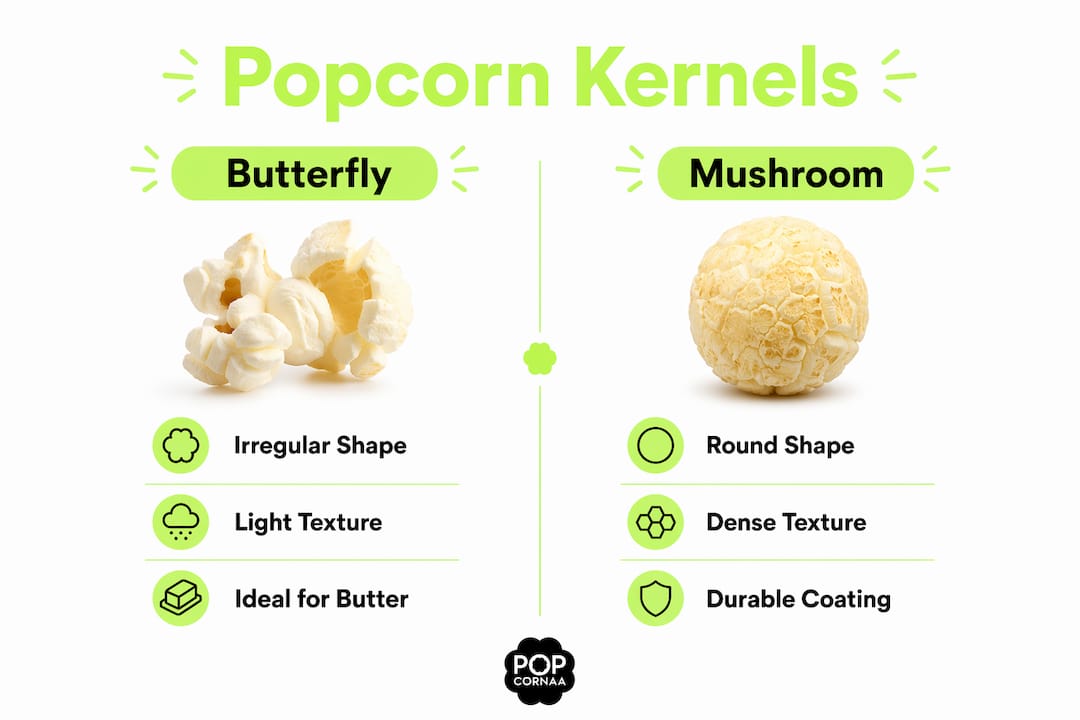
Butterfly and mushroom kernels are the two main kernel shapes used commercially and at home. They look completely different after popping, and that difference matters enormously for how you use them.
Butterfly kernels
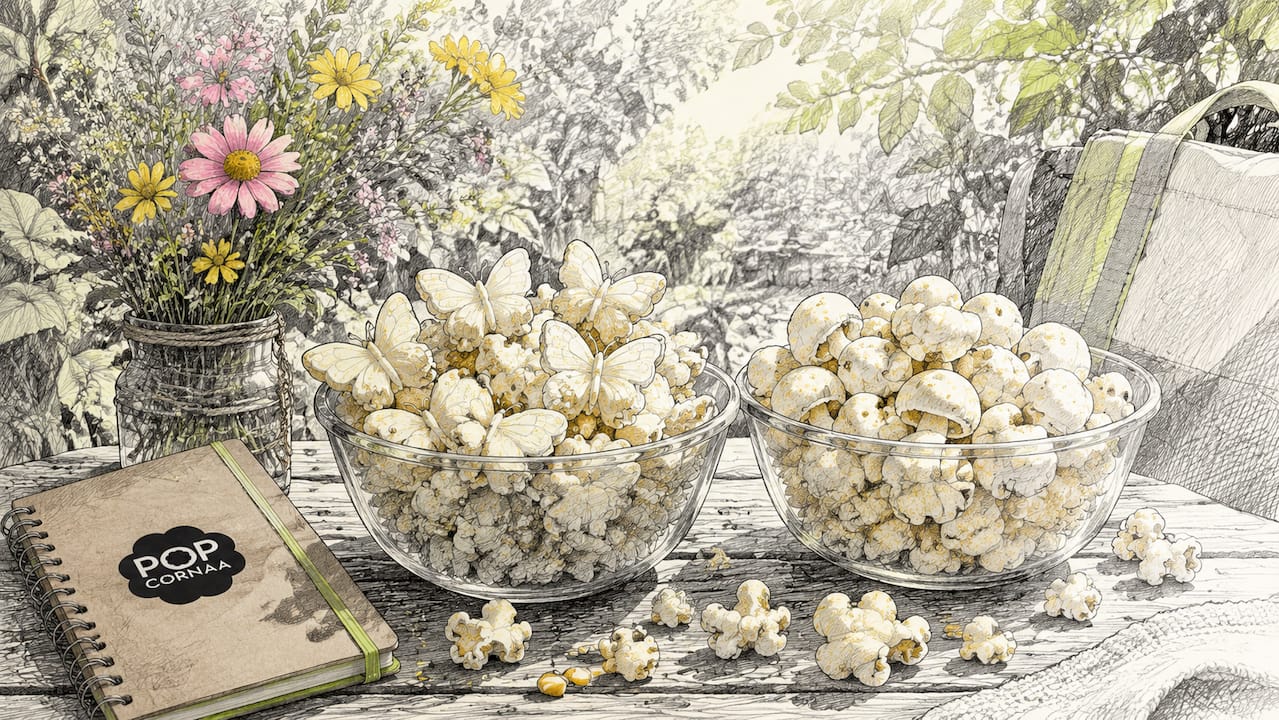
Butterfly kernels pop into large, irregular shapes with protruding wings and arms. That jagged surface area is ideal for catching butter, salt, and fine seasonings. Cinemas favour butterfly kernels precisely because high expansion and volume fill buckets impressively and carry buttery flavour well. The trade-off is fragility. Those wings break easily during stirring, coating, or packaging, which makes butterfly popcorn a poor choice for anything involving heavy toppings.
Mushroom kernels
Mushroom kernels pop into compact, round balls with a dense, sturdy structure. That shape makes them far more durable. Mushroom kernels are preferred for premium coated products like caramel corn and chocolate-dipped popcorn because they resist breakage during tumbling and coating processes. The surface is smooth rather than jagged, which means coatings spread evenly and set cleanly. If you are making a toffee popcorn or a chocolate drizzle at home, mushroom kernels will give you a far better result than butterfly.
| Attribute | Butterfly kernels | Mushroom kernels |
|---|---|---|
| Shape after popping | Irregular, winged | Round, compact ball |
| Texture | Light, airy, delicate | Dense, sturdy |
| Durability | Low | High |
| Best uses | Buttered, salted, cinema-style | Coated, caramel, chocolate |
| Coating suitability | Poor | Excellent |
Pro Tip: If you want to make caramel popcorn at home, source mushroom kernels specifically. Standard supermarket bags almost always contain butterfly kernels, which crumble the moment hot caramel hits them.
Commercial snack makers often blend both kernel types to balance volume, flavour absorption, and durability in a single product. That blend gives you the visual appeal of butterfly with just enough structural integrity from mushroom. It is a genuinely clever approach worth borrowing at home when you want a versatile batch.
How do yellow and white popcorn kernels compare in flavour and texture?
Yellow and white kernels are the most common types of popcorn kernels sold in the UK, and they are not interchangeable. Each has a distinct flavour profile, hull thickness, and popping behaviour.
Yellow kernels contain carotenoids, which produce their warm golden colour. They pop into larger flakes with a corn-forward flavour and thicker hulls. That thicker hull means yellow popcorn is more forgiving during cooking. It tolerates a wider range of temperatures without burning or leaving unpopped kernels behind. The larger flake surface area also absorbs butter and oil generously, which is why yellow popcorn tastes richer even before you add a single topping.
White kernels produce smaller, more delicate flakes with a milder, slightly sweeter flavour. The hulls are thinner, which creates a more tender eating experience with less of that papery residue you sometimes find stuck in your teeth. White popcorn is preferred for gourmet toppings precisely because its neutral flavour does not compete with complex seasonings. Popcornaa’s Asian-inspired and Brit-Core flavour ranges, for instance, benefit from a kernel that lets the seasoning speak rather than fighting it.
- Yellow kernels: larger flake, robust corn flavour, thicker hull, higher expansion rate, more forgiving to cook
- White kernels: smaller flake, mild and sweet, thinner hull, more delicate texture, ideal for gourmet coatings
- Yellow popcorn carries buttery flavour associations partly through colour psychology, not just starch content
- White kernels require more precise heat control to achieve a full pop without scorching
Pro Tip: White kernels are more sensitive to heat. Use a medium flame and keep the pan moving constantly. Yellow kernels are more forgiving, so they suit beginners or high-volume batches.
Colour psychology plays a genuine role in how you perceive flavour before you even taste the popcorn. Yellow popcorn looks richer and more indulgent, which primes your brain to expect a buttery, savoury experience. White popcorn looks lighter and cleaner, which sets up an expectation of delicacy. Neither perception is wrong. Both are real influences on your snacking enjoyment.
What role do heirloom and hull-less popcorn varieties play?
Heirloom popcorn varieties sit in a category of their own. Red, blue, and purple kernels are grown from older, non-hybrid seed lines and offer flavour complexity that standard yellow or white varieties simply cannot match.
- Purple kernels produce an earthy, slightly nutty flavour with a chewier texture after popping. They are the most distinctive of the heirloom group.
- Red kernels pop into delicate, flaky pieces with a mild nuttiness. They look striking in a bowl and pair well with light, herbal seasonings.
- Blue kernels offer a similar delicate consistency to red, with a slightly more complex flavour than standard white. Their nuttier flavour profile makes them a favourite among snack enthusiasts who want something beyond the ordinary.
One important detail: all three heirloom varieties pop mostly white. The vivid colour of the kernel does not transfer to the popped flake. You get the flavour benefit without the visual drama, which surprises many people the first time they try them.
The term “hull-less” popcorn deserves a clear correction. No truly hull-less popcorn exists. Every kernel requires a hull to trap steam pressure and force the pop. What hull-less varieties actually have is an exceptionally thin, fragile hull that shatters into tiny fragments during popping. Those fragments are so small they rarely get stuck between your teeth, which is where the perception of being hull-free comes from. The eating experience is genuinely more comfortable. The marketing label, however, is technically misleading.
Heirloom varieties work beautifully with lighter toppings. Their nuanced flavours are easily overwhelmed by heavy coatings, so pair them with olive oil, sea salt, or a dusting of nutritional yeast rather than thick caramel or chocolate.
How should home cooks choose and prepare different popcorn types?
Choosing the right kernel for your recipe is the most practical skill you can develop as a home cook. The differences in popcorn types only matter if you apply that knowledge at the stove.
-
Define your goal first. If you want a classic, buttery bowl for film night, choose yellow butterfly kernels. If you are making a coated or flavoured batch, choose mushroom kernels. If you want something nuanced and artisan, try a heirloom variety.
-
Match your heat to your kernel. Yellow kernels tolerate a wider temperature range. White kernels need precise heat control to pop fully without burning. Use a heavy-bottomed pan and medium heat for white kernels. Yellow kernels can handle a slightly higher flame.
-
Season after popping, not before. Fine seasonings like smoked paprika, nutritional yeast, or dried herbs cling best to butterfly kernels while the flakes are still warm and slightly oily. Apply them within 30 seconds of popping for maximum adhesion.
-
Use the right fat. Coconut oil and rapeseed oil both have high smoke points, making them well suited to stovetop popping. Butter burns at popping temperatures, so add it after the kernels have popped rather than during.
-
Try blending kernel types. Mixing butterfly and mushroom kernels in a single batch gives you volume and visual appeal from the butterfly flakes alongside the structural durability of mushroom pieces. This approach works particularly well for flavour pairing experiments where you want variety in a single bowl.
-
Store kernels correctly. Moisture is the enemy of a good pop. Keep kernels in an airtight container away from heat and light. Kernels that have dried out too much will not build enough steam pressure to pop fully, leaving you with a frustrating number of unpopped duds.
What are the common misconceptions about popcorn types?
Several persistent myths about popcorn varieties lead home cooks to make avoidable mistakes. Clearing them up makes a real difference to your results.
- “Hull-less means no hull.” As established, hull-less varieties still have hulls. The hull is simply thinner and fragments more completely during popping. No hull means no pop.
- “Yellow popcorn tastes better because it is yellow.” The flavour difference between yellow and white is real but modest. Colour psychology amplifies the perceived difference significantly. In blind taste tests, the gap narrows considerably.
- “All popcorn kernels pop the same way.” White kernels are genuinely more finicky. They produce more unpopped kernels when heat is inconsistent. This is a physical reality, not a quality issue.
- “Mushroom kernels taste worse.” Mushroom kernels have a denser, chewier texture that some snack lovers actually prefer. The flavour is comparable to butterfly. The difference is structural, not culinary.
- “Blending kernels is only for manufacturers.” Home cooks blend kernels all the time with excellent results. A 50/50 mix of butterfly and mushroom kernels is a practical starting point for any flavoured batch.
Understanding these distinctions puts you firmly in control of your snacking experience. The popcorn flavour science behind kernel selection is more nuanced than most people realise, and that nuance is genuinely worth exploring.
Key takeaways
The single most important factor in choosing popcorn is kernel shape: butterfly for light, buttery snacking and mushroom for coated or flavoured recipes.
| Point | Details |
|---|---|
| Kernel shape is decisive | Choose butterfly for butter and salt; choose mushroom for caramel, chocolate, or heavy coatings. |
| Yellow vs white is about texture | Yellow kernels produce larger, robust flakes; white kernels give a milder, more delicate result. |
| Hull-less is a myth | All popcorn requires a hull to pop; hull-less varieties simply have thinner, more fragile hulls. |
| Heirloom varieties add complexity | Red, blue, and purple kernels offer nuttier, earthier flavours best paired with light seasonings. |
| Heat control changes everything | White kernels need precise, consistent heat; yellow kernels tolerate a broader temperature range. |
Why I think most people are choosing the wrong kernel
I spent a long time assuming all popcorn kernels were essentially the same. It was only when I started making coated popcorn at home that the penny dropped. I used standard butterfly kernels for a toffee batch and ended up with a bowl of broken fragments. The moment I switched to mushroom kernels, the result was completely different. Firm, round pieces that held their coating beautifully.
What strikes me most in 2026 is how much the artisan popcorn world has grown. Heirloom varieties are appearing in independent food markets and specialist online shops with real frequency now. Purple and blue kernels in particular have stopped being a novelty and started becoming a genuine preference for snack enthusiasts who want something with more character. I find the earthy depth of purple kernels genuinely exciting, especially paired with a light miso or tamari seasoning.
My honest advice is to stop buying whatever is on the supermarket shelf without thinking about it. Spend a little time sourcing mushroom kernels if you enjoy flavoured popcorn. Try a heirloom variety at least once. And if you are making a plain buttery bowl, yellow butterfly kernels remain the gold standard for a reason. The differences in popcorn types are not trivial. They shape every aspect of the eating experience, from the first crunch to the last kernel.
— Emily
Popcornaa’s curated popcorn range for snack enthusiasts
If reading about popcorn varieties has made you want to try something genuinely different, Popcornaa is a good place to start.
[ ](https://www.popcornaa.com › pages › asian-fusion-taster-box)
Popcornaa specialises in gourmet vegan popcorn with flavour collections that take kernel selection seriously. The Asian Flavourz and Brit-Core Flavourz ranges are built around flavour pairings that complement the natural character of the kernels used. Whether you are looking for a sharing bucket, a themed gift box, or a customisable snack mix, the range covers a wide spectrum of tastes. Popcornaa also publishes guides and flavour resources to help you make more informed choices at home. Exploring the full collection is a genuinely enjoyable way to put your new kernel knowledge into practice.
FAQ
What is the main difference between butterfly and mushroom popcorn?
Butterfly kernels pop into large, irregular shapes ideal for butter and fine seasonings, while mushroom kernels form compact, round balls suited to heavy coatings like caramel and chocolate.
Is white or yellow popcorn better for home cooking?
Yellow kernels are more forgiving and produce larger flakes, making them better for beginners. White kernels offer a milder flavour and thinner hull but require more precise heat control to pop fully.
Does hull-less popcorn really have no hull?
No. Hull-less popcorn still has a hull. The term refers to varieties with exceptionally thin hulls that fragment during popping, reducing the residue left in your teeth.
What do heirloom popcorn varieties taste like?
Heirloom varieties like red, blue, and purple kernels offer nuttier, earthier flavours than standard yellow or white. They pop mostly white and pair best with light, delicate seasonings rather than heavy coatings.
Can you mix different popcorn kernel types at home?
Yes. Blending butterfly and mushroom kernels in equal parts gives you a batch with good volume and enough structural durability for light coatings. It is a practical technique used by commercial snack makers and works equally well at home.