

Discover the health benefits of plant-based popcorn
TL;DR:
- Not all vegan snacks are equally nutritious, and popcorn, when done right, is a genuinely healthy whole grain rich in fiber and antioxidants.
- Choosing air-popped, minimally processed varieties ensures you benefit from its natural health-promoting properties, while avoiding added sugars and unhealthy fats.
Not all vegan snacks are created equal. It’s easy to reach for something labelled plant-based and assume you’re making a brilliant choice, but the reality is a little more layered than that. Popcorn, though, is one snack that genuinely earns its reputation when it’s done right. Plain, air-popped popcorn is high in fibre and packed with antioxidants, making it a surprisingly powerful whole-grain snack. In this article, we’ll walk through what makes plant-based popcorn genuinely nourishing, what pitfalls to watch for, and how to pick the best flavours for both health and enjoyment.
Key Takeaways
| Point | Details |
|---|---|
| Naturally vegan and high fibre | Plant-based popcorn offers a fibre-rich, whole-grain foundation for health-conscious snacking. |
| Preparation impacts nutrition | The way popcorn is made and seasoned determines if it retains its health benefits. |
| Read labels for real benefits | Choose popcorn with minimal added sugar, fat, and sodium for the healthiest results. |
| Gourmet can mean both taste and wellness | With smart choices, you can enjoy innovative, flavourful vegan popcorn without sacrificing nutrition. |
What makes plant-based popcorn a healthy snack?
Popcorn isn’t just a cinema staple. It’s actually a whole grain, which means every kernel contains the bran, germ, and endosperm that you’d find in oats or brown rice. That whole-grain status matters enormously because it means you’re getting fibre, B vitamins, and minerals with every handful. Most people don’t think of popcorn in the same breath as quinoa or wholemeal bread, but nutritionally, it belongs in that same respected category.
What really sets popcorn apart, though, is its antioxidant content. Research suggests that popcorn may have more antioxidants per ounce than many fruits and vegetables, which is the kind of fact that stops you mid-munch. The specific antioxidants in question are polyphenols, including ferulic acid, which are found in the hull of the kernel. These compounds are associated with reducing oxidative stress in the body.
“Popcorn contains fibre and antioxidants and may even have more antioxidants, ounce-for-ounce, than fruits or vegetables.” — Cleveland Clinic Health
It’s worth noting that while some of these findings are promising, the research is still in relatively early stages. Scientists are enthusiastic, but they’re also careful. What we can say with confidence is that popcorn’s popcorn health benefits are grounded in solid nutritional science, even if some of the more exciting claims need further study.
Here’s a quick look at the typical nutritional profile for a 30g serving of plain air-popped popcorn:
| Nutrient | Per 30g serving |
|---|---|
| Calories | ~110 kcal |
| Carbohydrates | ~22g |
| Dietary fibre | ~3.5g |
| Protein | ~3g |
| Total fat | ~1.3g |
| Sodium | ~1mg |
| Iron | ~8% of daily value |
The numbers tell a clear story. Air-popped popcorn is genuinely low in fat, moderate in carbohydrates, and an honest source of gut-friendly fibre. It’s the kind of snack you can feel good about.
Key nutritional advantages of plain plant-based popcorn:
- A naturally vegan whole grain with no animal-derived ingredients
- Provides gut-friendly fibre that supports digestive health
- Contains polyphenol antioxidants, including ferulic acid
- Low in fat when prepared without added oils or butter
- Delivers a modest amount of iron and B vitamins
The key plant-based benefits explained
With the basics covered, let’s drill into which plant-based qualities actually improve your daily wellbeing. Because knowing that popcorn has fibre and antioxidants is one thing. Understanding why that matters is another altogether.
Fibre and satiety. One of the most immediately practical benefits of plant-based popcorn is how filling it feels relative to its calorie count. Fibre slows digestion, which means you feel satisfied for longer after eating. When you’re reaching for a snack mid-afternoon, a satisfying portion of popcorn can genuinely hold you over until your next meal without sending your blood sugar on a rollercoaster ride. That’s a real-world win.

Fibre also feeds the beneficial bacteria in your gut, which is something I think about a lot as someone who cares deeply about what goes into our bodies. A healthy gut microbiome is linked to better immune function, improved mood, and more stable energy levels throughout the day.
Antioxidants that punch above their weight. The polyphenol antioxidants in popcorn are concentrated primarily in the hull, which is the part that so often gets stuck in your teeth. As whole-kernel popcorn provides these polyphenols, the hull is actually the hero here, not the soft fluffy part. Ferulic acid in particular has been studied for its potential role in reducing inflammation. These aren’t magic bullet claims, but they are genuinely encouraging findings.
Low calorie when kept simple. Air-popped popcorn comes in at roughly 30 calories per cup, which makes it one of the most volume-friendly snacks available. Compare that to crisps, which typically deliver 150 calories or more per cup, and the difference is striking. As a satisfying vegan snack that doesn’t compromise on crunch or flavour, plain or lightly seasoned popcorn genuinely holds its own.
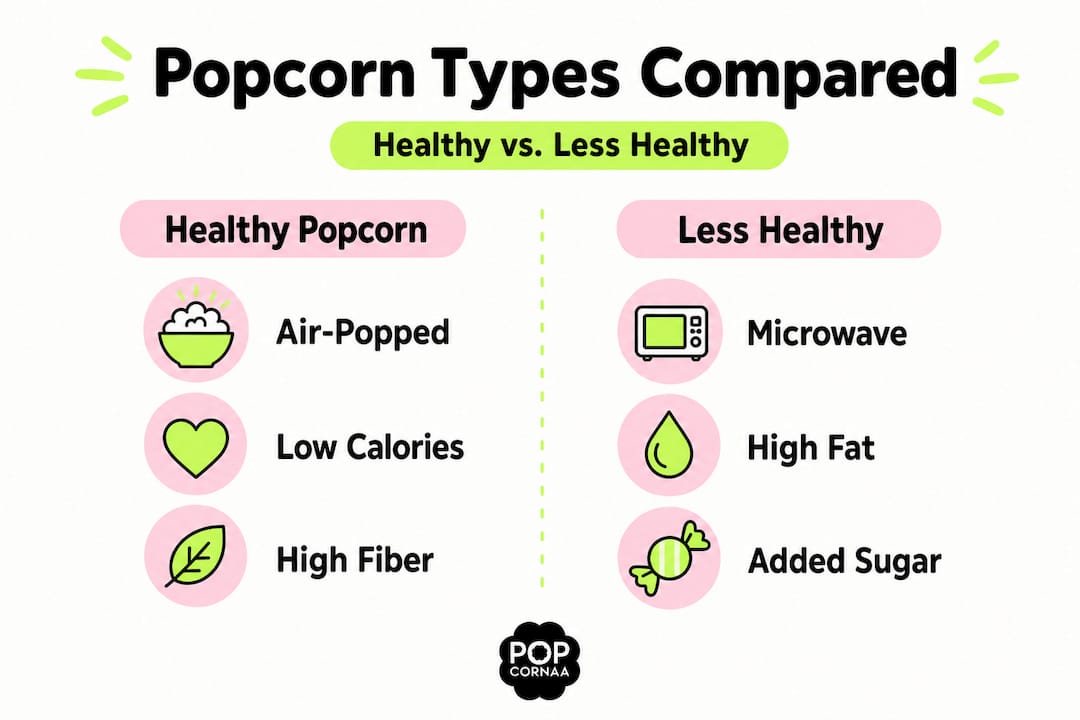
Pro Tip: When scanning popcorn packaging, look specifically for the words “whole grain” and check that added fat and salt are minimal. These two markers are the quickest way to separate a genuinely nutritious snack from one that merely looks the part.
Top 3 real-world plant-based popcorn health advantages:
- Supports digestive health through consistent fibre intake, reducing bloating and supporting regular digestion
- Helps manage hunger between meals without excess calories, making it a practical ally for mindful eating
- Delivers antioxidant support through polyphenols that may reduce oxidative stress over time
What separates healthy popcorn from less healthy options?
Understanding what helps isn’t enough. Knowing what to avoid is just as vital. And this is where it gets interesting, because the gap between a nourishing popcorn and a junk food dressed up in a vegan costume can be surprisingly narrow.
The preparation method is everything. Air-popped popcorn, prepared at home or sourced from a trusted brand, is where the nutritional value shines. Microwave popcorn, on the other hand, is often a very different story. Microwave popcorn raises concerns due to its added fat, high salt content, and certain packaging chemicals that have drawn scrutiny from health researchers. The convenience factor is real, but so are the trade-offs.
Gourmet varieties exist on a spectrum. A plain rosemary and sea salt gourmet popcorn, for instance, is a very different product from one coated in caramel or chocolate. Both may be vegan. Only one is genuinely health-forward.
| Popcorn type | Calories (per 30g) | Fat | Sodium | Key concern |
|---|---|---|---|---|
| Air-popped, plain | ~110 kcal | Very low | Very low | None significant |
| Microwave (regular) | ~140 kcal | Moderate | High | Added chemicals, excess salt |
| Gourmet plain flavoured | ~120 kcal | Low to moderate | Moderate | Varies by flavour |
| Gourmet sweet/coated | ~160 kcal | Moderate to high | Moderate | Added sugar, higher calories |
Tell-tale signs of a less healthful popcorn:
- Sugar listed in the first three ingredients
- Sodium above 400mg per 30g serving
- Partially hydrogenated oils anywhere on the ingredients list
- Artificial colourings or flavourings with no clear purpose
- “Butter flavour” from synthetic sources rather than real ingredients
Pro Tip: Flip any popcorn packet over and go straight to the ingredients list before you look at the front of the bag. The front is marketing. The back is truth. If you can’t recognise most of the ingredients, that’s a useful signal to pause before buying. Our healthiest popcorn guide breaks this down in even more detail, and if you’re exploring flavour options, browsing vegan popcorn flavours alongside their ingredient profiles is a great starting point.
Making smarter choices: Practical tips for picking gourmet vegan popcorn
Armed with this knowledge, here’s how you can make truly smart popcorn choices for every occasion. Whether you’re stocking up for a movie night, building a wellness-focused gift for someone you care about, or simply replacing less nourishing daily snacks, a little intention goes a long way.
The first priority is fibre. A serving of genuinely nutritious popcorn should deliver at least 2g of dietary fibre. That’s not a huge ask from a whole-grain snack, and if a product can’t meet it, it may have been so heavily processed that the nutritional benefit has largely been lost.
Added sugar is the next thing to monitor closely. Some beautifully packaged gourmet popcorns are essentially confectionery. There’s nothing wrong with enjoying a sweet treat occasionally, but it’s worth being honest with yourself about what you’re eating. Checking nutrition facts for fibre per serving, added sugar, sodium, and total fat is best practice, even when a product is labelled vegan.
Sodium deserves attention too. A modest seasoning of sea salt on gourmet popcorn is perfectly reasonable. But sodium levels above 400mg per serving start to creep into territory that isn’t supportive of heart health over time, particularly if you’re snacking regularly.
4 steps for a health check when buying gourmet popcorn:
- Read the ingredients list first, not the flavour name or the marketing copy on the front of the bag
- Check fibre content, aiming for at least 2g per 30g serving as a baseline for whole-grain quality
- Compare sodium and added sugar, keeping sodium below 300mg and added sugar below 5g per serving where possible
- Look at the fat sources, favouring natural oils like rapeseed or olive oil over palm oil or unspecified vegetable oils
When it comes to gifting, health-conscious friends deserve something that genuinely reflects their values. Popcorn for any snacking occasion can be both indulgent and thoughtful. For healthy movie night snacks, lightly seasoned or Asian-inspired flavours tend to hit the sweet spot between exciting and nourishing.
Popcorn gift ideas for wellness-focused friends:
- A curated selection box featuring savoury and lightly spiced flavours
- A build-your-own snack mix that lets the recipient choose their favourites
- A single standout flavour like rosemary and sea salt, which is satisfying without being indulgent
- A gift voucher for a popcorn brand whose values align with plant-based, health-forward eating
Why ‘plant-based’ alone isn’t enough: What most snackers miss
Here’s the perspective I think every savvy snacker genuinely needs to hear. The plant-based label has done something remarkable for the food industry. It’s created awareness, shifted buying habits, and opened up a whole new world of flavour exploration. But it’s also, if I’m being completely honest, created a kind of false comfort for a lot of well-meaning people.
I’ve seen it happen time and again. Someone makes the shift to plant-based eating with real commitment and real intention. They start buying vegan this and plant-based that, feeling proud of every choice. And then they look a little closer at the labels and realise that the caramel popcorn they’ve been eating every evening, the one in the beautiful packaging with the leaf logo, has more sugar per serving than a chocolate biscuit.
As the Cleveland Clinic notes, vegan doesn’t automatically mean healthful. Caramel coatings, chocolate drizzles, added oils, and generous salt can materially increase calories, saturated fat, and sodium in any popcorn product, regardless of whether it contains animal products or not.
The mindset shift I’d encourage is this: think of “plant-based” as the starting point, not the destination. It tells you what isn’t in the product. But the nutrition label and the ingredients list tell you what is. Those two together give you the full picture. Once you start reading both, you become a genuinely informed snacker rather than a label-trusting one.
The good news is that when you find a plant-based popcorn that genuinely delivers on both counts, it’s a real game-changer. Exploring vegan gourmet explained resources can help bridge that gap between simply choosing vegan and choosing well. The best gourmet plant-based popcorn out there is honest about its ingredients, generous with flavour, and light on the stuff your body doesn’t need. That combination exists. You just have to know where to look.
Explore plant-based popcorn with award-winning flavours
If reading this has sparked a wave of curiosity about what genuinely nourishing, genuinely delicious plant-based popcorn looks like in practice, we’d love to show you.
[ ](https://www.popcornaa.com › pages › asian-fusion-taster-box)
At Popcornaa, every product is crafted with both flavour and your wellbeing in mind. Our vegan popcorn taster box is the perfect way to explore a range of Asian-inspired and British flavours without committing to a single bag. If you already know you love something classic and health-forward, our rosemary and sea salt popcorn is a standout choice, simple, honest, and deeply satisfying. For gifting or building your ideal snack selection, our custom vegan snack box lets you mix and match exactly what you love. Great snacking starts with great choices.
Frequently asked questions
Is all popcorn naturally plant-based?
Plain popcorn is a whole grain and naturally vegan, but added seasonings, toppings, or flavour coatings may include dairy or other animal-derived ingredients, so it’s always worth checking.
Is microwave popcorn as healthy as air-popped?
No. Microwave popcorn is often higher in salt and unhealthy fats than air-popped varieties, and concerns have been raised about certain chemicals used in microwave popcorn packaging.
What should I look for on vegan popcorn labels to ensure it’s healthy?
Always check fibre, sugar, sodium, and fat on the nutrition label. Even a product labelled vegan can be high in added sugar or sodium, so reading the full label matters as much as checking the front of the bag.
Can plant-based popcorn be part of a weight-loss diet?
Yes, when prepared simply. Popcorn is high in fibre and low in calories when air-popped, making it a genuinely supportive snack for those managing their weight, as the fibre promotes satiety without excess energy.
How does flavoured vegan popcorn compare nutritionally to classic plain popcorn?
Flavoured varieties typically contain more sugar, salt, or fat than plain popcorn. Added sugar, salt, and fat can reduce the overall healthfulness of any flavoured variety, so comparing nutrition facts between products is the most reliable way to understand what you’re actually eating.