

Explaining air-popped popcorn: what you need to know
TL;DR:
- Air-popped popcorn is a nutritious, low-calorie whole grain snack that contains high fiber and protein levels. Its health benefits depend heavily on preparation methods and toppings, with plain air-popped popcorn offering a clean, flavorful base. Homemade air-popping is simple using dedicated appliances or microwave techniques, and creative seasoning can enhance its culinary appeal while maintaining healthfulness.
Most people assume popcorn is inherently unhealthy. Cinema buckets drowning in butter, microwave bags loaded with artificial flavouring. It is easy to see where that idea comes from. But explaining air-popped popcorn properly changes the picture entirely. Air popped plain popcorn, made without a drop of oil, is one of the most nutritious whole-grain snacks you can eat. This article covers everything you need to know: the science behind each kernel, the real nutritional numbers, exactly how to make it at home, and genuinely tasty ways to season it. No fuss, no confusion.
Key takeaways
| Point | Details |
|---|---|
| Air-popping uses no oil | Hot air alone pops the kernels, keeping calorie counts impressively low per serving. |
| Fibre and protein content surprises most people | Air-popped popcorn delivers 14.5g of fibre and 12.9g of protein per 100g, supporting fullness. |
| Temperature matters for popping | Kernels need to reach roughly 180°C and 930 kPa of internal pressure before they pop. |
| Toppings can undo the health benefit | A single tablespoon of butter adds over 100 calories to what is otherwise a light snack. |
| Seasoning opens up real culinary range | Herbs, spices, and nutritional yeast transform plain air-popped popcorn without adding empty calories. |
The science of how air-popped popcorn works
Every kernel of popping corn contains a tiny pocket of moisture locked inside a dense starchy interior, all sealed by a hard outer hull. When heat builds up, that moisture turns to steam. Pressure mounts inside the kernel until it reaches roughly 180°C and around 930 kPa of internal pressure. At that point, the hull ruptures and the starchy interior expands outward, cooling almost instantly into the light, foam-like shape we recognise.
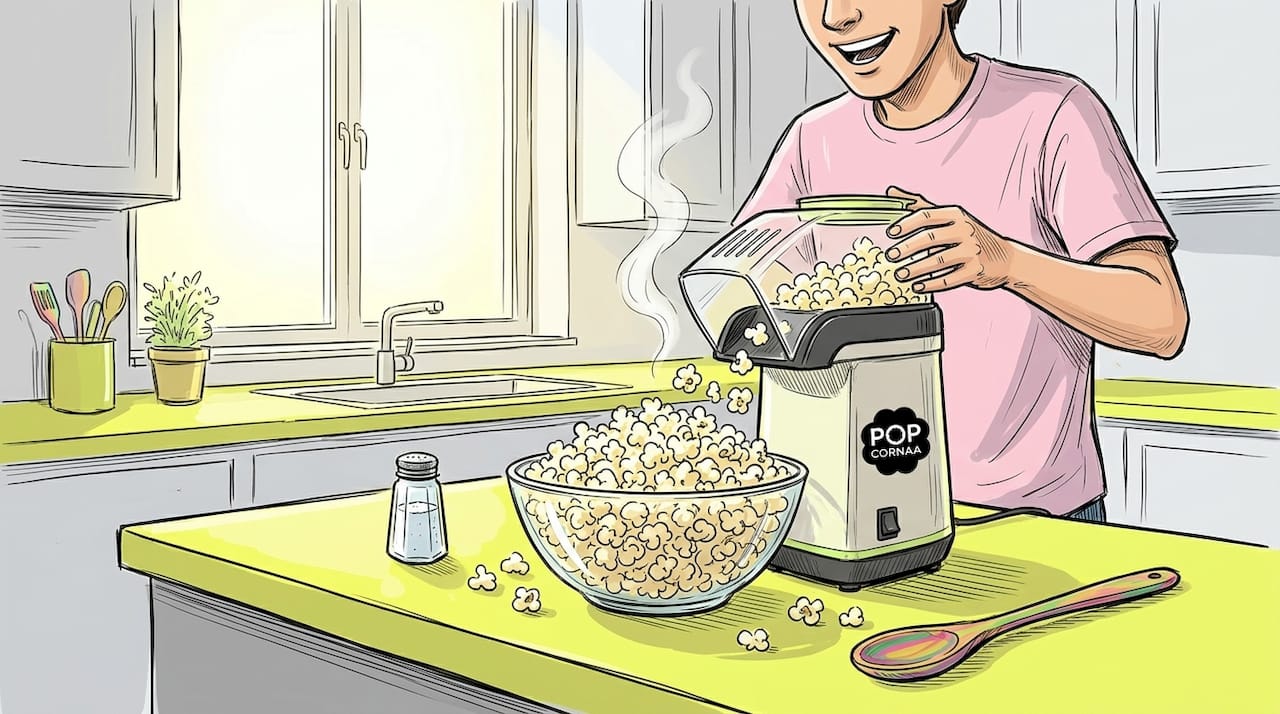
What makes air-popping distinct from other popcorn popping methods is simple: the heat source. A dedicated air popper appliance forces superheated air around the kernels at high speed, heating them evenly and uniformly without any contact with oil. Oil-based methods, whether stovetop or microwave, conduct heat through fat. That difference in heat transfer is exactly why the two methods produce noticeably different textures. You can learn more about the physics behind each kernel and what actually drives a clean pop.
Oil-popped corn tends to be slightly denser and richer because fat coats the kernel during the process, adding flavour but also calories. Air-popped corn is lighter, crispier, and has a more delicate crunch. Neither method is wrong. They are just different outcomes for different goals.
- Even heat distribution is why air poppers produce fewer unpopped kernels compared with stovetop methods where hot spots develop in pans.
- No oil means no Maillard browning, so air-popped popcorn stays a pale yellow rather than developing the toasty colour you see from oil popping.
- Expansion ratio in air-popped corn tends to be higher, meaning each kernel puffs out further, which contributes to the lighter mouthfeel.
- Hull integrity matters: older or improperly stored kernels lose internal moisture, which means they either pop poorly or not at all.
Pro Tip: Store your popping kernels in a sealed glass jar away from direct sunlight. Kernels that have dried out over time will not build enough internal steam to pop fully, resulting in a bowlful of hard, chewy half-pops.
Nutritional profile and real health benefits
Here is where things get genuinely interesting. Air-popped popcorn is a whole grain. That classification alone separates it from crisps, crackers, and most other bagged snacks on the shelf.
Per 100 grams, unseasoned air-popped popcorn provides approximately 382 calories, 78% carbohydrates, 12% protein, 4% fat, and 4% water. It is also a good source of riboflavin and several minerals. But the numbers that stop most people are the fibre and protein figures. Air-popped popcorn contains 14.5g of fibre and 12.9g of protein per 100 grams. For a snack food, that is genuinely impressive.
| Nutrient | Per 100g (air-popped) | Why it matters |
|---|---|---|
| Calories | ~382 kcal | Low in context: 3 cups = roughly 90–100 kcal |
| Dietary fibre | 14.5g | Supports digestion and sustained fullness |
| Protein | 12.9g | Reduces hunger between meals |
| Fat | 4g | Naturally low without added oil |
| Polyphenols | Up to 300mg per serving | Antioxidant activity concentrated in the hulls |
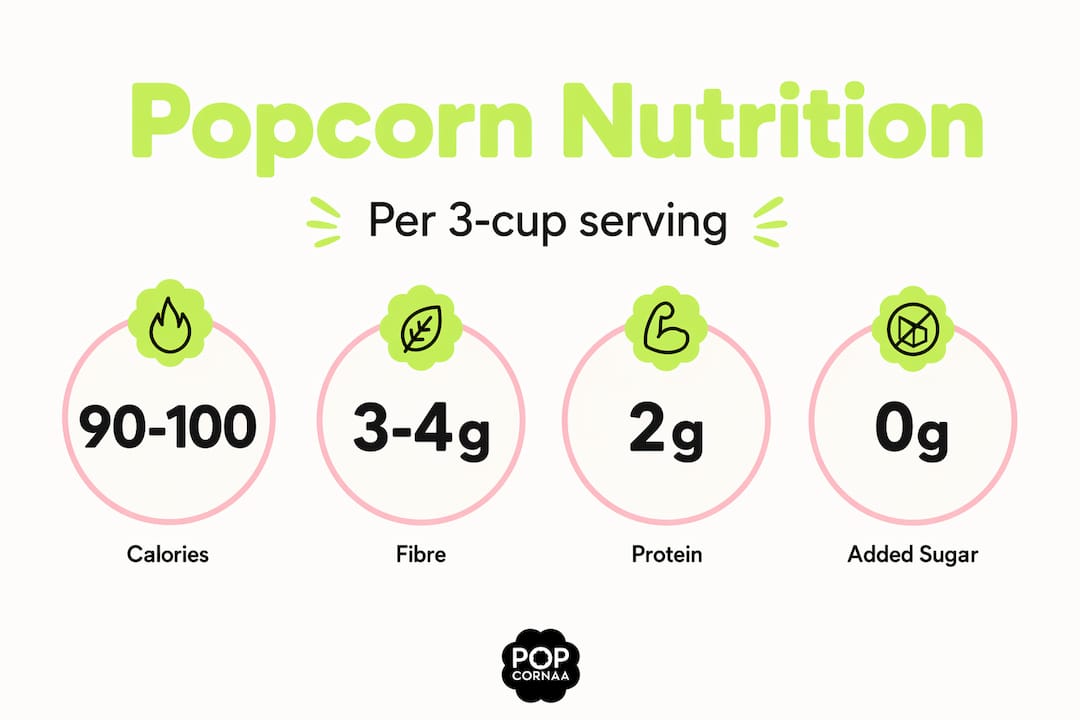
Three cups of plain air-popped corn contain only 90 to 100 calories, alongside 3 to 4 grams of fibre. That is a snack with real volume and staying power. Research also points to popcorn’s polyphenol content, with antioxidants concentrated mostly in the hulls reaching up to 300mg per serving. That places it alongside many fruits in terms of antioxidant contribution to your diet.
There is one thing worth being honest about, though. Preparation determines almost everything. One tablespoon of butter adds over 100 calories to your bowl. That single addition can transform what was a genuinely light snack into something far more calorie-dense than a packet of crisps. The popcorn itself is not the problem. What you put on it is. If you want the full picture on popcorn’s health credentials, the research consistently points back to preparation as the deciding factor.
Pro Tip: If you are watching your calorie intake, weigh your toppings rather than guessing. A light mist of olive oil from a spray bottle adds far less fat than a drizzle poured directly from the bottle.
How to air-pop popcorn at home
Knowing what is air popped popcorn is one thing. Making it well is another. The good news is that it does not require much skill or equipment. Here are the most reliable methods, ranked from simplest to slightly more hands-on.
-
Use a dedicated air popper appliance. This is the most straightforward approach. Air poppers are hands-off, take around three minutes, produce very few unpopped kernels, and require almost no cleanup. You measure kernels into the chamber, switch it on, and hold a bowl under the chute. Nothing else needed.
-
Try the paper bag microwave method. Place two to three tablespoons of kernels into a plain brown paper bag, fold the top over twice, and microwave on full power for two to three minutes. Listen carefully: stop the microwave when pops slow to about two seconds apart. This method produces excellent results with zero equipment investment.
-
Use a heavy-bottomed pot on the hob. Add a very small amount of high-smoke-point oil (such as coconut or rapeseed), just enough to barely coat the base, and heat on medium. Drop in two or three test kernels. When they pop, add the rest in a single layer and cover with a lid slightly ajar to let steam escape. Shake gently every thirty seconds.
-
Try a glass microwave bowl with a plate as a lid. A large microwave-safe bowl with a heavy plate on top works similarly to a pot. Add kernels, cover, and microwave for two to three minutes. The steam stays contained while the hot air circulates freely.
-
Avoid the air fryer for popping corn. Kernels can blow directly into the heating element during the process, which creates a fire risk. It is simply not worth it when better alternatives take the same amount of time.
Air popcorn machine tips worth remembering: always measure your kernels rather than guessing. Overcrowding the popping chamber leads to uneven popping and a lot of husks at the bottom of your bowl. And let the machine cool fully between batches.
Seasoning, flavouring, and creative uses
Plain air-popped popcorn is a genuinely neutral canvas. That is actually one of its biggest strengths. You are not fighting against an oily or heavily salted base when you season it yourself.
For savoury options, the classics work brilliantly:
- Nutritional yeast gives a cheesy, nutty flavour without any dairy. It also adds B vitamins, which makes it a favourite in vegan households.
- Smoked paprika and garlic powder create a warm, smoky depth with zero added calories.
- Cumin, coriander, and a pinch of chilli bring an earthy heat that pairs well with a squeeze of lime juice.
- Dried herbs like rosemary or thyme with a light misting of olive oil make for a genuinely elegant snack.
For those who prefer something sweet, a dusting of cinnamon and a tiny drizzle of maple syrup (used sparingly) transforms a plain bowl into something that feels indulgent but remains relatively light. The trick with any wet topping is to add it while the popcorn is still warm so it distributes evenly rather than pooling at the bottom.
Beyond snacking, air-popped popcorn has real culinary range. It works as a soup garnish in place of croutons, adding crunch without gluten or refined carbohydrates. Crushed finely, it can be used as a coating for oven-baked tofu or vegetables. Mixed into a trail mix with dried mango and toasted seeds, it adds bulk and a satisfying chew. Air-popped popcorn for healthy snacking also works well as a pre-meal nibble. Research suggests it may help stabilise blood glucose and reduce the tendency to overeat at the main meal.
Portion control is worth thinking about. A three-cup serving is a reasonable snack portion for most people. Beyond that, even low-calorie foods add up. Pairing your popcorn with a protein source, a boiled egg, a handful of edamame, or a small pot of hummus, gives the snack more staying power and prevents the hunger that tends to return quickly after carbohydrate-only snacking.
My honest take on air-popped popcorn
I have to be candid: when I first started looking seriously at what snack foods were doing to my family’s health, popcorn was not on my radar at all. It felt like a treat, full stop. What stopped me in my tracks was reading the actual fibre content. Fourteen grams per hundred grams. That is more than most vegetables.
What I have found in practice is that the air popper is one of those rare kitchen tools that actually gets used regularly. It takes less time than making toast. The mess is minimal. My children can help safely because there is no hot oil involved, which the research on air poppers confirms as a genuine advantage for families.
The pitfall I see most often is people treating the “healthy” label as a blank cheque. They pop a huge batch, tip half a block of butter over it, and then wonder why they feel heavy afterwards. The kernel is doing everything right. The toppings are the variable. I genuinely believe that once you stop automatically reaching for the butter, you start noticing how satisfying plain or lightly seasoned popcorn actually is.
There is also a wave of curiosity around gourmet and trending flavour directions for 2025 and beyond that I find genuinely exciting. Air-popped popcorn is no longer just a cinema snack or a diet food. It has earned a place in a thoughtful, flavour-forward approach to eating well.
— Emily
Try Popcornaa’s clean, vegan popcorn range
If explaining air-popped popcorn has made you want to actually eat some, Popcornaa has you covered.
[ ](https://www.popcornaa.com › pages › asian-fusion-taster-box)
Popcornaa’s entire range is 100% vegan and dairy-free, with no artificial flavourings or refined sugars. The focus on Asian-inspired and British flavours means there is always something unexpected to discover, whether you are snacking solo or looking for a gift. If you want to explore the range without committing to one flavour, the Asian Fusion Taster Box is a brilliant starting point. Five curated bags, all clean, all genuinely delicious. You can also build your own snack box for a fully personalised selection.
FAQ
What is air-popped popcorn?
Air-popped popcorn is made by heating kernels with hot air rather than oil, causing them to burst and expand into light, crispy puffs. It contains no added fat unless toppings are applied after popping.
How many calories are in air-popped popcorn?
Three cups of plain air-popped popcorn contain approximately 90 to 100 calories, making it one of the lowest-calorie whole-grain snack options available.
How do I air-pop popcorn without a machine?
Place two to three tablespoons of kernels in a paper bag, fold the top over twice, and microwave on full power for two to three minutes. Stop when the popping slows to one pop every two seconds.
Is air-popped popcorn good for weight management?
Yes. Its high fibre content promotes fullness, and its low calorie density means large-volume snacking remains controlled. The key is avoiding high-calorie toppings like butter or heavily salted coatings.
Can I use an air fryer to pop popcorn?
It is not recommended. Kernels can be blown into the heating element during the popping process, which poses a fire hazard. A dedicated air popper or the paper bag microwave method is far safer.