

Popcorn Flavor Fusion: 3 Ready Recipes and Templates for Home Cooks
Popcorn flavour fusion means combining two or more distinct taste profiles, sweet and salty, spicy and umami, citrus and roast, into a single blend that tastes deliberate rather than accidental. The rule that makes it work every time: pick one contrast (a flavour pair that pulls in opposite directions) and one binder (fat, salt or umami) to hold the whole thing together. Try it now: toss warm popcorn in melted butter, then dust with equal parts sugar and salt. That’s fusion in thirty seconds.
TL;DR:
- Salt enhances sweetness and suppresses bitterness, making it a versatile binder for balancing contrast in flavour blends.
- Umami deepens the overall mouthfeel and holds disparate notes together without tasting “savory” on its own.
- Flavour preservation is best within one day of popping, as aroma compounds fade quickly, so fresh preparation is key.
- Proper seasoning involves evenly coating warm popcorn with fine powders and adjusting salt or sweetness before large batches.
- Bold, layered flavour profiles that emphasize umami and contrast are trending, particularly with vegan and plant-based ingredients.
What Makes Popcorn Flavour Combinations Actually Work?
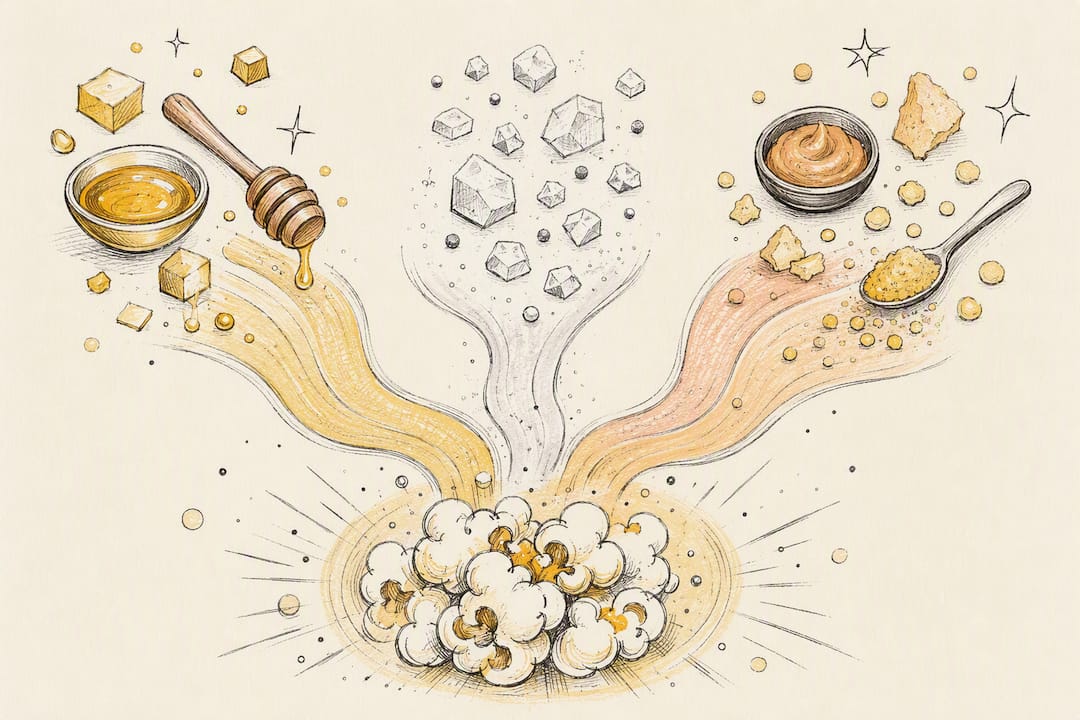
Salt is the workhorse of popcorn seasoning, but its real job isn’t making things salty. It suppresses bitterness and sharpens sweetness, which is exactly why Garrett Popcorn’s cheese and caramel “Chicago Mix” has stayed popular for decades. Sweetness reads as energy, salt reads as mineral replenishment, and the contrast between the two keeps you reaching back into the bowl.
Umami works differently. Compounds like glutamate, along with kokumi interactions, don’t add a flavour of their own so much as thicken everything around them, binding disparate notes together and boosting how full and rounded a bite feels. This is why a pinch of nutritional yeast or miso in a sweet blend doesn’t taste “savoury” exactly. It just makes the sweetness taste more substantial.
Then there’s aroma. The roasted, nutty base note in popcorn comes from Maillard volatiles created during popping, and those compounds are fragile. That roast character is what gives your fusion blend its backbone, everything else is layered on top of it.
Good fusion blends balance two forces:
- Contrast: opposing notes (sweet/salty, spicy/cooling, bright/roasted) create tension that keeps the palate interested.
- Continuity: a binding note, usually salt, fat or umami, stops the contrast from feeling chaotic.
Pro Tip: If a blend tastes “busy” rather than “complex”, you probably have contrast without continuity. Add a pinch more salt or a dash of umami powder before reaching for more spice.
Popular Fusion Templates You Can Remix
These pairings aren’t recipes yet, just proven starting points. Each works because of a specific mechanism, so once you understand why, you can swap ingredients freely.
- Sweet + salty (caramel + sea salt): salt blocks bitterness in the caramel and makes it taste sweeter, the classic mechanism behind the Chicago Mix.
- Spicy + sweet (chilli + maple or brown sugar): sugar tempers capsaicin’s burn while letting the fruitiness of the chilli come through.
- Umami + citrus (nutritional yeast + lime zest): umami adds body while citrus keeps the blend from tasting heavy.
- Smoke + sweet (smoked paprika + honey or agave): roasted, phenolic notes pair naturally with caramelised sugar.
- Herbaceous + salty (rosemary or nori + soy or tamari): green, resinous notes need a salty anchor or they read as bitter.
- Umami + umami layering (miso + toasted sesame): doubling umami sources deepens mouthfeel rather than making things taste “salty twice”.
- Sour + rich (tamarind or citric acid + coconut oil butter): acidity cuts through fat and stops a rich blend from feeling cloying.
For vegan swaps, nutritional yeast, miso paste (thinned and used sparingly) and tamari all deliver umami without dairy or fish sauce. Each template should move through a clear palate progression, an opening note, a middle build, and a savoury or sweet finish, rather than hitting every flavour at once.
How Do You Build a Fusion Blend Step by Step?
Getting the technique right matters more than the recipe. Here’s the sequence that works reliably at home.
- Pop and hold: pop your corn (air-popped or stovetop both work) and keep it warm and uncovered. Trapped steam turns kernels soggy before seasoning even goes on.
- Choose your binder: melted butter gives richness and helps sugar-based coatings cling, but browns quickly, so work fast. Neutral oil (avocado or refined coconut) is more forgiving and vegan-friendly. Aquafaba or a light simple syrup works if you want a fat-free, shrink-free coating.
- Toss for even coating: pour the binder over warm popcorn in a large bowl and toss with your hands or salad tongs before adding any powder. Seasoning sticks to fat, not to bare kernels.
- Add seasoning powder in stages: a solid starter ratio is 1 teaspoon salt, sugar, and umami powder (nutritional yeast or a mushroom blend) in appropriate amounts per typical serving of popped corn. Scale proportionally for bigger batches.
- Taste, adjust, repeat: season a small handful first. Adjust salt or sweetness before committing a whole batch, since fixing an oversalted bowl is nearly impossible.
Pro Tip: Grind your seasoning powders finer than you think you need. Coarse powder falls to the bottom of the bowl; a fine, even dust clings to every kernel and gives consistent flavour in every handful.
Three Ready Fusion Recipes With Clear Measurements
Salted caramel and toasted sesame (serves 2)
- 60g popped corn, 2 tbsp coconut sugar melted with 1 tbsp vegan butter and a pinch of sea salt, 1 tsp toasted sesame seeds folded through while warm.
- Expected profile: rich and nutty upfront, salty finish, sesame adds a savoury crunch that stops the caramel feeling one-note.
Chilli garlic and soy caramel, inspired by Kikkoman’s fusion popcorn duo
- 60g popped corn split into two batches. Batch one: 1 tsp oil, ½ tsp chilli powder, ¼ tsp garlic powder. Batch two: 1 tbsp sugar melted with 1 tsp tamari (use gluten-free tamari if needed, and taste before adding extra salt, soy is already salty).
- Serve the two batches side by side rather than mixed, so each flavour stays legible. Expected profile: heat first, then a rounded soy-sweet finish.
Nutritional yeast, maple and smoked paprika
- 60g popped corn, 1 tbsp melted vegan butter, 1 tbsp nutritional yeast, 1 tsp maple syrup warmed slightly, ¼ tsp smoked paprika.
- Expected profile: savoury and cheesy from the yeast, a light sweet lift from the maple, smoke lingering on the finish. One of the easiest vegan umami blends to get right on a first attempt.
How Long Does Flavoured Popcorn Stay Fresh?
Popcorn’s roasted aroma compounds fade fast. Measurements of roast-smelling odorants show key volatiles drop significantly within about a week of popping, reducing the roast aroma intensity, so fusion blends taste best made and eaten the same day.
- Store leftovers in an airtight container at room temperature, never the fridge, which introduces moisture and speeds sogginess.
- Skip plastic bags for anything with a fat-based coating, they trap oil and turn the texture greasy.
- Re-crisp briefly in a low oven (roughly 150°C for 3 to 4 minutes) if the batch has softened.
- Plate contrasting flavours in separate small bowls rather than one mixed heap, it keeps textures distinct and looks more deliberate for sharing.
Author Perspective: Lab-Tested Tips and 2026 Trend Notes
Small adjustments make the biggest difference when testing fusion blends. Powder particle size matters more than most home cooks expect, very fine powder clings evenly but clumps if the popcorn is even slightly damp, while coarser grinds need a stronger binder to stick at all.
- Test seasoning on a small handful before committing a full batch, humidity changes how fast coatings absorb.
- Weigh your salt-to-sugar ratio rather than eyeballing it, small shifts change the whole balance.
- Watch for 2026’s shift towards maximalist, layered flavour, bold, umami-forward blends with a bright top note and a savoury finish are outperforming single-note snacks.
- Plant-based savoury toppers (miso, dried mushroom powder, tamari) are showing up more often as home cooks lean into umami over pure sweetness.
For more pairing inspiration, PopCornaa’s flavour pairing guide and flavour science breakdown go deeper into the mechanics behind specific pairings.
Why Most Fusion Advice Misses the Point
Most guides to flavour fusion treat it as a numbers game, more spices, more layers, more intensity. That’s backwards. The best fusion snacks aren’t the ones piling on the most notes, they’re the ones where every note stays legible across the bite. A blend with five competing flavours usually tastes muddier than one with two well-chosen opposites and a proper binder.
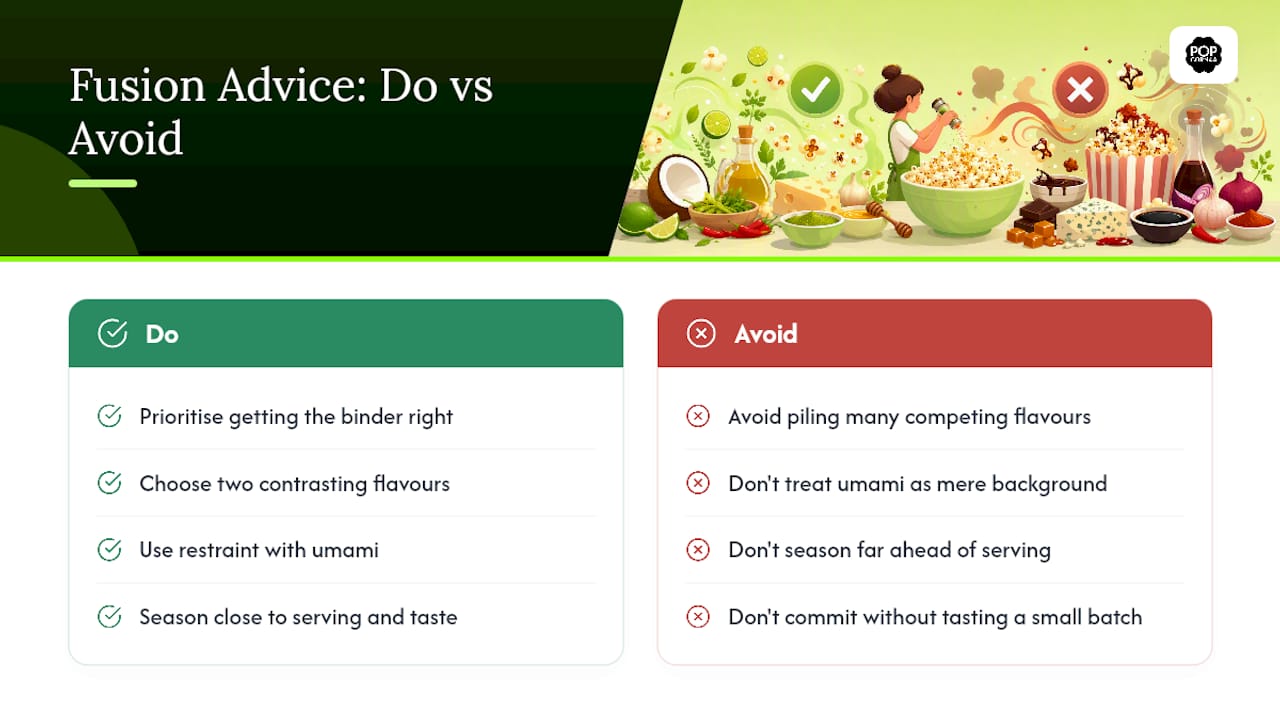
The conventional wisdom also underrates restraint with umami. People treat it as a background seasoning when it’s closer to structural glue, it’s the difference between a blend that tastes like separate ingredients thrown together and one that tastes considered. If you take one thing from this article, prioritise getting the binder right before you touch the spice rack. Contrast without continuity is just noise.
What the research keeps confirming is that timing matters as much as ratios. Season close to serving, taste before you commit to a full batch, and treat every blend as a draft you’re allowed to adjust. That’s the actual skill of flavour fusion, not memorising combinations, but learning to taste critically as you go.
— Emily
Try Fusion Flavours Without the Guesswork
Reading about contrast and binders is one thing, tasting five fusion styles side by side in one sitting teaches your palate faster than any ratio chart. PopCornaa’s Newbie Asian Fusion Taster Box packs five distinct vegan flavour bags into one box, giving you a direct comparison of how umami, spice and sweetness behave across different blends before you commit to building your own from scratch.
[ ](https://www.popcornaa.com › pages › asian-fusion-taster-box)
Working through the smaller bags first is genuinely useful groundwork. You get to identify which contrast styles you gravitate towards and which binder textures you prefer, sticky caramel versus a drier umami dust, before scaling anything up in your own kitchen. It’s a shortcut past the trial-and-error stage most home cooks go through when they start experimenting. Visit a taster box product page to pick your selection and start comparing flavours.
Sources
For deeper detail on the science behind these blends, read the WBEZ breakdown of sweet-salty appeal, the PMC review of umami and kokumi mechanisms, and broader sensory context in this culinary experience guide.
- The science behind Garrett Popcorn’s “Chicago Mix” - WBEZ
- The flavor-enhancing action of glutamate and kokumi mechanisms - PMC
- Quantitation of important roast‑smelling odorants in popcorn - TUM portal
FAQ
Is popcorn the unhealthiest snack?
No. Plain, air-popped popcorn is a wholegrain, fibre-rich snack; what makes it less healthy is heavy butter, sugar or oil coatings added afterwards, not the popcorn itself.
What are the main flavours of popcorn?
Classic categories include sweet (caramel, toffee), salty (sea salt, cheese-style), spicy (chilli, cajun), and savoury-umami (nutritional yeast, soy, smoked paprika), with fusion blends combining two or more of these.
How do they flavour popcorn?
Popcorn is typically coated with a binder, melted butter, oil or a light syrup, then dusted or tossed with seasoning powder or a warm glaze so the flavour adheres evenly to every kernel.
What do dentists think of popcorn?
Dentists generally consider plain popcorn low-risk for teeth, though sticky caramel coatings and unpopped kernels can pose a chipping or sticking risk, so moderation with sugary coatings is sensible.