

Explaining popcorn flavour trends: your 2026 guide
TL;DR:
- Popcorn flavours are shifting toward international, premium, and multi-sensory taste experiences in 2026.
- Asian-inspired flavours like matcha, hot honey, and kimchi are rapidly gaining popularity, driven by consumer familiarity.
Popcorn flavour trends are defined by the shift from simple salted or sweet profiles towards globally inspired, premium, and multi-sensory taste experiences. In 2026, matcha, hot honey, and kimchi are the fastest-growing flavour profiles in the UK popcorn market, with matcha alone growing by over 158%. Asian-inspired flavour claims across UK food and drink are up 20% overall, with Japanese-themed claims rising by 36.9%. Explaining popcorn flavour trends means understanding why these shifts are happening, what is driving consumer appetite, and how brands like Popcornaa are turning those signals into genuinely exciting products.
Which global flavours are shaping popcorn trends in 2026?
Asian-inspired profiles have moved firmly from niche curiosity to mainstream expectation in the UK snack aisle. High-street dining chains like Wagamama and Itsu have spent years normalising umami, miso, and matcha flavours for British palates. That familiarity has created a ready audience for popcorn brands willing to go further.
The fastest-growing flavour profiles in the UK popcorn market right now are:
- Matcha — earthy, slightly bitter, and visually striking in its green hue. Growth of over 158% makes it the standout performer.
- Hot honey — a sweet and spicy hybrid that taps into two dominant snack trends simultaneously.
- Kimchi — fermented, tangy, and deeply savoury. Its probiotic associations add a health dimension that resonates with wellness-conscious shoppers.
- Miso caramel — a bridge between familiar sweetness and Japanese umami depth.
- Yuzu citrus — bright, floral, and unlike anything in the traditional British snack repertoire.
What makes these flavours stick is not just novelty. Asian flavour anticipation is now well-established in the UK because high-street brands have normalised these profiles in fast-casual dining. Consumers already know what matcha tastes like from their morning latte. That prior exposure dramatically lowers the barrier to trying it on popcorn.
Pro Tip: If you want to experiment with Asian-inspired popcorn at home, start with a miso butter base. It delivers umami depth without overwhelming heat, making it a reliable entry point for guests who are new to bold flavours.
Popcornaa’s Asian-inspired popcorn range reflects exactly this logic. The brand’s ‘Our Asian Flavourz’ collection is built around profiles that feel adventurous but grounded in recognisable taste references. That balance is what separates a trend that lasts from one that fades after a single season.
How are premiumisation and limited editions changing popcorn pricing?
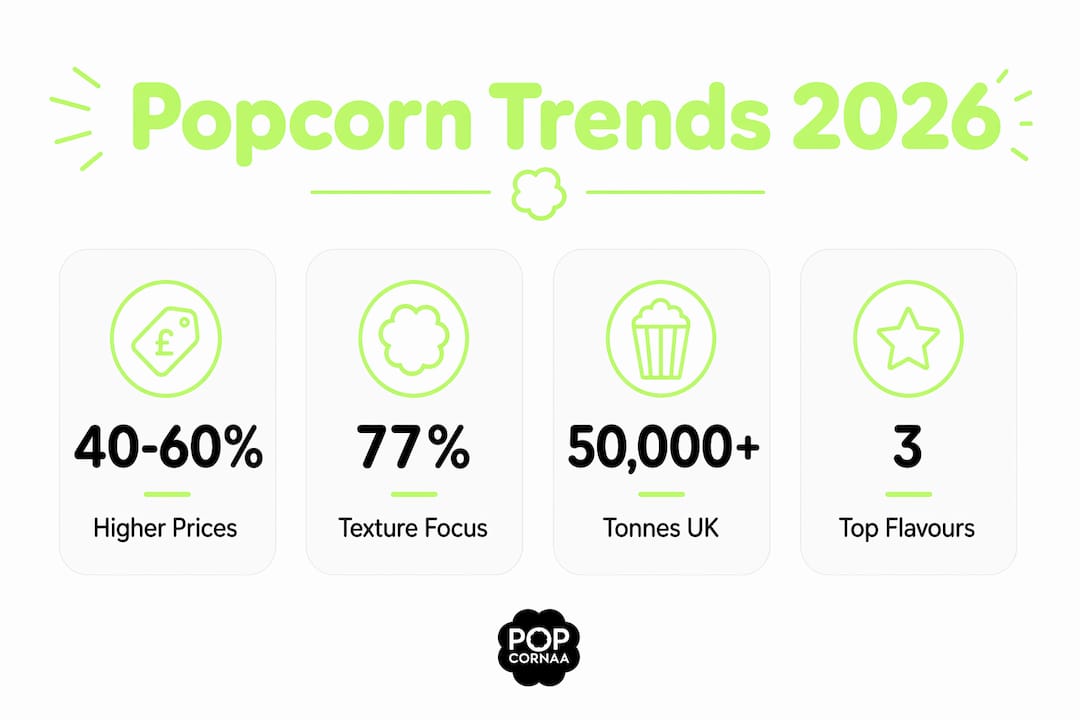
Premium popcorn is no longer a niche indulgence. Limited-edition seasonal kits and spicy/sweet hybrid flavours now account for 18–22% of new European popcorn product launches. They command 40–60% higher retail prices than standard lines. That is a significant premium for what is, at its core, a humble grain.
Premium popcorn in the UK typically retails between £5.50 and £8.00 per bag. That price point is not accidental. It reflects a deliberate strategy built on four pillars:
- Exotic or functional ingredients — matcha, activated charcoal, truffle oil, and adaptogenic mushrooms signal quality and justify the price.
- Limited availability — scarcity drives urgency. Seasonal Halloween or Christmas flavour kits sell out precisely because shoppers know they will not return until next year.
- Experiential packaging — gift-ready boxes, curated tasting sets, and personalised snack mixes transform popcorn from a casual snack into a considered purchase.
- Social currency — unique flavour trials drive social media engagement among younger consumers who share unboxing moments and flavour reactions online.
The social media dimension is worth pausing on. Limited-edition popcorn releases function as social currency for younger shoppers. A bag of yuzu white chocolate popcorn is not just a snack. It is content. Brands that understand this design their limited editions with shareability in mind, from the colour of the bag to the name of the flavour.
Home-snacking diversification has accelerated this trend. As people invest more in quality at-home food experiences, premium snack positioning in the gourmet food sector has become a reliable growth lever. Popcorn sits at the intersection of affordable indulgence and genuine flavour craft, which is a rare and valuable position.
What role do sensory experiences and texture play in new popcorn flavours?
Flavour alone does not sell a snack in 2026. 77% of UK adults consciously try to savour eating experiences, prioritising multi-sensory engagement that combines texture, sound, and emotional triggers like nostalgia. That figure is striking. It tells you that the crunch of popcorn is not incidental. It is part of the product.
“Consumers increasingly eat with their eyes, ears, and emotions. Texture and aesthetic elements often drive snack purchasing decisions beyond flavour alone. Savoury snacks appear at 60% of at-home hosting occasions, and sweet snacks at 57%, underscoring how deeply embedded sensory snacking has become in British social life.”
Texture contrast is now a deliberate design choice in premium popcorn. Think of a kernel coated in a hard caramel shell that gives way to a soft, yielding centre. Or a miso-glazed piece with a crystallised sugar crust that shatters on the first bite. These contrasts create what food scientists call a “multi-phase texture experience,” and they are extraordinarily effective at making a snack feel special.
Visual appeal drives discovery before a single kernel is eaten. Sensory and visual engagement are key to consumer discovery, with aesthetic elements often influencing purchasing decisions as much as flavour claims. A bag of vivid green matcha popcorn catches the eye on a shelf. A deep red kimchi-dusted variety signals heat and adventure. Colour communicates flavour before the packet is opened.
Nostalgia adds another layer. Classic flavours like toffee or cheese are being reimagined with premium twists, connecting emotional memory to new taste experiences. That combination of the familiar and the unexpected is one of the most reliable formulas in food product development.
Pro Tip: When tasting a new popcorn flavour, eat the first piece slowly and without distraction. The full sensory experience, including the sound of the crunch and the aroma that follows, tells you far more about the product than eating it while scrolling your phone.
What technical and market factors support popcorn flavour innovation?
The technical side of popcorn flavour development has advanced considerably. Natural encapsulation systems now allow high-impact flavours to be delivered onto popcorn while maintaining gluten-free and clean-label status, avoiding malt and wheat carriers entirely. This matters because it opens premium flavour development to a much wider consumer base, including the growing number of shoppers who actively avoid gluten.
The market structure supporting these innovations looks like this:
| Growth driver | How it works |
|---|---|
| Clean-label encapsulation | Delivers bold flavours without wheat or malt carriers, preserving gluten-free status |
| Direct-to-consumer subscriptions | DTC subscription models allow niche flavours to be tested before committing to retail |
| Foodservice expansion | Hotel minibars and cinema concessions offer higher margins than retail shelf space |
| Pre-popped flavoured segment | Pre-popped volumes are growing at 7–9% annually in the UK |
| Sustainability pressures | Packaging innovation and reduced-waste production are becoming baseline expectations |
The direct-to-consumer model deserves particular attention. Subscription snack boxes allow small brands to test genuinely unusual flavours, think black sesame, pandan, or shiso, and gather real consumer data before committing to large retail runs. This reduces the financial risk of flavour innovation and accelerates the pipeline from concept to shelf.
Foodservice channels are equally important. Premium popcorn brands that supply hotel minibars and cinema concessions secure higher margins and avoid the price compression that comes with supermarket listings. That revenue stability funds further flavour research and development. Gourmet food innovation in premium snack channels reflects exactly this dynamic, where exclusivity and channel strategy work together to protect brand value.
Popcorn kernel throughput in the UK is expected to exceed 50,000 tonnes annually by 2026. That volume signals a category with genuine industrial momentum, not just a passing food trend.
Key takeaways
Popcorn flavour innovation in 2026 is driven by Asian-inspired profiles, premium pricing strategies, multi-sensory design, and clean-label technical advances that together are reshaping the UK snack category.
| Point | Details |
|---|---|
| Asian flavours lead growth | Matcha, hot honey, and kimchi are the fastest-growing profiles, with matcha up over 158% in the UK. |
| Premium pricing is justified | Limited-edition and hybrid flavours command 40–60% higher retail prices through ingredient quality and scarcity. |
| Sensory design drives purchase | 77% of UK adults prioritise multi-sensory eating, making texture and visual appeal as important as flavour. |
| Clean-label tech expands reach | Natural encapsulation delivers bold flavours without wheat or malt, keeping products gluten-free and accessible. |
| DTC models reduce innovation risk | Subscription boxes let brands test niche flavours and gather data before committing to retail distribution. |
What I have learned from watching popcorn trends up close
I will be honest with you. When I first started paying close attention to popcorn flavour trends, I expected the story to be simple: a few new seasonings, a bit of social media buzz, and then back to basics. What I found was something far more interesting.
The brands that are genuinely winning in this space are not just chasing whatever flavour went viral last month. They are doing the harder work of understanding why a flavour resonates. Matcha is not popular because it is exotic. It is popular because millions of UK consumers already encounter it in coffee shops and feel comfortable with it. The popcorn just gives them a new context for a familiar pleasure.
What I find most compelling is the sensory design piece. I used to think texture was secondary to flavour. I was wrong. The crunch of a well-made piece of popcorn, the way a caramel shell fractures, the lingering warmth of a chilli finish: these are not accidents. They are engineered. And the brands that get this right, including Popcornaa with its Asian-inspired flavour collections, are the ones building genuine loyalty rather than one-time curiosity purchases.
My honest advice for anyone following these trends: look at what is happening in fast-casual dining six to twelve months before it appears in snack aisles. Wagamama’s menu today is often a reliable preview of tomorrow’s popcorn flavour. That lag is your window to spot what is coming before it arrives.
— Emily
Popcornaa’s Asian Fusion Taster Box: try the trends yourself
If reading about matcha, kimchi, and hot honey has made you want to actually taste where popcorn flavour innovation is heading, Popcornaa has made that very easy.
[ ](https://www.popcornaa.com › pages › asian-fusion-taster-box)
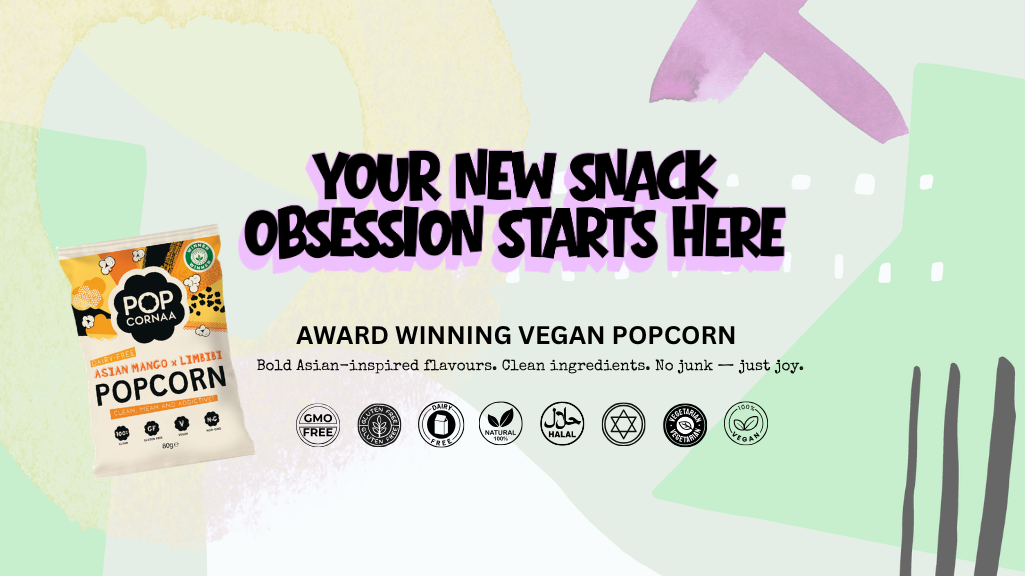
The Newbie Asian Fusion Taster Box brings together five bags of Popcornaa’s best Asian-inspired vegan popcorn flavours in a single curated selection. Every bag is plant-based, made without refined sugars where possible, and designed to give you a genuine sense of the flavour profiles shaping the 2026 snack market. It is the kind of thing that works brilliantly as a gift, a sharing moment, or simply a personal tasting session at home. You can also browse the full Asian Fusion collection to find the right size and combination for your needs.
FAQ
What are the fastest-growing popcorn flavours in the UK right now?
Matcha, hot honey, and kimchi are the fastest-growing profiles in the UK popcorn market in 2026, with matcha growing by over 158%. Asian-inspired flavour claims across UK food and drink are up 20% overall.
Why does premium popcorn cost so much more than standard varieties?
Limited-edition and hybrid flavour popcorn commands 40–60% higher retail prices than standard lines, typically retailing between £5.50 and £8.00 per bag in the UK. Exotic ingredients, scarcity, and gift-ready packaging all contribute to the premium price point.
How does texture affect popcorn flavour perception?
Texture is a core part of the eating experience, not a secondary detail. 77% of UK adults consciously try to savour snacks, and multi-sensory engagement combining crunch, aroma, and visual appeal directly influences how satisfying a flavour feels.
What does clean-label mean in popcorn production?
Clean-label popcorn uses natural encapsulation systems to deliver flavour without malt or wheat carriers, keeping the product gluten-free and free from artificial additives. This approach is capturing premium shelf space as shoppers increasingly read ingredient lists.
How can I spot the next big popcorn flavour trend?
Watch fast-casual dining menus six to twelve months ahead of the snack aisle. Flavours that normalise in high-street restaurants, such as miso, yuzu, and pandan, tend to migrate into premium snack products once consumer familiarity reaches a tipping point.