

Guide to Asian popcorn flavours: bold tastes explored
TL;DR:
- Asian popcorn flavors feature umami-rich, layered seasonings like miso, seaweed, gochujang, and wasabi. These flavors have gained popularity in the UK due to consumer interest in authentic, regional tastes and effective seasoning techniques. The market for value-added Asian popcorn is projected to grow steadily, with home recipes becoming increasingly accessible.
Asian popcorn flavours are defined by umami-rich, layered seasonings drawn from East and South-East Asian culinary traditions, including wasabi, miso, seaweed, gochujang, and sweet chilli. This guide to Asian popcorn flavours covers the full spectrum of what makes these profiles so distinct, why they have captured the UK snacking market, and how you can recreate them at home. Value-added popcorn flavours are expected to grow 9–12% annually to 2035, outpacing basic kernel demand. That figure tells you something important: this is not a passing trend. Popcornaa has been at the forefront of bringing these profiles to British snack lovers, and the appetite for authentic Asian-inspired popcorn has never been stronger.
What are the key Asian popcorn flavour profiles and examples?
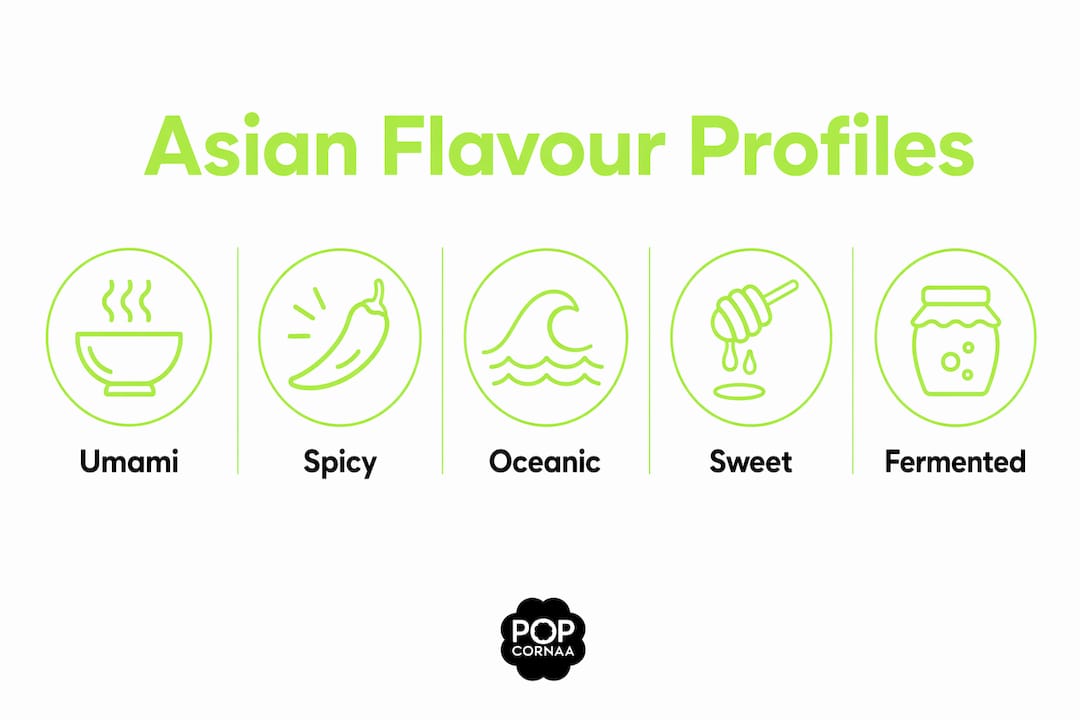
Asian popcorn flavours sit across four broad taste categories: umami-savoury, spicy-fermented, oceanic-mineral, and sweet-heat. Each category draws on ingredients that are deeply embedded in regional cooking traditions, and each translates surprisingly well onto popcorn.
Wasabi
Wasabi delivers a sharp, sinus-clearing heat that differs entirely from chilli. It comes from the Japanese horseradish plant and produces a nasal warmth rather than a tongue burn. On popcorn, wasabi seasoning is typically blended with a light salt base and sometimes a touch of soy powder to round out the sharpness. The result is bold, clean, and addictive.

Seaweed and nori
Seaweed, particularly nori (the dried sheet used in sushi), adds a mineral, oceanic depth to popcorn. Nori flakes are ground into a fine powder and combined with sea salt and sometimes sesame. The flavour is subtle at first, then builds into a satisfying savoury finish. It is one of the most accessible Asian flavours for people new to this style of snacking.
Miso
Miso is a fermented soybean paste used across Japanese cooking. Its flavour is deeply savoury, slightly sweet, and complex. As a popcorn seasoning, miso powder works beautifully with butter or coconut oil, creating a coating that is rich without being heavy. White miso gives a milder, sweeter note; red miso delivers a more intense, earthy punch.
Korean BBQ and gochujang
Korean BBQ flavour on popcorn typically combines gochujang (a fermented red chilli paste), garlic, soy, and a touch of sweetness. The result is smoky, spicy, and deeply savoury all at once. Gochujang in particular has moved from specialist Korean grocers to mainstream UK supermarkets, making it one of the most recognised Asian flavours in British food culture today.
Sweet chilli
Sweet chilli is the most approachable entry point on any Asian popcorn flavours list. It balances sugar, vinegar, and mild chilli heat in a way that feels familiar yet distinctly Asian in origin. On popcorn, it creates a sticky, glossy coating with a gentle warmth that lingers.
| Flavour | Taste notes | Heat level | Umami intensity |
|---|---|---|---|
| Wasabi | Sharp, nasal heat, clean | High | Low |
| Seaweed/nori | Oceanic, mineral, savoury | None | Medium |
| Miso | Earthy, sweet, fermented | None | Very high |
| Korean BBQ/gochujang | Smoky, spicy, sweet | Medium-high | High |
| Sweet chilli | Sweet, tangy, mild heat | Low | Low |
Pro Tip: Mix nori powder with white miso powder in a 2:1 ratio for a seasoning blend that delivers both oceanic and fermented depth in a single coating.
How have Asian popcorn flavours grown in popularity and why?
The rise of Asian-inspired popcorn in the UK is rooted in a broader shift in consumer taste. 78% of UK shoppers now purchase Asian-inspired snacks, reflecting a clear move towards authentic, layered flavour profiles. That is not a niche figure. It means the majority of British snack buyers are already comfortable with these tastes.
A concept called “taste tourism” sits at the heart of this shift. Taste tourism describes the way consumers explore global flavours conveniently through snack formats, without needing to travel or cook elaborate meals. Popcorn is the perfect vehicle for this. It is light, shareable, and takes on seasoning exceptionally well.
Familiarity has also played a decisive role. High-street chains like Wagamama and Itsu have introduced millions of British diners to gochujang, miso, and matcha over the past decade. Gochujang and matcha are now standard desirable flavours rather than exotic novelties. That familiarity removes the hesitation many shoppers once felt when picking up an unfamiliar snack.
The numbers back this up clearly:
- Searches for Korean-style products rose 51% year-on-year in the UK.
- Searches for Japanese products rose 16% over the same period.
- 43% of UK households purchased East Asian snacks within a six-month window.
“The success of Asian snacking in the UK is rooted in familiarisation via popular chains, making flavours like gochujang and matcha expected rather than novel. Consumers are no longer experimenting. They are seeking out what they already know they enjoy.”
This shift matters for anyone interested in popcorn flavour innovation, because it means the market has moved past novelty. Authenticity is now the competitive standard.
What seasoning techniques define great Asian popcorn?
The difference between a forgettable Asian-inspired popcorn and one that genuinely captures a regional flavour comes down to technique. Authentic seasoning is not simply about adding a single ingredient. It is about layering.
Co-development with specialist flavour houses allows brands to create popcorn-specific seasoning solutions that maintain flavour adhesion and shelf stability across varying storage conditions. This matters because popcorn is porous and fragile. A seasoning that works on crisps will not automatically work on popcorn. The fat content, particle size, and application method all need to be calibrated specifically for the kernel.
Successful Asian popcorn flavours balance umami, heat, and textural contrast, often incorporating ingredients uncommon in Western snacks, such as kombu, shiitake, and specific fermented condiments. Kombu adds a deep oceanic umami without any fishiness. Shiitake powder brings an earthy, meaty depth. Fermented condiments like gochujang and miso contribute complexity that single-note seasonings simply cannot replicate.
Emerging seasoning trends also include “swicy” profiles, which combine sweet and spicy notes in a single coating. This pairing works particularly well on popcorn because the natural sweetness of the kernel softens the heat, creating a balanced bite.
| Technique | Key ingredients | Effect on popcorn |
|---|---|---|
| Umami layering | Miso, kombu, shiitake powder | Deep, complex savoury base |
| Swicy coating | Gochujang, honey, rice vinegar | Sweet heat with sticky finish |
| Oceanic mineral blend | Nori, sea salt, sesame | Light, savoury, aromatic |
| Fermented drizzle | Gochujang thinned with oil | Intense, smoky, spicy glaze |
Pro Tip: Apply seasoning to popcorn while it is still warm and lightly oiled. The heat opens the surface of the kernel, allowing powders to adhere more evenly and intensely.
How can you make Asian-inspired popcorn at home?
Making Asian-inspired popcorn at home is genuinely straightforward once you have the right ingredients. The key is sourcing quality base components and applying seasoning correctly. Most of what you need is available in large supermarkets or Asian grocery stores.
Three starter blends to try
Miso butter popcorn
- Pop your kernels using coconut oil or a neutral vegetable oil.
- Melt one tablespoon of unsalted butter (or vegan butter) in a small pan.
- Whisk in one teaspoon of white miso paste until fully combined.
- Drizzle the miso butter over warm popcorn and toss immediately.
- Finish with a pinch of sea salt and toasted sesame seeds.
Seaweed salt popcorn
- Grind two sheets of toasted nori in a spice grinder until fine.
- Mix the nori powder with half a teaspoon of flaky sea salt.
- Pop your kernels and toss with a light coating of sesame oil.
- Sprinkle the seaweed salt blend over the popcorn while warm.
Gochujang drizzle popcorn
- Thin one tablespoon of gochujang paste with one teaspoon of rice vinegar and one teaspoon of honey.
- Warm the mixture gently in a pan until it loosens.
- Pop your kernels and spread them on a baking tray.
- Drizzle the gochujang mixture over the popcorn and toss to coat.
- Bake at 160°C for five minutes to set the glaze.
For sourcing, Asian popcorn recipes work best with ingredients bought from dedicated Asian grocery stores or the world food aisle in larger supermarkets. Look for:
- White or red miso paste (refrigerated section)
- Gochujang paste (Korean section or online)
- Nori sheets (Japanese section)
- Toasted sesame oil (Asian cooking oils)
- Kombu or shiitake powder (health food stores or online)
Pro Tip: Butterfly or mushroom kernels both work for Asian seasonings, but mushroom kernels have a denser, rounder surface that holds powdered blends more evenly. If you are making a drizzle-style coating, either variety works well.
If you want to explore unique popcorn flavour combinations beyond these three, the principles remain the same: balance umami with a contrasting note (heat, sweetness, or acidity), apply seasoning to warm, lightly oiled popcorn, and taste as you go.
Asian-inspired popcorn also fits naturally into healthy vending and snack formats, which is part of why these flavours are appearing in more grab-and-go settings across the UK.
Key takeaways
Asian popcorn flavours succeed because they layer umami, heat, and textural contrast in ways that Western seasoning traditions rarely combine.
| Point | Details |
|---|---|
| Flavour profiles are distinct | Wasabi, miso, nori, gochujang, and sweet chilli each deliver a unique taste experience on popcorn. |
| UK demand is mainstream | 78% of UK shoppers buy Asian-inspired snacks, and searches for Korean products rose 51% year-on-year. |
| Technique drives authenticity | Layering fermented, oceanic, and spicy ingredients creates depth that single-note seasonings cannot match. |
| Home preparation is accessible | Miso butter, seaweed salt, and gochujang drizzle are all achievable with supermarket ingredients. |
| Market growth is sustained | Value-added popcorn flavours are projected to grow 9–12% annually to 2035, confirming long-term consumer interest. |
Why I think Asian popcorn is the most exciting snack shift of this decade
When I first started paying close attention to what was happening in the UK snack market, I expected the Asian flavour wave to peak and recede like so many food trends before it. It has not. What stopped me in my tracks was realising that this is not a trend driven by novelty. It is driven by genuine flavour quality.
Miso, gochujang, and nori are not popular because they are unusual. They are popular because they are genuinely delicious in ways that standard salt-and-vinegar or cheese profiles simply cannot replicate. The umami depth in a well-made miso popcorn coating is something you feel in your whole mouth, not just on your tongue.
What excites me most is where this is heading. I think we will see more hyper-regional Asian flavours entering the popcorn space over the next few years. Sichuan pepper, yuzu, and Japanese curry powder are all waiting in the wings. Consumers are more adventurous than brands often give them credit for. The question is not whether people will try these flavours. It is whether brands will commit to getting the seasoning right rather than producing a diluted, generic version.
Popcornaa’s approach of using clean, dairy-free ingredients while staying true to authentic flavour profiles is exactly the right instinct. The snack market rewards honesty. Shoppers can taste the difference between a real miso seasoning and a flavouring that merely gestures at one.
— Emily
Popcornaa’s Asian-inspired popcorn range
If reading through this flavour guide has made you want to taste rather than just read, Popcornaa’s gourmet range is a natural next step. Every product in the Asian-inspired popcorn collection is 100% dairy-free, made with clean ingredients, and crafted to reflect authentic flavour profiles rather than generic approximations.
[ ](https://www.popcornaa.com › pages › asian-fusion-taster-box)
Popcornaa offers a full selection of Asian-flavoured popcorn, from bold Korean BBQ to delicate seaweed salt, alongside gift boxes and sharing buckets that make these flavours easy to try and easy to share. Whether you are building a snack spread for friends or looking for a gift that goes beyond the ordinary, the range covers the full Asian popcorn flavours list explored in this guide. Visit Popcornaa to browse the full collection and find your next favourite flavour.
FAQ
What are the most popular Asian popcorn flavours?
The most popular Asian popcorn flavours include wasabi, miso, seaweed (nori), Korean BBQ (gochujang), and sweet chilli. Each delivers a distinct taste profile rooted in East and South-East Asian culinary traditions.
Are Asian-inspired popcorn seasonings suitable for vegans?
Most Asian popcorn seasonings, including miso, nori, gochujang, and seaweed salt blends, are plant-based by nature. Popcornaa’s full range is 100% dairy-free and vegan-friendly.
How do I season popcorn with Asian flavours at home?
Apply seasoning to warm, lightly oiled popcorn immediately after popping. Miso butter, seaweed salt, and gochujang drizzle are the three most accessible starting points, all made with ingredients available in most large UK supermarkets.
Why are Asian popcorn flavours growing in the UK?
Searches for Korean-style products rose 51% year-on-year in the UK, and 43% of UK households purchased East Asian snacks within a six-month period. High-street familiarity with brands like Wagamama and Itsu has made flavours like gochujang and miso feel approachable rather than unfamiliar.
What is “swicy” seasoning in Asian popcorn?
“Swicy” describes a seasoning that combines sweet and spicy notes in a single coating. Gochujang with honey is the most common example in Asian popcorn, delivering smoky heat balanced by natural sweetness.