

25–30g Portions Keep Popcorn Guilt Free With Portioned Gourmet Packs
Yes, popcorn can be a genuinely guilt-free snack, but only under specific conditions. Air-pop it or use minimal oil, keep the portion to 25–30g, and skip the heavily flavoured shop packets. Home preparation gives you full control over salt, sugar and fat; portioned options like PopCornaa’s gourmet bags do the same work for you when you want convenience without the trade-off.
TL;DR:
- Air-popped popcorn is the healthiest method, containing only natural wholegrain with about 110 calories and 4 grams of fiber per 28 grams serving.
- Portion control is essential, with 25 to 30 grams being the recommended serving size to maintain its guilt-free status.
- Flavourings like nutritional yeast, smoked paprika, and spices enhance taste without adding calories or salt, unlike processed butter or caramel coatings.
- Choosing freshly popped kernels for better popping results minimizes waste and unpopped kernels, ensuring consistent portion sizes.
- Pre-portioned gourmet popcorn ranges, such as PopCornaa’s awards-winning selection, simplify portion control and reduce the risk of over-seasoning or overeating.
The nutritional case for guilt-free popcorn
Wholegrain popcorn earns its healthy reputation honestly. It’s one of the few snack foods that’s a genuine wholegrain, and that matters more than marketing copy usually lets on.
A standard 28.35g serving of air-popped popcorn provides roughly 110 calories and around 4.1g of fibre, alongside modest protein and trace minerals. That fibre content is doing real work: it slows digestion, keeps you fuller for longer, and helps blunt the blood sugar spike you’d get from something like crisps or a chocolate bar. The British Heart Foundation points to popcorn specifically as a lower-calorie, fibre-rich alternative to fried snacks, which is useful context if you’re trying to wean yourself off crisps without feeling deprived.
Fibre and satiety in a 28g serving:
| Nutrient | Approximate value |
|---|---|
| Calories | ~110 |
| Fibre | ~4.1g |
| Fat | Low (air-popped) |
The catch is what happens after popping. Pre-flavoured and cinema-style popcorn routinely tips this balance the wrong way, packing in saturated fat, sugar and sodium to the point where a single 30g bag can carry over 10% of your daily recommended salt. The kernel isn’t the problem. What you put on it usually is.
How to make genuinely low-calorie popcorn at home
If you want popcorn that stays on the right side of “guilt-free,” the preparation method matters as much as the seasoning. Here’s how three common methods stack up.
- Air-popping. No oil, no added fat, just hot air and kernels. This is the healthiest method by a clear margin because nothing sits between you and the wholegrain itself, and it’s the approach public health resources like the NHS tend to recommend for exactly that reason.
- Stovetop. Heat one teaspoon of oil (rapeseed or light olive oil work well) in a heavy-based pan over medium heat, add two to three kernels as testers, then tip in around 60g of kernels once they pop. Cover, shake occasionally, and remove from the heat the moment the popping slows to one pop every two or three seconds. Burnt popcorn tastes bitter and tempts you to mask it with more salt.
- Microwave, without the sachet. Skip pre-packaged microwave bags entirely; they’re often loaded with flavouring oils you don’t need. Instead, put 60g of kernels into a plain paper bag or a microwave-safe roasting bag, fold the top loosely, and microwave in 30-second bursts until popping slows.
Pro Tip: Season immediately after popping, while the surface is still slightly warm. Popcorn loses its grip on dry seasonings as it cools, so a spice blend added five minutes late mostly ends up at the bottom of the bowl instead of on the popcorn.
Choosing the right method matters, but experts consistently note that raw kernels and minimal seasoning beat anything with a long ingredients list, whichever popping method you use.
Portion control: the 25–30g rule and how to eyeball it
Nutritionists are remarkably consistent on this point: it’s portion size, not the ingredient, that decides whether popcorn stays guilt-free. The commonly cited sensible serving is 25 to 30 grams, and going well beyond that quietly erodes the low-calorie benefit even when you’ve air-popped it perfectly.
In practical terms:
- 25–30g of popped popcorn is roughly two loosely packed cupfuls, or about two generous handfuls.
- Weighing it once with kitchen scales trains your eye far faster than guessing every time.
- Pre-portioning into small resealable bags straight after popping stops the “just one more handful” creep that undoes an otherwise sensible snack.
- Every extra tablespoon of butter, cheese or sweet glaze added afterwards shifts the calorie and salt count fast, even on a correctly sized portion.
That last point catches people out constantly. A perfectly portioned 30g bag can still double its salt content with a heavy-handed cheese dusting.
Guilt-free flavour ideas and quick recipes to keep calories low
Flavour is where most home popcorn goes wrong, but it doesn’t need to. A handful of low-calorie seasonings deliver serious savouriness without the baggage of butter or shop-bought flavour sachets.
- Savoury base: nutritional yeast, smoked paprika and a pinch of chilli flakes, tossed through warm popcorn.
- Low-sugar sweet: a light dusting of cinnamon, or a small handful of freeze-dried fruit pieces stirred in.
- NHS-style piri-piri and pomegranate: the NHS’s own recipe combines a small amount of oil, piri-piri seasoning and fresh pomegranate seeds for a snack that’s spicy, slightly sweet and genuinely low in added fat.
- Even coating trick: use a spray bottle of olive oil rather than pouring, so the oil disperses as a fine mist rather than pooling on a few unlucky kernels.
Subtle seasonings like nutritional yeast and smoked paprika punch well above their calorie weight, which is exactly why they turn up in so many guilt-free recipes. Toss, don’t stir, for the most even coverage: a lidded bowl shaken gently spreads seasoning far better than a spoon ever will.
Why you can trust this guidance
This article draws on public health recipe guidance, including NHS and British Heart Foundation resources, alongside nutrition data on fibre, calories and glycaemic index from established health publications. The practical steps, from oil measures to portion cues, are built around the same advice nutritionists give repeatedly: prepare simply, weigh your portion, and check labels on anything pre-flavoured.
PopCornaa’s own approach follows that same logic. Its gourmet vegan popcorn range, recognised at the Great Taste Awards 2024, is built around portioned bags rather than family-size tubs, which sidesteps the biggest guilt-free popcorn mistake before it happens.
How popcorn compares with other popular snacks
Weight for weight, popcorn holds up well against most snack cupboard regulars. A 30g portion of air-popped popcorn sits at roughly 110 calories with around 4g of fibre. The same weight of crisps typically carries more fat and less fibre, with none of the wholegrain content. Chocolate and biscuits bring considerably more sugar and saturated fat into a much smaller, less filling portion.
The glycaemic index tells a similar story. Air-popped, unsalted popcorn sits at a medium GI of around 55, which means it releases energy more steadily than refined snacks like white-flour crackers or sugary cereal bars. That steadier release is one reason popcorn turns up so often in diabetic-friendly snack guidance, provided the portion and toppings stay sensible.
Traditional cinema or microwave popcorn is a different story entirely. Once butter flavouring, caramel coatings or heavy salting enter the picture, popcorn’s advantage over crisps or sweets shrinks fast or disappears altogether. The wholegrain kernel itself is the healthy part. Everything added afterwards is where the comparison either holds up or falls apart, which is exactly why air-popped and lightly seasoned versions are the ones worth reaching for.
What the key ingredients actually do for you
Strip popcorn back to its basics and you’re left with three things doing most of the nutritional work: the wholegrain kernel, fibre, and whatever plant-based seasoning you add.
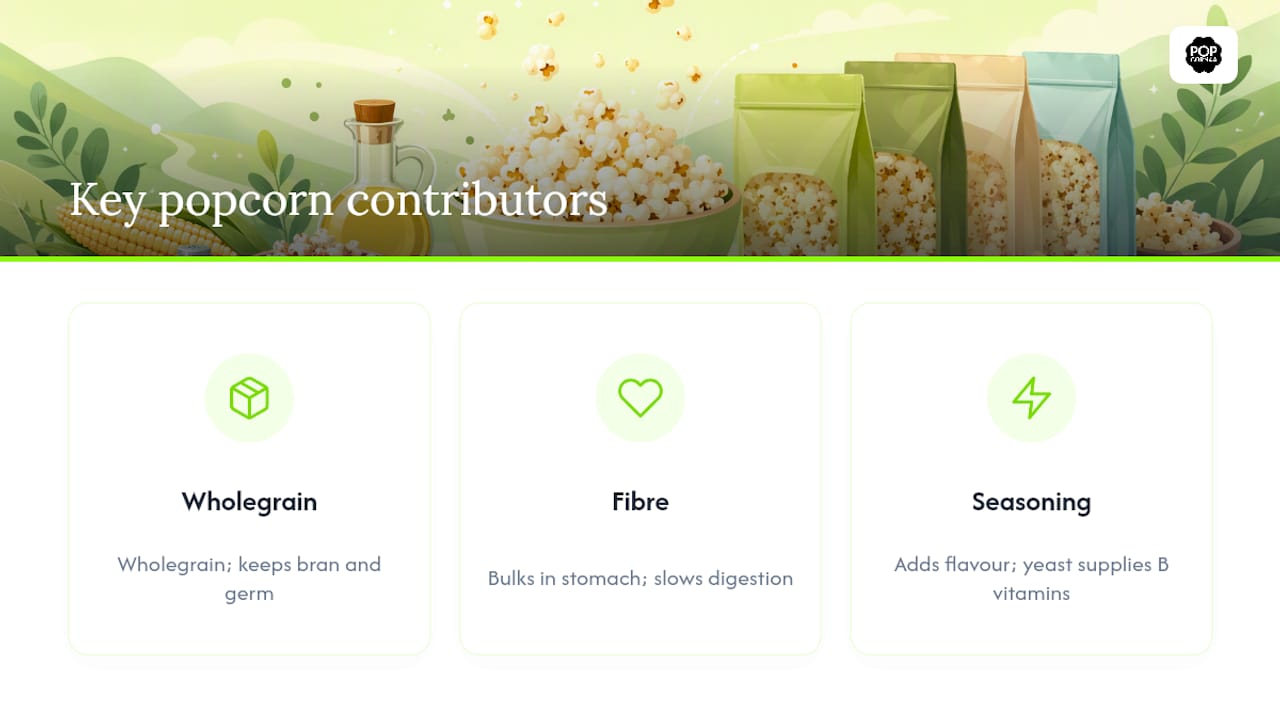
The kernel itself is a wholegrain, meaning it retains the bran and germ that refined snacks strip away. That’s where the fibre comes from, and fibre is the real engine behind popcorn’s satiety effect. It bulks out in the stomach and slows digestion, which is part of why a modest 25–30g portion can feel more satisfying than an equivalent calorie count from something like pretzels.
Plant-based toppings add their own small benefits without disrupting that profile. Nutritional yeast contributes a savoury, cheese-like flavour along with B vitamins, and it’s naturally vegan, which makes it a favourite for anyone building vegan popcorn snacks that don’t rely on dairy-based seasoning. Smoked paprika and chilli flakes bring flavour intensity without meaningful calories, letting you season generously rather than sparingly. Even a light spray of olive oil, used in place of butter, swaps saturated fat for a source of monounsaturated fat instead.
None of this makes popcorn a superfood. What it does is make the case that, prepared simply, popcorn is one of the more nutritionally efficient snacks in the cupboard, delivering fibre and steady energy for a genuinely low calorie cost.
Choosing kernels that actually pop well
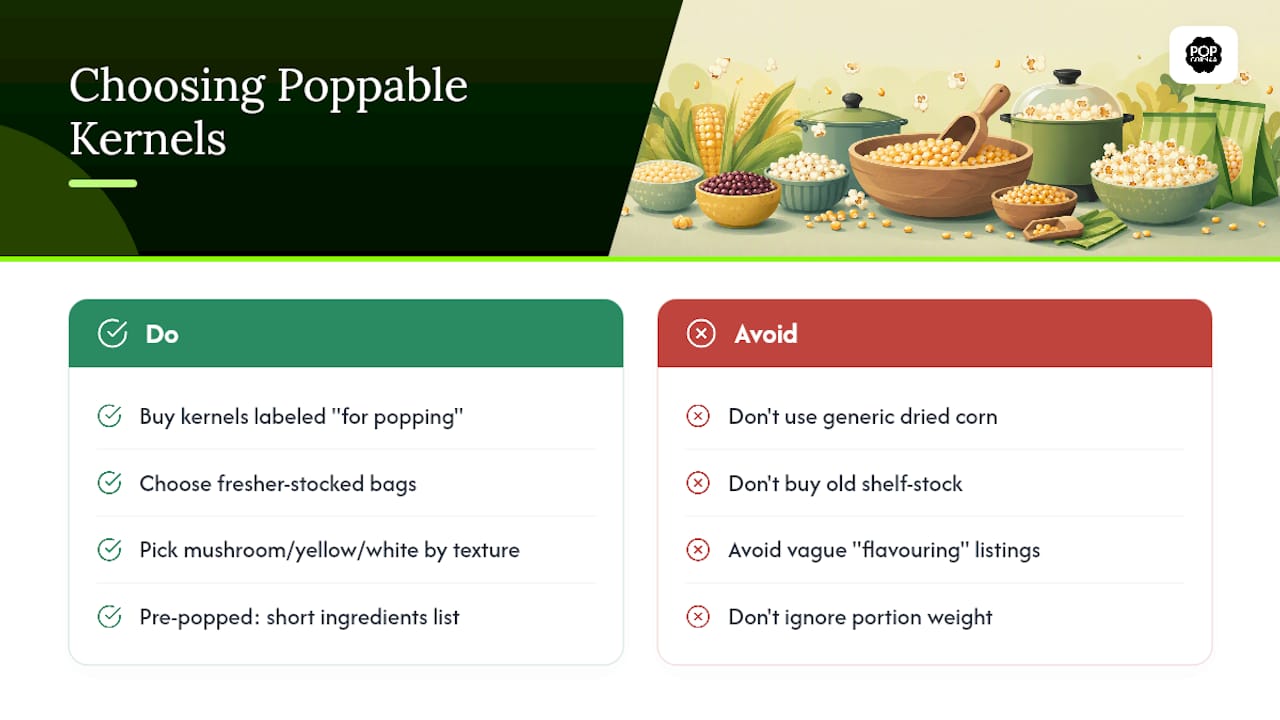
Not all popcorn kernels behave the same way, and the kernel you start with affects both the texture and how much oil or seasoning you’ll actually need. Look for kernels labelled specifically for popping, rather than any dried corn, since popping varieties have a moisture content and hull structure bred to expand fully when heated.
Fresher kernels pop more reliably and leave fewer unpopped duds at the bottom of the pan, which matters because unpopped kernels are essentially wasted weight in your portion. Buying from a supplier with decent turnover, rather than a bag that’s sat on a shelf for months, makes a noticeable difference here. Kernel colour is largely cosmetic. Yellow, white and the smaller “mushroom” varieties differ mainly in the shape of the popped kernel and how well they hold seasoning, not in underlying nutrition.
If you’re buying pre-popped gourmet popcorn rather than raw kernels, the same scrutiny should apply to the ingredients list. A short list, real seasoning names rather than “flavouring,” and a clear portion weight on the bag are the practical markers of a product built around health rather than just marketing. That’s a useful filter whether you’re comparing supermarket own-brand bags or specialist gourmet ranges.
Try PopCornaa’s taster box for portion-perfect snacking
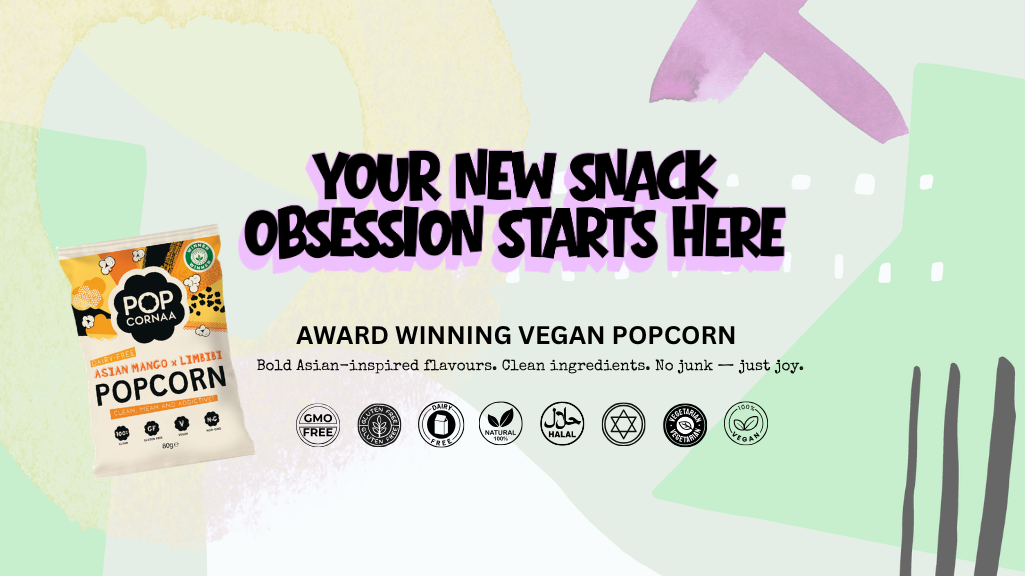
Popcornaa’s Newbie Asian Fusion Taster Box solves the one problem home preparation can’t always fix: consistency. Each bag arrives already portioned, so there’s no second-guessing whether you’ve gone over 30g, and no bowl left within easy reach for a mindless refill.
[ ](https://www.popcornaa.com › pages › asian-fusion-taster-box)
The range earned recognition at the Great Taste Awards 2024, which reflects the kind of attention to flavour balance that lets these bags stay genuinely low in the heavy oils and sugar syrups that weigh down supermarket alternatives. You get variety across several Asian-inspired flavours in one box, which makes it as sensible for gifting as it is for your own snack drawer.
If you’ve read this far and fancy trying flavour swaps without doing the measuring yourself, the Newbie Asian Fusion Taster Box is the easiest place to start. Order one, keep a bag in your bag or desk drawer, and portion control stops being something you have to think about at all.
Balancing taste and health, honestly
The mistake I see most often is treating “guilt-free” as a fixed property of a food rather than a description of how it’s prepared and served. Popcorn earns that label through portion size and simple seasoning, not through the kernel alone, and that’s genuinely liberating once it clicks: it means you don’t need to hunt for a perfect product, you need a sensible method.
Experiment with the flavour swaps. Weigh a portion once so your eye learns the size. And when convenience wins, a portioned pack does exactly the same job as your kitchen scales. Popcorn deserves a permanent, unworried spot in your snack rotation.
— Emily
Sources
For deeper detail on preparation methods, see PopCornaa’s guides on air-popped popcorn and the healthiest way to make popcorn. The NHS’s piri-piri pomegranate recipe and the British Heart Foundation’s snack guidance are both worth bookmarking for further recipes.
- Popcorn nutrition and health — Healthline
- Is popcorn healthy? — BBC Good Food
- Piri‑piri pomegranate popcorn recipe — NHS
- Popcorn and type 2 diabetes guide — Bolt Pharmacy
- Is popcorn healthy? — Medical News Today
FAQ
What is the healthiest popcorn in the UK?
Air-popped, unsalted popcorn with minimal added oil is the healthiest option, since it keeps the wholegrain’s fibre content intact without the saturated fat, sugar or sodium common in shop-bought flavoured varieties.
What is the healthiest brand of popcorn?
Look for brands offering pre-portioned bags with short, recognisable ingredients lists rather than heavy oils or syrups. PopCornaa’s portioned gourmet range, recognised at the Great Taste Awards 2024, is built around exactly that approach.
What foods can I eat guilt free?
Foods that are naturally low in energy density but high in fibre, such as air-popped popcorn, vegetable sticks and fruit, tend to top guilt-free snack lists because they’re filling without excess calories.
Is there a healthy version of popcorn?
Yes. Air-popped popcorn kept to a 25–30g portion, lightly seasoned with options like smoked paprika or nutritional yeast, is a genuinely healthy version that avoids the salt and sugar loads found in many pre-packaged varieties.