

How to choose Asian popcorn flavours: a food lover's guide
TL;DR:
- Furikake-style umami popcorn is the easiest and most balanced Asian-inspired snack to make at home. Different flavour profiles like Sichuan spice or miso caramel add complexity and suit various occasions, from casual snacking to gifting. Proper technique, including cool-down and baking, ensures the popcorn stays crisp and flavorful from first kernel to last.
Start with furikake-style umami popcorn. Of all the Asian-inspired profiles you could try this week, it is the most forgiving to make, the most balanced on the palate, and the one that will convince you this whole category is worth your time. Toss freshly popped corn with a thin coat of melted butter or neutral oil, wait 30–60 seconds, then scatter a generous pinch of furikake seasoning over the top and toss again. That is genuinely it.
Once you have that base under your belt, the rest of the guide opens up naturally. Hurricane popcorn layers sesame, soy and nori over a buttery base for something deeply savoury. Sichuan Magic Dust brings a numbing, warming heat that is unlike anything in the standard snack aisle. Pad Thai–inspired popcorn plays sweet against sour and umami in a way that keeps you reaching back into the bowl. And miso caramel sits at the crossroads of indulgence and complexity. Pick one or two profiles that match your palate and occasion, follow the recipes below, and you will have a genuinely impressive snack on the table in under 20 minutes. Vegan swaps are noted throughout, and every ingredient is available from UK supermarkets or Asian grocery shops.
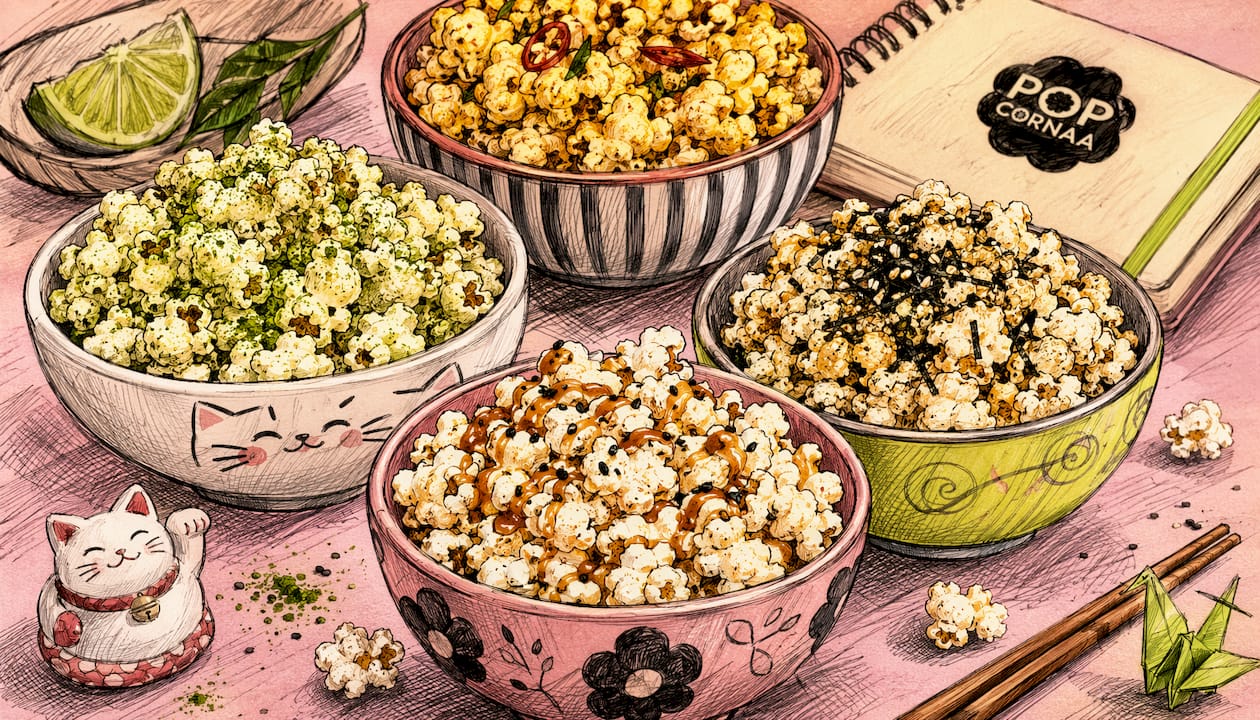
What are the most popular Asian-inspired popcorn flavour families?
Asian-inspired popcorn draws from a rich set of regional flavour traditions, and understanding the broad families makes it much easier to decide what to make or buy. Here is a practical map of the main profiles.
-
Furikake / sushi-style: Briny, toasty, and gently sweet. The core ingredients are toasted sesame seeds, nori and bonito flakes, though vegan versions swap bonito for extra nori or shiso. The fat binder is typically melted butter or light oil. Best for: movie nights, casual snacking, gifting. Check the label — some commercial blends contain MSG or added sugar, which changes the flavour profile noticeably.
-
Sesame-soy / buttered nori: Simpler than furikake but deeply satisfying. Toasted sesame oil, a splash of soy sauce and crumbled nori sheets give you a clean umami hit. Naturally vegan when made with plant-based butter. Best for: quick weeknight snacking, pairing with cold beer or green tea.
-
Sichuan / numbing spice: Ground Sichuan peppercorn delivers that distinctive mouth-tingle, balanced with gochugaru (Korean chilli flakes) and warm paprika. A touch of sugar or a drizzle of oil rounds the heat. Best for: parties, spice lovers, sharing platters. Not naturally sweet, so it pairs well with something cold and lightly sweet to drink.
-
Pad Thai–inspired sweet-savoury: Tamarind or lime juice for acidity, palm sugar or brown sugar for sweetness, soy sauce or fish sauce for umami, and crushed roasted peanuts for crunch. Vegan swap: replace fish sauce with soy or tamari. Best for: entertaining, themed nights, anyone who loves Thai food.
-
Miso caramel: White or red miso stirred into a caramel base gives you sweet, salty and fermented depth in one coating. The fat binder here is the caramel syrup itself. Best for: gifting, dessert-style snacking, pairing with sparkling wine or oolong tea.
-
Hurricane style (Hawaii): Sesame seeds, bonito flakes, nori and butter create a layered savoury-seaweed profile with real mouthfeel. The bonito flakes are the defining ingredient — they add a smoky, oceanic note that is hard to replicate. Vegan swap: omit bonito and double the nori. Best for: sharing bowls, film nights, anyone who loves Japanese flavours but wants something richer than plain furikake.
Across Asia, sweet, spicy and umami profiles tend to favour contrast and layering over single-note saltiness, which is exactly what makes them so compelling on popcorn.
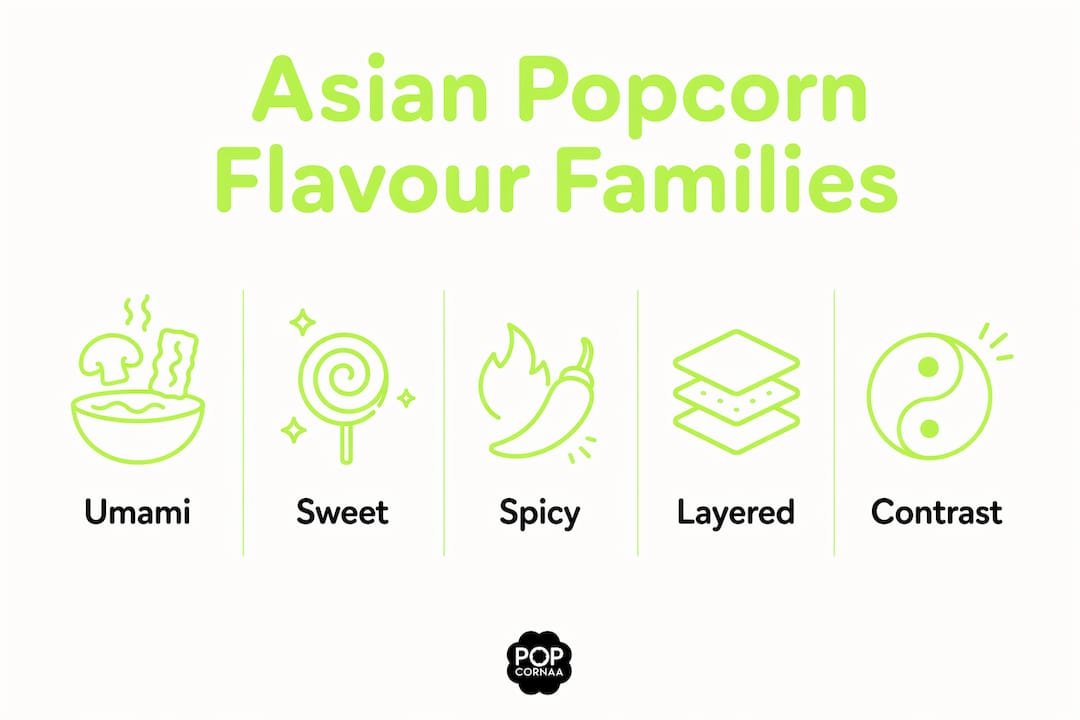
How do you choose the right Asian popcorn flavour for your taste and occasion?
Choosing well comes down to four honest questions: What do you actually enjoy eating? What is the occasion? Do you have any dietary requirements? And what can you realistically source this week?

On taste preference: If you gravitate towards savoury, umami-forward food — miso soup, sushi, ramen — furikake or sesame-soy is your natural starting point. If you love heat and complexity, Sichuan Magic Dust will feel immediately familiar. Sweet-and-savoury fans tend to fall hard for miso caramel or Pad Thai popcorn. There is no wrong answer, but picking a profile that mirrors food you already love means your first batch is far more likely to succeed.
On occasion: Movie nights call for something easy to eat by the handful without mess — furikake or sesame-soy fits perfectly. Hosting a dinner party or a themed night? Sichuan Magic Dust or Pad Thai popcorn creates a talking point. For gifts, miso caramel and Hurricane popcorn travel well in airtight tins and look impressive without requiring the recipient to know anything about Asian cuisine. For a flavour-matched occasion guide, Popcornaa’s blog covers the decision in more depth.
On dietary needs: Furikake and Hurricane popcorn both typically contain bonito (dried fish), so they are not vegan in their standard form. Always check the label — some blends include MSG, which is fine for most people but worth knowing if you are cooking for guests with sensitivities. Soy sauce contains gluten unless you use tamari. Sesame is a declared allergen in the UK, so label any homemade gifts clearly.
On sourcing: Every ingredient in these recipes is available in the UK. Furikake is stocked in most large Waitrose, Sainsbury’s and Tesco stores, as well as Asian supermarkets and online retailers such as Japan Centre. Nori sheets, toasted sesame oil, gochugaru, miso paste and tamarind concentrate are all standard in Asian grocery shops and widely available online. White miso paste has crossed into mainstream UK supermarkets over the past few years and is now reliably stocked in most large branches.
For gifts, plan on roughly 30–40g of seasoned popcorn per person as a generous portion. Kraft paper bags sealed with a sticker, or small airtight tins, both work well and keep the popcorn crisp for up to three days.
Five kitchen-tested Asian-inspired popcorn recipes
These five recipes cover the full range of the flavour families above. Each one includes a brief ‘why this works’ note, because understanding the logic helps you adapt and scale with confidence.
1. Furikake popcorn
Ingredients:
- 80g plain popped popcorn (about 3 large handfuls)
- 2 tbsp unsalted butter (or vegan butter)
- 1 tbsp granulated sugar
- A small pinch of fine sea salt
- ¼ tsp baking soda
- 3–4 tbsp furikake seasoning (check label for vegan versions)
Method:
- Preheat your oven to 150°C fan. Spread the popcorn on a lined baking tray.
- Melt the butter in a small saucepan over a medium heat. Add the sugar and salt, stirring until dissolved.
- Remove from the heat and whisk in the baking soda — the mixture will foam slightly. This lightens the syrup so it coats evenly rather than forming sticky clumps.
- Pour the syrup over the popcorn and toss quickly to coat.
- Bake for 10 minutes, stirring once halfway through.
- Remove from the oven, allow to cool briefly, then scatter furikake generously over the top and toss again.
- Cool completely on the tray before serving or packing.
Why this works: The baked syrup sets into a light, crisp shell that holds the furikake in place. Cooling before adding the seasoning prevents the nori from going limp.
Quick tips: Scale up easily — double the batch and bake on two trays. Store in an airtight container for up to three days.
2. Hurricane popcorn
Ingredients:
- 80g plain popped popcorn
- 2 tbsp unsalted butter, melted
- 1 tbsp toasted sesame seeds
- 1 tbsp bonito flakes (omit for vegan; add extra nori instead)
- 2 sheets nori, crumbled or cut into small strips
- 1 tsp soy sauce
- Pinch of fine sea salt
Method:
- Pop your corn and tip into a large bowl.
- Drizzle the melted butter and soy sauce over the popcorn, then toss immediately.
- Wait 30 seconds, then add the sesame seeds, bonito flakes and crumbled nori.
- Toss thoroughly so every kernel picks up some of each ingredient.
- Taste and adjust salt. Serve immediately for the best texture.
Why this works: Butter carries the soy salt into every crevice of the popcorn, while the bonito and nori add oceanic depth. The sesame seeds give a gentle crunch that contrasts with the soft flakes.
Quick tips: For a vegan version, double the nori and add a few drops of toasted sesame oil. Hurricane popcorn is best eaten fresh — the nori softens within an hour.
3. Sichuan Magic Dust popcorn
Ingredients:
- 80g plain popped popcorn
- 1½ tbsp neutral oil (sunflower or rapeseed)
- 1 tsp ground Sichuan peppercorn
- 1 tsp gochugaru (Korean chilli flakes)
- ½ tsp smoked paprika
- ½ tsp fine sea salt
- ½ tsp caster sugar
Method:
- Mix all the dry spices and sugar together in a small bowl to make your Magic Dust.
- Drizzle the oil over the freshly popped corn and toss to coat evenly.
- Scatter the spice blend over the popcorn in two or three additions, tossing between each.
- Taste and adjust heat or salt to your preference.
Why this works: Sichuan peppercorn’s numbing quality means the heat builds slowly rather than hitting all at once. The touch of sugar softens the edge and keeps the blend from tasting purely medicinal. Gochugaru adds colour and a fruity warmth that paprika alone cannot deliver.
Quick tips: Sichuan peppercorns vary in potency — toast them lightly in a dry pan before grinding for a more aromatic result. This blend is naturally vegan and gluten-free.
4. Pad Thai–inspired popcorn
Ingredients:
- 80g plain popped popcorn
- 1 tbsp neutral oil
- 1 tsp tamarind concentrate (or 1 tsp lime juice)
- 1 tsp palm sugar or soft brown sugar
- 1 tsp soy sauce (or fish sauce for non-vegan)
- 2 tbsp crushed roasted peanuts
- ½ tsp dried chilli flakes (optional)
- Small pinch of fine sea salt
Method:
- Whisk together the oil, tamarind, sugar and soy sauce in a small bowl until the sugar dissolves.
- Drizzle the mixture over the popcorn and toss well.
- Scatter the crushed peanuts and chilli flakes over the top and toss again.
- Spread on a lined tray and allow to dry for 5–10 minutes before serving.
Why this works: Tamarind’s acidity and palm sugar’s caramel sweetness mirror the balance that makes Pad Thai so addictive. Peanuts add a contrasting crunch that popcorn alone cannot provide.
Quick tips: Tamarind concentrate is available in most UK supermarkets and Asian grocery shops. For a nut-free version, replace peanuts with toasted pumpkin seeds.
5. Miso caramel popcorn
Ingredients:
- 80g plain popped popcorn
- 3 tbsp caster sugar
- 1 tbsp water
- 1 tbsp unsalted butter (or vegan butter)
- 1 tbsp white miso paste
- Pinch of fine sea salt
- ¼ tsp baking soda
Method:
- Preheat your oven to 150°C fan. Spread popcorn on a lined baking tray.
- Combine sugar and water in a small saucepan over a medium heat. Do not stir — swirl the pan gently until the sugar dissolves and turns a pale amber.
- Remove from the heat. Carefully stir in the butter and miso paste — the mixture will bubble.
- Whisk in the baking soda quickly, then pour over the popcorn and toss to coat.
- Bake for 10 minutes, stirring once. Cool completely before breaking apart.
Why this works: White miso adds a fermented, savoury depth that stops the caramel from tasting one-dimensionally sweet. The baking soda creates a lighter, crunchier shell than a plain caramel would.
Quick tips: Red miso gives a stronger, saltier result — use half the quantity if substituting. Miso caramel popcorn keeps well in an airtight tin for up to four days, making it ideal for gifts.
How do you make Asian seasonings stick and stay crisp?
Getting the seasoning to adhere properly is the single biggest difference between popcorn that tastes professional and a batch where all the flavour ends up at the bottom of the bowl.
Fat choice matters more than most people realise. Melted butter gives the richest flavour and the best adhesion for dry seasonings like furikake. Neutral oils (sunflower, rapeseed) are better for spice blends like Sichuan Magic Dust because they do not compete with the seasoning’s own flavour. Coconut oil adds a faint sweetness that works well with Pad Thai or miso caramel profiles. For kettle-corn style coatings, a thin sugar syrup is the binder — and whisking in a small amount of baking soda before pouring it over the corn creates tiny air bubbles that help the syrup coat evenly rather than pooling.
Timing is everything with dry seasonings. Furikake is hygroscopic, meaning it absorbs moisture readily. Add it to piping hot, steaming popcorn and the nori will go soft within minutes. The fix is simple: let the popcorn cool for 30–60 seconds after applying the fat, then add the seasoning and toss. The kernels are still warm enough to hold the seasoning, but not so hot that they create steam.
Spray versus toss. An oil mister or spray bottle gives you an even, light coat across a large batch without over-saturating any single kernel — useful for spice blends where you want coverage without weight. Drizzling works well for syrups and melted butter, but toss immediately and thoroughly so the fat does not pool. For baked coatings (furikake kettle-corn, miso caramel), tossing in a large bowl before spreading on the tray gives the most even result.
Pro Tip: For the crispest results, bake seasoned popcorn at 150°C fan for 8–10 minutes after coating. This sets the binder and drives off residual moisture. Cool completely on the tray before storing — trapping steam in a container is the most common cause of soggy popcorn.
Store all seasoned popcorn in an airtight container at room temperature. Most varieties keep well for two to three days; Hurricane popcorn is the exception and is best eaten the same day due to the nori softening.
Why do these flavour combinations actually work?
There is a logic to why Asian-inspired popcorn tastes so satisfying, and it goes beyond novelty. Professional chefs describe the appeal as flavour architecture: a deliberate assembly of texture and umami where bonito flakes, nori and toasted seeds do not simply season the surface but build a layered experience. Each component plays a distinct role. Nori contributes briny, mineral depth. Toasted sesame seeds add fat and a nutty warmth. Bonito flakes bring smokiness and glutamate-driven savouriness. Together, they create something that keeps your palate interested from the first kernel to the last.
This layering principle is what separates Asian-inspired profiles from the single-note saltiness of standard cinema popcorn. UK and European audiences have shown stronger receptiveness to complex, gourmet popcorn profiles compared with the hyper-buttered, salt-forward styles dominant in the US market. That cultural openness is part of why these flavours translate so naturally to British home kitchens.
For UK cooks, a few sourcing notes are worth keeping in mind. Look for furikake labelled “mutenka” (無添加) if you want to avoid MSG — this Japanese term means “no additives” and appears on many imported brands available at Japan Centre and Sous Chef. White miso paste from Clearspring or Yutaka is widely stocked in Waitrose and Sainsbury’s. Gochugaru is available in most Korean grocery shops and online; the Sempio brand is reliable and widely distributed in the UK. Tamarind concentrate from TRS or Natco is a supermarket staple.
Serving suggestions, pairings and gift ideas
The flavour family you choose shapes what to serve alongside it.
Furikake and sesame-soy popcorn pair beautifully with cold Japanese lager (Asahi or Sapporo), chilled green tea, or a dry sake. The clean, briny notes complement light, crisp drinks without competition.
Sichuan Magic Dust popcorn calls for something cooling. Cold milk tea, a light lager, or a simple cucumber-mint water all work well. Avoid tannic red wines — they amplify the heat rather than soothing it.
Pad Thai popcorn is surprisingly good with a dry Riesling or a crisp Pinot Gris, where the slight sweetness in the wine mirrors the palm sugar in the popcorn. Non-alcoholic: sparkling water with a squeeze of lime echoes the tamarind note.
Miso caramel popcorn pairs well with oolong tea, sparkling wine, or a light Prosecco. It also works as a dessert snack alongside vanilla ice cream.
Hurricane popcorn suits cold beer, particularly a Sapporo or a pale ale, and holds its own alongside a simple cheese board.
For creative pairing ideas beyond these suggestions, Popcornaa’s blog covers drink and food pairings in detail.
Gifting and packaging: Miso caramel and furikake kettle-corn travel best — both keep for three to four days in an airtight tin. Kraft paper bags with a heat seal and a handwritten label look lovely and cost very little. For a gift set, combine two contrasting profiles (e.g. miso caramel and Sichuan Magic Dust) in a small box with a flavour note card. Portion at roughly 35–40g per person for a generous single serving.
Allergen reminders: Sesame is a UK-declared allergen and must be labelled on any homemade gift. Soy (in soy sauce and miso) is also a declared allergen. Bonito flakes are fish. If you are making popcorn for guests, ask about allergies before you start — and label homemade gifts clearly with the full ingredient list.
Key takeaways
Furikake-style umami popcorn is the best starting point for most home cooks: it requires minimal equipment, uses widely available UK ingredients, and delivers a balanced sweet-savoury-briny result that scales easily for gifts or sharing.
| Point | Details |
|---|---|
| Start with furikake | It is the most accessible Asian-inspired profile and the quickest route to balanced umami popcorn. |
| Bind before seasoning | Apply a thin coat of fat first, wait 30–60 seconds, then add dry seasonings to prevent sogginess. |
| Baking soda for crunch | Whisking baking soda into a hot syrup creates a lighter, crispier shell for kettle-corn style coatings. |
| Check labels for vegan and allergen needs | Many furikake blends contain bonito (fish) and some include MSG; tamari replaces soy for gluten-free batches. |
| Popcornaa for ready blends | Popcornaa offers gourmet vegan Asian-inspired popcorn and gift vouchers for readers who prefer a ready-made option. |
The part most guides skip
Most Asian popcorn guides focus on the recipe and stop there. What they rarely say is that texture matters more than intensity for repeat snacking. A popcorn that hits you hard on the first kernel but softens or clumps by the bottom of the bowl is one you will not make again. The recipes that keep people coming back — furikake kettle-corn, miso caramel, Sichuan Magic Dust — all share one quality: they stay crisp, and the seasoning holds its character from start to finish.
The practical implication is that your technique decisions (cooling time, fat choice, baking versus not baking) are at least as important as your seasoning choices. A beautifully balanced Pad Thai spice blend applied to soggy, over-steamed popcorn will disappoint every time. Get the base right first, then experiment with flavour.
My honest advice: make small batches when you are testing. A single 80g batch takes less than 15 minutes and wastes almost nothing if it does not work out. Taste each variety with a neutral palate — a small piece of plain bread between samples clears the residual heat and sweetness so you can assess each profile fairly. Record what you change, even if it is just a note on your phone. The difference between a good batch and a great one is often a single adjustment: a little more miso, a touch less sugar, an extra minute in the oven.
Popcornaa’s Asian-inspired flavour guide is worth reading alongside this article if you want to go deeper into the flavour logic behind each profile.
When a ready-made Popcornaa blend makes more sense than DIY
Making your own Asian-inspired popcorn is genuinely satisfying, and the recipes above are designed to be repeatable and reliable. But there are moments when DIY is not the right call: a last-minute gift, a gathering where you need consistent flavour across a large batch, or simply a week when you do not have the time or energy to source six different ingredients.
[ ](https://www.popcornaa.com › pages › asian-fusion-taster-box)
Popcornaa specialises in gourmet vegan popcorn with a dedicated Asian-inspired range, crafted without the compromises that come with mass-produced snacks. The flavours are developed with the same layered approach described throughout this guide, and every product is vegan by default — no label-checking required. For gifting, the digital gift vouchers are a particularly clean solution: instant delivery, no packaging to sort, and the recipient gets to choose their own flavours. Vouchers are available in multiple denominations and are delivered digitally, making them ideal for last-minute occasions.
If you know exactly what you want, the gift card collection page shows all current options with delivery details. Browse the Asian Flavourz range on Popcornaa’s website to see what is currently available, or pick up a gift voucher today and let someone else make the choice.
Useful sources and UK ingredient suppliers
The sources below informed the recipes and flavour guidance in this article, alongside practical notes on where to find key ingredients in the UK.
| Source | What it covers | UK sourcing note |
|---|---|---|
| Just One Cookbook — Furikake | Furikake varieties, ingredients and label guidance | Available at Japan Centre, Sous Chef, Waitrose, Sainsbury’s |
| Simply Recipes — Furikake Popcorn | Fat binding, cooling timing, MSG and vegan label tips | Furikake: Japan Centre, Yutaka brand in major supermarkets |
| The Kitchn — Furikake Popcorn | Baking soda technique for kettle-corn texture | Baking soda: all UK supermarkets |
| Brimarie Popcorn — World Flavours | Asian regional flavour tendencies and examples | General inspiration; no specific UK sourcing |
| Cinemanext — Global Popcorn | UK/European palate receptiveness to gourmet profiles | Market context only |
| Popcornaa — Asian Flavourz | Ready-made vegan Asian-inspired blends and gift vouchers | Ships within the UK; digital vouchers available instantly |
Quick UK sourcing summary: Miso paste (Clearspring, Yutaka) — Waitrose, Sainsbury’s, Ocado. Gochugaru (Sempio) — Korean grocery shops, Amazon UK. Tamarind concentrate (TRS, Natco) — most large supermarkets. Nori sheets — most large supermarkets and Asian grocery shops. Sichuan peppercorns — Sous Chef online, Waitrose, Sainsbury’s.
FAQ
What are the best seasonings for Asian-inspired popcorn?
Furikake is the most versatile starting point, combining toasted sesame seeds, nori and (optionally) bonito flakes for a briny, umami-rich result. Sichuan peppercorn blends, miso caramel and sesame-soy are also widely popular.
Which Asian popcorn flavour is best for beginners?
Furikake-style popcorn is the easiest to make: apply melted butter or oil, wait 30–60 seconds, then toss with furikake seasoning. No cooking required beyond popping the corn.
Are Asian-inspired popcorn flavours suitable for vegans?
Most profiles can be made vegan with simple swaps. Furikake and Hurricane popcorn typically contain bonito (fish), but vegan furikake blends are available; replace fish sauce with soy or tamari in Pad Thai popcorn. Popcornaa’s entire range is vegan by default.
What are some unique Asian popcorn flavours worth trying?
Sichuan Magic Dust (numbing peppercorn and gochugaru), miso caramel (fermented-sweet), and Pad Thai popcorn (tamarind, palm sugar, peanuts) are all distinctive profiles that go well beyond standard cinema-style seasoning.
How do you stop Asian-seasoned popcorn from going soggy?
Let freshly popped corn cool for 30–60 seconds before applying any fat or seasoning, and bake coated popcorn at 150°C fan for 8–10 minutes to set the binder. Store in an airtight container at room temperature and consume within two to three days.