

How to discover new popcorn flavours at home
The fastest way to discover new popcorn flavours is to combine one seasoning method (dry powder, oil binder, or glaze) with a single flavour axis (sweet, savoury, spicy, or global) and run a small, structured test batch of 20–30g. That one loop, repeated three or four times, will tell you more about your palate than any recipe book.
Here is where to start tonight:
- Pop a small batch using your preferred method (stovetop, air popper, or microwave).
- Pick one flavour axis and one or two ingredients from that axis only.
- Season immediately after popping, taste, score, and adjust before scaling up.
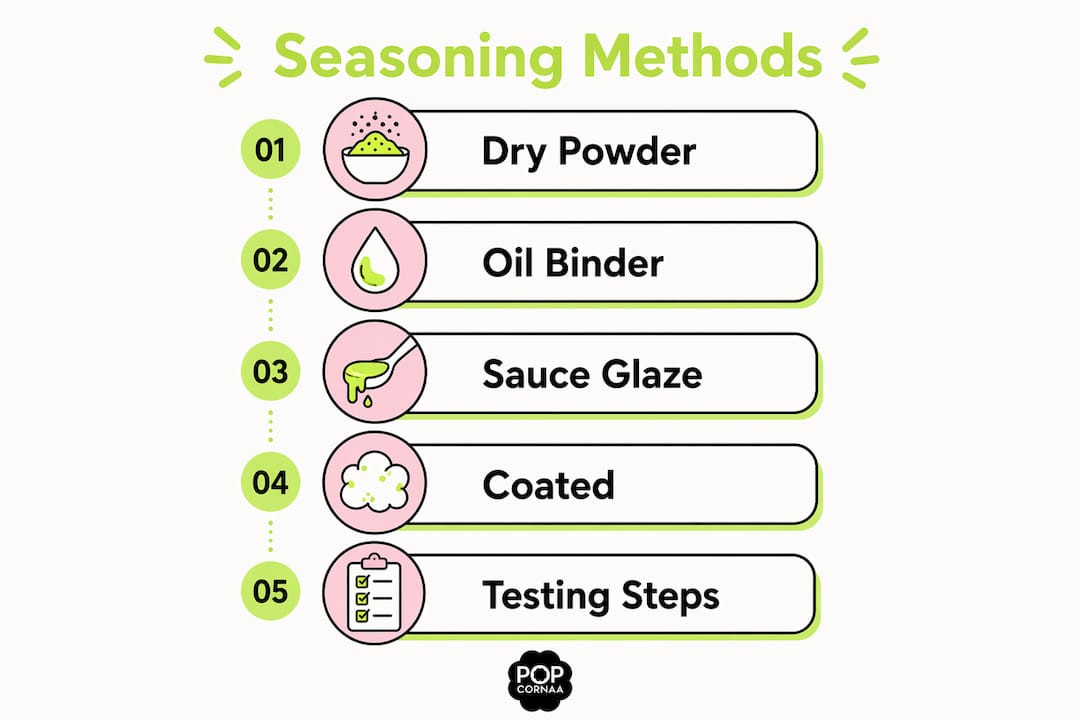
The three most reliable seasoning methods, ranked by how well they hold flavour:
- Dry powder: fine spice blends or nutritional yeast dusted over a lightly oiled surface.
- Oil or sauce binder: melted coconut oil, vegan butter, or infused fat tossed through warm popcorn.
- Glaze or caramel coat: a sugar syrup or chocolate drizzle applied hot, then cooled to set.
How do you actually add flavour to popcorn?
Understanding the mechanics here saves a lot of wasted batches. Each method suits a different flavour effect, and the timing of when you season matters as much as what you use.

Dry powders
Dry powders work best for savoury, spicy, and umami profiles: think smoked paprika, garlic powder, nutritional yeast, or a tandoori masala blend. The catch is adhesion. Popcorn’s surface is naturally dry, so powder slides straight off unless there is something tacky to grip. A light spray or thin drizzle of oil immediately after popping creates just enough surface moisture. Then add your powder while the corn is still warm and toss aggressively. Seasoning adhesion improves dramatically when you use ultra-fine particles: sieve your blends before use so larger fragments do not clump unevenly.
Pro Tip: Grind your spice blends in a small coffee grinder until they pass through a fine-mesh sieve. Finer particles carry a faint static charge that helps them cling to the kernel surface without needing extra oil.
Oil and sauce binders
Stovetop popping with oil gives you a head start: adding salt to the hot oil before the kernels go in means seasoning absorbs into the corn as it pops. For air-popped corn, you need to add fat after the fact. Melt coconut oil, vegan butter, or an infused fat (try garlic-chilli oil or miso butter), drizzle sparingly, toss, then dust with your chosen powder. Infused fats are particularly good for global profiles: a toasted sesame oil drizzle with a pinch of shichimi togarashi takes about two minutes and produces something genuinely interesting.
Glazes and coated methods
Glazes suit sweet, dessert, and kettle-corn styles. You apply a hot sugar syrup or melted chocolate directly to the popcorn, toss to coat, then spread on a lined baking tray to cool and set. Mushroom-shaped kernels hold glazes better than butterfly kernels because their dense, round surface resists crumbling under a heavy coat. The key steps:
- Pop your corn and set aside in a large bowl.
- Make your glaze in a separate pan (sugar, a fat, and a flavour agent such as vanilla or miso).
- Pour the hot glaze over the popcorn in stages, tossing between each addition.
- Spread on a lined tray and cool for at least 10 minutes before breaking apart.
Pro Tip: Keep glazed popcorn away from steam while it sets. Any moisture reactivates the sugar and turns a crisp coat into a sticky mess. Cool it uncovered at room temperature, never under a lid.
What flavour directions are worth exploring?
Organising your experiments by flavour axis stops you from randomly combining ingredients that fight each other. Here are the main axes, each with concrete ingredient prompts to mix and match.
Classic savoury: fine sea salt, smoked paprika, garlic powder, onion powder, dried thyme. Pair with a light drizzle of olive oil.
Cheesy and umami: nutritional yeast (the vegan workhorse for cheesy popcorn flavour), mushroom powder, white miso paste, soy sauce powder, black garlic powder. These profiles are particularly satisfying because umami registers as depth rather than a single sharp note.
Sweet: cinnamon sugar, vanilla powder, coconut sugar, cocoa powder, freeze-dried raspberry dust. Skip salt entirely or use only a tiny pinch to lift the sweetness without tipping into savoury.
Sweet and spicy (swicy): chilli flakes with maple syrup glaze, gochujang powder with brown sugar, Tajín-style lime-chilli salt. The contrast between heat and sweetness is what makes this axis so compelling right now.
Spicy: cayenne, chipotle powder, ghost pepper flakes (use sparingly), harissa powder. Balance with a fat binder to soften the heat’s edge.
Aromatic and herb: dried dill, za’atar, herbes de Provence, lemon zest powder, dried rose petals. These work best as a secondary layer over a neutral oil base.
Global and international: tandoori masala, furikake, dukkah, berbere, ras el hanout. Each of these is a ready-made blend, which makes them ideal for quick single-variable tests.
Dessert and novelty: white chocolate drizzle with freeze-dried strawberry, salted caramel with pretzel crumbs, dark chocolate with sea salt and orange zest.
A few pairing principles worth keeping in mind:
- Acid (citrus zest, powdered vinegar) cuts through fat and lifts heavy savoury profiles.
- Salt contrast makes sweet flavours taste more intense, not less.
- Aromatic herbs and citrus add lift to dense umami blends.
- Textural additions (toasted pumpkin seeds, candied pecans, sesame brittle pieces) make a flavour profile feel more complete without changing the seasoning itself.
Ten easy flavoured popcorn recipes to try tonight
Each recipe below uses a 50g unpopped kernel batch (roughly four generous servings). Times are approximate for a home kitchen.
1. Smoked paprika and nutritional yeast Savoury umami | 10 minutes | Easy | Fully vegan
- Pop 50g kernels in 1 tbsp coconut oil on the stovetop.
- Transfer to a large bowl.
- Drizzle with 1 tsp melted vegan butter.
- Combine 2 tbsp nutritional yeast, 1 tsp smoked paprika, ½ tsp garlic powder, ¼ tsp fine sea salt.
- Dust over the warm popcorn and toss well.
- Taste and add a pinch more salt if needed.
2. Cinnamon sugar Sweet | 8 minutes | Easy | Fully vegan
- Air-pop 50g kernels.
- Drizzle with 1 tbsp melted coconut oil.
- Mix 2 tbsp caster sugar with 1 tsp ground cinnamon.
- Dust over the popcorn while warm and toss.
- Spread on a tray for 2 minutes to prevent clumping.
3. Tandoori masala Global spiced savoury | 12 minutes | Easy | Fully vegan
- Pop 50g kernels in 1 tbsp sunflower oil.
- In a small bowl, combine 1½ tsp tandoori masala, ½ tsp cumin, ¼ tsp fine salt, pinch of cayenne.
- Drizzle popcorn with 1 tsp extra oil, toss.
- Add spice blend in two stages, tossing between each.
- Finish with a squeeze of fresh lime juice.
4. Elote-style (Mexican street corn) Global sweet-savoury | 15 minutes | Easy | Vegan swap: use vegan mayo
- Pop 50g kernels by your preferred method.
- Whisk 1 tbsp vegan mayo with ½ tsp lime juice and a pinch of salt.
- Drizzle over warm popcorn and toss quickly.
- Dust with 1 tsp chilli powder, 1 tsp nutritional yeast, and a pinch of smoked paprika.
- Finish with lime zest.
5. Miso caramel Dessert umami | 20 minutes | Moderate | Vegan swap: use coconut cream
- Pop 50g mushroom kernels in coconut oil.
- In a small pan, melt 3 tbsp coconut sugar with 2 tbsp coconut cream over medium heat.
- Stir in 1 tsp white miso paste and a pinch of sea salt.
- Pour over popcorn in two stages, tossing between each.
- Spread on a lined tray and cool for 10 minutes before serving.
6. Salt and vinegar Classic savoury | 10 minutes | Easy | Fully vegan
- Air-pop 50g kernels.
- Drizzle with 1 tbsp sunflower oil.
- Combine 1 tsp powdered malt vinegar, ½ tsp fine sea salt.
- Dust over warm popcorn and toss vigorously.
- Add a second pinch of vinegar powder if you want a sharper bite.
7. Dark chocolate and orange Dessert | 15 minutes | Easy | Fully vegan
- Pop 50g kernels by any method.
- Melt 50g dark vegan chocolate in a bowl over hot water.
- Stir in ½ tsp orange zest.
- Drizzle over spread-out popcorn on a lined tray.
- Sprinkle with flaky sea salt and cool until set.
8. Furikake sesame Global umami | 10 minutes | Easy | Check label for vegan
- Pop 50g kernels in 1 tbsp toasted sesame oil.
- Transfer to a bowl and drizzle with ½ tsp soy sauce.
- Toss immediately.
- Add 2 tsp furikake seasoning and toss again.
- Finish with a pinch of chilli flakes if you want heat.
9. Chilli maple (swicy) Sweet and spicy | 12 minutes | Easy | Fully vegan
- Pop 50g kernels in coconut oil.
- Warm 1 tbsp maple syrup in a small pan with ½ tsp chilli flakes and a pinch of salt.
- Drizzle the warm syrup over the popcorn and toss quickly.
- Spread on a tray and cool for 5 minutes.
- Taste: add more chilli flakes on top if you want extra heat.
10. Truffle and black pepper Gourmet savoury | 10 minutes | Easy | Fully vegan
- Pop 50g kernels in 1 tbsp olive oil.
- Drizzle with ½ tsp truffle oil immediately after popping.
- Combine ½ tsp fine sea salt, ½ tsp freshly cracked black pepper, 1 tsp nutritional yeast.
- Dust over the popcorn and toss.
- Serve immediately: truffle aroma fades quickly.
How do you invent your own popcorn flavour from scratch?
The method that actually works is borrowed from food science: form a hypothesis, run a small batch, change one variable, and score the result before moving on. Skipping the scoring step is where most home experiments fall apart.
The small-batch testing loop:
- Choose a flavour axis and write down your hypothesis (e.g. “miso + sesame + nori will produce a savoury umami profile with oceanic lift”).
- Pop a 20–30g test batch (roughly one generous handful of kernels).
- Change only one variable per test: the binder, the primary seasoning, or the ratio.
- Score on four criteria: aroma, balance, texture, aftertaste (1–5 for each).
- Record your result and adjust one element before the next batch.
- Once a profile scores consistently above 4 across all criteria, scale to a full 50g batch.
Baseline ratios to start from (per 100g popped popcorn):
| Element | Starting ratio |
|---|---|
| Oil or fat binder | 1–2 tsp |
| Dry seasoning powder | 1–2 tbsp |
| Salt | ¼–½ tsp |
| Sugar (for sweet profiles) | 1–2 tbsp |
Binder comparison:
| Binder | Adhesion | Flavour impact | Best for |
|---|---|---|---|
| Coconut oil | Good | Mild, slightly sweet | Sweet and savoury profiles |
| Toasted sesame oil | Good | Nutty, strong | Asian-inspired profiles |
| Vegan butter | Very good | Rich, buttery | Classic savoury, caramel |
| Olive oil | Moderate | Grassy, peppery | Herb and Mediterranean profiles |
| Maple syrup | Excellent (sticky) | Sweet | Swicy and dessert glazes |
Testing checklist:
- Aroma: does it smell like what you intended?
- Balance: is any single note (salt, sweet, heat) overpowering?
- Texture: is the popcorn still crisp, or has the binder made it soft?
- Aftertaste: does the finish linger pleasantly or turn bitter?
The small-batch testing approach used by boutique popcorn producers is exactly this loop, just run at a larger scale. At home, 20–30g batches mean you can run three or four tests in an evening without wasting ingredients.
Where are new popcorn flavours coming from in 2026?
Two forces are shaping the most interesting new profiles right now: a push toward global culinary influences driven by Gen Z and millennial palates, and a parallel move toward plant-based umami as a credible alternative to dairy-heavy cheese coatings. These are not separate trends. They often converge in the same product: a miso-glazed popcorn or a nutritional yeast and smoked chipotle blend that is simultaneously vegan, complex, and globally inspired.
Food innovation experts note that the most successful new profiles in 2026 tend to reimagine comfort flavours rather than invent entirely new ones. Pizza popcorn with nutritional yeast and oregano, or cinnamon sugar with a pinch of cardamom, lands better than something completely unfamiliar because it gives the palate a reference point. Novelty alone rarely sustains interest. Market analysis also confirms that sweet, salty, spicy, and aromatic categories are all expanding as consumers seek more varied at-home snacking experiences.
Classic profiles still anchor the market. Butter, sea salt, and cheddar remain commercially dominant, which tells you something useful: there is a floor of familiarity that even adventurous eaters return to. The opportunity for home cooks is in the space between familiar and surprising.
For UK-based sourcing, these are the most practical places to find unusual ingredients:
- Asian supermarkets (particularly in London, Birmingham, and Manchester) for furikake, shichimi togarashi, gochujang powder, and miso paste.
- Spice shops and market stalls such as those at Borough Market or local farmers’ markets for artisanal salt blends, ras el hanout, and dukkah.
- Online retailers such as Sous Chef and The Spice Shop for specialist powders including freeze-dried fruit dust, black garlic powder, and truffle salt.
- Health food shops (Holland & Barrett, independent wholefood shops) for nutritional yeast, coconut sugar, and smoked sea salt.
- Growing your own herbs in small spaces is surprisingly practical for fresh aromatic additions; growing edible plants at home gives you access to fresh dill, lemon thyme, and basil that dried versions simply cannot match.
Pro Tip: Artisanal salts (smoked Maldon, black lava, pink Himalayan) change the character of a seasoning blend more than most people expect. Buy a small sampler set and test each one against the same base seasoning before committing to a large batch.
How long does a batch take, and what does it cost?
Realistically, most flavoured popcorn batches take between 8 and 25 minutes from start to finish, depending on the method and whether you are making a glaze. Cost per batch is low enough that experimentation carries very little financial risk.
| Method | Time | Approximate cost per 50g batch |
|---|---|---|
| Air-popped with dry seasoning | 8–10 minutes | — |
| Stovetop with oil binder | 10–15 minutes | — |
| Glazed or caramel coated | 20–25 minutes | — |
These figures use standard UK supermarket prices for kernels (roughly £1.50–£2.00 per 500g), basic oils, and common spices. Specialist ingredients such as truffle oil or freeze-dried fruit dust push costs up, but even a gourmet batch rarely exceeds £2.50 for four servings.
A few practical notes:
- A typical 50g kernel batch produces enough popped corn for several people as a snack.
- Glazed batches take longer because of cooling time, but most of that is passive: you are not standing over the hob.
- For a party batch (200g kernels), multiply the seasoning ratios by four and work in two or three tossing stages so the coating stays even.
How do you keep flavoured popcorn crisp?
Moisture is the enemy. Once flavoured popcorn absorbs humidity from the air, it softens within hours and no amount of re-seasoning will fully rescue it.
- Cool popcorn completely before sealing. Warm popcorn releases steam inside a container, which condenses and softens the corn.
- Use airtight containers (glass jars or resealable tins) once the popcorn is fully cool and dry.
- Avoid the fridge: the humidity inside a refrigerator accelerates softening faster than room temperature storage.
- Savoury popcorn keeps well for a few days in an airtight container. Sweet or glazed popcorn, because the sugar coating seals the surface, often stays crisp longer.
- To refresh popcorn that has softened, spread it on a baking tray and warm in the oven at 150°C for 5–8 minutes. Cool before eating.
For serving and presentation:
- Paper cones, small kraft boxes, or individual bowls make flavoured popcorn feel considered at a gathering.
- Textural additions (toasted pumpkin seeds, candied walnuts, sesame brittle) are best added just before serving so they retain their own crunch.
- One allergy note: if you are serving to guests, check for nut, dairy, and soy sensitivities before adding peanut oil, cheese powders, or soy sauce-based seasonings.
Key takeaways
Discovering new popcorn flavours consistently comes down to choosing the right seasoning method, picking one flavour axis at a time, and running small, scored test batches before scaling up.
| Point | Details |
|---|---|
| Choose your method first | Dry powder, oil binder, or glaze each suit different flavour profiles — match the method to the outcome you want. |
| Test in 20–30g batches | Small batches let you run three or four experiments in one evening without wasting ingredients. |
| Score every test | Rate aroma, balance, texture, and aftertaste (1–5) and record results so you can iterate deliberately. |
| Adhesion is the key technical step | Sieve dry powders to a fine particle size and add them to warm, lightly oiled popcorn for even coverage. |
| Popcornaa for ready-made discovery | Popcornaa’s curated vegan boxes offer a fast way to taste gourmet and global profiles before you recreate them at home. |
Why the best flavour discoveries start with curiosity, not recipes
There is something I find genuinely exciting about the moment a flavour combination clicks. You have dusted a small bowl with something unexpected — miso and black pepper, or chilli and maple — and suddenly the popcorn is doing something it has never done before. That feeling is what drove the thinking behind Popcornaa. Not the idea of selling popcorn, but the idea that a humble, everyday snack could carry real complexity, real craft, and real global inspiration.
What I notice in home cooks who discover their best flavours is that they stop following recipes and start asking questions. What happens if I add acid here? What if the heat comes at the end rather than the beginning? The small-batch method in this guide is designed to make that kind of curiosity practical, not just aspirational. You do not need a professional kitchen or specialist equipment. You need a pan, a bowl, and the willingness to taste critically and adjust.
The popcorn flavour innovation space is genuinely wide open right now, particularly for plant-based and globally inspired profiles. That is not marketing language. It is what the data and the market are both saying.
Curated gourmet flavour boxes for when you want ready-made inspiration
If you want to taste before you create, a curated taster box is one of the most efficient ways to map your own flavour preferences. Rather than spending an evening testing combinations that may or may not work, you get a set of finished, award-winning profiles to eat, compare, and learn from.
[ ](https://www.popcornaa.com › pages › asian-fusion-taster-box)
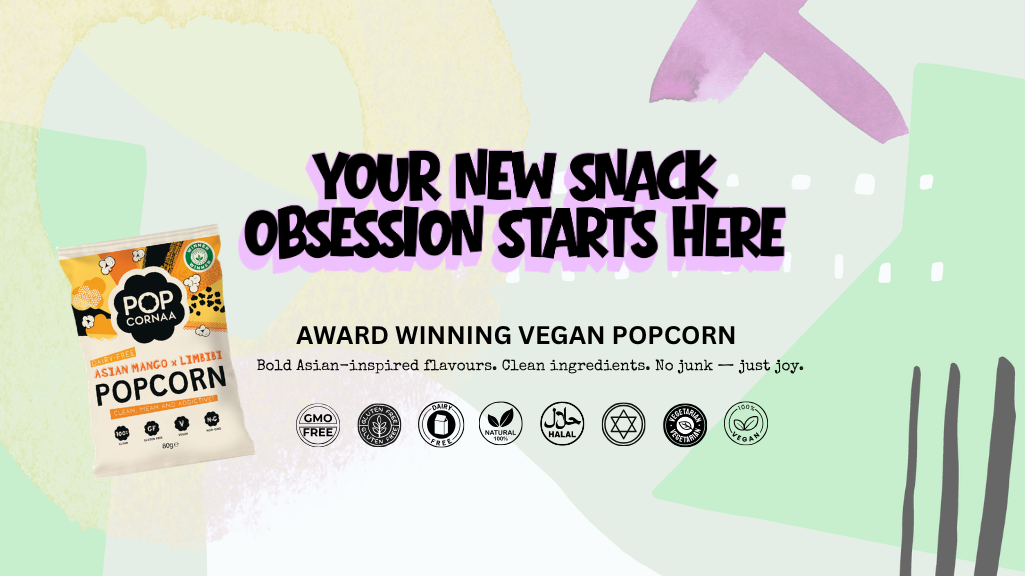
Popcornaa’s Asian Fusion Taster Box brings together five vegan gourmet bags across Asian-inspired and British profiles, all made without refined sugars or artificial additives. It is a practical starting point for anyone who wants to understand what a well-executed global flavour profile actually tastes like before attempting it at home. For a novice tester, it removes the guesswork entirely. For a more adventurous cook, it works as a reference set: taste a finished miso or chilli profile, then try to reverse-engineer it in your own kitchen. Popcornaa holds Great Taste Awards recognition, which means the flavour benchmarks in the box are independently verified, not just self-assessed.
Browse the full range at popcornaa.com and find the box that matches where you are in your flavour exploration.
Useful sources and further reading
- Popcorn flavour innovation guide for home cooks — Popcornaa: Practical vegan flavour ideas and trend context written for UK home cooks.
- Unique popcorn flavours list: top creative picks for 2026 — Popcornaa: A curated list of creative flavour directions with global and plant-based inspiration.
- Popcorn seasonings recipe: vegan flavour mixes — Popcornaa: Step-by-step vegan seasoning recipes and swap notes for home kitchens.
- Why your seasoning never sticks to popcorn — Serious Eats: Detailed technical explanation of adhesion, particle size, and the role of oil in seasoning popcorn evenly.
- A guide to popcorn for your home popcorn maker — Leeds Journal: Covers kernel types, oil choices, and seasoning basics for home equipment.
- The latest popcorn trends — Symrise Insight: Industry-level trend analysis on global flavour influences and consumer behaviour.
- Building a boutique popcorn brand — Noble Maillard: Practical notes on small-batch testing, cost per batch, and seasonal flavour rotation from a craft producer’s perspective.
- Why vegetarian pizza toppings are growing in 2026 — Hell Crust Pizza Blog: Useful context on plant-based savoury flavour trends that translate directly into pizza-style popcorn profiles.
FAQ
How do you add different flavours to popcorn?
The most reliable method is to lightly drizzle warm popcorn with oil or melted vegan butter to create a tacky surface, then dust with a fine-sieved dry seasoning blend and toss well. For sweet profiles, a hot glaze (sugar syrup or melted chocolate) applied in stages and cooled on a lined tray gives the most even coating.
What is the most popular popcorn flavour in the UK?
Classic sea salt and butter remain the most commercially dominant profiles, with cheddar cheese close behind. These familiar flavours continue to anchor retail sales even as more adventurous options such as sweet chilli, caramel, and global-inspired blends grow in popularity.
What are some unique popcorn flavours worth trying at home?
Miso caramel, tandoori masala, furikake sesame, and chilli maple (swicy) are all straightforward to make at home and produce genuinely distinctive results. Popcornaa’s Asian-inspired range offers a ready-made way to taste several of these profiles before attempting them yourself.
How do you stop popcorn seasoning from falling off?
Use the finest possible particle size for your dry seasonings (sieve blends before use), add them while the popcorn is still warm, and make sure there is a thin layer of oil or fat on the surface first. Starch added to a seasoning blend also improves adhesion, as it acts as a natural binding agent between the powder and the kernel surface.
How do you keep flavoured popcorn fresh and crisp?
Cool popcorn completely before sealing it in an airtight container at room temperature. Savoury popcorn keeps well for 2–3 days; glazed or caramel-coated popcorn often stays crisp for 4–5 days. If it softens, spread it on a baking tray and warm at 150°C for 5–8 minutes, then cool before eating.