

How to select popcorn flavours for any occasion
TL;DR:
- Choosing popcorn flavors requires matching kernel types with suitable seasonings and using fat binders for even coating.
- Popular trends include sweet-spicy blends, global umami, and nostalgic classics like butter salt, which appeal to diverse preferences.
Selecting popcorn flavours is the art of matching complementary taste profiles to the right popcorn base, then applying seasonings correctly so every kernel delivers a consistent, satisfying bite. The most popular flavour trends right now include sweet-spicy “swicy” blends, global umami notes, and nostalgic comfort classics like butter salt. Understanding how to select popcorn flavors properly means thinking about three things at once: the type of kernel you are working with, the binding agent that holds seasoning in place, and the flavour architecture that makes a combination feel balanced rather than muddled. Get those three right and the difference is remarkable.
Which types of popcorn and seasonings work best for different flavours?
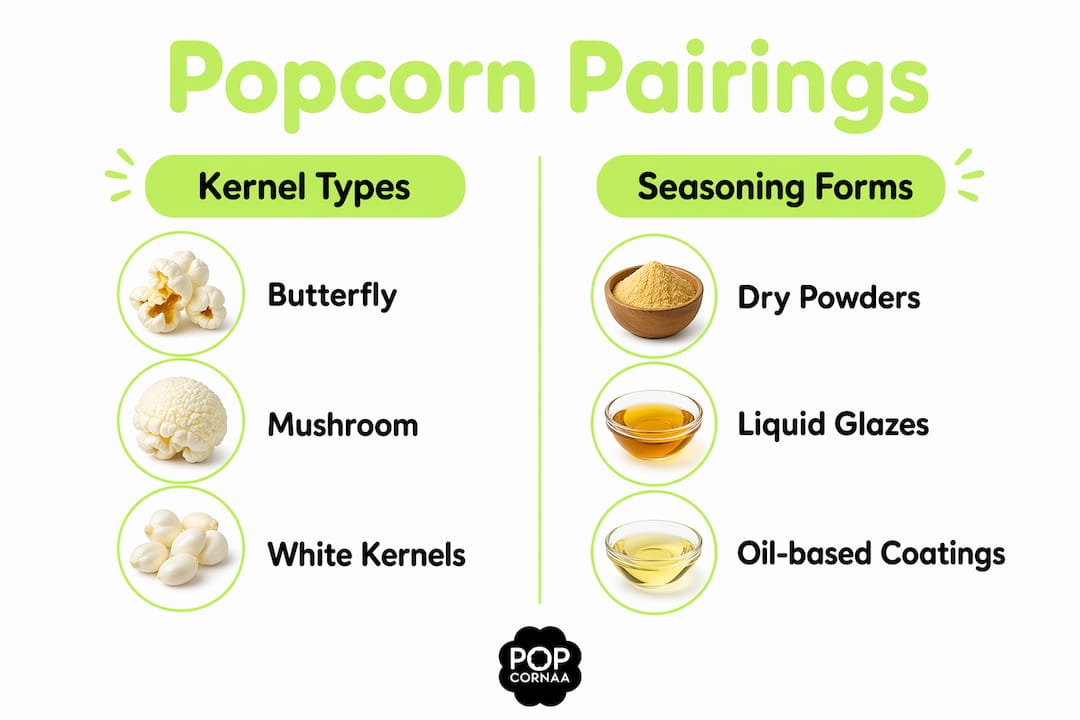
The kernel variety you choose shapes everything that follows. Butterfly popcorn is lighter and ideal for classic salted butter flavours, while mushroom popcorn pops dense and round, making it far better suited to heavy coatings like caramel or cheese. That physical difference matters because a sticky glaze on butterfly popcorn collapses the delicate wings, leaving you with a soggy, uneven result. Mushroom kernels hold their shape under pressure, which is why commercial caramel corn almost always uses them.
Seasoning form is equally important. Dry powders, liquid glazes, and oil-based coatings each behave differently on popcorn, and choosing the wrong one for your kernel type is the most common mistake home snackers make.
| Seasoning type | Best kernel match | Key consideration |
|---|---|---|
| Dry powder (garlic, paprika, nutritional yeast) | Butterfly or mushroom with fat binder | Needs oil or butter mist for adhesion |
| Liquid glaze (caramel, toffee, honey) | Mushroom popcorn | Applied during or immediately after popping |
| Oil-based coating (truffle oil, chilli oil) | Butterfly popcorn | Use sparingly to avoid sogginess |
| Cheese dust or fine salt | Both varieties | Works best on warm popcorn with light fat base |
Dry powders require a fat-based binder like oil or butter to stick effectively, especially on air-popped varieties. Without that binder, the seasoning simply falls to the bottom of the bowl, and you end up with a flavourless top layer and an intensely seasoned pile at the base. This is a physics problem as much as a culinary one, and solving it changes your results immediately.
- Butter and ghee melt evenly and carry fat-soluble flavours like smoked paprika and turmeric beautifully.
- Avocado oil and olive oil work well for savoury profiles and are ideal for vegan preparations.
- Coconut oil adds a subtle sweetness that pairs naturally with cinnamon or chilli-lime blends.
- Microwave popcorn lines, such as Guy Fieri’s 2026 range featuring Mexican Street Corn and Cinnamon Butter Bomb, demonstrate how flavour profiles and ingredient quality directly influence the selection process, with no artificial colours and gluten-free certification raising the bar for what consumers now expect.
White popcorn kernels have a thinner hull and a more neutral flavour, making them a cleaner canvas for delicate seasonings like matcha or rose salt. Yellow kernels have a slightly nuttier, more robust taste that holds up well against bold spices. Knowing this before you season means you are working with the kernel rather than against it.
How to pair and combine popcorn flavours effectively
Flavour pairing for popcorn follows the same logic as pairing ingredients in any serious kitchen: you are looking for complementary notes that engage multiple taste receptors at once. Flavour architecture is the principle at work here, where tangy, creamy, and spicy elements combine to create something greater than the sum of their parts. The Elote (Mexican street corn) combination is a perfect example: lime, chilli, cotija-style seasoning, and a creamy base hit sour, hot, savoury, and rich simultaneously. That multi-layered experience is what separates a genuinely memorable snack from a forgettable one.
The “swicy” trend, which blends sweet and spicy notes, has become one of the most requested flavour profiles in gourmet snacking. Think honey and sriracha, mango and chilli, or maple and cayenne. These combinations work because sweetness softens the heat’s sharp edge, making the spice feel exciting rather than punishing.
Here are some of the best popcorn flavour combinations worth trying:
- Truffle and parmesan: earthy umami from truffle oil layered with sharp, salty cheese dust creates a deeply savoury profile that feels genuinely gourmet.
- Swicy mango chilli: dried mango powder (amchur) with chilli flakes and a touch of coconut sugar hits sweet, sour, and hot in one go.
- Smoked paprika and nutritional yeast: a vegan-friendly combination that delivers smoky, cheesy depth without any dairy.
- Cinnamon and brown butter: warm, nostalgic, and perfect for autumn evenings or family film nights.
- Matcha and sea salt: subtle bitterness from matcha balanced by flaky salt creates an unexpectedly sophisticated snack.
Micro-fine seasoning powders promote consistent coating across sweet, savoury, and spicy profiles, avoiding the clumping that coarser blends produce. This is worth paying attention to when you buy pre-mixed seasonings: if the powder feels gritty or uneven, it will coat unevenly. For a deeper look at how gourmet flavour architecture shapes the snacking experience, the principles apply directly to home preparation as much as commercial production.
Pro Tip: Layer your seasonings in two stages. Add your base seasoning (salt, fat, primary spice) while the popcorn is hot, toss well, then add any fresh or delicate toppings like dried herbs, citrus zest, or finishing salt once the popcorn has cooled slightly. This prevents the delicate top notes from burning off and gives the flavour genuine depth.
What tools and ingredients do you need for flavouring popcorn at home?
The right equipment makes a measurable difference to the final result. You do not need a professional kitchen, but a few specific tools prevent the most common problems: uneven coating, sogginess, and seasoning that slides off the moment you reach into the bowl.
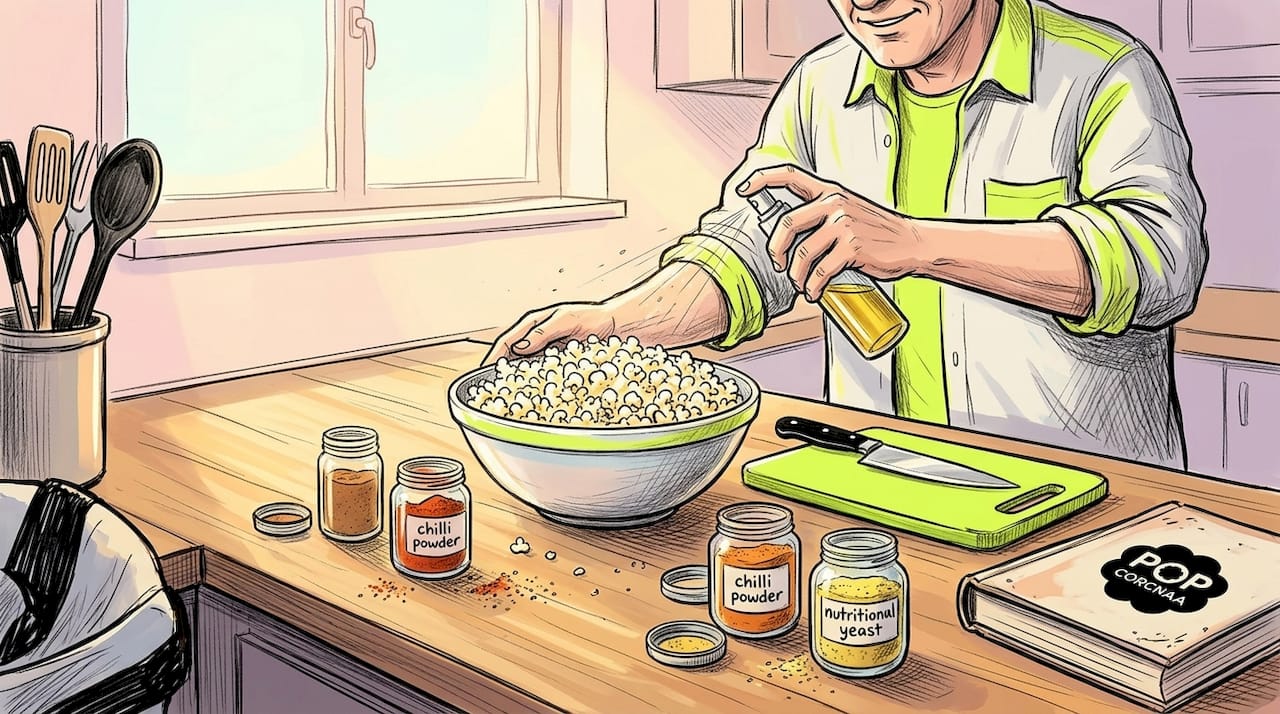
A light mist of olive oil, avocado oil, or melted butter applied immediately after air popping helps seasonings adhere uniformly across every kernel. The key word is “mist.” Pouring oil directly onto popcorn saturates the base kernels while leaving the top ones dry, which is exactly the uneven result you are trying to avoid.
| Tool or ingredient | Purpose | Practical tip |
|---|---|---|
| Oil mister or spray bottle | Even fat distribution without sogginess | Fill with avocado or olive oil; spray in short bursts |
| Large mixing bowl | Tossing popcorn without crushing | Use a bowl at least three times the volume of your popcorn |
| Measuring spoons | Consistent seasoning ratios | Start with half the amount you think you need, then adjust |
| Fine-mesh sieve | Removing clumps from dry powders | Sift seasoning directly over warm popcorn for even coverage |
| Silicone spatula | Gentle folding for glazed popcorn | Prevents breaking kernels during coating |
Butter and oil sprays create fine tackiness ideal for seasoning adhesion without making popcorn soggy, while pouring oils directly causes the sogginess that ruins texture. That single swap, from pouring to spraying, is the most impactful change most home snackers can make.
For dry seasonings, garlic powder, smoked paprika, nutritional yeast, onion powder, and fine sea salt are the workhorses of a well-stocked popcorn pantry. For sweet profiles, caster sugar, icing sugar, cinnamon, and cocoa powder all blend smoothly when sifted. The process of building flavours from scratch involves choosing a fat base, adding fine-textured seasoning to a hot bowl, tossing to distribute evenly, and then adjusting after tasting. That final tasting step is non-negotiable. Seasoning behaves differently once it cools, so what tastes right at 70°C may need a small correction at room temperature.
Pro Tip: Season your popcorn while it is still warm. The heat opens the surface of the kernel slightly, allowing the fat and seasoning to bond more effectively. Popcorn seasoned cold rarely achieves the same depth of flavour.
How to choose popcorn flavours based on occasion and preference
Choosing popcorn flavours for a specific occasion is about reading the room as much as reading your own palate. Butter salt remains the most popular popcorn seasoning globally, with white cheddar, kettle corn, and spicy jalapeño cheddar as strong contenders. That tells you something useful: when you are catering for a mixed group, a classic butter base with a bold option alongside it covers the widest range of preferences without alienating anyone.
For film nights and family gatherings, consider these flavour selection principles:
- For children and mixed families: classic butter salt, mild cheddar, and sweet kettle corn are safe, crowd-pleasing choices that rarely divide opinion.
- For heat seekers: swicy blends like sriracha honey or ghost pepper lime deliver the intensity they are looking for without requiring a specialist palate.
- For foodies and gourmet enthusiasts: truffle parmesan, miso caramel, or Elote-style corn seasonings signal that real thought has gone into the snack selection.
- For vegan and health-conscious guests: nutritional yeast with smoked paprika, or a simple olive oil and sea salt combination, delivers flavour without dairy or artificial additives.
- For gifting occasions: a curated selection of three to four contrasting flavours, such as one sweet, one savoury, and one spicy, gives the recipient a genuine tasting experience rather than a single note.
Dietary considerations are increasingly central to flavour selection. Gluten-free, dairy-free, and no-artificial-colour preferences are no longer niche requests. Guy Fieri’s 2026 microwave popcorn line, for instance, carries kosher and gluten-free certification across all five flavours, reflecting how mainstream these requirements have become. When you are selecting flavours for an event, checking those credentials upfront saves awkward conversations later.
Experimenting with vegan flavour mixes at home is one of the most satisfying ways to develop your own flavour instincts. Start with a base you know works, then introduce one new element at a time. That methodical approach, rather than throwing everything in at once, is how you learn what actually complements what. For further inspiration on flavour innovation at home, the principles of layering and contrast apply across every cuisine and dietary preference.
Key takeaways
Selecting popcorn flavours well requires matching kernel type to seasoning weight, using a fat binder for adhesion, and layering complementary taste profiles rather than relying on a single note.
| Point | Details |
|---|---|
| Match kernel to coating weight | Use mushroom popcorn for heavy glazes and butterfly popcorn for lighter dry seasonings. |
| Always use a fat binder | Spray oil or melted butter onto warm popcorn before adding dry powders to prevent bottom-heavy coating. |
| Layer flavours in two stages | Add base seasoning hot, then finish with delicate toppings once the popcorn cools slightly. |
| Tailor flavours to the occasion | Offer one sweet, one savoury, and one spicy option for mixed groups to cover the widest range of preferences. |
| Use fine-textured powders | Micro-fine seasonings coat evenly and prevent clumping, producing a consistent flavour in every handful. |
What I have learnt from years of experimenting with popcorn flavours
I will be honest: the first time I tried to make truffle popcorn at home, it was a disaster. I poured the oil straight from the bottle, the bottom half of the bowl was saturated, and the top was completely bare. It stopped me in my tracks because I had assumed popcorn was simple. It is not. It rewards attention.
What changed everything for me was understanding that layering flavour bases with fresh toppings leads to a richer, more balanced result. Salt and fat first, then the primary seasoning, then a finishing element. That structure is not complicated, but most people skip it entirely.
The swicy trend genuinely surprised me. I expected it to feel like a gimmick, but the combination of sweetness softening heat is genuinely clever. Mango chilli popcorn has become a regular in our house, and it works for adults and older children alike. The key is balance: too much chilli and the sweetness disappears; too much sugar and the heat loses its point.
My honest advice is to trust texture as much as flavour. Mushroom popcorn with a caramel glaze feels luxurious in a way that butterfly popcorn with the same coating simply does not. The kernel is part of the flavour experience, not just a vehicle for it. Once you start thinking that way, your choices become much more deliberate and the results become much more consistent.
— Emily
Explore gourmet popcorn flavours with Popcornaa
If you want to experience expertly selected flavour combinations without the trial and error, Popcornaa has done the work for you. Every product in the range is 100% clean, dairy-free, and crafted with real flavour intention, from bold Asian-inspired profiles to classic British favourites.
[ ](https://www.popcornaa.com › pages › asian-fusion-taster-box)
Whether you are building a personalised snack selection for a film night, putting together a gift for someone who takes their snacking seriously, or simply curious about what gourmet vegan popcorn can taste like, the custom snack pack builder lets you mix and match flavours to suit your exact preferences. Explore the full range of clean, dairy-free gourmet popcorn at Popcornaa and find your next favourite combination.
FAQ
What is the best way to get seasoning to stick to popcorn?
The most effective method is to mist warm popcorn with oil or melted butter immediately after popping, then add fine-textured dry seasoning and toss thoroughly. Pouring oil directly causes sogginess, so a spray bottle is the better tool.
Which popcorn kernel is best for caramel or toffee coatings?
Mushroom popcorn is the correct choice for heavy coatings like caramel or toffee, as its dense, round shape holds up under sticky glazes without collapsing. Butterfly popcorn is better suited to lighter, dry seasonings.
What are the most popular popcorn flavour combinations right now?
Butter salt remains the global favourite, while swicy blends (sweet and spicy), truffle parmesan, Elote-style Mexican street corn, and smoked paprika with nutritional yeast are among the strongest-performing gourmet combinations in 2026.
How do I choose popcorn flavours for a mixed group at a party?
Offer at least one sweet option, one classic savoury, and one bold or spicy flavour. This three-profile approach covers the widest range of preferences and ensures every guest finds something they enjoy.
Can I make flavoured popcorn that is vegan and gluten-free?
Vegan and gluten-free popcorn is straightforward to achieve using olive oil or avocado oil as the fat base, with seasonings like nutritional yeast, smoked paprika, garlic powder, and fine sea salt. Always check that pre-mixed seasoning blends carry certified gluten-free labelling before using them.