
Quality Popcorn: What to Look For Before You Buy
Quality popcorn comes down to four things you can check: a kernel that pops big and tender, a short ingredient list you can read, a pack that is fresh and sealed, and a label that tells you honestly what is and is not in the bag. Get those four right and the flavour takes care of itself. If you are vegan, avoiding dairy or buying for someone who is, the label matters most, and that is where we put our effort at PopCornaa: every product is vegan, made with clean natural ingredients, in a facility free of major allergens.
TL;DR
- Good popcorn starts with the kernel: about 13.5 to 14% moisture and a big, tender pop, with few unpopped kernels and no tough hulls.
- Read the ingredients: real corn, a good oil, salt and recognisable flavourings. Butter, whey, cheese powder and honey make popcorn non-vegan.
- Vegan on the front does not replace the allergen statement. Check the current pack’s “Contains” and “may contain” wording every time.
- Fresh, sealed and stored airtight beats anything fancy. Moisture loss ruins popcorn faster than you would think.
- For gifts, a variety box lets people find their own favourite, and a digital voucher works when you do not know their taste.
What makes popcorn high quality
Popcorn is a simple food, which is why small differences show. Three things decide how good a bag is before any seasoning goes on.
The kernel and the pop
A popcorn kernel is a seed with a hard hull and a little water inside. When it heats to roughly 180°C, that water turns to steam and the hull bursts, as Scientific American explains. Quality is judged by popping yield (how many kernels pop rather than stay as hard “old maids”) and by expansion, meaning how large the popped flake gets.
A New Mexico State University circular on specialty corns says most commercial varieties expand 30 to 40 times their volume, and that greater volume generally means a better texture. The same source lists flavour, tenderness, absence of hulls, colour and shape as the other marks of quality.
When you eat a bag, you are tasting those points. Tender, light flakes that dissolve are good. Chewy, tough or hull-heavy popcorn that catches in your teeth is not.
Moisture: the hidden variable
Moisture is why fresh popcorn pops and stale popcorn does not. University of Wisconsin extension material reports maximum popping volume at 13.0 to 14.5% moisture, with 13.5% the optimum, and notes that over-dried kernels at 11% or below do not fully recover their popping volume even if rewetted.
The American Popcorn Association adds that a 3% moisture loss can leave popcorn unpoppable, and even a 1% drop harms quality. For a ready-popped bag, the same logic shows up as staleness: air gets in, the flake goes chewy, and the flavour flattens.
Ingredients and how they are applied
The coating is where gourmet popcorn is made or ruined. Look for a short list of ingredients you recognise: corn, a good oil, salt, real spices and fruit or cocoa flavourings rather than a vague “artificial flavouring”. Pieces that are large and consistent, evenly coated rather than clumped or greasy, are a sign of careful tumbling or kettle-cooking. A recent made-on or best-before date and airtight packaging matter just as much.
We go deeper on this in our guides to what makes popcorn gourmet and our gourmet popcorn checklist.
A quick checklist for the shop shelf
| Check | Good sign | Warning sign |
|---|---|---|
| Ingredient list | Short, readable, real ingredients | Long list of flavour enhancers and vague “flavouring” |
| Pieces | Large, light, evenly coated | Mostly crumbs, clumps or pools of oil |
| Date | Recent best-before | Close to expiry, or no date you can find |
| Pack | Sealed, airtight, undamaged | Torn, soft or crushed bag |
| Allergens | Clear “Contains” line and honest precautionary wording | Vegan claim only, with nothing else you can verify |
| Sweet coatings | Flavour from fruit, spice or cocoa | Heavy sugar coating hiding plain kernels |
Vegan, dairy-free and low-allergen: how to read the pack
Plain popped corn is vegan. What the maker adds is what changes the answer. Butter, ghee, cheese powder, whey, milk-based caramel and honey all move a bag out of vegan territory, and milk can hide under names such as casein, lactalbumin and sodium caseinate, as the Allergy & Asthma Network’s label guide lists.
Two points deserve to be said plainly, particularly for families and anyone buying for a school lunch box.
“Vegan” and “allergen-free” are different claims. The Food and Drink Federation’s guidance says there is no legal definition of “vegan” in UK or EU law, and that a vegan product can still carry cross-contact risk. The Food Standards Agency confirms that precautionary allergen statements can sit alongside a vegan label because the two communicate different things.
Recipes change. The same US allergy charity advises reading the label at the shop, at home and before eating, because ingredients can change without notice. Good habit, whichever brand you buy.
If allergies are the reason you are shopping carefully, look for the maker to be open about where the food is produced. Ours is made in a facility free of major allergens, and our products are vegan and made with natural ingredients, which is why we are comfortable with the school-snack and family-snack question. For a specific allergy, always check the pack in your hands against your own medical advice, and speak to your GP or dietitian about what is right for you or your child.
The nutrition side: why popcorn is a decent snack when it is made well
Popcorn is a whole grain, and that is a large part of its appeal. The US Department of Agriculture’s research service says a three-cup serving of air-popped popcorn has about 100 calories and around 15% of the daily fibre most people need, before toppings.
Toppings change the picture, which is why the coating matters. Health Canada’s nutrient table shows air-popped popcorn at 32 kcal per 250 mL cup, against 160 kcal and 20 g sugar for caramel-coated in the same volume (the portions differ in weight, 8 g against 37 g, but the point stands: coatings carry the calories).
A US survey analysis of popcorn eaters found they averaged about 22% more fibre and far more whole grain than people who did not eat it. Popcorn will not fix a diet, but it is an easy whole-grain snack that people actually enjoy. That makes it a sensible choice for the mindful snacker, with a short ingredient list and no refined-sugar glaze doing the heavy lifting.

Ready-to-eat, microwave or home-popped?
Each format has its place. Iowa State University Extension says home-popped whole kernels are the most economical and give you the most control, and that air popping is the lightest method. Microwave bags are quick, but check the label for added fats and flavourings. For pre-packaged bags, it advises choosing a natural product with few added ingredients and checking serving size, fat and salt.
For ready-to-eat, our approach is simple: the flavour is built in, nothing to measure, nothing to burn. For movie night, the office drawer or a lunch box, that convenience is the point.

If you do pop at home
The American Popcorn Association recommends popping at 400 to 460°F (oil burns at 500°F), using an oil such as sunflower, olive, canola, corn or coconut, never butter, which burns under high heat, and salting after popping because salt on the kernels toughens the popcorn. If you like to finish with a flavoured oil, these seasoning oils for home cooking show how to keep the flavour of delicate oils intact. Our step-by-step home cook’s guide and flavour guide for home cooks walk through it.
Keeping popcorn fresh
Whichever format you buy, moisture and air are the enemy. The American Popcorn Association says airtight plastic or glass containers in a cool cupboard are the best way to avoid moisture loss for kernels. For ready-popped bags, the principle is the same: reseal tightly after opening, keep away from heat and damp, and finish the bag within a few days for the best crunch. Always follow the best-before date and storage instructions printed on the pack you buy.
Quality popcorn as a gift
Gourmet popcorn makes an easy gift because it suits so many people: vegan friends, kids, colleagues, a host. What turns a bag into a good gift is variety and honesty about what is inside.
- Variety. Flavour is personal. A mixed box lets the recipient find their favourite rather than getting one you hoped they would like.
- Dietary clarity. If the recipient is vegan or dairy-free, a product that is vegan throughout removes the guesswork.
- Presentation. A box looks like a present; a loose bag looks like a snack. Our packaging guide covers what makes it feel considered.
Where to start with PopCornaa
If you want to taste what quality looks like in a vegan bag, our boxes are built for exactly that. Everything we make is vegan, with Asian-inspired and British flavours.
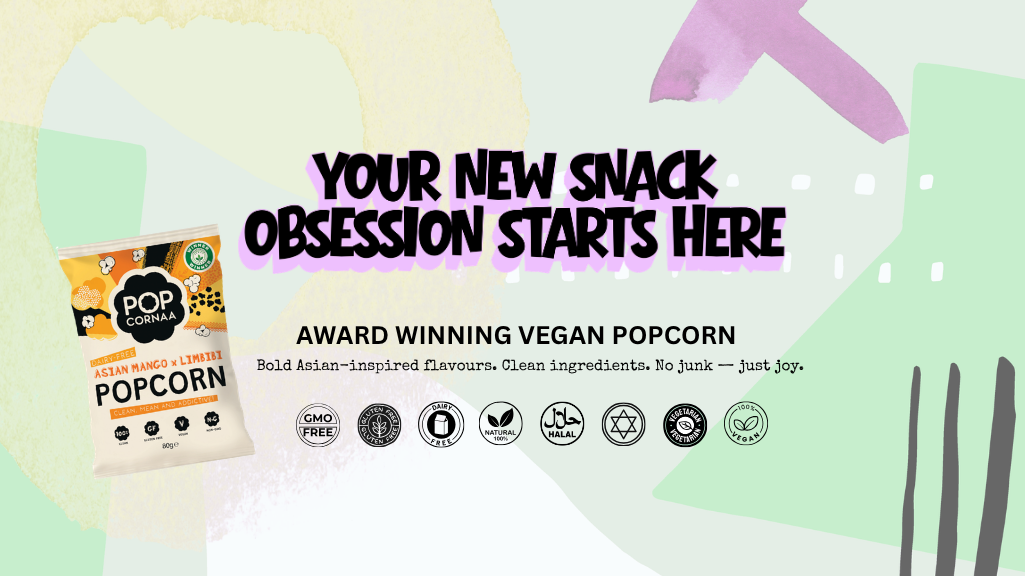
- The Newbie Asian Fusion Taster Box is £17.99 for five bags: the easiest way in.
- The Asian Sweet Bliss Box is £25.95 for nine bags of tropical fruit flavours.
- The Ultimate Asian Sampler Box is £32.95 for twelve bags, a full flavour journey.
- If you would rather choose yourself, you can build your own snack mix.
- When you do not know their taste, digital gift vouchers start from £10.
[ ](https://www.popcornaa.com › pages › asian-fusion-taster-box)
Businesses in the UK and EU who want popcorn for the office, events or resale can find our 35g and 80g snack bags and 625g to 3kg sharing bags on our wholesale page.
Our perspective
I am a parent first, and a food entrepreneur second. That order matters, because it changed how I look at a snack bag. I read every label twice. I ask what is in it, what it was made next to, and whether I would be happy to see my child eat it.
What stopped me in my tracks was how few popcorn bags passed that test while still tasting exciting. Plain popcorn is wonderful. But the moment flavour arrives, so does the butter powder, the whey, the long list. We wanted to prove you could have bold, Asian-inspired and British flavours with a clean, plant-based list and a facility free of major allergens.
So our view of quality popcorn is a simple one. It is light and tender. It is fresh. It is honest on the label. And it makes people curious enough to try something new. That is why we build tasters and variety boxes: so nobody has to commit to a whole bucket of a flavour they have not met.
I hope the next time you pick up a bag, you turn it over first.
Emily
FAQ
What is the healthiest kind of popcorn to buy?
The healthiest popcorn is plain or lightly seasoned, with a short ingredient list and modest fat, salt and sugar. Air-popped popcorn is low in calories, and heavy sweet coatings add the most sugar. Compare the per-serving figures on the pack rather than the front label.
How long does popcorn last?
Follow the best-before date on the pack, and store it airtight in a cool, dry place. Unpopped kernels dry out if exposed to air, and popped popcorn goes chewy as it absorbs moisture. Reseal bags tightly after opening and eat them within a few days for the best texture.
Is all popcorn vegan?
Plain popped corn is vegan, but flavoured popcorn often is not. Butter, ghee, cheese powder, whey, milk caramel and honey are the usual culprits. Read the full ingredients list and the allergen statement on the exact pack, because UK law has no formal definition of vegan.
Is gourmet popcorn worth paying more for?
When it is made with real ingredients, a fresh pop and careful coating, you can taste the difference. Use the checklist above: ingredients, piece size, date, sealed pack and honest allergen information. A variety box lets you try several flavours before settling on a favourite.
Sources
- Scientific American: Explore the “POP” in popcorn
- New Mexico State University: Specialty Corns
- University of Wisconsin: Popcorn Production and Marketing
- American Popcorn Association: Preparing Perfect Popcorn
- Allergy & Asthma Network: How to Read a Food Label for Food Allergies
- FDF guidance on allergen-free and vegan claims
- Food Standards Agency: allergen labelling technical guidance, prepacked food
- USDA ARS: Popcorn, a healthy whole grain snack
- Health Canada: Nutrient value of some common foods
- PubMed: Popcorn consumption and dietary and physiological parameters
- Iowa State Extension: Popcorn, a great snack choice
- Seasoning oils for home cooking