

What gourmet snacks really do for taste, occasions and the snack market
Gourmet snacks exist to do three things: sharpen the taste and texture of an ordinary snacking moment, bring better ingredients and sometimes real functional benefit to the table, and pull the wider snack aisle towards premiumisation. That is the role in one line. What “gourmet” means and how much it matters shifts with the occasion. A solo afternoon craving calls for something different from a dinner party bowl, and consumers now weigh flavour, provenance and price‑per‑portion far more carefully than they did a decade ago.
Key Takeaways
Gourmet snacks earn their premium by combining genuine ingredient quality, craft technique and functional or sensory benefit, which is what drives their growing share of the wider snack market.
| Point | Details |
|---|---|
| “Gourmet” is a criteria word, not a price tag | Judge it on ingredients, technique and presentation, not the number on the label. |
| Richer flavour can mean smaller portions | Better sensory satisfaction per bite often reduces how much people eat in one sitting. |
| Savoury snacks lead the category | Savoury snacks held around 34% of premium snack revenue in 2025, with continued growth forecast. |
| Traceability now matters as much as taste | Audited suppliers and named provenance separate real premium claims from marketing language. |
| Occasion should guide the format | Taster boxes suit gifting, buckets suit sharing, and single bags suit solo cravings. |
The role of gourmet snacks in defining what ‘gourmet’ actually means
“Gourmet” gets printed on a lot of packaging that has no business wearing the word. Culinary tradition ties it to specific, checkable things: high‑quality or rare ingredients, expert technique, and presentation that respects the food rather than just wrapping it, not a price tag by itself.
Four practical markers separate the real thing from marketing gloss:
Ingredients you recognise. A gourmet snack lists whole foods you could name in a kitchen, not a string of stabilisers and flavour compounds standing in for actual flavour.
Technique that respects the ingredient. Small‑batch cooking, slower roasting, hand‑seasoning and controlled production runs cost more because they take longer, but they also produce texture and flavour depth that mass‑line processing usually cannot.
Packaging that protects rather than performs. Good gourmet packaging keeps a product crisp and fresh; it is not there purely to look expensive on a shelf.
A gap between claim and craft. If a product’s story leans entirely on adjectives (“indulgent”, “artisanal”) with no mention of where the ingredients came from or how it was made, treat that as a flag rather than a feature.
Genuine gourmet practice combines specifically sourced ingredients with artisan technique and deliberately limited production scale, which is exactly why some premium snack lines cost more and sell out faster than mass‑market equivalents.
Why gourmet snacks matter: the benefits behind the price
The extra cost of a gourmet snack buys something measurable: more flavour and texture per bite, which changes how much you actually eat. Richer, better‑made snacks tend to deliver greater sensory satisfaction per portion, so people often reach for smaller amounts and still feel satisfied, unlike a bag of bland crisps that invites you to keep going long after you’re full.
That is only part of the picture. The benefits split across a few distinct categories:
- Sensory payoff. Bolder, cleaner flavours and better textures make each handful more rewarding, which naturally slows overconsumption.
- Functional upgrades. Formulations built around protein, fibre or plant‑based fats can turn a snack into something closer to a small, purposeful meal.
- Social currency. Gourmet snacks do real work as gifts, party centrepieces and shared moments, something a standard vending‑machine bag never manages.
- Perceived and actual value. Paying more per bag but eating less per sitting can even things out financially, especially against snacks bought purely on impulse.
Pro Tip: Before buying on flavour alone, check whether the pack lists a protein, fibre or seed content on the front. That is usually the clearest sign a brand has built in a functional benefit rather than just dialling up seasoning.
Main categories and examples of gourmet snacks
Gourmet snacking isn’t one category, it’s several distinct ones, and each rewards a different kind of attention.
- Savoury artisanal crisps, nuts and crackers. This remains the biggest slice of the market. Savoury snacks held roughly 34% of category revenue in 2025, with growth forecast to continue outpacing many other snack types, largely on the back of interesting seasoning and better base ingredients.
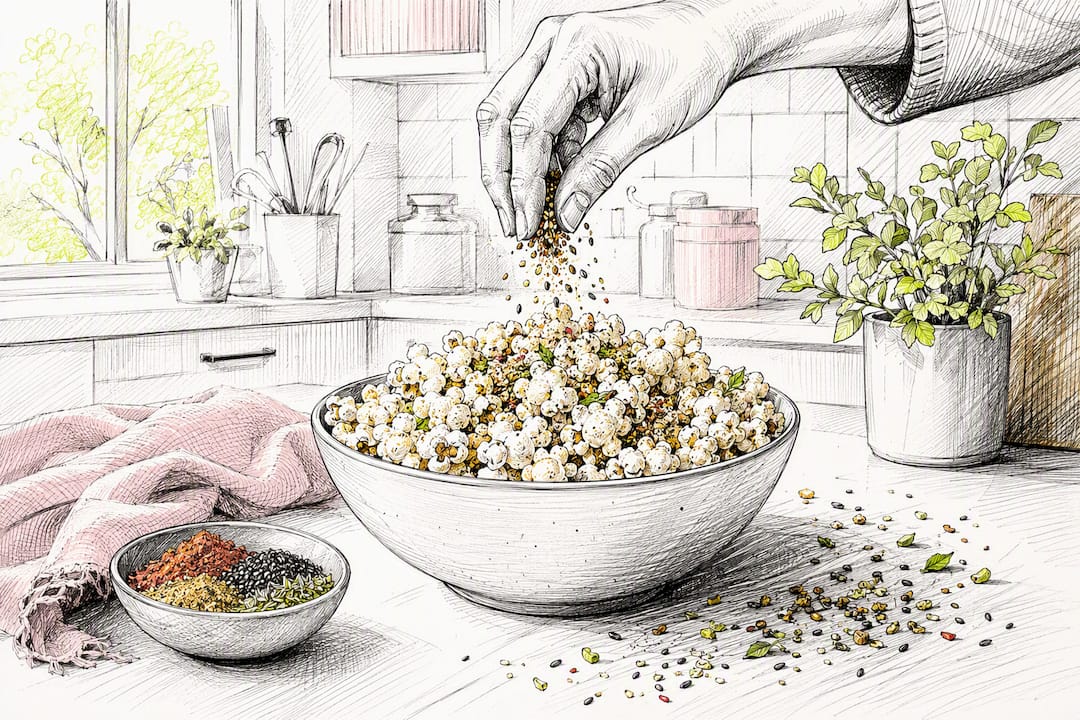
- Gourmet popcorn. Once an afterthought, popcorn has become its own gourmet subcategory. Analysts point to renewed interest driven by health positioning and flavour innovation, with air‑popped bases and inventive seasoning replacing the buttery, salty default. Popcornaa’s own Asian‑inspired flavour range is a good example of how far the category has moved from cinema tubs.
- Bakery and confectionery. Premium biscuits, chocolate‑dipped snacks and small‑batch sweets built on better cocoa, real butter and slower baking rather than shelf‑life shortcuts.
- Functional and better‑for‑you variants. Snacks engineered around protein, fibre or reduced sugar, aimed at shoppers who want indulgence without the usual nutritional trade‑off.
Market size, growth drivers and where gourmet snacks are sold
The numbers back up what your local supermarket shelf already suggests: premium is no longer a niche corner, it’s a growth engine. Market forecasts point to sustained expansion for gourmet and premium snacks through the early 2030s, with premiumisation, online retail and flavour innovation cited as the main forces behind it.
Savoury snacks led category revenue at around 34.12% in 2025, with a projected annual growth rate near 5.5% through the forecast window, according to Mordor Intelligence’s premium snacks analysis. That single figure explains a lot about where shelf space and marketing budgets are heading next.
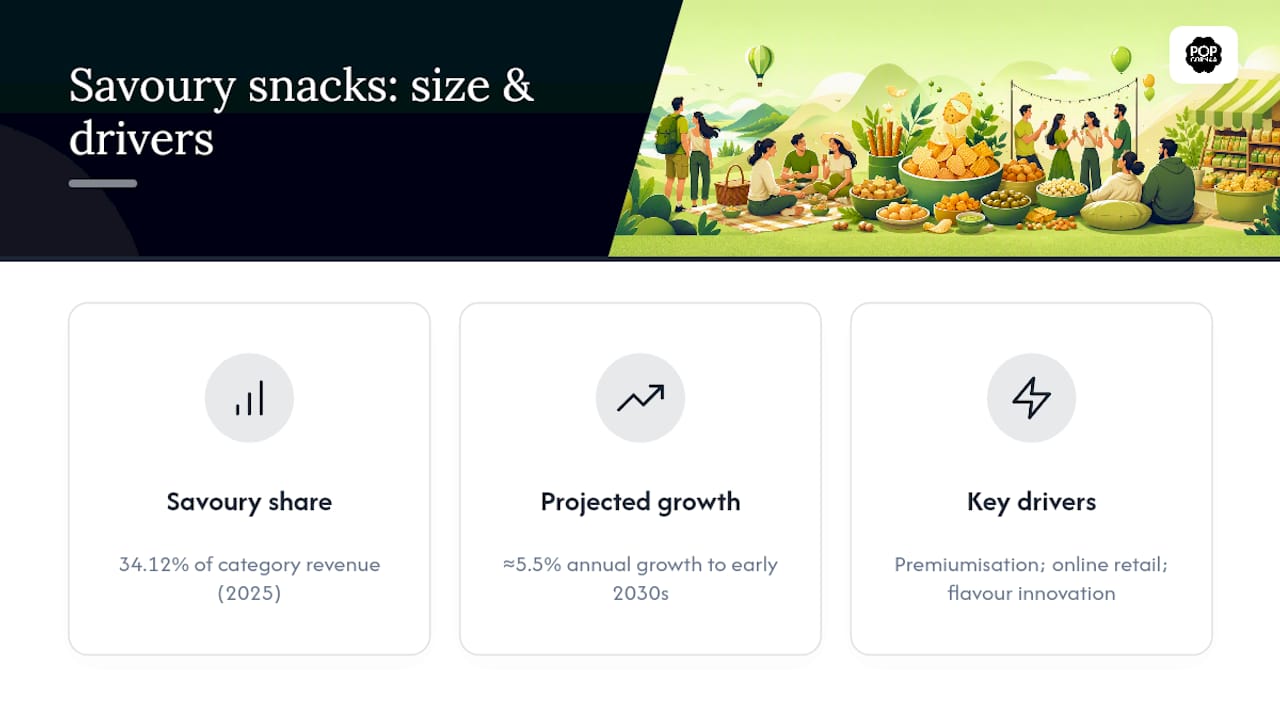
Three forces are doing most of the reshaping. First, clean‑label demand: shoppers increasingly want traceable, functionally enriched ingredients such as protein, nuts and seeds, rather than a vague “premium” claim on the front of the bag. Second, distribution: online retail and direct‑to‑consumer channels are letting smaller specialist brands reach shoppers without fighting for limited supermarket planogram space. Third, geography: Europe currently leads on artisan and organic spend, while Asia‑Pacific is growing faster off a smaller base, a pattern consistent with broader snack market analysis.
There’s also a subtler shift worth noting. Premium snacks are increasingly bought as everyday groceries rather than occasional treats, which is changing how brands think about pack size and pricing rather than treating every product as a once‑a‑month indulgence.
Sourcing, quality claims and sustainability worth trusting
Not every provenance claim on a packet deserves your trust, but the ones that do share a pattern: they name a supplier, a region or a process, not just an adjective. Genuine premium positioning increasingly relies on audited suppliers and real traceability, because shoppers have got sharper at spotting vague “premium” language that isn’t backed by anything.
A few things worth checking before you pay a premium price:
- Traceability claims should name something specific. A farm, a region, a supplier, not just “responsibly sourced” with no further detail.
- Certifications tell you something narrow, not everything. Organic, Fairtrade and non‑GMO labels each confirm a specific standard was met; none of them alone guarantees taste or overall quality.
- Packaging should serve freshness first. Resealable pouches and nitrogen‑flushed bags that keep flavour intact matter more than how glossy the print looks.
- Scarcity genuinely drives cost. Rare seasonings, specific cacao origins or limited harvest ingredients push prices up for real reasons, not just brand positioning.
How to choose gourmet snacks: a quick checklist
Buying well takes about thirty seconds once you know what to look for.
- Scan the ingredients list first. Whole, recognisable foods near the top of the list beat a long tail of stabilisers and flavour agents.
- Check for freshness signals. Batch codes, “best before” dates set reasonably far out, and resealable packaging all suggest a brand that cares about how the product tastes on day ten, not just day one.
- Match the pack to the occasion. A taster box suits gifting or trying new flavours; a large sharing bucket suits a party; a personal‑size bag suits a solo craving.
- Work out the price‑per‑portion. A pricier bag that satisfies you at half the quantity can genuinely cost less per snacking moment than a cheaper one you finish in one sitting.
Pro Tip: Divide the pack price by the number of realistic servings rather than the stated serving size on the label. Gourmet packs are often eaten in fewer, larger portions than mass‑market bags, so the real cost per craving is usually lower than it first looks.
Culinary role: how gourmet snacks fit into food and drink
Gourmet snacks earn their place well beyond the sofa. They work hard at the table too, especially wherever texture and contrast matter.
- Aperitivo and canapé service. Crisp, salty or umami‑forward snacks make natural stand‑ins for canapés when you want something quick but polished.
- Drink pairings. Bold, spiced flavours suit citrus‑forward cocktails or a crisp lager; sweeter, caramelised notes pair naturally with dessert wine or a good stout.
- Cheese and dip company. A well‑seasoned cracker or crisp can carry a soft cheese or dip better than a plain, neutral base ever will.
- Presentation at home. Tipping a gourmet snack into a simple bowl rather than serving from the bag instantly reads as more considered, without any extra effort.
PopCornaa’s role in gourmet snacking, in practice
We built Popcornaa around the same criteria this article has laid out: real ingredients, genuine flavour craft, and formats that fit how people actually snack.
- Taster boxes and sharing buckets. From the Newbie Asian Fusion Taster Box to large sharing buckets, our formats match the occasion rather than forcing one pack size on every customer.
- Discovery tools. A flavour quiz and curated collections like Our Asian Flavourz and Brit-Core Flavourz help shoppers find a match instead of guessing.
- Trust signals. Awards, customer reviews and a running blog of flavour and trend explainers back up the claims on the pack rather than leaving them unproven.
- Vegan formulation throughout. Every flavour is built without animal products, so gourmet doesn’t come at the cost of dietary flexibility.
What the evidence actually supports about gourmet snacking
The conventional line on gourmet snacks treats them as an indulgence tax, paying more for the same craving with nicer packaging. The market data and culinary definitions both point somewhere else. Real premium positioning is a supply‑chain decision as much as a flavour one: better sourcing and smaller batches cost more to produce, and that cost shows up honestly in the price rather than being invented to justify one.
Where conventional advice falls short is in treating all “premium” claims as equal. A bag with vague adjectives and no named supplier is not doing the same work as one built on audited sourcing and small‑batch technique, even if both sit at similar price points on the shelf.
If you take one thing from this, prioritise the ingredients list over the marketing copy. Everything else, the packaging, the price, the brand story, should support what’s actually inside the bag, not distract from it. Get that right and the rest of the buying decision becomes far simpler.
Sources
- Gourmet Snacks Market Size, Growth, and Trends 2025 to 2035
- Premium snacks market report (Mordor Intelligence)
- What ‘gourmet’ means in professional culinary contexts
- UK crisps and savoury snacks market report (Mintel Store)
FAQ
What does “gourmet snacks” mean?
Gourmet snacks are foods made with high‑quality or specifically sourced ingredients, expert preparation technique and considered presentation, rather than snacks defined simply by a higher price.
Why is it important to have snacks?
Snacks bridge the gap between meals, supporting energy and focus, and gourmet options add sensory satisfaction and sometimes functional nutrition, such as added protein or fibre, on top of that basic role.
What does “gourmet” mean in food?
In professional culinary use, “gourmet” refers to ingredient quality, craftsmanship and presentation rather than cost alone, a standard set out clearly in culinary definitions of the term.
What are gourmet treats?
Gourmet treats are indulgent foods, sweet or savoury, built from premium ingredients and finished with more care than mass‑market equivalents, spanning everything from artisanal chocolate to flavoured gourmet popcorn.