

Step by step gourmet popcorn: your home cook's guide
TL;DR:
- Gourmet popcorn requires precise control over kernel moisture, popping technique, and staged flavoring to ensure high-quality results. Using the right tools, proper kernels, and following the recommended 30-second rest during popping can prevent common mistakes like unpopped kernels or burning. Applying flavors while warm and gradually in stages enhances taste without overpowering the popcorn, encouraging creative experimentation.
Gourmet popcorn is defined as carefully prepared popcorn where kernel quality, cooking temperature, and flavour application are all controlled to produce a refined snack. The step by step gourmet popcorn process is not complicated, but it does reward precision. Kernel moisture content of 14% delivers the highest popping volume and the lowest rate of unpopped kernels. Get that right, and you already have a head start over most home cooks. Add thoughtful seasoning, and you have something genuinely special.
What do you need to make gourmet popcorn at home?
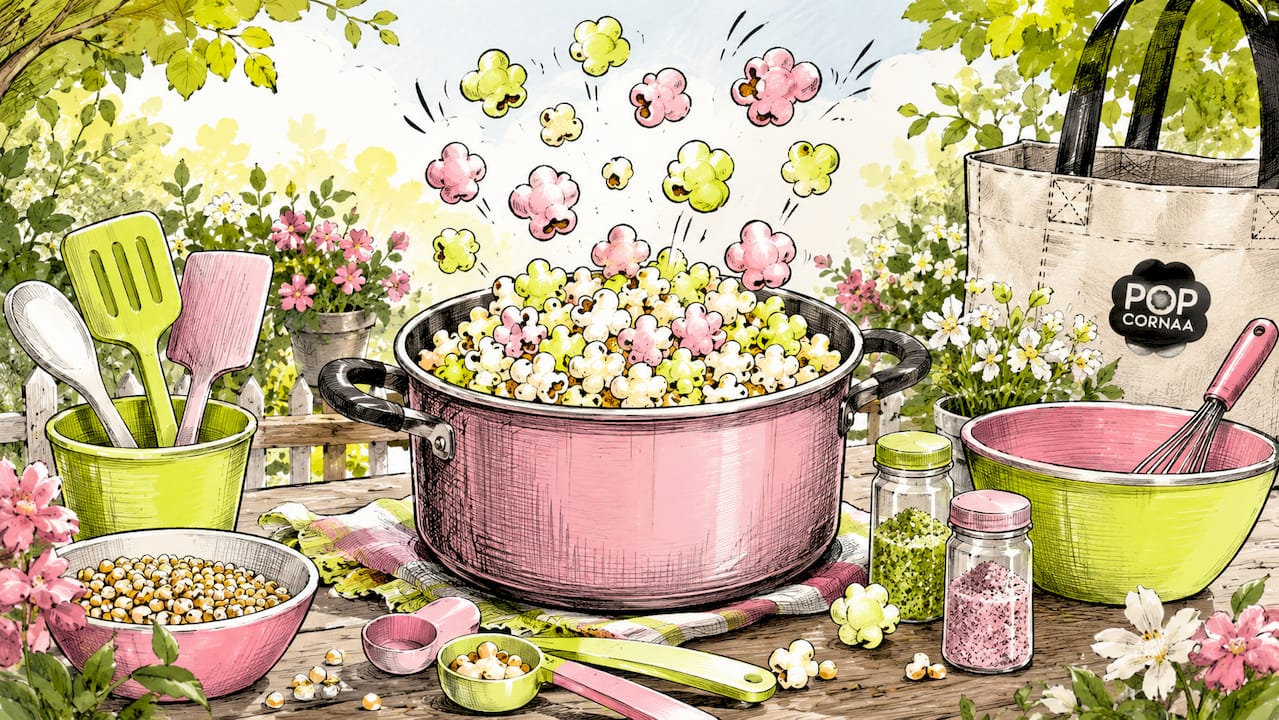
The right tools make a real difference before a single kernel hits the pot. A heavy-bottomed pot in the 6–8 quart range gives kernels room to expand without crowding, which is the single most common cause of uneven popping. A tight-fitting lid, a large mixing bowl for tossing, and a set of measuring spoons round out the basics.
Choosing your kernels
Kernel quality is the foundation of every great gourmet popcorn recipe. Popping temperature sits between 180°C and 200°C, and kernels at the correct moisture level convert their internal water to steam efficiently at that range. Kernels that are too dry pop small and leave a chewy texture. Kernels that are too moist can scorch before they fully open.
Look for kernels labelled as “mushroom” or “butterfly” varieties. Mushroom kernels produce a round, dense shape that holds coatings well, making them ideal for sweet and caramel recipes. Butterfly kernels produce the classic jagged shape with more surface area, which suits light savoury seasonings.
Oils and fats
Your choice of fat affects both flavour and how well seasoning clings to the popcorn. Neutral oils such as vegetable or refined coconut oil handle high heat without burning and let your chosen seasoning take centre stage. Butter adds flavour but burns easily, so many home cooks combine a neutral oil for popping with melted butter added after.
| Cookware size | Kernel quantity | Best use |
|---|---|---|
| 4 quart pot | ¼ cup kernels | Single serving, quick batches |
| 6–8 quart pot | ½ cup kernels | Standard family batch |
| Large stockpot | ¾ cup kernels | Party or sharing quantities |
How do you pop kernels perfectly every time?
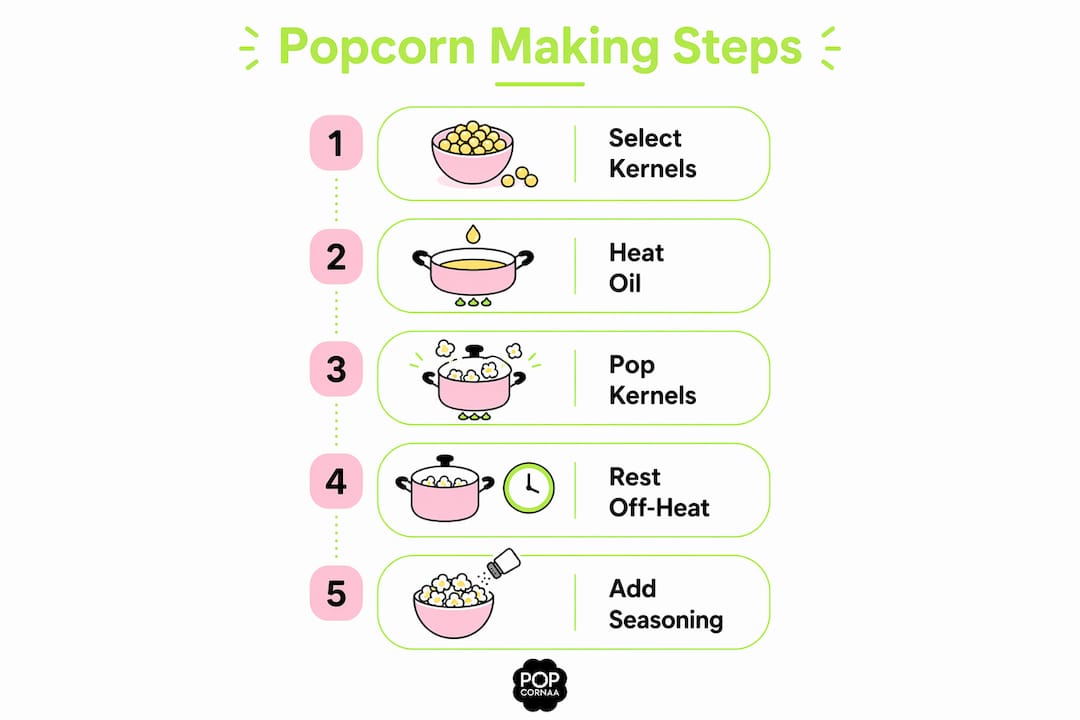
The 6-step stovetop method is the most reliable technique for consistent, near-perfect results. Each step has a specific purpose, and skipping any one of them increases the chance of burnt kernels or a disappointing yield.
- Heat your oil. Add two to three tablespoons of neutral oil to your pot and set the heat to medium-high.
- Test with 3–4 kernels. Drop in three or four kernels and place the lid on. When those kernels pop, your oil is at the correct temperature.
- Add the bulk kernels. Pour in half a cup of kernels in a single layer across the base of the pot.
- Remove from heat for 30 seconds. This off-heat rest lets all the kernels reach a similar temperature, which synchronises the popping and reduces the number left unpopped at the end.
- Return to heat and shake. Place the pot back on medium-high heat. Shake gently every 10–15 seconds to redistribute kernels and prevent burning.
- Remove when popping slows. Once you hear a gap of two to three seconds between pops, take the pot off the heat immediately. Waiting longer scorches the batch.
Pro Tip: Tilt the lid slightly during popping to let steam escape. Trapped steam makes popcorn chewy rather than crisp.
The 30-second off-heat rest is the step most home cooks skip, and it is the one that makes the biggest difference. It costs you nothing except half a minute of patience.
How do you apply gourmet flavourings without overpowering the popcorn?
Flavour application is where gourmet popcorn recipes separate themselves from the ordinary. Seasoning while the popcorn is still warm and using a light coating of fat helps flavours adhere and intensify. Cold popcorn repels dry seasoning, and you end up with most of it at the bottom of the bowl.
The fat-first approach works like this: drizzle melted butter or a neutral oil over the warm popcorn, toss thoroughly, then add your dry seasoning in stages. Toss and taste between each addition. This staged method gives you control and prevents the most common mistake in home gourmet popcorn making.
Flavour profiles to try
- Savoury: Truffle salt with a little nutritional yeast, rosemary and sea salt, smoked paprika with garlic powder, or grated Parmesan with black pepper.
- Sweet: Salted caramel with a pinch of flaky sea salt, cinnamon sugar with vanilla, or dark chocolate drizzle with crushed almonds.
- Spicy: Chilli lime with a squeeze of fresh lime zest, cayenne and honey for sweet heat, or Korean gochugaru with sesame oil.
- Cheesy comfort: Cheddar powder with onion flakes, or a blend of nutritional yeast, turmeric, and smoked salt for a vegan version.
Potent flavourings like truffle salt have a dramatic effect even in very small quantities, because popcorn traps aroma compounds exceptionally well. A quarter teaspoon of truffle salt across a full batch is often enough. Start with less than you think you need.
Pro Tip: Mix your dry seasonings together in a small bowl before applying them. This gives you an even blend across every kernel rather than pockets of intense flavour.
For deeper reading on how professional flavour makers approach this, the best gourmet popcorn flavours guide from Popcornaa covers truffle salt staging and aroma release in detail.
What mistakes should you avoid when making gourmet popcorn?
Most problems in homemade gourmet popcorn come down to three areas: incorrect kernel moisture, poor heat management, and mistimed seasoning. Recognising these early saves you from a frustrating batch.
- Too many unpopped kernels: Kernels are likely too dry or the oil was not hot enough before you added them. Use the 3–4 kernel test every time.
- Burnt popcorn: The pot was left on heat too long after popping slowed, or the kernels were not shaken regularly. Shake every 10–15 seconds and remove promptly.
- Chewy texture: Steam was trapped under the lid. Tilt the lid slightly to allow moisture to escape during popping.
- Uneven seasoning: Seasoning was added to cold popcorn without fat. Always season warm popcorn with a fat base first.
- Overpowering flavour: Too much seasoning was added in one go. Use the staged application method and taste as you go.
| Problem | Likely cause | Fix |
|---|---|---|
| Many unpopped kernels | Dry kernels or cool oil | Use 14% moisture kernels; test oil with 3–4 kernels first |
| Burnt batch | Infrequent shaking or late removal | Shake every 10–15 seconds; remove when popping slows |
| Chewy popcorn | Trapped steam | Tilt lid slightly during popping |
| Uneven seasoning | Cold popcorn or no fat base | Season warm with fat; toss thoroughly |
| Overpowering flavour | Too much seasoning at once | Apply in stages; taste between additions |
Consistent heat and correct seasoning timing are the two levers that fix most quality issues. Address those two things and the rest follows naturally.
Creative flavour combinations to inspire your next batch
Once you have the technique down, the real fun begins. Gourmet popcorn flavour profiles span sweet, savoury, spicy, and cheesy categories, and the most interesting creations often blend two of those categories together.
- Truffle garlic: Truffle salt, garlic powder, and a drizzle of good olive oil. Rich, earthy, and deeply satisfying.
- Chilli chocolate: Dark chocolate drizzle with a dusting of cayenne and flaky sea salt. The heat arrives after the sweetness, which makes it addictive.
- Salted caramel and pecan: Caramel coating with crushed toasted pecans and a generous pinch of sea salt. A crowd favourite at gatherings.
- Miso butter: White miso whisked into melted butter, brushed over warm popcorn, then finished with sesame seeds. Umami-forward and unexpected.
- Chilli lime: Lime zest, chilli flakes, and a touch of sugar for balance. Bright, sharp, and very moreish.
Serving a seasoning station at a gathering is one of the most underrated creative popcorn ideas. Pop a large plain batch, set out small bowls of different seasonings, and let guests build their own combinations. It turns a snack into an experience. For more inspiration, the popcorn flavour innovation guide from Popcornaa offers step-by-step flavour application ideas built specifically for home cooks.
Key takeaways
Gourmet popcorn made at home requires the right kernel moisture, a controlled popping method, and staged flavour application to achieve consistent, professional-quality results.
| Point | Details |
|---|---|
| Kernel moisture matters | Use kernels at approximately 14% moisture for the highest yield and fewest unpopped kernels. |
| The 30-second rest is non-negotiable | Removing the pot from heat for 30 seconds after adding kernels synchronises popping and reduces waste. |
| Season warm with fat first | Apply a light fat coating before dry seasoning so flavours adhere evenly across every kernel. |
| Stage your seasoning | Add potent flavourings gradually, tossing and tasting between each addition to avoid overpowering the batch. |
| Shake regularly during popping | Gentle shaking every 10–15 seconds prevents burning and distributes heat evenly across the kernels. |
What I have learned from making gourmet popcorn obsessively
I will be honest with you. The first time I tried to make truffle popcorn at home, I dumped half a jar of truffle salt over the bowl and nearly ruined the whole batch. It smelled extraordinary and tasted like I had eaten a forest floor. That experience taught me more about seasoning restraint than any recipe ever could.
The technique section of this guide reflects what I genuinely believe: the popping method is the foundation, and you cannot shortcut it. The 30-second off-heat rest felt fussy to me the first time I read about it. Now I would not skip it for anything. It is the difference between a bowl with a handful of sad unpopped kernels at the bottom and one that is almost entirely perfect.
What I find most exciting about gourmet popcorn is how much creative freedom it offers once the basics are solid. The miso butter combination I mentioned above came from a moment of curiosity and a half-used tub of white miso in the fridge. Popcorn is forgiving in that way. It rewards experimentation, as long as you respect the balance between flavours. If you are just starting out, try the 7 unique popcorn mix options from Popcornaa for ideas that are genuinely creative without being intimidating.
— Emily
Popcornaa’s gourmet flavours: worth trying alongside your homemade batches
Making gourmet popcorn at home is deeply satisfying, and tasting professionally crafted flavours alongside your own creations is one of the best ways to sharpen your palate.
[ ](https://www.popcornaa.com › pages › asian-fusion-taster-box)
Popcornaa’s Asian Fusion Taster Box brings together five distinct gourmet vegan popcorn flavours, each representing the kind of bold, layered seasoning that takes time to develop at home. The range has earned recognition at the Great Taste Awards 2024, which reflects the care that goes into each flavour. Trying a curated selection like this gives you a clear reference point for what balanced, well-applied seasoning actually tastes like. It is a genuinely useful benchmark for any home cook serious about their craft.
FAQ
What moisture content do popcorn kernels need for best results?
Kernels at 14% moisture content produce the highest popping volume and the lowest rate of unpopped kernels. Kernels that are too dry or too moist will pop inconsistently.
Why do you remove the pot from heat before adding all the kernels?
The 30-second off-heat rest after adding bulk kernels allows all kernels to reach a similar temperature. This synchronises popping and significantly reduces the number of kernels left unpopped at the end.
What is the best fat to use for gourmet popcorn seasoning?
Melted butter or a neutral oil applied while the popcorn is warm creates the best base for seasoning adhesion. Fat helps flavours cling and intensify across every kernel.
How do you stop gourmet popcorn from tasting too salty or overpowering?
Apply seasoning in stages, tossing and tasting between each addition. Potent seasonings like truffle salt have a strong effect in small quantities, so starting with less and building up gives you control over the final flavour.
What pot size works best for making gourmet popcorn at home?
A 6–8 quart heavy-bottomed pot with half a cup of kernels gives kernels enough room to expand fully. A pot that is too small crowds the kernels and leads to uneven popping and a higher risk of burning.