

Sustainable Snack Options: A Practical List for 2026
The most sustainable snacks are plant-based, made from responsibly sourced ingredients, packed with as little waste as possible and eaten rather than thrown away. This list gives you real options for the fruit bowl, the desk drawer, the lunch box and the sofa, plus a simple way to judge any snack you find on a shelf.
I’m a parent and a food entrepreneur, so I look at snacks from two angles: what is going into my family, and what is left behind afterwards. Neither has to be a compromise.
TL;DR
- A sustainable snack combines quality ingredients, responsible sourcing, low-waste packaging and an ethical business behind it.
- Easy wins: seasonal fruit, nuts and seeds from bulk shops, roasted chickpeas, air-popped popcorn, and snacks made from leftovers.
- Packaged snacks can be part of a sustainable routine, and research suggests packaging can cut food waste when it is done well.
- Read the label for vegan and allergen needs, and look for clear, specific claims instead of vague green wording.
- Plan snacks for the week and store them properly so nothing goes in the bin.
What makes a snack sustainable?
There is no single badge that settles it. A UCLA Sustainability article from 2024 describes a positive-impact snack as one made from quality ingredients rather than artificial or chemical ones, sourced responsibly with eco-conscious farming, packaged with low or zero waste, and made by an ethically and environmentally minded business.
That gives us four questions to ask of any snack:
- Ingredients: are they simple, natural and recognisable?
- Sourcing: do you know where they came from, and was the farming kind to land and people?
- Packaging: is there less of it, and can you reuse, recycle or avoid it?
- Business: does the brand publish what it does, or only say it?
The same article points readers towards brands that publish sustainability reports and commit to cutting waste and carbon emissions. Transparency is the common thread. A snack that is hard to trace is hard to trust.
If you want more on why this matters day to day, our piece on why eco-friendly snacks matter for conscious snackers goes deeper.
A sustainable snack options list
Here is the list I would actually hand to a friend, grouped by how you shop and how much effort you want to spend.
Fresh and unwrapped
The lowest-packaging snacks are the ones that arrive with their own skin.
- Seasonal fruit: apples and pears in autumn, British berries in summer. Buy loose and bring your own bag.
- Raw vegetable sticks with hummus: carrots, cucumber and peppers keep well in a container for a few days.
- Fruit with nuts or seeds: a satisfying mix of sweetness, protein and fibre.
- Bananas: easy to carry and naturally wrapped.
Bulk-buy and prepare-ahead
A small amount of Sunday effort removes a lot of single-use wrapping.
- Nuts, seeds and dried fruit from a refill shop or a large paper sack, decanted into a jar.
- Roasted chickpeas: toss cooked chickpeas in oil and spices and roast until crisp. We cover this idea in our guide to savoury roasted chickpeas.
- Energy bites: dates, oats, seeds and nut butter rolled into balls and kept in the fridge.
- Seed crackers: chia, sunflower and pumpkin seeds baked into a crisp sheet.
- Popcorn kernels: one bag of kernels makes a very large bowl of snack.
Plant-based crunch that comes ready to eat
Sometimes you need something in the bag and out of the door. Good choices here are vegan snacks with short ingredient lists, such as baked lentil crisps, air-popped veggie chips, puffed quinoa and, of course, gourmet vegan popcorn. Popcorn is a whole grain, light to carry and satisfying to share, which is exactly why we built PopCornaa around it.

For more variety, browse our plant-based snack ideas.
Snacks from leftovers
This is the most sustainable category of all, because it uses food that already exists. Love Food Hate Waste suggests turning cooked potatoes, risotto and bread ends into quesadillas, arancini balls and mini pizzas. Cold roasted vegetables in a wrap, or stale bread blitzed into crisp croutons, work the same way.
Quick comparison: which option suits which moment
| Moment | Good option | Why it works |
|---|---|---|
| School or work bag | Fruit, nut and seed mix in a reusable tin | Little or no packaging, filling |
| Movie night | Popcorn, homemade or ready-flavoured | Easy to share, naturally light |
| Afternoon slump | Hummus with vegetable sticks | Fibre and protein, prepared in minutes |
| Weekend baking | Energy bites or seed crackers | Batch-made, stored for days |
| Gift or treat | A curated box of vegan snacks | Variety in one parcel |
| Using up the fridge | Quesadillas or mini pizzas | Rescues leftovers |
How to read a label without getting fooled
Green wording on a pack can be loud and still say very little. A 2025 trend report from Chaucer Foods says studies show 52% of consumers find eco-friendly claims on packaging trustworthy when they are clearly stated, and it recommends looking for callouts such as organic, non-GMO or fair trade. The same report names traceability as a key factor, with proof of ingredients followed from farm to snack.
In practice, this is the checklist I use in the shop:
- Short ingredient list. If you cannot picture the ingredients, ask why they are there.
- Specific claims. A named certification or a stated action beats a leaf icon.
- Allergen and vegan information. Check for milk, whey, casein, honey and gelatin if you are avoiding animal products.
- Packaging. Less is better, and a resealable bag you can reuse counts for something.
- Company honesty. Does the brand explain its sourcing and operations on its own website?
If you have a severe allergy or intolerance, always read the full allergen statement on the pack and speak to your GP or a registered dietitian about what is right for you.
Packaging, food waste and the bigger picture
Packaging gets blamed for a lot, and sometimes fairly. Yet wasted food carries its own environmental cost: the land, water and energy used to grow it are all lost.
A 2022 peer-reviewed framework in PMC by Gustafson and colleagues argues that packaged foods can improve food safety, reduce unnecessary food waste and conserve resources. It adds that manufacturing and processing at scale can in many cases use less energy and water and generate less waste than preparing the same food at home. The authors say that healthy, sustainable diet guidance often discourages packaged foods, which does not fit modern life, and that packaged foods can help make good dietary patterns achievable for everyone.
So the question is not packaged or homemade. It is whether the snack is well made, well packed and actually eaten. A sealed bag of popcorn that stays fresh until you are ready for it can be a perfectly sensible choice, and so can a batch of popcorn you pop at home from kernels.
If you run a food business and want to see how packaging expectations are evolving, this overview of eco-friendly food packaging for EU operators shows how food companies are thinking about it.
Cutting waste at home
Small habits go a long way:
- Keep your fridge between 0 and 5°C. Love Food Hate Waste says the right storage can give food an extra two or three days of freshness.
- Decant bulk snacks into airtight jars so they stay crisp.
- Plan snacks the way you plan meals, then buy only what you will eat.
- Take reusable bags and tins when you shop.
- Eat the oldest snack first.
Vegan, dairy-free and allergen-friendly choices
Plenty of sustainable snacks suit plant-based diets by default: fruit, nuts, seeds, roasted chickpeas, edamame, hummus with vegetables and popcorn. Where it gets trickier is shop-bought sweet and savoury snacks, which can hide milk powder, whey, honey or gelatin.
For families, this matters even more. School rules on nuts differ, and children with sensory or gut sensitivities often do better with simple, predictable textures. That is one reason I care about clean, natural ingredients. Every PopCornaa product is vegan, and we make them in a facility free of major allergens. Read the pack for the allergen details of each product, and our healthy snacking checklist is a handy companion for a one-to-two snacks-a-day routine.
If you want to see the bigger case for plant-based eating, read why plant-based snacks are worth choosing.
Making sustainable snacking practical
The best sustainable snack is the one you actually reach for. Cost, convenience and taste decide that, so build a routine around them.
- Choose a base. Pick two or three staples, such as fruit, a nut mix and a crunchy savoury snack.
- Add one prepared item per week. Roasted chickpeas, energy bites or a tray of seed crackers.
- Keep one ready-to-eat option. Something shelf-stable for rushed days stops you buying whatever is nearest.
- Reuse what you can. Jars, tins and bags last for years.
- Review the bin. If something is going off, buy less of it next time.
If you prefer to compare brands, our guide to sustainable snack brands in the UK explains how to evaluate them on flavour, nutrition and ethos.
Our perspective on sustainable snacking
I started PopCornaa as a parent who wanted snacks I felt good about handing to my children, and who was tired of choosing between flavour and conscience.
For us, sustainability starts with the plate: vegan products, clean natural ingredients and a facility free of major allergens, so that more people can share the same bowl. Then we bring the fun, with Asian-inspired and British flavours that make plant-based snacking feel like a treat rather than a compromise.
I believe the most sustainable snack is one that people love enough to finish. That is why we build boxes for tasting, sharing and gifting, so you can try new flavours in small bags and find your favourites without waste.
Our own claim is simple: good snacks should be kind, honest and delicious. We hope our range helps you make that choice every day.
Emily
Try a plant-based snack box
If you would like to explore vegan gourmet popcorn without committing to one flavour, we have three boxes. The Newbie Asian Fusion Taster Box is £17.99 and holds five bags. The Asian Sweet Bliss Box is £25.95 for nine bags of tropical fruit flavours. The Ultimate Asian Sampler Box is £32.95 for twelve bags.
[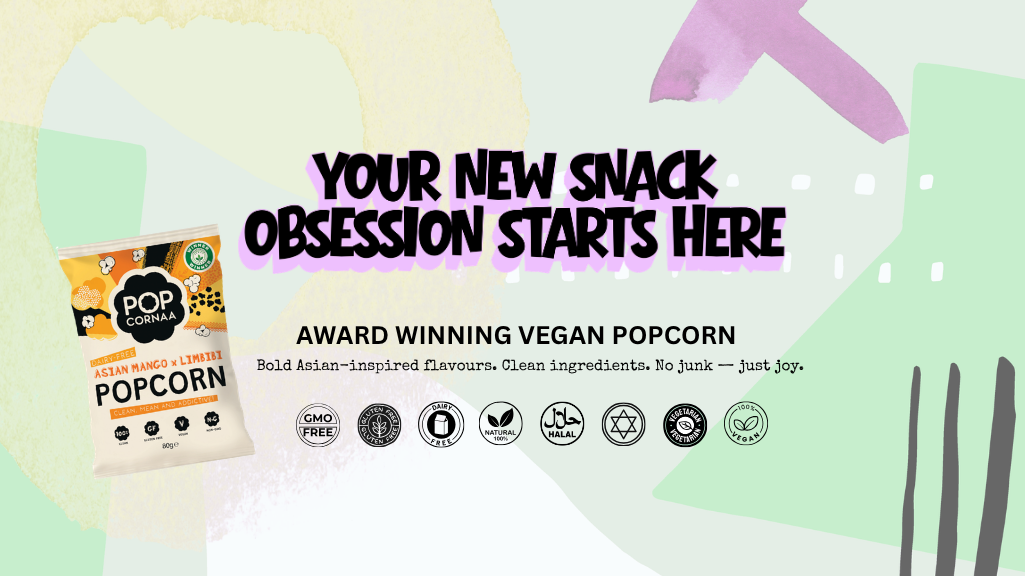 ](https://www.popcornaa.com › pages › asian-fusion-taster-box)
Want it your way? Build your own with the Custom Popcorn Box, or give someone else the choice with a digital gift card from £10. For cafes, offices and shops, our wholesale page covers snack bags and bulk sharing bags.
FAQ
What are the most sustainable snacks?
The lowest-impact choices are usually seasonal fruit and vegetables, nuts and seeds bought with little packaging, and snacks made from leftovers. Plant-based ready-to-eat snacks with short ingredient lists and clear sourcing are a good option when you need convenience.
Is popcorn a sustainable snack?
Popcorn is a plant-based whole grain, and you can pop it at home from kernels or buy it ready-flavoured. Either way, look for simple ingredients and a brand that is open about how it makes its snacks. Our popcorn is vegan and made with clean natural ingredients.
Are packaged snacks always worse than homemade ones?
No. A 2022 PMC framework argues that packaged foods can reduce food waste and conserve resources, and that manufacturing at scale can be more efficient than home preparation in many cases. What matters is the whole picture: ingredients, packaging and whether the food gets eaten.
How can I tell if a sustainability claim is trustworthy?
Look for specific, clearly stated claims such as organic or fair trade, and for brands that show where ingredients come from. Vague phrases with no detail deserve a second look. A company that explains its sourcing on its own site is easier to trust.
How do I reduce waste from the snacks I buy?
Plan your snacks for the week, store them airtight, keep the fridge at 0 to 5°C for fresh items and eat the oldest first. Leftovers can become quesadillas, mini pizzas or croutons instead of going in the bin.
Sources
- Better Snacking Through Sustainability, UCLA Sustainability
- Trendwatch 2025: clean label sustainable snacks, Chaucer Foods
- How to snack sustainably, Love Food Hate Waste
- Making Healthy, Sustainable Diets Accessible and Affordable, PMC
- Eco-friendly food packaging for EU operators