

Sweet or salted popcorn: which one is better for you?
Lightly salted, homemade popcorn is the better everyday choice for most people. Salt is easier to control at home and doesn’t come near the sugar and calorie load found in most shop-bought sweet varieties. That’s the short answer, but the real story sits in the detail.
Sweet popcorn carries the bigger nutritional burden, mainly from added sugar and the calories that come with it. Salted popcorn’s main risk is sodium, particularly in pre-popped bags where the seasoning is baked in rather than sprinkled to taste. Neither is automatically “bad” and neither is automatically “healthy” either. It depends almost entirely on who made it and how.
- If you’re snacking at home tonight: air-pop your kernels and season yourself. You control both the sugar and the salt.
- If you’re buying pre-popped: check the label rather than the flavour name. A “lightly salted” bag can still be high in salt per 100g.
- If sugar is your main concern: skip sweet pre-popped popcorn altogether. It can rival confectionery for calorie density.
Key Takeaways
Homemade, lightly seasoned popcorn beats most shop-bought sweet and salted varieties on calories, sugar and salt, because you control every ingredient that goes into the bowl.
| Point | Details |
|---|---|
| Homemade beats pre-popped | Air-popping and seasoning yourself avoids the sugar and salt loads found in most commercial bags. |
| Sweet carries the bigger sugar risk | Pre-popped sweet popcorn can be high in sugar, rivalling confectionery. |
| Salted carries the bigger sodium risk | Products above 1.5g salt per 100g count as high-salt under NHS and hospital dietetic standards. |
| Time sugar with meals | Eating sweet popcorn alongside a meal, not between meals, reduces dental sugar exposure. |
| Popcornaa offers a vegan-first middle ground | Its gourmet flavours are built without the heavy sugar glazes or salt dusting common in mass-market bags. |
Sweet or salted popcorn: a quick comparison
Sweet and salted popcorn aren’t just different flavours, they’re different foods by the time manufacturers finish with them. Sweet versions usually start with a sugar syrup or caramelised coating, sometimes called kettle-corn style, cooked onto the popped kernels while they’re still warm. Salted versions rely on fine salt, often combined with butter or oil, dusted over the corn either during or after popping.
The occasions each suits tend to follow naturally from that. Sweet popcorn reads as a treat: cinema trips, dessert tables, party bowls sitting next to the crisps. Salted popcorn does the everyday savoury job, the kind of thing you reach for during a film or as an afternoon snack when you want something crunchy rather than sweet.
Nutritionally, the gap between the two styles can be wide, and it depends heavily on preparation. Sweet pre-popped popcorn can be high in calories and sugar, according to a product-scan by SpikeSaver, while salted pre-popped variants can carry sugar levels as low as 0.4g per 100g. That’s a genuinely large spread for two snacks sitting on the same supermarket shelf.
| Dimension | Sweet popcorn | Salted popcorn |
|---|---|---|
| Best for | Dessert-style treats, parties | Everyday savoury snacking, cinema |
| Calories (typical pre-popped) | ~490–506 kcal/100g | Varies, often lower without sugar coating |
| Sugar | high sugar | As low as 0.4g/100g |
| Sodium/salt | Usually low unless combined flavour | Can exceed 1.5g salt/100g in some brands |
| Fat/oil | Butter or oil in glaze | Butter, oil or dry seasoning |
| Preparation | Stovetop kettle-corn, coated after popping | Air-popped, stovetop, or pre-seasoned |
| Portion guidance | Small handful, treat-frequency | Standard snack portion, watch salt brands |
A useful rule from hospital dietetics teams: a food is “high” in salt above 1.5g per 100g and “low” at 0.3g or below, according to Cambridge University Hospitals’ snack guidance. Multiply the sodium figure on a label by 2.5 if a pack only lists sodium rather than salt.
The health case: calories, sugar, salt and what they actually do
Most popcorn on supermarket shelves fails a basic health test. The 2025 Action on Salt survey found that roughly 90% of sweet popcorn products and 60% of savoury ones are classified as high in fat, salt or sugar (HFSS), out of a wider snack dataset where 73% of products overall carried that classification. That’s not a marginal issue confined to a few outlier brands. It’s most of the category.
Sweet pre-popped popcorn is often the worse offender by sheer density. Registered dietitian Azmina Govindji has pointed out that sweet popcorn can be as calorie-dense as confectionery, which undercuts the “wholegrain snack” reputation popcorn usually trades on, as reported by Women’s Health. Salted popcorn’s main liability runs the other direction: sodium, and its long-documented link to raised blood pressure over time.
Dental health adds another layer that’s easy to overlook. Sugar coatings on kettle-corn style popcorn linger on teeth in a way plain popcorn doesn’t, and NHS guidance on healthier snacks recommends eating sugary snacks alongside meals rather than between them, to reduce the time teeth spend exposed to sugar. The same principle applies whether the sugar comes from popcorn, biscuits, or fruit juice.
- Plain, air-popped popcorn stays a wholegrain, fibre-rich food, but the moment it’s coated, glazed, or heavily salted, that profile shifts fast.
- Sweet pre-popped popcorn’s sugar content can sit close to some biscuits and sweets per 100g.
- Salted varieties above 1.5g salt per 100g count as high-salt by NHS and hospital dietetic standards.
- Homemade versions of either style let you set your own sugar and salt levels from zero upward.
Pro Tip: If you’re going to have the sweet version, treat it as a proper snack with a meal rather than continuous grazing through an evening. It keeps sugar contact with teeth shorter and makes portion control much easier to notice.
How to make healthier sweet and salted popcorn at home
Both styles are genuinely simple to make well, and the trick with sweet popcorn specifically is timing. Sugar burns at a lower temperature than corn pops, so professional popcorn makers add sweetness after popping rather than during it.
Kettle-corn style sweet popcorn: Air-pop or stovetop-pop your kernels first, with no oil needed for an air popper. Once popped, drizzle with a small amount of maple syrup or a light sugar syrup while the corn is still warm, then toss quickly so it coats evenly rather than clumping and scorching. A dusting of cinnamon works well layered on top, adding flavour without extra sugar.

Lightly salted popcorn: Pop your kernels using an air popper, or stovetop with a measured tablespoon of rapeseed or olive oil for a full batch, not per handful. Season immediately after popping with a pinch of fine sea salt, tossing as you go so it distributes rather than sitting in clumps at the bottom of the bowl.
If you’re buying pre-popped for convenience, treat the ingredients list as more informative than the flavour name on the front. A “sea salt” bag can still be high-salt; a “lightly sweetened” one can still carry more sugar than a chocolate bar. The NHS’s piri-piri pomegranate popcorn recipe is a decent example of how a simple homemade seasoning approach keeps calories in check while still delivering real flavour.
Pro Tip: Never add sugar to the pan before or during popping. It caramelises unevenly, sticks to the pan, and burns well before every kernel has popped, which wastes both corn and sugar.
Ingredient swaps that cut sugar, salt and calories without losing flavour
Flavour and health don’t have to be a trade-off if you’re the one seasoning the bowl. Cinnamon, vanilla powder, and finely grated dark chocolate all give a sweet-adjacent flavour hit for a fraction of the sugar in a syrup glaze. A light dusting goes further than most people expect, particularly once the popcorn is warm and the spice clings to the surface.
On the salted side, finishing salts (flaky sea salt used sparingly at the end, rather than fine table salt mixed through) deliver more perceived saltiness per gram because it sits on the surface where your tongue meets it first. Nutritional yeast is worth trying too. It adds a savoury, umami depth without needing much added salt at all, and it fits naturally into a vegan seasoning cupboard.
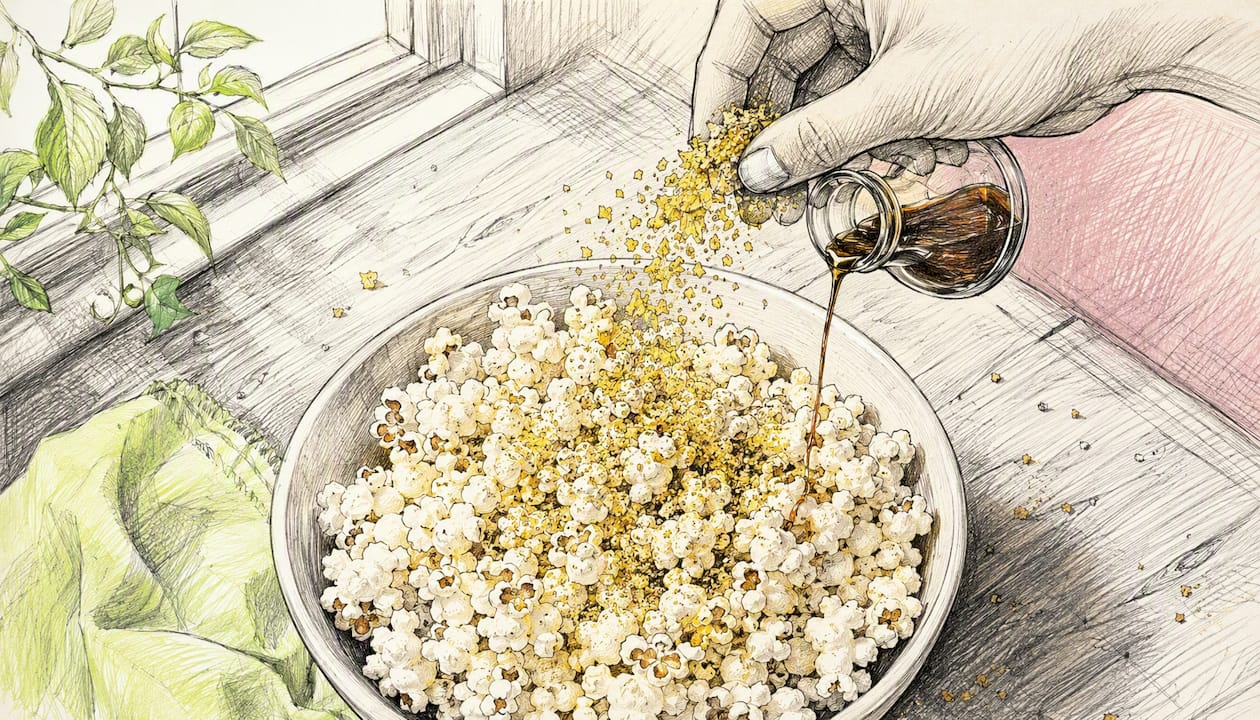
For oil, a light spray of olive oil or a teaspoon of rapeseed oil per batch is usually enough to help seasoning stick, rather than the tablespoons some stovetop recipes call for. Popcornaa’s popcorn seasoning guide covers several vegan flavour blends if you want inspiration beyond salt and sugar.
For children, portion size matters more than flavour choice. A small handful rather than a full bowl limits both sugar exposure for dental health and sodium intake, and pairing a sweet version with a meal (rather than as a standalone snack) reduces the time sugar sits on teeth.
Pro Tip: Keep a small jar of your favourite dry seasoning blend, cinnamon and coconut sugar for sweet, or nutritional yeast and smoked paprika for salted, ready-mixed. It makes healthier seasoning as fast as reaching for a shaker of table salt.
Do people prefer sweet or salty popcorn? A cultural snapshot
Preference for sweet or salted popcorn tends to track occasion as much as geography. In much of the United States, sweet styles like caramel corn and kettle corn have long been fairground and cinema staples, sitting alongside salted popcorn rather than replacing it. In the UK, salted and butter-flavoured popcorn has traditionally dominated cinema snacking, though sweet and flavoured varieties have grown sharply as gourmet and Asian-inspired flavour trends expand the category, a shift covered in more depth in Popcornaa’s look at why popcorn is trending.
Context shapes expectation more than most people realise. A birthday party leans toward sweet because it reads as a treat. A film night leans savoury because that’s the established script. TOJ EXPRESS’s coverage of snack flavour innovation points to growing appetite for bolder, regionally inspired flavours that don’t sit neatly in either the sweet or salty camp, spice blends, fruit infusions, and umami-forward mixes among them.
- Much of the data on regional taste preference comes from surveys and retail sales trends rather than controlled research, so treat broad claims about “which country prefers what” as a general pattern rather than a fixed rule.
- Children’s parties and cinema trips both skew toward whichever style feels most like a treat in that specific context, regardless of country.
- Asian-inspired seasoning blends, from wasabi to Thai chilli, are increasingly popular as a genuine third lane beyond classic sweet or salty, explored in Popcornaa’s Asian-inspired snack picks.
Which should you choose: a quick decision framework
The right choice depends on what you’re actually trying to manage, not on which flavour tastes nicer in the abstract.
- Managing blood sugar or diabetes: choose salted or plain popcorn. Sweet pre-popped varieties carry a sugar load that can rival dessert-category snacks.
- Managing blood pressure or on a low-sodium diet: choose sweet in moderation, or better still, plain homemade popcorn with no added salt at all.
- Snacking for weight control: air-popped plain popcorn with light seasoning beats both pre-popped extremes on calories per portion.
- Serving children: favour plain or lightly salted popcorn, and if serving a sweet version, pair it with a meal rather than as a standalone snack to limit sugar contact with teeth.
- Hosting a party or dessert table: a small portion of homemade kettle-corn works fine as an occasional treat; it’s the daily habit of shop-bought sweet popcorn that causes the real damage.
Pro Tip: If you genuinely want both flavours in one sitting, make two small batches rather than one large one, a plain salted batch and a light cinnamon batch, so you can enjoy both without needing a heavily processed pre-popped bag that combines sugar and salt in one product.
What the evidence actually says
The recommendation running through most credible guidance on this topic is consistent: plain, homemade popcorn beats almost anything pre-packaged, sweet or salted. That’s not a lifestyle-blog opinion, it’s what the two most relevant UK health bodies and an industry-wide product survey all converge on independently.
- The Action on Salt HFSS findings are strong, product-survey evidence covering a wide sample of UK popcorn brands, not a small or anecdotal study.
- NHS and BHF guidance on preferring homemade, plain popcorn is consistent and advisory rather than a hard clinical rule, it’s a sensible default rather than a strict prescription.
- Labelling thresholds for “high” and “low” salt are standardised and useful for reading packs quickly, but portion sizes on labels vary by brand, so always check the per-100g figure rather than the per-pack one.
- Where evidence is thinner is regional taste preference and exact calorie counts for homemade recipes, which vary by ingredient quantities and aren’t standardised the way commercial nutrition panels are.
Why I always come back to the plain bowl
I’ll be honest, I used to think the “healthier snack” conversation around popcorn was a bit overblown. Popcorn’s popcorn, right? Then I started actually reading labels properly, comparing a sweet pre-popped bag against a salted one against what I’d made myself at home, and the gap stopped my curiosity in its tracks. A shop bag that reads “lightly sweetened” carrying more sugar per 100g than a chocolate digestive isn’t a technicality. It’s the whole point.
What I do now, most evenings, is air-pop a batch and finish it myself: a dusting of cinnamon if I’m after something sweet-leaning, a scattering of flaky sea salt or nutritional yeast if I want savoury. It takes about the same time as microwaving a bag, and I know exactly what’s gone into it. That habit is basically the whole argument of this article condensed into one bowl.
It’s also, honestly, why gourmet, vegan-first flavour work matters to me beyond just being a nice idea. When you build flavour from real ingredients rather than a sugar glaze or a salt-heavy seasoning dust, you get something that tastes genuinely better, not just “healthier by default.” That’s the standard I hold Popcornaa’s own flavour development to, and it’s the same standard I’d encourage any home snacker to hold their own kitchen to.
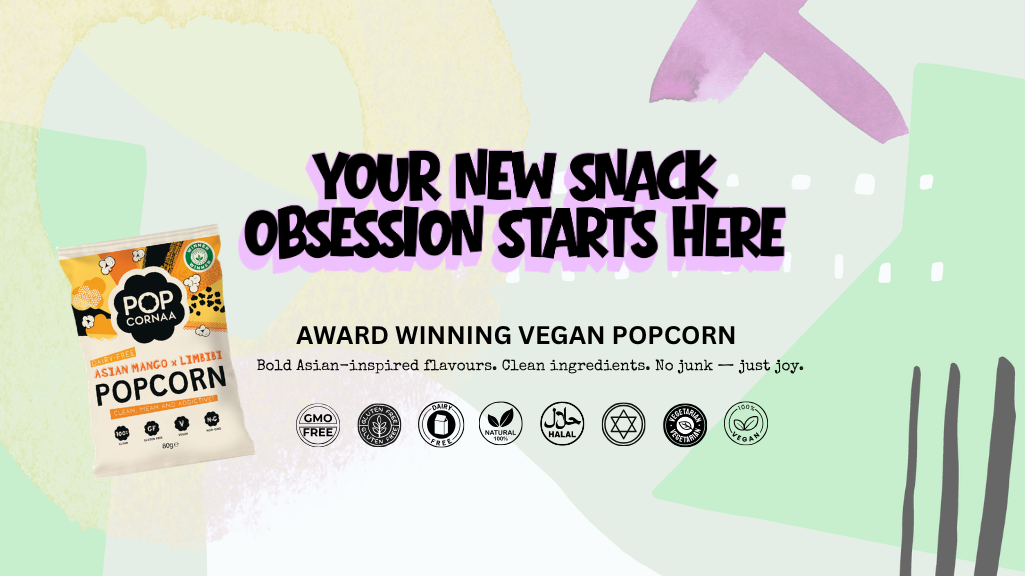
Popcornaa’s gourmet vegan popcorn, made the way this article recommends
Popcornaa exists precisely because the gap between “flavoured popcorn” and “healthy popcorn” shouldn’t have to be this wide. Every flavour in the range, from the Asian-inspired blends to the Brit-Core Flavourz collection, is built vegan-first, without the ultra-processed sugar glazes and heavy salt dusting that pushed most supermarket popcorn into HFSS territory in the 2025 Action on Salt survey.
[ ](https://www.popcornaa.com › pages › asian-fusion-taster-box)
If you’ve read this far wanting the flavour of proper sweet or salted popcorn without reaching for a bag that reads badly on the label, that’s exactly who Popcornaa’s range is built for. The sharing buckets suit party dessert tables where you’d normally default to a sugar-heavy shop bag, and the customisable snack mixes let you build a bag around your own sweet or savoury preference rather than accepting whatever a mass-market brand decided to combine. Browse the full flavour range and build your own box, or send a digital gift voucher to someone who’d rather choose their own bag.
Sources
- NHS — Healthier snacks (Healthier Families)
- Women’s Health — Is popcorn healthy? How the snack’s nutrition creds stack up
- SpikeSaver — Nutritional information for popcorn (calories, protein, carbs)
This article is general information, not a substitute for advice from a qualified doctor. Consult a qualified healthcare professional about your own circumstances before acting on anything here.
FAQ
Which is better, sweet or salted popcorn?
Salted popcorn made at home is generally the better everyday choice, since sweet pre-popped varieties tend to carry far more sugar and comparable or greater calories.
What has more calories, sweet or salty popcorn?
Sweet pre-popped popcorn typically has more calories, reaching around 490 to 506 kcal per 100g compared with lower figures for many salted varieties, largely due to added sugar coatings.
Is salted popcorn very unhealthy?
Not inherently, but many shop-bought salted varieties exceed 1.5g of salt per 100g, which counts as high-salt under NHS and hospital labelling standards, so portion and brand choice both matter.
What type of popcorn is the healthiest?
Plain, air-popped popcorn seasoned lightly at home, whether with a pinch of sea salt or a dusting of cinnamon, is the healthiest option, since it avoids the added sugar and heavy salt found in most commercial versions.