

Vegan snack selection guide: choose better in 2026
TL;DR:
- Choosing genuine vegan snacks requires label literacy, ingredient awareness, and a focus on whole plant foods.
- While vegan snacks often compare favorably nutritionally, ultra-processed options may still be nutrient-poor; prioritizing whole ingredients enhances health benefits.
A vegan snack is defined as any food made entirely from plant-based ingredients, free from animal-derived products including meat, dairy, eggs, honey, and gelatine. Choosing wisely within this category matters more than most people realise. The plant-based snack market has expanded rapidly, and not every product labelled “vegan” is genuinely nutritious or even fully animal-free. This vegan snack selection guide cuts through the noise, covering label literacy, nutritional comparisons, ingredient quality, and practical choices for every occasion, so you can snack with both confidence and genuine satisfaction.
What does a good vegan snack selection guide actually cover?
Reading a vegan snack label well is one of the most underrated skills in plant-based eating. The nutrition panel tells you serving size, calories, fibre, protein, saturated fat, and total sugars. Each of those numbers means something specific, and ignoring any one of them can lead you towards snacks that feel virtuous but deliver very little.

Start with the ingredient list, not the front of the packet. Front-of-pack claims like “plant-based,” “natural,” or “free from” are marketing language. The ingredient list is the legal record. Hidden animal ingredients such as gelatine (E441), carmine (E120), shellac (E904), and certain whey derivatives appear in snacks that look vegan at first glance. Carmine, for instance, is a red dye derived from crushed insects and turns up in fruit-flavoured sweets and some yoghurt-coated products.
Beyond those obvious culprits, additives like mono- and diglycerides or vague terms like “natural flavours” may originate from animal fats, and labelling laws do not require manufacturers to disclose the source. Only contacting the brand directly or choosing certified vegan products gives you certainty here.
Look for these markers when evaluating any packet:
- The Vegan Society Sunflower trademark or equivalent certified vegan logo
- A short, recognisable ingredient list of three to seven items
- Whole food ingredients listed first (nuts, seeds, oats, legumes, fruit)
- Fortifications clearly labelled as plant-derived, particularly vitamin D3 from lichen rather than lanolin
One more thing worth knowing: vitamin D3 in fortified snacks is frequently sourced from sheep’s wool unless the label specifies lichen-based D3. This catches many careful shoppers off guard.
Pro Tip: Apply the “first three ingredients” rule to every packet you pick up. If the first three ingredients are refined oils, sugars, or processed starches, the snack is likely calorie-dense but nutrient-poor, regardless of its vegan credentials.
How do vegan snacks compare nutritionally to conventional options?
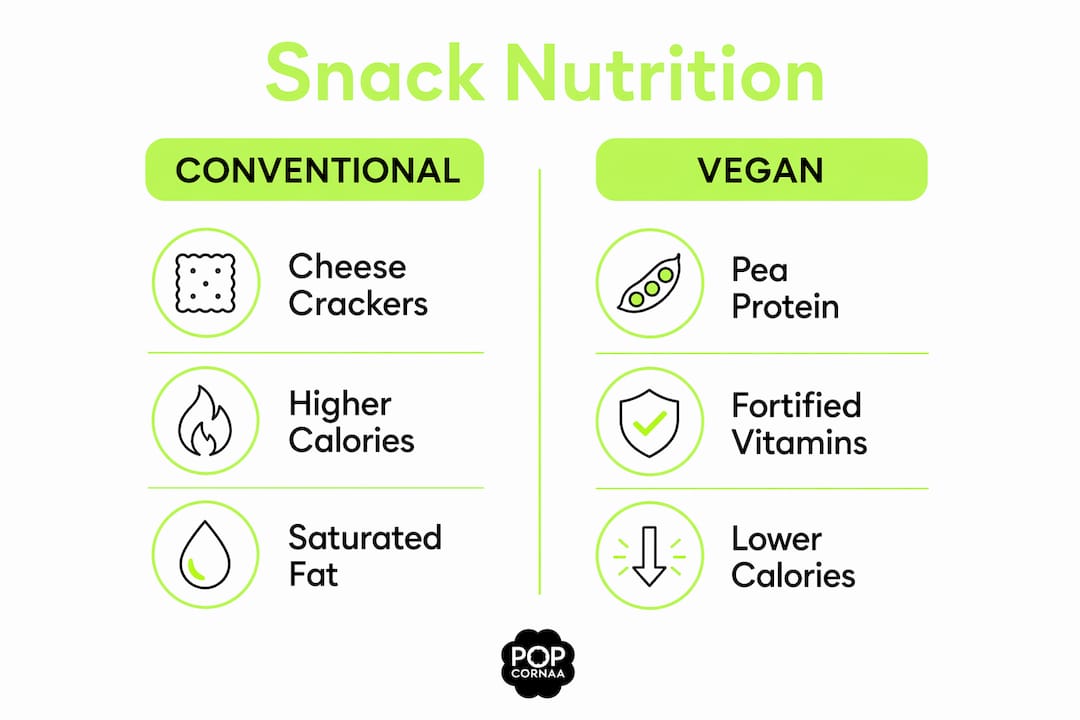
The honest answer is: it depends entirely on which products you compare. Vegan snacks are not automatically healthier than their conventional counterparts, but the data from 2026 market analysis suggests they often hold their own, and sometimes outperform, on key nutritional markers.
Vegan cheese crackers average around $0.20 per ounce versus approximately $0.25 per ounce for conventional equivalents, frequently using pea protein or nuts as the base. That price advantage combined with a better saturated fat profile makes them a genuinely competitive choice, not just an ethical compromise.
Here is a practical comparison across common snack categories:
| Conventional snack | Vegan alternative | Key nutritional difference |
|---|---|---|
| Cheese crackers | Pea protein or nut-based crackers | Lower saturated fat; often higher fibre |
| Milk chocolate bar | Dark chocolate (70%+ cocoa) | Less sugar; higher antioxidant content |
| Prawn cocktail crisps | Roasted chickpea snacks | More protein and fibre per serving |
| Yoghurt-coated raisins | Coconut-yoghurt raisins | Dairy-free; check for added sugars |
| Beef jerky | Mushroom or soy-based jerky | Lower saturated fat; variable sodium |
The nuance lies in processing. A vegan snack made from refined starches and palm oil is not nutritionally superior to a conventional snack made from whole ingredients. Plant-based snacks with shorter ingredient lists of three to seven recognisable items are genuinely superior to ultra-processed options, because processing strips out fibre and the satiety-inducing nutrients that make snacks satisfying.
Fortification also plays a role. Vitamin B12, calcium, and D3 are commonly added to vegan snacks to address nutritional gaps. These additions are helpful, but only when the source is plant-derived. Always check the small print.
Pro Tip: Calculate nutrient density by dividing the protein and fibre content by the calorie count. A snack delivering 5g of protein and 3g of fibre per 100 calories is a far better investment than one delivering 1g of each at the same calorie load.
Why variety and whole-food ingredients matter in plant-based snacking
Snacking should be treated as an extension of your daily nutrition, not a gap-filler between meals. Sharon Palmer, a registered dietitian nutritionist, highlights that variety is the single most important factor in preventing nutrient gaps during regular snacking. Eating the same handful of almonds every afternoon is better than eating crisps, but it still leaves your body missing out on the broader spectrum of vitamins and minerals that diverse plant foods provide.
The key whole plant food groups to rotate through for snacking are:
- Proteins: edamame, roasted chickpeas, hemp seeds, nut butters
- Whole grains: oat-based bars, rice cakes, popcorn made from whole kernel corn
- Fruits and vegetables: fresh fruit, vegetable sticks, dried mango without added sugar
- Healthy fats: walnuts, avocado on rice crackers, tahini
Whole legumes and seeds provide fibre and phytonutrients that isolated protein sources simply cannot replicate. Dry-roasted edamame, for example, delivers 11g of complete plant protein per serving alongside gut-friendly fibre, making it one of the most nutritionally complete snack options available.
To build a balanced snack from whole foods, follow this simple structure:
- Choose a protein base (a small handful of nuts, a portion of edamame, or a tablespoon of nut butter)
- Add a complex carbohydrate (oat crackers, a piece of fruit, or a small portion of popcorn)
- Include a source of healthy fat if your protein base does not already provide one
This three-part approach mirrors what snack diversity research consistently recommends for sustained energy and satiety. It also prevents the monotony that leads people to abandon plant-based eating altogether.
Pro Tip: Time your snacks to fall two to three hours before your next meal. This prevents blood sugar dips without blunting your appetite. A small, protein-rich snack in the mid-afternoon is far more effective than a large, carbohydrate-heavy one.
How to choose vegan snacks for different occasions
The right snack depends entirely on what you need it to do. A pre-workout snack, a desk snack, a celebratory treat, and a low-calorie evening option all call for different nutritional profiles. Getting this right is where snack selection for vegans moves from theory into genuine daily practice.
For quick energy before exercise or a long meeting, reach for fast-digesting carbohydrates paired with a small amount of protein. A banana with almond butter, or a handful of dates with a few walnuts, works well here. For sustained fullness during a long work session, prioritise fibre and protein. Roasted chickpeas, a small portion of mixed seeds, or an oat-based bar with minimal added sugar will keep you focused without a mid-afternoon slump.
Plant-based snacks high in fibre and protein support weight management by promoting fullness with mindful portion control, which reduces the risk of over-snacking later in the day. For those watching calorie intake, low-calorie vegan options like air-popped popcorn, vegetable sticks with hummus, or rice cakes with avocado deliver genuine satisfaction without a heavy calorie load.
For celebratory or indulgent occasions, the key is choosing quality over quantity:
- Gourmet popcorn in bold, complex flavours (think miso caramel or sriracha lime)
- Dark chocolate with a high cocoa percentage and a short ingredient list
- Nut-based energy balls made at home with dates, cocoa, and desiccated coconut
Batch preparation is one of the most practical strategies for consistent healthy snacking. Spending thirty minutes on a Sunday making energy balls, roasting chickpeas, or portioning out mixed nuts means you have genuinely good options ready when hunger strikes mid-week. Pair this with loyalty programmes from trusted brands and you will find exclusive deals that make quality plant-based snacking more affordable over time.
Pro Tip: When buying store-bought snacks, check the vegan certification and cross-reference with the brand’s allergen page online. Many brands now publish full ingredient sourcing details, which saves you the effort of contacting them directly.
Key takeaways
Choosing genuinely good vegan snacks requires label literacy, ingredient awareness, and a commitment to variety across whole plant food groups.
| Point | Details |
|---|---|
| Read the ingredient list first | Front-of-pack claims are marketing; the ingredient list is the legal record of what you are eating. |
| Apply the first-three-ingredients rule | If refined oils or sugars lead the list, the snack is likely nutrient-poor despite vegan credentials. |
| Prioritise whole-food protein sources | Whole legumes and seeds deliver fibre and phytonutrients that isolated proteins cannot replicate. |
| Rotate across plant food groups | Variety prevents nutrient gaps and supports sustained energy, as Sharon Palmer’s research confirms. |
| Match snack to occasion | Pre-workout, desk, and indulgent snacks each require different nutritional profiles for best results. |
What I have learnt from years of watching the vegan snack market
I have spent a long time watching this market grow, and the thing that still stops me in my tracks is how many people assume “vegan” automatically means “healthy.” It does not. Some of the most heavily processed snacks on the shelf carry certified vegan logos, and some of the most nutritious options have no certification at all because the brand is too small to afford the application fee.
What I have come to trust is the ingredient list above everything else. Short lists with recognisable ingredients tell you something honest about a product. Long lists full of emulsifiers, “natural flavours,” and stabilisers tell you something honest too, just not what the front of the packet wants you to hear.
I also think the conversation around hidden animal ingredients is still not loud enough. Most people know to avoid gelatine, but very few check for shellac on their chocolate-coated snacks or question whether the vitamin D3 in their fortified bar comes from lichen or lanolin. These details matter, and understanding them is the difference between eating in alignment with your values and just feeling like you are.
My honest advice is to experiment widely. Try brands you have never heard of. Make things at home when you have the time. And when you find a product with a short ingredient list, a certified vegan logo, and a flavour that genuinely excites you, hold onto it. Those products are rarer than they should be, and they deserve your loyalty.
— Emily
Discover Popcornaa’s curated vegan snack range
If you are looking for snacks that tick every box discussed in this guide, clean ingredients, bold flavours, and genuine vegan credentials, Popcornaa has done the hard work for you.
[ ](https://www.popcornaa.com › pages › asian-fusion-taster-box)
Popcornaa specialises in gourmet vegan popcorn crafted with short, recognisable ingredient lists and no dairy in sight. The Newbie Asian Fusion Taster Box is a brilliant starting point, bringing together five distinct flavours inspired by Asian and British taste traditions. For those who want to build their own selection, the custom snack mix option lets you curate exactly what suits your palate and occasion. Every product is award-recognised and made with the kind of ingredient transparency this guide has been championing throughout.
FAQ
What makes a snack officially vegan?
A snack is vegan when it contains no animal-derived ingredients, including meat, dairy, eggs, honey, gelatine, carmine, and shellac. Certified vegan logos from organisations like The Vegan Society provide the most reliable assurance.
How do I spot hidden animal ingredients on a label?
Look for E441 (gelatine), E120 (carmine), E904 (shellac), and vague terms like “natural flavours” or “mono- and diglycerides,” which may originate from animal fats. When in doubt, contact the manufacturer directly or choose certified vegan products.
Are vegan snacks better for weight management?
Plant-based snacks high in fibre and protein promote fullness and support energy balance, which reduces the risk of over-snacking. The key is choosing whole-food options rather than ultra-processed vegan alternatives.
What is the easiest way to build a balanced vegan snack?
Combine a protein base such as edamame or nut butter, a complex carbohydrate like oat crackers or fruit, and a source of healthy fat. This three-part structure delivers sustained energy and genuine satiety between meals.
How do I know if a vegan snack is genuinely nutritious?
Apply the first-three-ingredients rule: if refined oils, sugars, or processed starches lead the list, the snack is likely nutrient-poor. Prioritise products with three to seven recognisable whole-food ingredients and a certified vegan logo.