

Vegan vs dairy popcorn: what's really the difference?
TL;DR:
- Plain popcorn kernels are inherently vegan because their popping process involves only heat and moisture, with no animal ingredients.
- Dairy ingredients in popcorn, such as butter, cheese powder, whey, and natural flavours, transform a plant-based snack into a non-vegan option, making label reading essential.
Plain popcorn kernels are vegan by definition. The difference between vegan and dairy popcorn lies entirely in what gets added after the kernel pops. Butter, cheese powder, whey, and casein are the ingredients that transform a plant-based snack into a dairy one. Understanding this distinction matters whether you are shopping in a supermarket, ordering at a cinema, or making a batch at home. Brands like SkinnyPop and venues like AMC and Cinemark all handle this differently, and knowing what to look for puts you in control of what you actually eat.
What makes popcorn vegan or non-vegan?
Plain popcorn is vegan in its most basic form. A corn kernel contains starch, water, and a tough outer hull. When you apply heat, the moisture inside turns to steam, pressure builds, and the kernel bursts open. No animal product is involved in that process at any stage.

The popping process itself uses only heat and the kernel’s internal moisture, which means the vegan or dairy status of any popcorn product is determined entirely by what happens next. Once the kernel has popped, manufacturers, cinemas, and home cooks make choices about oils, toppings, and flavourings. Those choices are where the distinction begins and ends.
Unflavoured popcorn popped in a plant-based oil such as sunflower or coconut oil is fully vegan. The moment butter, a cheese powder, or a milk-derived flavouring enters the picture, the product crosses into dairy territory. This is not a grey area. It is a clean, ingredient-level distinction that you can verify by reading a label.
Pro Tip: When you are unsure about a product, look for the words “suitable for vegans” or a certified vegan logo from organisations like The Vegan Society. These marks confirm the full supply chain has been checked, not just the obvious ingredients.
Dairy ingredients commonly hidden in popcorn flavourings
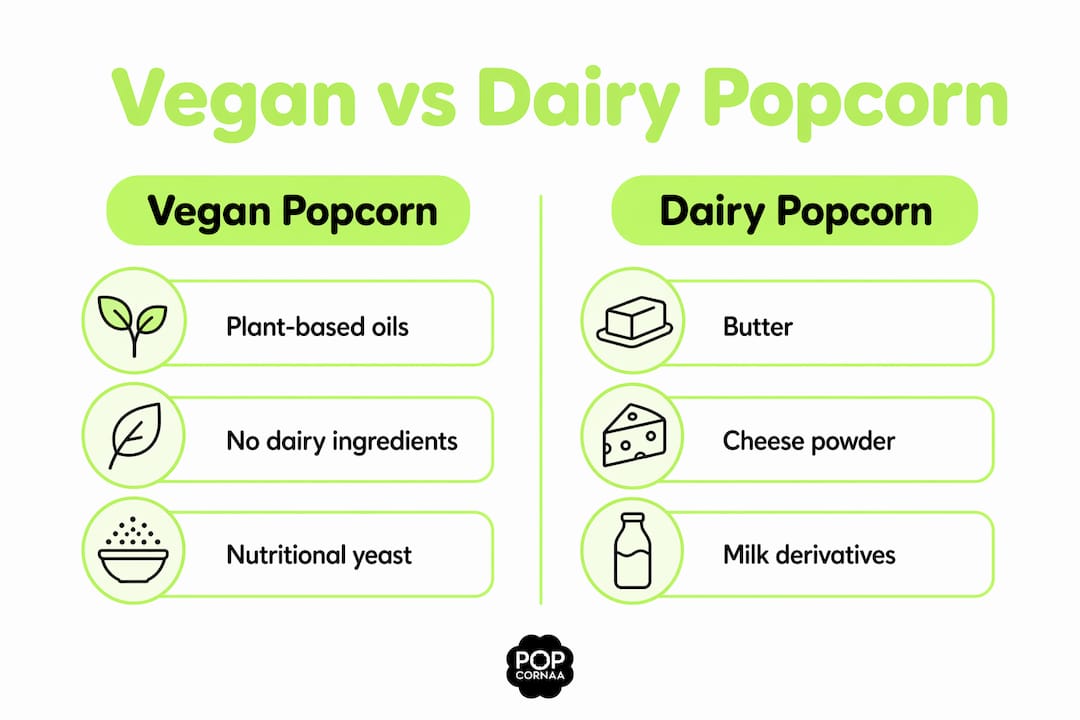
This is where things get genuinely surprising. Most people expect butter-flavoured popcorn to contain butter. Fewer people expect a product labelled “light” or “natural” to contain milk derivatives. Yet butter-flavoured microwave popcorn frequently includes skim milk, making it non-vegan despite appearing innocuous. SkinnyPop’s microwave range, for example, changed its formulation and lost its vegan status precisely because of this kind of ingredient addition.
The dairy ingredients most commonly found in popcorn flavourings include:
- Butter and butterfat: Used directly or as a component of flavouring blends in both microwave and cinema popcorn.
- Cheese powder: The defining ingredient in cheddar and nacho-style variants, almost always derived from cow’s milk.
- Whey: A by-product of cheese production, frequently used as a flavour carrier or texture agent.
- Casein: A milk protein that appears in some flavouring systems and processed coatings.
- Skim milk and buttermilk: Added to microwave popcorn recipes to enhance richness and mouthfeel.
- Natural flavours: A catch-all term that can include milk derivatives without naming them explicitly on the front of pack.
That last point deserves particular attention. The phrase “natural flavours” on a UK or US ingredient list is legally permitted to include animal-derived compounds. A product that lists “butter flavour” or “natural flavour” is not automatically dairy-free. The only way to confirm is to contact the manufacturer or look for a certified vegan mark. This is not alarmism. It is ingredient literacy, and it matters for anyone making a conscious dietary choice.
How to identify vegan popcorn in shops, at home, and at the cinema
Identifying vegan popcorn is straightforward once you know the system. Here is a practical approach that works across different settings.
-
Read the full ingredient list, not just the front of pack. Look for any of the dairy terms listed above. Pay particular attention to “natural flavours,” “butter flavour,” and “contains milk” allergen declarations at the bottom of the label.
-
Look for certified vegan logos. The Vegan Society sunflower logo and Vegan Action’s “Certified Vegan” mark both require manufacturers to verify the entire formulation. These are more reliable than a brand’s own “vegan-friendly” claim.
-
At the cinema, ask specifically about the oil and the topping. Cinema popcorn bases are often popped in plant-based oils, but the butter-flavoured topping applied at the counter frequently contains milk derivatives. At AMC and Cinemark, the base popcorn is generally vegan, but the topping is not. Requesting plain popcorn with no topping is the safest option.
-
Ask about cross-contamination. Shared scoops and dispensers at concession stands can transfer dairy residue to plain popcorn. For strict vegans or those with dairy allergies, this is worth raising directly with staff before ordering.
-
At home, choose your oil and flavouring deliberately. Coconut oil, sunflower oil, and olive oil are all vegan. For a cheesy flavour without dairy, nutritional yeast is the most popular substitute. It provides a savoury, umami-rich coating that genuinely mimics the depth of cheese powder without any animal product involved.
-
Check formulations regularly. Popcorn recipes change without notice, as the SkinnyPop microwave situation demonstrated. A product that was vegan last year may not be this year. Checking the label each time you buy is a habit worth building.
Pro Tip: Plain or lightly salted popcorn from most supermarket own-brand ranges is almost always vegan. It is the flavoured varieties, particularly cheese, butter, and “cinema-style,” that carry the highest risk of containing dairy.
For a broader look at how preparation methods affect vegan status, the vegan popcorn guide from Popcornaa covers the full process clearly.
Why many people are choosing vegan popcorn over dairy versions
The reasons people prefer vegan popcorn over dairy popcorn are a mix of health, ethics, and practicality. Understanding these motivations helps explain why the market for dairy-free snacks has grown so noticeably in recent years.
From a nutritional standpoint, vegan popcorn tends to carry a cleaner profile. Dairy-based toppings add saturated fat and cholesterol, particularly when butter or cheese powder is used generously. Vegan popcorn made with plant-based oils avoids both. For anyone monitoring cardiovascular health or managing cholesterol, this is a meaningful difference in a daily snack.
Vegan snacks also exclude allergens that affect a significant portion of the population. Lactose intolerance is widespread, and dairy allergies, while less common, can be severe. Choosing vegan popcorn removes that risk entirely without requiring a compromise on flavour or enjoyment.
The ethical dimension is equally significant for many consumers. Dairy production involves practices that conflict with vegan values around animal welfare. Choosing a plant-based snack, even in something as small as a bag of popcorn, is a consistent expression of those values. For people who are exploring plant-based eating, vegan popcorn is one of the easiest and most satisfying entry points.
There is also an environmental consideration. Dairy farming carries a higher carbon and water footprint than plant-based food production. Opting for vegan popcorn is a small but real reduction in that impact, particularly for people who snack frequently. You can read more about the benefits of vegan popcorn as a daily snack choice on the Popcornaa blog.
Key takeaways
The single most important fact about vegan and dairy popcorn is this: the kernel is always vegan, and every dairy ingredient enters through toppings, flavourings, or oils added after popping.
| Point | Details |
|---|---|
| Kernels are always vegan | The popping process involves no animal products; dairy status depends entirely on added ingredients. |
| Hidden dairy is common | Terms like “natural flavours” and “butter flavour” can legally contain milk derivatives without clear labelling. |
| Cinema popcorn needs checking | Base popcorn at venues like AMC and Cinemark is often vegan, but toppings and shared equipment may not be. |
| Nutritional yeast is the best swap | It replicates cheese flavour in vegan popcorn without any dairy and works well in home preparation. |
| Formulations change | Products like SkinnyPop microwave popcorn have lost vegan status through ingredient changes, so checking labels regularly is necessary. |
What I have learned from years of reading popcorn labels
I will be honest with you. When I first started paying attention to what was actually in flavoured popcorn, I was genuinely caught off guard. I had assumed that if a product did not shout “cheese” or “butter” on the front, it was probably fine. That assumption turned out to be wrong more times than I expected.
The SkinnyPop microwave situation stopped me in my tracks. Here was a brand with a clean, health-forward image, and its microwave range quietly added skim milk to the formulation. No fanfare. No obvious change to the packaging. Just a new ingredient buried in the list. That experience changed how I approach every popcorn purchase.
What I have come to appreciate is that vegan popcorn in 2026 is genuinely better than it was even five years ago. The flavour options are wider, the certifications are more reliable, and brands are increasingly transparent about their ingredients. Nutritional yeast, in particular, has moved from a niche health food shop ingredient to something you can find in most supermarkets. If you have not tried it on freshly popped corn with a little olive oil and sea salt, you are missing something worth discovering.
My honest advice is to stop assuming and start reading. It takes ten seconds to check a label, and that habit protects you from the kind of quiet reformulations that catch even experienced vegan snackers out. The difference between vegan and dairy popcorn is always in the detail.
— Emily
Discover Popcornaa’s dairy-free gourmet popcorn
If you want popcorn you can trust completely, Popcornaa makes it straightforward. Every product in the range is 100% plant-based, dairy-free, and crafted with real flavour in mind. From Asian-inspired tropical fruit blends to bold Brit-Core flavours, there is no guesswork about ingredients.
[ ](https://www.popcornaa.com › pages › asian-fusion-taster-box)
Whether you are looking for a large sharing bucket for a film night or want to build your own snack mix with your favourite flavours, Popcornaa has a clean, certified option ready to order. No hidden dairy. No ambiguous “natural flavours.” Just genuinely good vegan popcorn delivered to your door.
FAQ
Is plain popcorn always vegan?
Plain popcorn made from kernels popped in a plant-based oil is vegan. Dairy enters only through added toppings, flavourings, or butter-based oils applied after popping.
What dairy ingredients should I look for on a popcorn label?
Look for butter, butterfat, cheese powder, whey, casein, skim milk, and buttermilk. Also check for “natural flavours” and “butter flavour,” as these terms can legally include milk derivatives.
Is cinema popcorn vegan?
The base popcorn at most cinemas is popped in plant-based oil and is technically vegan, but the butter-flavoured topping typically contains dairy. Requesting plain popcorn and asking about cross-contamination from shared equipment is the safest approach.
Can I make vegan cheese-flavoured popcorn at home?
Yes. Nutritional yeast is the standard dairy-free substitute for cheese flavour in vegan popcorn. Toss freshly popped corn in a little olive oil, add nutritional yeast and sea salt, and the result is genuinely satisfying.
Do vegan popcorn products change their formulations?
They can and do. SkinnyPop’s microwave range is a well-documented example of a product losing its vegan status after a formulation change. Checking the ingredient list each time you purchase is the only reliable way to stay informed.