

Good protein snacks that actually keep you full
The fastest good protein snacks are Greek yoghurt, tinned tuna, cottage cheese, hard-boiled eggs, edamame and a protein bar or shake. Aim for roughly 20 to 30 grams of protein per snack, which is the range NHS-backed guidance from Mersey Care NHS Foundation Trust points to for genuine satiety between meals.
Here’s what to reach for when hunger strikes:
- Greek yoghurt (150g pot): around 15g protein
- Tinned tuna (one small tin): around 20 to 25g
- Cottage cheese (half-cup): around 14g
- Hard-boiled eggs (two eggs): around 12g
- Edamame (one cup): around 18.5g
- Protein bar or shake: 15 to 25g, depending on the brand
None of these hit 30g alone except the tuna, which is exactly why pairing two together, cottage cheese with a boiled egg, say, gets you there in under a minute.
Key Takeaways
Reaching 20 to 30 grams of protein in a snack is simplest when you combine two whole foods rather than searching for one perfect product.
| Point | Details |
|---|---|
| Target range | Aim for 15 to 25g of protein per snack, up to 30g around workouts or heavier appetite needs. |
| Combine, don’t hunt | Pairing cottage cheese with seeds or eggs with tuna reaches 20g faster than one product alone. |
| Whole foods win on cost | Yoghurt and eggs deliver more protein per pound than most commercial bars. |
| Spread protein across the day | Two or three protein snacks alongside meals supports satiety and weight management. |
| Plant-based needs pairing | Combine legumes with seeds or grains for a fuller amino acid profile. |
What are good protein snacks for everyday eating?
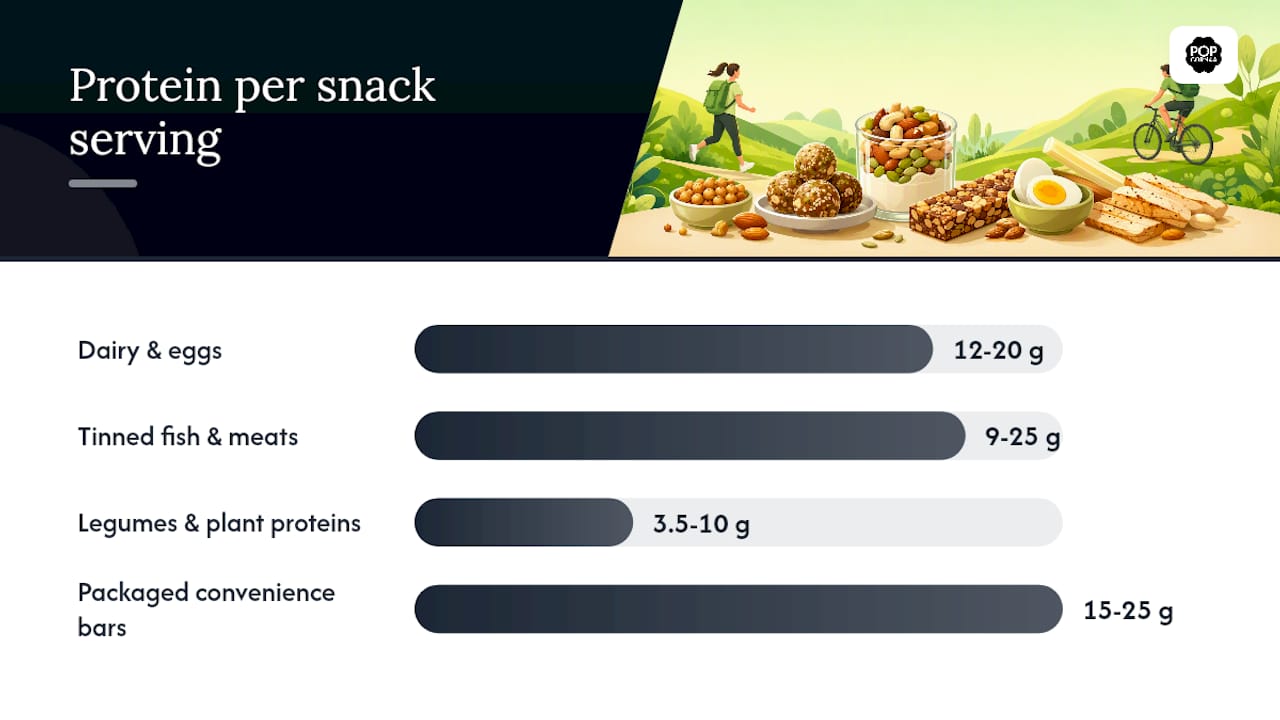
Good protein snacks fall into four practical groups, and knowing which bucket a snack sits in helps you plan a week without repeating yourself. Dairy and eggs are your fridge staples. Tinned fish and cooked meats travel well and need zero prep. Legumes and plant proteins cover vegan and vegetarian readers without sacrificing grams. Packaged convenience items fill the gaps when you’re nowhere near a kitchen.
Dairy and eggs Greek yoghurt delivers around 15 to 20g per 150g pot and works straight from the fridge. Cottage cheese gives roughly 14g per half-cup and pairs well with almost anything sweet or savoury. Two hard-boiled eggs add around 12g and store for up to a week once cooked, making them the easiest batch-prep item on this list.
Tinned fish and cooked meats A small tin of tuna carries 20 to 25g of protein and needs no cooking, no fridge, no cutlery beyond a fork. Beef or turkey jerky offers a similarly portable option, typically 9 to 15g per 30g bag, though it’s worth checking the sodium content on the label. Cooked chicken breast, kept in portioned tubs, remains one of the cheapest protein sources per gram you’ll find, according to Mealprep.
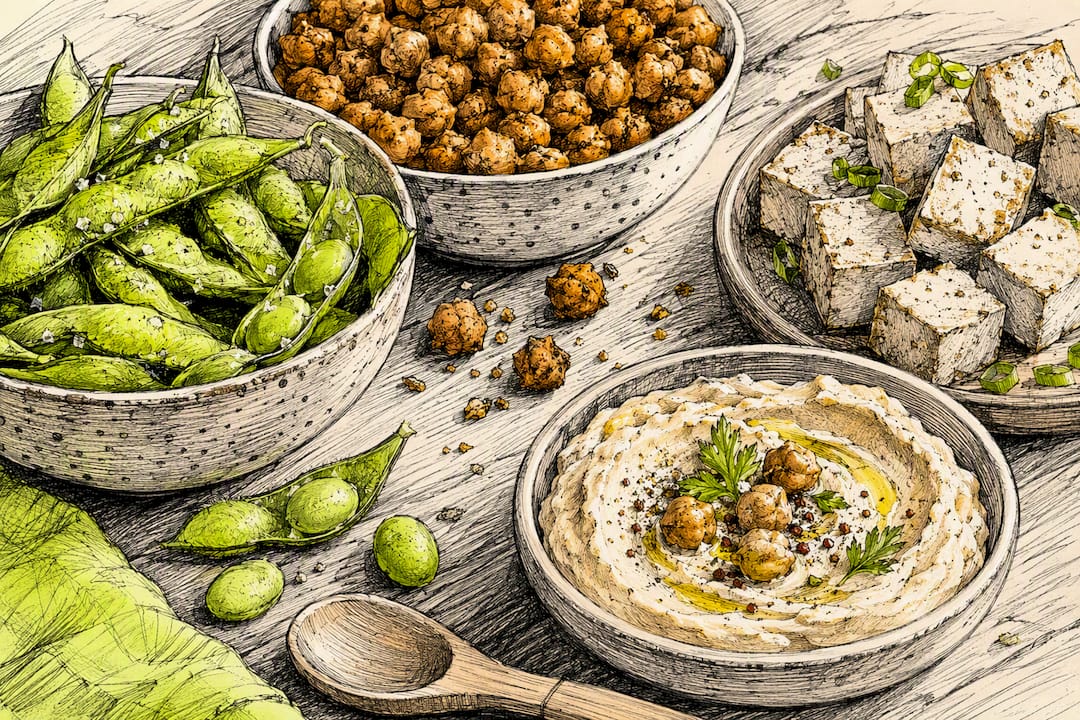
Legumes and plant proteins Edamame gives you a significant amount of protein per cooked cup, whether steamed at home or bought frozen. Roasted chickpeas offer roughly 6 to 7g per half-cup and satisfy a crunch craving without the ultra-processed ingredient list of a crisp packet. Hummus, by contrast, is lighter on protein at around 3.5g per three tablespoons according to the University Hospitals Sussex protein fact sheet, so treat it as a flavour boost rather than your main protein source. Tofu, pressed and pan-fried or cubed raw into a salad, delivers around 10g per 100g serving.
Packaged convenience Protein bars and ready-made shakes range from 15 to 25g depending on the brand, and they’re genuinely useful when you’re travelling or stuck at a desk with no fridge nearby. That said, whole foods like Greek yoghurt and tinned tuna tend to be cheaper and more nutrient-dense per gram of protein than commercial bars, which is why bars work best as a backup rather than a daily habit.
Mix-and-match combos that reach 20 to 30 grams
Building your own combo is often quicker than hunting for one perfect product. Here are combinations that consistently land in the 20 to 30g range:
- Cottage cheese + pumpkin seeds + berries — around 20g
- Greek yoghurt + chia seeds + a handful of almonds — around 22g
- Two boiled eggs + a small tin of tuna — around 32g
- Edamame + a soft-boiled egg — around 24g
- Tofu cubes + roasted chickpeas — around 20g
- Cottage cheese + two oatcakes + hummus — around 20g, per portion values from UHS Sussex
- Protein shake + a small handful of nuts — around 25 to 30g
- Jerky + a tinned tuna pouch (no-fridge travel combo) — around 30g
For plant-based combos specifically, pair a legume (edamame, chickpeas, tofu) with a seed or grain, since combining different whole foods this way builds a more complete amino acid profile than relying on one source alone.
Six no-cook protein snacks ready in under five minutes
- Greek yoghurt parfait: layer yoghurt, chia seeds and berries. Two minutes prep, around 20g protein, keeps in the fridge for a day if covered.
- Tuna and oatcakes: flake tuna over two oatcakes. Three minutes, around 22g, best eaten fresh.
- Cottage cheese pots: portion into small containers with a spoon of seeds. One minute, around 15g, lasts three to four days refrigerated.
- Edamame with sea salt: steam from frozen or buy pre-cooked, sprinkle with salt. Three minutes, around 18.5g, eat warm or cold.
- Peanut butter apple stacks: slice an apple, spread with peanut butter. Two minutes, around 8g, eat immediately for best texture.
- Protein smoothie bowl: blend protein powder, frozen banana and a splash of milk, top with nuts. Four minutes, 25 to 30g, best consumed fresh.
Pro Tip: Batch-prep a full week of hard-boiled eggs and portioned cottage cheese pots on a Sunday evening. It turns “I’ve got nothing to eat” into a fridge full of ready answers.
How much protein should a snack actually contain?
Most nutrition guidance points to a sweet spot of 15 to 25g of protein per snack, with some sources suggesting up to 30g works well around workouts or for weight management. Roam Food’s guidance suggests aiming for a calorie-to-protein ratio of roughly 10:1 or better if you’re also watching calorie intake, meaning a 200 kcal snack should ideally carry at least 20g of protein.
Spreading protein across the day rather than loading it all into one meal helps with satiety and weight management, a principle NHS dietitians consistently recommend. If you’re eating three meals plus two snacks, distributing 20 to 25g per snack alongside 25 to 30g per meal gets most adults comfortably past 100g daily without any single sitting feeling excessive.
- Two snacks of 20g each = 40g extra protein on top of meals
- If you need more due to illness or low appetite, clinical guidance from North Bristol NHS Trust suggests 2 to 3 high-protein snacks daily on top of meals
- People with kidney disease or other renal conditions should check with a doctor or dietitian before significantly increasing protein intake
- Watch for added sugars and sweeteners in flavoured protein products marketed as “healthy”
Pro Tip: If a bar or shake lists more than five ingredients you don’t recognise, it’s probably built for marketing rather than nutrition. Check the label before the branding.
Plant-based ways to hit 20 grams without dairy or meat
Vegan and vegetarian readers can still reach 20g comfortably by combining legumes with seeds or grains rather than relying on a single plant protein.
- Edamame + quinoa bowl: around 22g combined
- Tofu skewers + a small nut-based dip: around 20g
- Soya yoghurt + hemp seeds: around 18 to 20g depending on the yoghurt brand
- Roasted chickpeas + a handful of pumpkin seeds: around 15 to 18g
Fortified plant milks and commercial vegan protein products can help close any remaining gap, though whole foods generally deliver more nutrients per gram of protein. Tofu and edamame both keep well pre-portioned in the fridge for three to four days, making them realistic weekday staples rather than occasional treats. For more plant-based combinations and prep ideas, Popcornaa’s guide to plant-based snack ideas covers further variations worth trying.
Pro Tip: Pair a legume with a seed or grain in the same snack. Neither is a complete protein alone, but together they cover the full amino acid spread.
Why whole foods beat bars for daily snacking
Whole foods win on cost and nutrient density almost every time. A pot of Greek yoghurt with a scoop of whey typically delivers 35 to 45g of protein for under a pound, while a branded protein bar might offer 20 to 25g for two to three times the price. That gap isn’t trivial when you’re snacking twice a day, every day.
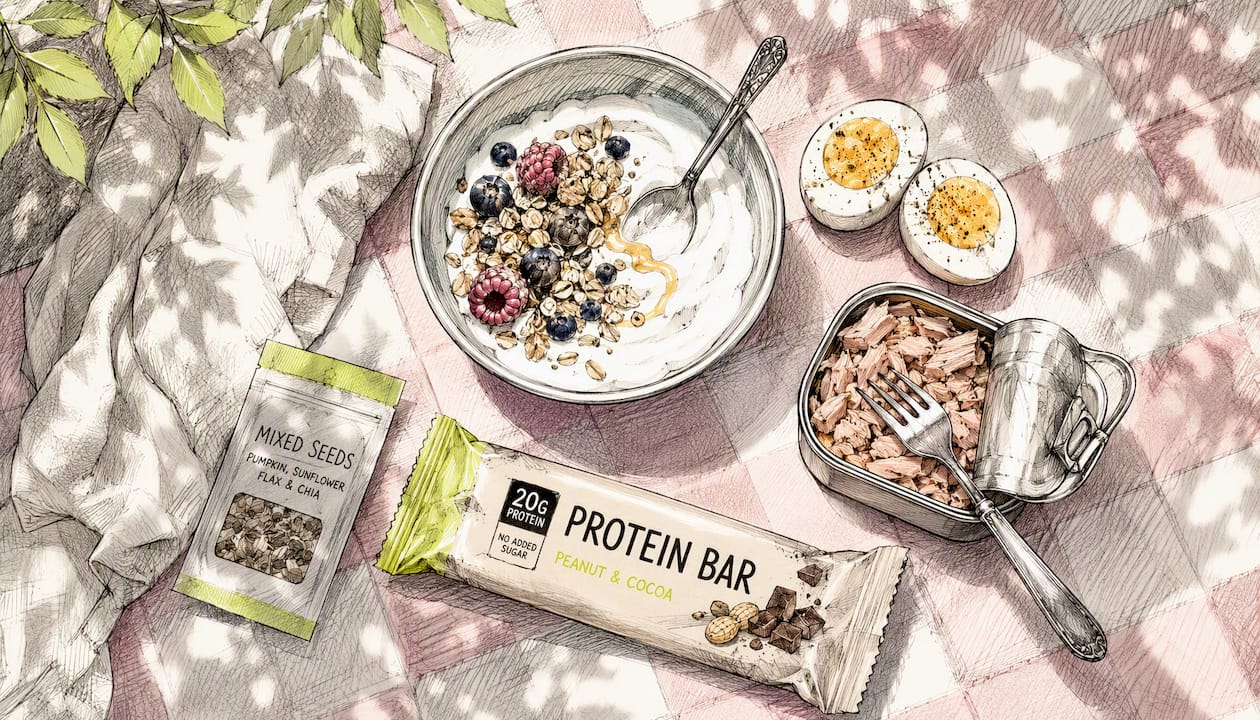
My honest approach: keep bars and shakes for travel days, meetings that run long, or anywhere a fridge isn’t an option. For everything else, a boiled egg or a pot of cottage cheese does the job better and cheaper. Working on vegan snack development at Popcornaa has made this even clearer. Plant-based eaters often assume they need processed protein products to hit their numbers, but edamame, tofu and a well-stocked spice rack usually get you there just as reliably.
Sources
- Protein packing :: Mersey Care NHS Foundation Trust
- How to eat more protein | North Bristol NHS Trust
- Protein fact sheet | University Hospitals Sussex
- Mealprep
- The 15 best high‑protein snacks under 200 kcals | Roam Food
FAQ
What is a good snack that’s high in protein?
Greek yoghurt, tinned tuna, cottage cheese and hard-boiled eggs are all reliable choices, typically offering 12 to 25g of protein per serving with little or no preparation.
How can I get 20g of protein in a snack?
Combine two whole foods, such as cottage cheese with pumpkin seeds and berries, or two boiled eggs with a small tin of tuna, both of which land around 20g or above.
What are 5 good foods for protein?
Greek yoghurt, tinned tuna, cottage cheese, eggs and edamame all rank among the most practical protein sources for everyday snacking, each delivering between 12g and 25g per typical serving.
How do I get 30g of protein in a snack?
Pairing a higher-protein item like tuna or a protein shake with a second source, such as two boiled eggs or a handful of nuts, comfortably pushes the total to 30g or beyond.