

What are tropical flavour snacks, and how do you spot the real ones?
A tropical-flavour snack is any snack built around the fruits and aromatic notes typical of equatorial and near-equatorial regions, most commonly mango, pineapple, coconut and passion fruit. What makes a snack genuinely tropical is not the label but two things working together:
- The fruit source or flavour notes — real fruit, fruit concentrate, or a flavour system built to mimic esters and lactones from fruits like guava, lychee or dragon fruit.
- The processing format — how that fruit character survives (or gets rebuilt) once it’s dried, baked, coated or blended into something you can eat with your hands.
A dried mango chip ticks both boxes cleanly: single ingredient, minimal processing, unmistakably mango. A neon-coloured “tropical punch” sweet often ticks neither, relying on a flavour system loosely inspired by the fruit family rather than any actual fruit. Knowing the difference is the whole game, and it’s what the rest of this guide is built to teach you.
Key takeaways
Tropical-flavour snacks work best when a named fruit or fruit concentrate appears early on the label, and the format (dried, freeze-dried, puree-based) supports rather than masks that fruit character.
| Point | Details |
|---|---|
| Check the ingredients first | A named fruit or fruit concentrate in the first few ingredients signals genuine tropical flavour. |
| Learn the top fruits | Mango, pineapple, coconut and passion fruit dominate; guava, lychee and jackfruit add variety. |
| Trust dried and puree formats most | Freeze-dried fruit and puree-based bars most reliably preserve authentic fruit character. |
| Pair with spice or cream | Chilli, lime, ginger and coconut all amplify tropical notes without overpowering them. |
| Try Popcornaa for a ready-made option | Popcornaa’s tropical-inspired popcorn ranges deliver fruit-forward flavour on a vegan, wholegrain base. |
What actually counts as a tropical-flavour snack?
Here’s the quick rule: if you can name the specific fruit driving the flavour, and trace roughly how it got from orchard to packet, it counts. If the packaging just says “tropical” with no named fruit and an ingredients list dominated by flavourings, treat it as tropical-inspired rather than tropical-flavoured.
Food scientists tend to break this down along three axes. First, the primary fruit note, the dominant taste your tongue clocks first, whether that’s the tang of pineapple or the custardy sweetness of soursop. Second, the supporting aromatic notes, the esters, terpenes and lactones that give a fruit its specific character rather than a generic “sweet” impression. Research into volatile compounds in tropical fruit shows that mango, pineapple, passion fruit, guava, lychee and dragon fruit carry unusually high concentrations of these compounds, which is precisely why they taste so much juicier and more aromatic than, say, an apple. Third, the format, whether you’re eating actual fruit tissue, a puree-based product, or a flavour system applied to a completely different base like popcorn or maize.
In practice, these three axes play out differently depending on what you’re eating. Dried fruit snacks usually nail the first two axes because there’s genuinely nothing else in the bag. Puree-based bars sit in the middle: you get real fruit character, but it’s been cooked down and blended with binders, so some volatility is lost along the way. Flavour-infused savoury snacks, think mango chilli crisps or pineapple-glazed popcorn, are where things get more interesting, because the tropical note is usually a flavour system layered onto a neutral base rather than fruit itself.
Pro Tip: If the ingredients list shows a named fruit or fruit concentrate within the first five items, you’re looking at a genuinely fruit-forward snack. If “tropical flavour” only appears as a standalone phrase with no fruit named anywhere, it’s a flavour claim, not a fruit claim.
Which tropical fruits show up most often, and what do they actually taste like?
These are the fruits you’ll meet again and again across dried snacks, bars, drinks and crisps, each with a distinct tasting signature worth learning.
- Mango — sweet, slightly resinous, with a lactone-driven creaminess that makes it the most recognisable tropical note going.
- Pineapple — sharp, acidic and estery, delivering the juicy “candy” top note most people associate with tropical sweets.
- Coconut — rich, fatty and mildly sweet, functioning more as a texture-and-aroma carrier than a sharp flavour hit.
- Passion fruit — intensely tart and floral, prized in the industry as a “small amount, big impact” ingredient because a little goes a long way.
- Guava — musky, floral and slightly astringent, often used to add depth beneath brighter fruit notes.
- Dragon fruit (pitaya) — mild, faintly sweet, valued more for its striking colour than a strong flavour of its own.
- Lychee — delicately floral and rose-like, with a light sweetness that reads as refreshing rather than heavy.
- Papaya — soft, musky sweetness with a texture more famous than its taste.
- Jackfruit — a distinctive tropical sweetness often compared to a blend of banana and pineapple.
- Soursop — creamy and tart at once, sometimes described as a cross between pineapple and strawberry.
- Tamarind — sour and tangy, frequently used to cut sweetness in savoury tropical snack blends.
- Acai — earthy and mildly tart, more often a health-halo ingredient than a dominant flavour.
- Mangosteen — subtly sweet and slightly tangy, a genuine curiosity flavour outside Southeast Asia.
- Star fruit — crisp and delicately sour, closer to a mild apple-citrus hybrid than anything overtly tropical.
- Durian — famously pungent and custardy, divisive by design and rarely mainstream in Western snacks.
- Longan — sweet and musky, often likened to a milder, less floral lychee.
| Fruit | Core tasting note | Typical snack formats |
|---|---|---|
| Mango | Sweet, creamy, resinous | Dried slices, purees, bars |
| Pineapple | Sharp, juicy, acidic | Dried rings, powders, flavour coatings |
| Coconut | Rich, fatty, mildly sweet | Flakes, chips, yoghurt bases |
| Passion fruit | Tart, floral, intense | Purees, concentrates, drink mixers |
| Guava | Musky, floral, astringent | Purees, pastes, powders |
| Lychee | Floral, delicate, sweet | Dried fruit, drink flavourings |
| Jackfruit | Sweet, banana-pineapple hybrid | Chips, dried strips |
| Tamarind | Sour, tangy | Pastes, savoury coatings |
What snack formats actually carry tropical flavours?
The main formats you’ll see on shelves are dried and freeze-dried fruit, chips and crisps, popcorn and puffed snacks, bars and bites, powders and concentrates, beverages and yoghurts, and confectionery.
Dried and freeze-dried fruit usually delivers the most authentic flavour because it’s real fruit with the water removed, though sugar content can climb if it’s been syrup-dipped first. Chips and crisps carrying tropical notes are typically potato, plantain or root vegetable bases dusted with a flavour system rather than fruit itself, so authenticity depends entirely on the ingredients list. Popcorn and puffed snacks work the same way: the fruit note is applied as a coating or seasoning, meaning the base carries the nutrition and the flavour system carries the tropical character. Bars and bites tend to use fruit puree or concentrate mixed with binders like dates or nuts, which usually preserves genuine fruit taste but blends it with other flavours. Powders and concentrates are the most industrial format, often the raw material other snacks are built from rather than something eaten on its own. Beverages and yoghurts frequently use real fruit or juice concentrate, though added sugar varies wildly between brands. Confectionery, sweets, gummies and similar, is the format most likely to rely entirely on flavour systems with no fruit content at all.
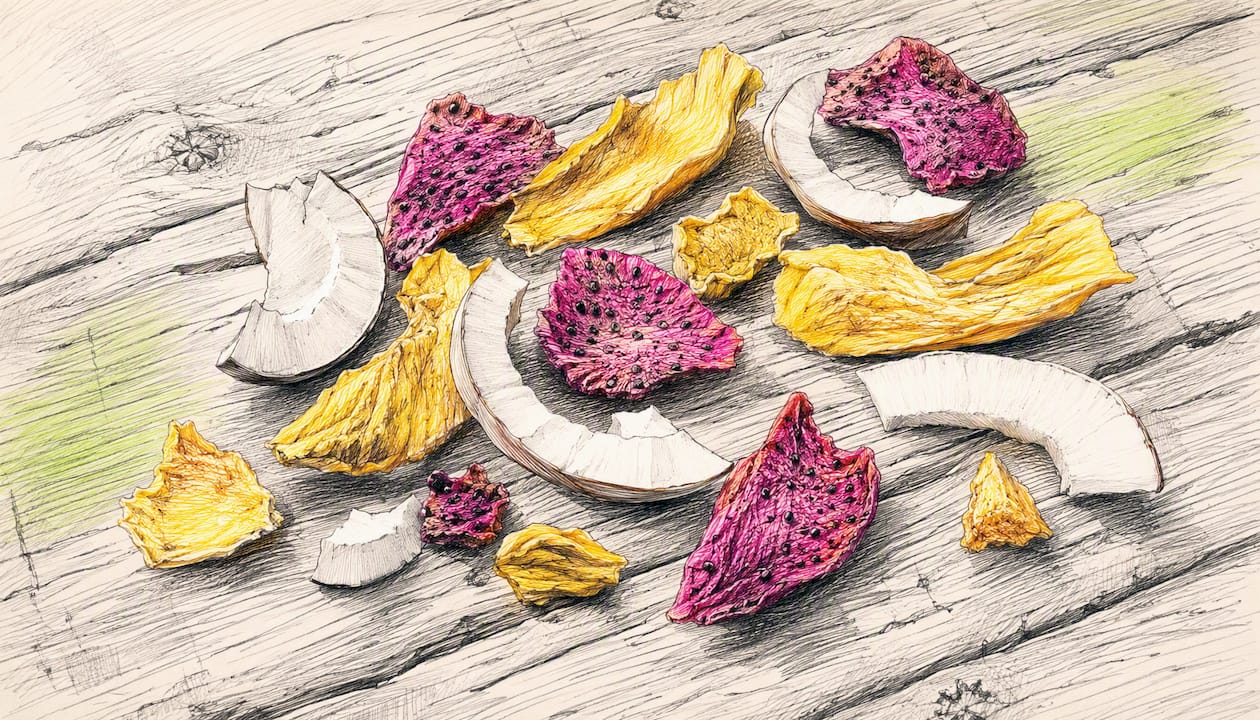
If you want the format most likely to show real fruit character, freeze-dried fruit and limited-ingredient yoghurts are your safest bets, followed closely by puree-based bars. Anything brightly coloured with a long ingredients list is worth a second glance before you assume it’s fruit-driven.
Why are tropical flavours everywhere right now?
Tropical flavours are trending because they combine a sense of freshness, genuine exotic appeal, and increasingly strong health associations, three things brands struggle to deliver at once with more familiar flavours.
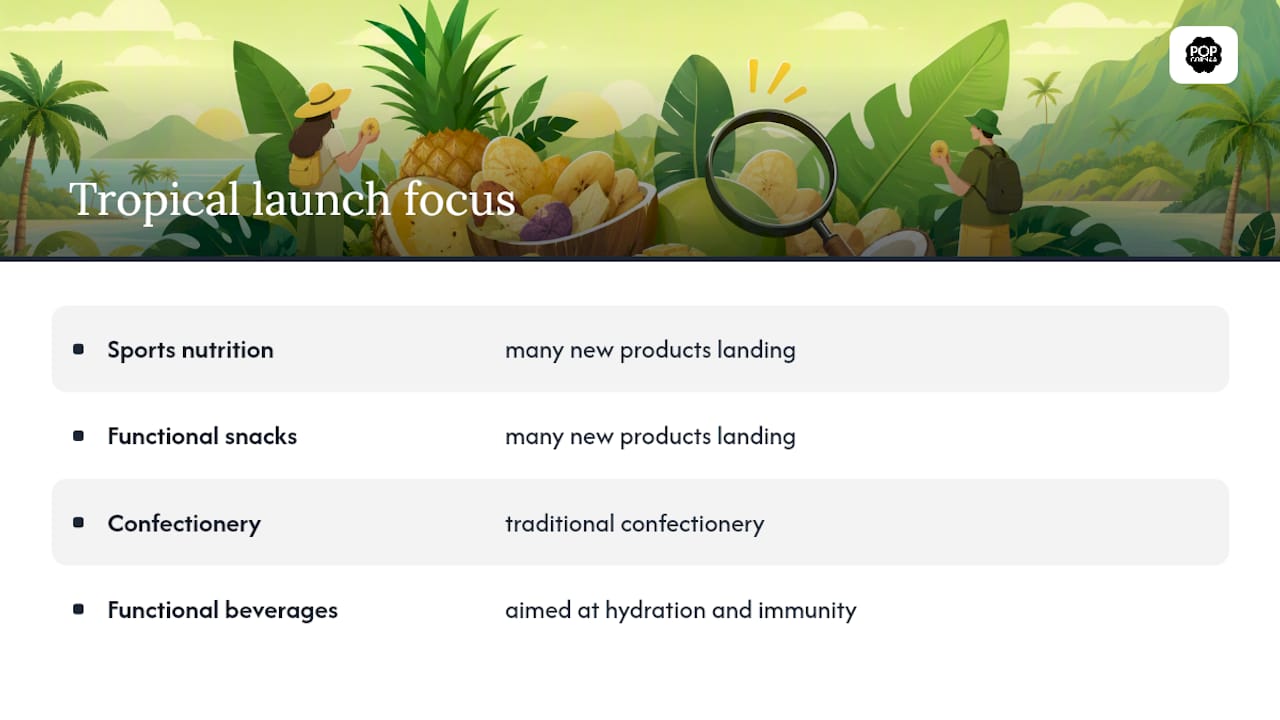
Market trend research shows a clear mid-2020s shift towards “better-for-you” tropical launches, with many new products landing in sports nutrition and functional snack categories rather than traditional confectionery, according to Innovative Market Insights. Passion fruit and dragon fruit pairings, guava and calamansi blends, and mango-turmeric combinations are increasingly appearing in functional beverages and snacks aimed at hydration and immunity, a shift the Institute of Food Technologists has documented as brands chase flavour, format and function simultaneously.
Statistic callout: A review of global tropical fruit production and processing found steady annual growth, cited at around 3.8% per year, with about half of that output moving into processed formats like purees, powders and chips rather than being sold fresh.
Trend callout: Consumers increasingly expect taste and health signals delivered together, according to Fi Global Insights, which is pushing tropical flavours out of sugary confectionery and into low-sugar, hydration-oriented snacks and drinks. That same growth, though, cuts both ways: more genuine innovation on one side, but also more “tropical-sounding” synthetic flavours riding the trend’s coattails on the other. Popularity doesn’t guarantee authenticity, and it’s worth reading labels a little more carefully as the category expands. Our own look at innovative vegan flavour launches tracks how this plays out on UK shelves specifically.
How do manufacturers actually recreate tropical flavours?
Most commercial tropical profiles are engineered blends of esters, lactones, terpenes and specific sulphur compounds, layered onto either a real-fruit base or a concentrate, rather than pure fruit extraction alone.
Esters are largely responsible for the “fruity” impression itself, lactones bring the creamy, ripe quality you taste in mango and coconut, and terpenes contribute the floral or citrus lift found in lychee and passion fruit. Flavourists at Flavorist describe a genuinely useful concept here: the “tropical fantasy” blend, where pineapple esters, mango lactones, passion fruit sulphur compounds and guava green notes are layered together to create a flavour that feels unmistakably tropical even when no single fruit dominates. Research on pineapple cultivars specifically found that methyl and ethyl esters, alongside terpenoid compounds, strongly drive how much people actually enjoy the aroma, confirming that this isn’t guesswork, it’s measurable chemistry.
The process, broadly, runs like this: raw fruit is turned into puree or concentrate, its aroma compounds are captured or reconstituted, that aroma profile is blended with supporting flavour compounds to round out the character, and the final blend is applied to whatever the snack’s base happens to be, whether that’s drying, coating or baking. Single-fruit extraction alone often loses nuance somewhere in that chain, which is exactly why so many “true to fruit” products still lean on a supporting flavour system to fill the gaps.
Pro Tip: Look for ingredient lists that name a specific fruit concentrate or puree alongside “natural flavouring” rather than “flavouring” alone. The word “natural” before “flavouring” means it was derived from a real plant or fruit source, even if not the named one, which is a meaningfully different claim from a synthetic flavour built from scratch.
What pairs well with tropical-flavoured snacks?
Tropical notes lend themselves brilliantly to warm spices, cooling herbs and creamy elements, because their natural acidity and sweetness need something to push against.
- Pineapple, chilli and lime on popcorn, the heat and acid cut straight through the sugar.
- Mango, coconut and lime in a yoghurt dip, creamy richness balancing bright fruit.
- Passion fruit and dark chocolate shards, tart fruit against bitter cocoa.
- Guava and fresh ginger, floral fruit lifted by warming spice.
- Coconut and toasted cashew, fat-on-fat richness that mellows sharper tropical notes.
Flavour developers at Alba Exotic Fruit point out that warm spices like ginger, chilli and cardamom pair particularly well with tropical fruit because they balance acidity while amplifying depth rather than competing with it. On the drinks side, iced tea, light lager and coconut water all work because they’re crisp enough not to fight the fruit for attention. Texture matters just as much as pairing: crunchy formats like popcorn or freeze-dried fruit tend to make flavours read as bolder and more immediate, while creamy formats like yoghurt or dips soften and round out the same flavour into something gentler.
How do you actually choose a healthier tropical snack?
Prioritise real-fruit or freeze-dried ingredients, keep an eye on added sugar, and be honest with yourself about portion size, that’s the whole rule in one line.
When you’re reading a label, work through this checklist for choosing healthier tropical snacks:
- Check whether a named fruit or fruit concentrate appears in the first three ingredients.
- Look at added sugars specifically, not just total sugar, since dried fruit carries natural sugar that reads differently on a nutrition panel.
- Note whether the flavour is described as “natural flavouring,” a named fruit concentrate, or simply “flavouring,” which usually signals a synthetic build.
- Check fibre and protein content if you’re snacking for satiety rather than just taste.
- Read the stated serving size against what you’d realistically eat in one sitting, dried fruit bags in particular often list unrealistically small portions.
Pro Tip: “Natural flavour” doesn’t mean it came from the fruit named on the pack, only that it came from some natural source. If authenticity matters to you, look for the actual fruit or fruit concentrate named directly in the ingredients rather than trusting the word “natural” alone. An occasional indulgent tropical sweet is perfectly reasonable, the goal isn’t zero sugar, it’s knowing which snacks are everyday choices and which are treats. Our piece on why plant-based snacks are worth choosing goes further into balancing flavour and nutrition without turning snacking into a chore.
Three easy tropical snack ideas to try this week
If you want to taste-test tropical flavours without overthinking it, these three combinations use pantry staples and take minutes, alongside one ready-made category worth knowing: tropical-flavoured popcorn, which delivers bold fruit-forward seasoning on a whole-grain base rather than a syrup-heavy sweet.
- Freeze-dried mango with dark chocolate drizzle. Melt a small amount of 70% dark chocolate, drizzle over freeze-dried mango pieces, and let it set for ten minutes. Takes under fifteen minutes total, travels well in a sealed tub, and the dark chocolate keeps added sugar lower than milk chocolate versions.
- Pineapple chilli popcorn toss. Toss freshly popped popcorn with a pinch of chilli powder, a squeeze of lime, and a light dusting of pineapple powder or finely chopped dried pineapple. Ready in five minutes and genuinely moreish; use unsweetened dried pineapple to keep sugar in check.
- Coconut yoghurt mango dip with granola. Blend mango puree into plain coconut yoghurt, top with a handful of granola for crunch. Best eaten fresh rather than stored, and swapping in unsweetened coconut flakes on top keeps it from tipping into dessert territory.
For inspiration beyond these three, our guide to creative plant-based snack ideas has more combinations worth trying at home.
A curator’s honest take on picking tropical flavours
Curating snacks for a living teaches you fairly quickly that “tropical” is one of the most abused words on a packet, and also one of the most rewarding when a brand actually gets it right. My rule when trying something new is simple: taste it before reading the marketing copy. If the fruit character disappears the moment you swallow, leaving only sweetness behind, that’s usually a flavour system doing all the work with little fruit substance underneath. If the flavour lingers with some genuine tartness or floral quality, that’s usually real fruit or a well-built concentrate talking.
What to avoid: anything that lists “tropical flavour” as a single catch-all ingredient with no named fruit anywhere on the pack. What to try first: passion fruit and guava combinations, because they’re harder to fake convincingly and tend to signal a brand that’s actually invested in flavour development rather than a generic fruit-punch shortcut.
Popcornaa’s approach to tropical flavours leans on this same instinct, building fruit-forward profiles onto a wholegrain popcorn base rather than relying on sugar to carry the whole experience, which fits how the brand approaches its wider Asian Flavourz range more broadly.
Fancy trying ready-made tropical popcorn instead of building your own?
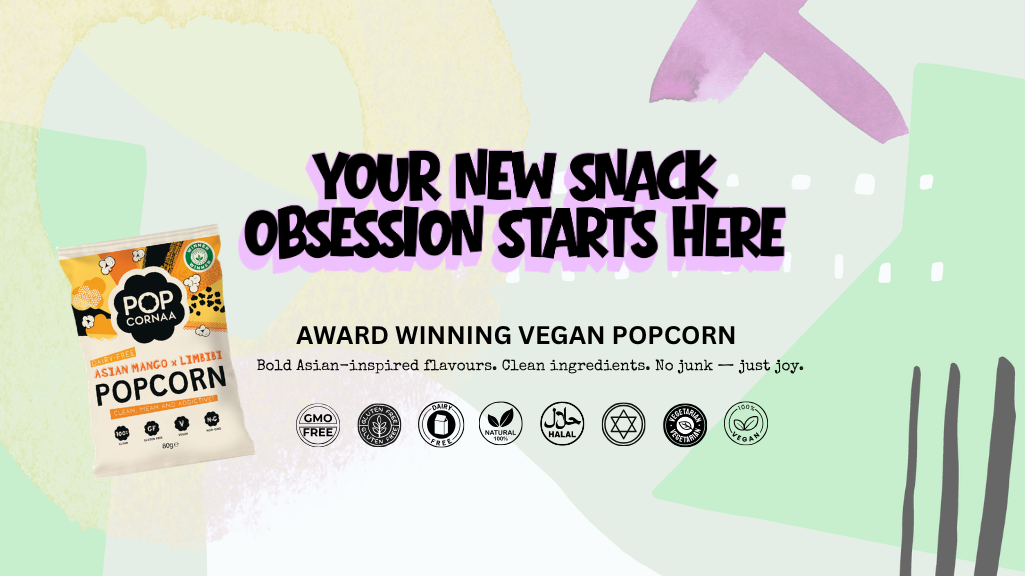
If three DIY recipes still feels like more effort than you want on a Tuesday evening, Popcornaa’s tropical-inspired popcorn ranges give you that same fruit-forward flavour architecture without needing a shopping list, a saucepan or any chilli powder measuring.
[ ](https://www.popcornaa.com › pages › asian-fusion-taster-box)
Every batch is built on vegan, wholegrain popcorn rather than a sugar-heavy sweet base, so you get the bold tropical flavour hit without abandoning the better-for-you principles this whole guide has been walking through. Whether you’re drawn to the brand’s Asian-inspired flavour collections or want to build a custom mix around your favourite tropical notes, the Popcornaa store is the place to start browsing, and a themed gift box or personalised snack mix is only a couple of clicks from your basket today.
Sources
These are the sources behind the flavour science and market trends covered in this guide, worth a read if you want to go deeper.
- PubMed: volatile compounds and tropical fruit flavour profiles
- Innovative Market Insights: tropical flavour trends and global consumer insights
- Springer: review on tropical fruit production, processing and market trends
- ACS Journal of Agricultural and Food Chemistry: pineapple cultivar volatile compound study
FAQ
What flavours are considered tropical?
Mango, pineapple, coconut, passion fruit, guava, lychee, papaya and dragon fruit are the flavours most consistently classed as tropical, thanks to their equatorial origins and high ester and terpene content.
What does tropical fruit taste like?
Tropical fruit generally combines intense sweetness with sharp acidity and floral or musky aromatics, ranging from mango’s creamy richness to passion fruit’s tart, perfumed bite.
How can I tell real tropical flavour from an artificial one?
Check whether a specific fruit or fruit concentrate is named in the ingredients rather than a generic “tropical flavouring”, real fruit character also tends to fade with a lingering tartness rather than pure sweetness.
What are the best tropical fruits for snacking?
Mango, pineapple and passion fruit are the most commonly used because they’re high-impact and easy to process, though guava and lychee offer more distinctive, less mainstream profiles worth seeking out.
What’s a quick way to try tropical flavours at home?
Toss popcorn with lime and a little dried pineapple, or drizzle freeze-dried mango with dark chocolate, both take under fifteen minutes and use ingredients most kitchens already have. If you’d rather skip the prep entirely, Popcornaa’s tropical-inspired popcorn ranges offer the same flavour profile ready to eat.