

What defines gourmet snacks: the complete 2026 guide
TL;DR:
- Gourmet snacks are characterized by high-quality ingredient provenance, artisanal preparation, and complex flavors, emphasizing care over price. They are now a mainstream market driven by consumer demand for authenticity, transparency, and sensory richness. Recognizing genuine gourmet snacks involves examining ingredient lists, certifications, texture, and layered flavors to distinguish craft from mass production.
Gourmet snacks are defined by exceptional ingredient provenance, artisanal preparation methods, and deliberate flavour complexity that place them in a category entirely apart from mass-produced alternatives. The term “gourmet” is the recognised culinary standard for this quality tier, describing a philosophy of care rather than simply a price point. What defines gourmet snacks, at its core, is the commitment to ingredient integrity: where something comes from, how it is made, and whether every element serves a genuine sensory purpose. The gourmet snacks market is projected to reach USD 74.11 billion in 2026, driven by rising demand for chef-inspired preparations and rare, high-quality ingredients. That figure tells you something important: this is no longer a niche pursuit. It is a mainstream shift in how people think about what they eat between meals.
What essential qualities distinguish gourmet snacks from regular snacks?
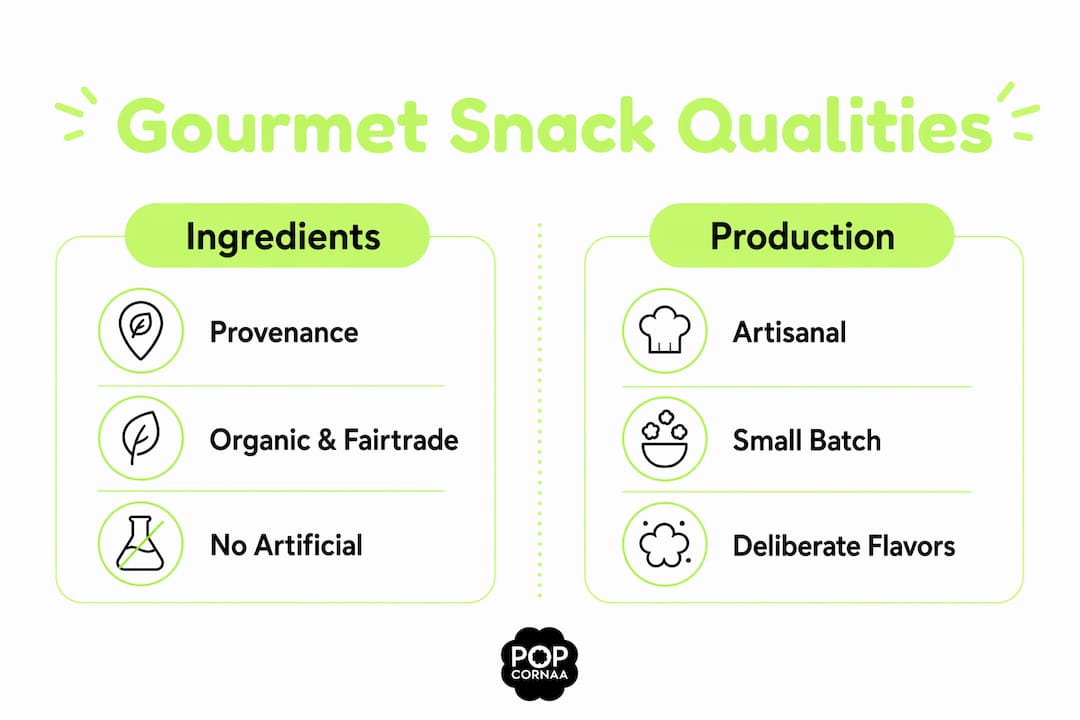
The gourmet snack definition rests on five pillars, and price is the least important of them. A £12 bag of crisps seasoned with truffle oil is not automatically gourmet. A £3 bag of single-origin popcorn seasoned with Himalayan salt and cold-pressed coconut oil very much can be.
The genuine characteristics of gourmet snacks are:
- Ingredient provenance. Gourmet snacks prioritise ingredient provenance and certifications such as USDA Organic or Fairtrade to verify quality. Knowing where an ingredient originates, and being able to trace it, is a non-negotiable marker of authenticity.
- Absence of artificial additives. Genuine gourmet snacks avoid synthetic flavourings, artificial colours, and preservatives. The ingredient list should read like a recipe, not a chemistry catalogue.
- Artisanal preparation. Small-batch production, hand-seasoning, and careful roasting or frying are what separate artisanal craftsmanship from factory-line output. Traditional methods such as Indian snack-making techniques demonstrate how time-honoured processes create depth that industrial methods cannot replicate.
- Flavour complexity. Gourmet is not about novelty. A snack that layers umami, heat, and a clean finish is gourmet. A snack that simply tastes of “birthday cake” or “pizza” is a gimmick. The distinction matters enormously.
- Sensory design. Texture, aroma, and visual presentation are all considered. A gourmet snack should engage multiple senses, not just deliver a hit of salt or sugar.
Price premiums do reflect quality in many cases. Specialty nuts and savoury mixes cost between $0.70 and $2.50 per ounce, while small-batch chocolates often exceed $3.00 per ounce. These figures reflect the cost of sourcing better ingredients and producing in smaller quantities, not marketing budgets.
Pro Tip: When assessing a snack’s gourmet credentials, count the number of ingredients you cannot pronounce. If there are more than two, the product is likely relying on chemistry rather than craft.
How do ingredients and production methods create unique sensory experiences?
The sensory architecture of a truly gourmet snack begins long before it reaches your mouth. It starts in the field, the orchard, or the sea, and it is shaped at every stage of production by decisions that prioritise flavour over convenience.
Single-origin cocoa, heritage nut varieties, high-grade cold-pressed oils, and stone-ground spices all behave differently from their commodity equivalents. They carry terroir, the subtle flavour signatures of their growing environment, in the same way that a good wine does. When a producer uses single-origin ingredients, they are making a deliberate choice to let the ingredient speak rather than masking it with artificial enhancement.
“The best gourmet snacks demonstrate restraint, focusing on deliberate, exceptional ingredients rather than novelty stunt flavours. Examples include high-grade oils or single-origin potatoes treated with care, creating layered, architectural flavours.” — Luxury Potato Chips: An Extra Fine Guide
This philosophy of restraint is what separates a genuinely gourmet popcorn from a flavoured one. Small-batch roasting, for example, allows the producer to monitor colour, aroma, and moisture at every stage. The result is a consistency of texture and depth that a high-volume production line simply cannot achieve. Natural seasoning applied after cooking, rather than baked in during processing, preserves the integrity of individual spices and allows their volatile aromatic compounds to remain active when you open the bag.
The sensory experience also extends to texture. A well-made gourmet snack has a considered bite: not too hard, not too soft, with a finish that lingers cleanly rather than coating the palate with residual fat or artificial sweetness. That textural precision is a direct result of production care, and it is something you notice immediately when you compare it to a mass-produced equivalent.

What do market trends reveal about gourmet snacks in 2026?
The numbers behind the gourmet snack industry in 2026 are striking, and they reflect a genuine shift in consumer values rather than a passing trend.
| Trend | What it means for consumers |
|---|---|
| Market value of USD 74.11 billion | Gourmet snacking is now a mainstream category, not a premium niche |
| Sustainable and organic sourcing | Shoppers expect traceability and certifications as standard |
| Limited-run artisanal releases | Scarcity signals quality and drives collector-style purchasing behaviour |
| Transparent ingredient labelling | Consumers read labels and reject products with unrecognisable additives |
| Health-conscious formulation | Clean-label, allergen-free, and vegan credentials are growth drivers |
Sustainable and transparent sourcing, including organic and Fairtrade certifications, is a major driver of gourmet snacks’ appeal in 2026. Packaging innovations and supply chain transparency add to perceived value and consumer trust. This is not simply ethical posturing. Consumers who understand ingredient provenance are better equipped to judge quality, and they are willing to pay accordingly.
The rise of limited-run and artisanal snack offerings mirrors what happened in craft beer and specialty coffee a decade ago. Snack innovation in 2026 shows producers drawing on global culinary traditions, from Caribbean spice blends to East Asian umami profiles, to create flavour experiences that feel genuinely new rather than manufactured. The most successful producers are those who treat flavour development as a craft discipline, not a marketing exercise.
Pricing reflects this reality. The premium over standard snacks is justified not by branding alone but by the measurable difference in ingredient cost, production time, and flavour outcome. A consumer who has tasted a properly made small-batch snack rarely returns to the mass-market equivalent without noticing what is missing.
How can you identify and appreciate genuine gourmet snacks?
Recognising authentic gourmet snacks in practice requires a small shift in how you approach the buying and tasting experience. The following steps will help you cut through marketing language and find products that genuinely deliver.
- Read the ingredient list first. A short list of recognisable, high-quality ingredients is the clearest signal of gourmet intent. If the first three ingredients are refined starches, hydrogenated oils, or artificial flavourings, the product is not gourmet regardless of the packaging.
- Look for certifications and provenance claims. USDA Organic, Fairtrade, Rainforest Alliance, and named origin claims (such as “Peruvian pink salt” or “Sicilian olive oil”) indicate that the producer has invested in verifiable quality standards.
- Assess the flavour in stages. A gourmet snack reveals itself in layers: an initial flavour note, a mid-palate development, and a clean or complex finish. If the flavour is one-dimensional and fades immediately, the product is relying on intensity rather than depth.
- Notice the texture. Gourmet snacks have considered texture. Crunch, chew, and finish are all deliberate. A snack that turns immediately to a paste or leaves a greasy residue has not been made with the same care.
- Consider the serving context. Gourmet snacks are often shared intentionally, forming part of social rituals. Serving premium popcorn alongside a cocktail or pairing artisanal crisps with a cheese board transforms the experience and reveals flavour dimensions that solo snacking can miss.
For those who want to explore trending gourmet flavours without committing to a full range, taster boxes and curated selections are an excellent starting point. They allow you to compare flavour profiles side by side, which is the fastest way to develop a calibrated palate.
Pro Tip: Elevated snacking can be achieved affordably by using high-quality pantry finishers like flaky sea salt, premium olive oil, or toasted spices to upgrade simpler snacks. This approach often costs less than pre-packaged gourmet products and gives you direct control over ingredient quality.
Key takeaways
Gourmet snacks are defined by ingredient provenance, artisanal production, and deliberate flavour complexity, not by price or packaging alone.
| Point | Details |
|---|---|
| Ingredient provenance is the foundation | Certifications like Fairtrade and named origins verify quality beyond marketing claims. |
| Restraint signals authenticity | Gourmet snacks use fewer, better ingredients rather than layering artificial complexity. |
| Market growth reflects genuine demand | The USD 74.11 billion market valuation confirms that gourmet snacking is a mainstream consumer priority. |
| Sensory architecture matters | Texture, aroma, and layered flavour are deliberate design choices, not accidents of production. |
| Affordable gourmet is achievable | Pantry finishers and curated taster selections offer genuine quality without excessive spend. |
Why restraint is the most underrated quality in gourmet snacking
I have tasted a lot of snacks over the years, and the ones that stopped me in my tracks were never the loudest. They were the quietest. A single-origin popcorn seasoned with nothing more than cold-pressed oil and a pinch of smoked sea salt. A heritage nut roasted at low temperature until the natural sugars caramelised without burning. These are the products that made me rethink what gourmet actually means.
What I find most interesting is how the word “gourmet” has been stretched by marketing to cover almost anything with a premium price tag. The true meaning of gourmet is a philosophy of care focused on ingredient integrity and flavour layering, not a descriptor you earn by charging more. That distinction matters to me personally, and it is why I am drawn to producers who can articulate exactly what makes their product different, not just that it is “artisan” or “premium.”
The practical upshot is this: when you are choosing a gourmet snack, trust your palate over the packaging. If the flavour is complex, clean, and lingers in a way that makes you want to understand it better, you are holding something genuinely gourmet. If it simply delivers a loud, one-note hit and leaves your mouth feeling coated, the label is doing more work than the ingredients. Seek authenticity. It is always worth it.
— Emily
Discover PopCornaa’s artisan gourmet popcorn
If this has sparked a wave of curiosity about what genuinely gourmet snacking tastes like, PopCornaa is a good place to start. Every product in the range is 100% clean, dairy-free, and made in small batches with real ingredients and no artificial additives. The flavour profiles draw on Asian-inspired and British culinary traditions, which means you get genuine complexity rather than novelty.
[ ](https://www.popcornaa.com › pages › asian-fusion-taster-box)
The Newbie Asian Fusion Taster Box is a curated five-bag selection that lets you explore the range without committing to a single flavour. It is the kind of snack experience that makes the gourmet difference immediately obvious. If you prefer to build your own selection, PopCornaa’s custom snack pack lets you choose exactly what goes in the box.
FAQ
What is the gourmet snack definition in simple terms?
A gourmet snack is one made with high-quality, traceable ingredients, artisanal production methods, and deliberate flavour complexity. It is a culinary philosophy focused on care and ingredient integrity rather than simply a higher price point.
How do gourmet snacks differ from regular snacks?
Gourmet snacks use premium, often certified ingredients, avoid artificial additives, and are produced in small batches with attention to texture and flavour layering. Regular snacks prioritise cost efficiency, shelf life, and mass-market flavour intensity over ingredient quality.
Are gourmet snacks always expensive?
Not necessarily. While specialty savoury mixes can cost between $0.70 and $2.50 per ounce, gourmet quality can also be achieved by using high-quality pantry finishers to upgrade simpler snacks. The price reflects ingredient and production costs, not a fixed threshold for quality.
What certifications should I look for on gourmet snacks?
Look for USDA Organic, Fairtrade, Rainforest Alliance, or named origin claims on the packaging. These certifications confirm that the producer has met verifiable standards for ingredient sourcing and production practices.
What makes popcorn a gourmet snack?
Popcorn becomes a gourmet snack when it is made with high-grade oils, natural seasonings, and small-batch production methods that create layered flavour and considered texture. The absence of artificial additives and the presence of traceable ingredients are the clearest markers of genuine gourmet quality.