

Non-GMO popcorn explained: UK guide for health-conscious shoppers
Almost every bag of popcorn you pick up in the UK is already non-GMO, whether it says so on the label or not. There is currently no commercially available genetically modified popcorn variety anywhere in the world, which means the claim is more about consumer reassurance than it is about a meaningful safety distinction. That said, understanding what the label actually means, what UK law requires, and how to shop wisely still matters.
Here is what you need to know at a glance:
- Commercial popcorn is a flint corn variety, botanically distinct from the field corn and sweet corn varieties that have been genetically engineered.
- No GMO popcorn exists on the market, so all popcorn is effectively non-GMO by default.
- UK law requires mandatory labelling when authorised GMO content exceeds a legally defined threshold in a product, so the absence of a “contains GMO” declaration is itself a legal signal.
- “Non-GMO” does not mean organic, pesticide-free, or nutritionally superior.
Pro Tip: When scanning a label in a UK supermarket, look for the absence of “produced from genetically modified [ingredient]” wording rather than searching for a “non-GMO” badge. Under UK rules, that absence is the regulated signal.
Key takeaways
Non-GMO popcorn is effectively the default for all commercial popcorn, since no GMO popcorn variety currently exists, making the label a transparency signal rather than a safety distinction.
| Point | Details |
|---|---|
| No GMO popcorn exists | All commercial popcorn is flint corn with no released GMO variety, so every bag is non-GMO by default. |
| UK law uses mandatory GMO labelling | Products must declare GMO content above 0.9%; absence of that declaration is a legal consumer signal. |
| Non-GMO is not a health claim | Preparation, added oils, salt, and sugar matter far more to nutrition than a product’s GMO status. |
| Organic beats non-GMO for breadth | Soil Association organic certification covers pesticides and farming practices; non-GMO addresses only genetic modification. |
| Popcornaa’s range | Popcornaa offers gourmet vegan popcorn with transparent sourcing, including curated taster boxes for UK shoppers. |
What does ‘non-GMO’ actually mean on a popcorn label?
“Non-GMO” means the product has not been produced from seeds or ingredients that have undergone genetic modification, the laboratory process of altering an organism’s DNA to introduce traits it would not develop through conventional breeding. Applied to a whole food like a popcorn kernel, the claim addresses the seed’s origin and, in certified cases, the supply chain traceability behind it.
What it does not cover is worth spelling out clearly:
- Pesticide use: Non-GMO kernels can still be grown with synthetic pesticides. Only an organic certification addresses farming inputs.
- Processing additives: A bag labelled “non-GMO” may still contain refined sugar, hydrogenated oils, or artificial flavourings.
- Nutritional quality: The Food Standards Agency requires that authorised GM foods must not be nutritionally inferior to their conventional equivalents, but “non-GMO” itself carries no nutrition promise in either direction.
- Organic status: Organic certification (such as the Soil Association’s symbol) covers far more ground than a non-GMO claim, including soil health, animal welfare, and prohibited inputs.
On pack, a non-GMO claim typically covers: seed origin (non-engineered variety), supply chain documentation, and in some cases third-party testing or certification. A voluntary certification from a body like the Non-GMO Project adds an additional layer of verification, but it is not a legal requirement in the UK.
Can popcorn actually be genetically modified?
The short answer is no, not commercially. According to the Non-GMO Project, there is currently no commercially available GMO popcorn variety, and popcorn does not appear on their high-risk list for corn. That is a meaningful distinction, because field corn and sweet corn do appear there.
Popcorn is a flint corn (Zea mays everta), a subspecies with a uniquely hard, moisture-sealed hull that causes it to pop under heat. Breeders working with popcorn focus almost entirely on popping quality, hull thickness, and flavour rather than the traits typically engineered into field corn, such as herbicide tolerance or pest resistance. The commercial seed market for popcorn is also far smaller and more specialised than that for commodity field corn, which reduces the economic incentive for genetic engineering investment.
Cross-contamination from nearby GMO field corn is theoretically possible through pollen drift, but the botanical separation and dedicated supply chains used by popcorn producers make this a low-probability risk in practice. The UK’s mandatory pre-market safety assessment, conducted by the Advisory Committee on Novel Foods and Processes (ACNFP) and described on the FAO GM platform, means any GMO variety would require authorisation before it could legally enter the food supply.
The Non-GMO Project notes that popcorn’s classification as a flint corn variety, combined with the absence of any commercially released GMO popcorn seed, means the crop sits in a genuinely low-risk category, distinct from the high-risk field and sweet corn varieties that dominate GMO development.
Is non-GMO popcorn healthier? What the nutrition actually says
Plain popcorn is genuinely good for you, but that has nothing to do with its GMO status. As a wholegrain, air-popped popcorn delivers gut-friendly fibre, a modest amount of protein, and relatively few calories per volume. It is the preparation and added ingredients that determine whether a bag of popcorn supports your health or quietly undermines it.

“Non-GMO” is not a nutrition claim. A bag of non-GMO popcorn drenched in butter, coated in refined sugar, and loaded with salt is not a healthier choice than a conventionally labelled bag prepared with a light drizzle of olive oil. The Food Standards Agency is clear that authorised GM foods must not be nutritionally inferior to their conventional counterparts, which means the nutritional gap between GMO and non-GMO versions of the same food is, by regulatory design, negligible.
For a deeper look at preparation and nutrition comparisons, the healthiest popcorn guide from Popcornaa covers the specifics in detail.
Practical tips for healthier eating:
- Choose air-popped or dry-popped kernels over microwave bags, which often contain added oils and salt.
- Check the saturated fat content per 30g serving rather than per 100g, since serving sizes vary widely between brands.
- Opt for natural seasonings: nutritional yeast, smoked paprika, or a pinch of sea salt add flavour without significant calorie load.
- Watch out for “light” or “natural” claims on pre-popped bags; these are not regulated in the same way as nutritional claims.
Pro Tip: On any pre-popped bag, flip straight to the ingredients list and look at where oil and salt appear. If either sits in the first three ingredients, the product is likely higher in fat or sodium than the front-of-pack messaging suggests.
How to read ‘non-GMO’ labels in the UK: what the law says
UK food law takes a clear position: any food containing or produced from an authorised GMO must be labelled as such. The Genetically Modified Organisms (Traceability and Labelling) (England) Regulations 2004 implement traceability and labelling obligations across the supply chain, requiring operators to pass on and retain documentation at every stage.
The key authorities and standards to be aware of:
- Food Standards Agency (FSA): The primary body for food safety policy in England, Wales, and Northern Ireland; publishes consumer and business guidance on GM foods.
- Food Standards Scotland: Equivalent body for Scotland, operating under the same legislative framework.
- ACNFP (Advisory Committee on Novel Foods and Processes): Conducts independent safety reviews of any GMO submitted for authorisation in the UK.
- GOV.UK authorisation guidance: The operational resource businesses must consult before placing any GMO-derived product on the UK market.
Under UK rules, the absence of “produced from genetically modified [ingredient]” wording on a prepacked food is a legally meaningful signal, not just a marketing omission. It indicates the product either contains no authorised GMO material or falls below the 0.9% labelling threshold.
For prepacked products, look for that specific phrase in the ingredients list or a separate declaration. For non-prepacked products (loose popcorn at a market stall, for instance), Business Companion guidance notes that retailers must still be able to provide GMO information on request, and that any claim of “100% GMO-free” must be substantiated. Historical labelling context is set out in the Genetically Modified Foods (England) Regulations 2000, which established the original framework that subsequent legislation built upon.
Choosing popcorn in the UK: certifications, organic vs non-GMO, and shopping tips
Understanding the difference between “non-GMO” and “organic” is probably the single most useful thing you can do as a health-conscious shopper. They are not interchangeable.
Organic certification (look for the Soil Association logo or an equivalent EU/USDA mark on imported products) covers the entire farming system: no synthetic pesticides, no artificial fertilisers, mandatory crop rotation, and, crucially, no GMO seeds. An organic popcorn product is therefore also non-GMO by definition, but the reverse is not true.
Non-GMO on its own addresses only the seed and genetic modification question. The crop may still have been grown with conventional pesticides and fertilisers.
A practical buying checklist for UK shoppers:
- Check for organic certification first. The Soil Association logo or an equivalent mark gives you the broadest assurance: no GMOs, no synthetic pesticides, and traceable farming practices.
- Look for third-party non-GMO verification if organic is not available or is outside your budget. Voluntary certifications add supply chain documentation beyond a brand’s own claim.
- Read the ingredients list in full. A non-GMO kernel can still be paired with GMO-derived additives (some emulsifiers, for instance), so check each ingredient if that matters to you.
- Compare product forms. Loose kernels and plain pre-popped bags tend to have shorter ingredient lists than microwave varieties, which often include added oils, salt, and flavour compounds.
- Check the brand’s sourcing page. Reputable brands publish sourcing and certification information; if a brand makes a non-GMO claim but provides no traceability detail, treat it with appropriate scepticism.
For vegan shoppers navigating ingredient lists alongside GMO concerns, the vegan popcorn guide from Popcornaa covers both dimensions in one place.
Why brands label popcorn ‘non-GMO’: marketing, myths, and what experts say
Given that no GMO popcorn exists commercially, why do brands bother with the label? The honest answer is consumer demand. Research from the Non-GMO Project confirms that “non-GMO” on popcorn functions primarily as a reassurance signal, responding to broader consumer anxiety about agricultural biotechnology rather than flagging a genuine product distinction. Brands know that health-conscious shoppers scan for the claim, so it appears on packaging even when it describes a characteristic that every bag of popcorn already has.
A few persistent myths are worth correcting directly:
- “All corn is GMO.” False. Popcorn, as a flint corn variety, has no commercially released GMO version. Field corn and some sweet corn varieties do have GMO versions, but these are not the same crop.
- “Non-GMO means pesticide-free.” False. These are entirely separate claims governed by different standards. Only organic certification addresses pesticide use.
- “GMO foods are unsafe.” Not supported by the regulatory evidence. The FSA’s mandatory pre-market safety assessment process, including independent ACNFP review, is specifically designed to prevent unsafe GMO foods from reaching UK shelves.
- “A non-GMO label means the product is healthier.” Not automatically. Preparation, added ingredients, and portion size have far more influence on a popcorn product’s nutritional profile than its GMO status.
The Non-GMO Project’s own guidance acknowledges that a “non-GMO” badge on popcorn is often a response to consumer concerns about broader agricultural practices, not an indication that the product is materially different from unlabelled alternatives. The label can still be a useful shorthand for supply chain transparency, but it should not be read as a standalone health claim.
A note from Popcornaa
At Popcornaa, we source our kernels with transparency in mind, because we believe you deserve to know exactly what goes into your snack. Our gourmet vegan popcorn range is built around clean ingredients, and we are proud to be Quality Food Award winners in both 2023 and 2024. This article reflects our honest editorial view of the non-GMO question; we want you to make informed choices, whether that leads you to our products or simply gives you the confidence to read any label more clearly.
Gourmet non-GMO popcorn, curated and ready to enjoy
If reading all of this has made you want a bag of genuinely good popcorn, Popcornaa’s Asian Fusion Taster Box is a great place to start. It brings together five vegan flavours, each made with clearly labelled, quality-sourced kernels, in a curated box that works equally well as a personal treat or a gift.
[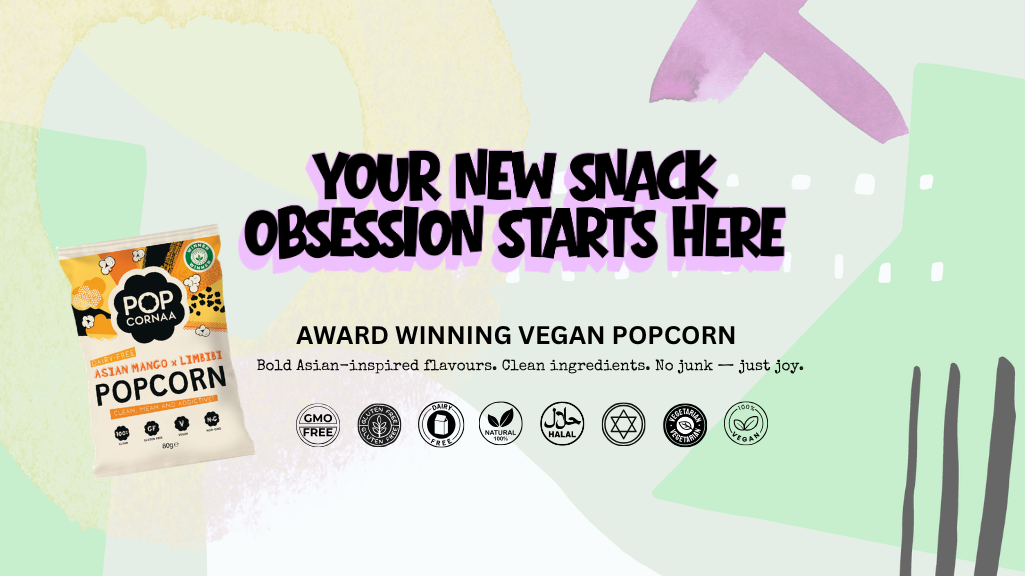 ](https://www.popcornaa.com › pages › asian-fusion-taster-box)
Browse the full selection at Popcornaa and find the flavours that suit you.
Sources
- Genetically modified foods | Food Standards Agency
- The GMO High‑Risk List: Corn - The Non‑GMO Project
- The Genetically Modified Organisms (Traceability and Labelling) (England) Regulations 2004
- Gov
- United Kingdom of Great Britain and Northern Ireland | FAO GM platform
- Genetically modified foods | Business Companion
FAQ
Is non-GMO popcorn good for you?
Plain popcorn is a wholegrain with useful fibre and relatively few calories, making it a genuinely healthy snack. The “non-GMO” label does not add nutritional value; what matters most is how the popcorn is prepared and what has been added to it.
Is all popcorn GMO-free?
Yes, in practice. There is currently no commercially available GMO popcorn variety anywhere in the world, so all popcorn on UK shelves is non-GMO by default, whether or not the packaging says so.
What is the healthiest popcorn to eat?
Air-popped or dry-popped plain popcorn with minimal added salt and no hydrogenated oils is the healthiest preparation. Check the ingredients list for added sugars and saturated fats, which have a far greater impact on health than GMO status.
Is it safe to eat popcorn that does not say ‘non-GMO’ on the pack?
Yes. Since no GMO popcorn exists commercially, the absence of a “non-GMO” badge on popcorn carries no safety concern.