

Five Forces Reshaping Snack Innovation for Product Teams and Popcornaa
Snack innovation today means solving for taste, function and value at once, not launching a novel flavour for headlines. It centres on flavour layering, added protein or fibre, portion-smart formats and clean labels working together in a single pack. The drivers, R&D trade-offs behind reformulation, and how brands test new ideas fast all follow from that shift.
TL;DR:
- Snack innovation now emphasizes solving specific consumer needs like satiety, energy, and digestion through ingredient choices and packaging design, rather than just launching new flavors.
- Flavour layering and complex taste combinations, along with texture and visual appeal, are key drivers that enhance product discovery and sharing on social platforms.
- Reformulation challenges include maintaining texture and shelf life when adding functional ingredients, requiring extensive testing and field validation before scaling production.
- Small-format trial packs, influencer seeding, and digital engagement are crucial for validating new products and converting trial customers into repeat buyers.
- Formats like taster boxes and sharing buckets enable brands like Popcornaa to test flavors efficiently and gather customer feedback before investing in full-scale launches.
What is snack innovation in today’s market?
Ask a product developer from a decade ago what counted as innovation, and they’d probably describe a bold new flavour launch. That’s no longer the whole story. Innovation now spans bars, chips, puffed legumes, drinkable snacks and everything adjacent, judged less by novelty and more by whether the product answers a specific need at the moment someone reaches for it.
Industry analysts describe this as a shift from reinvention to relevance: rather than innovating within rigid category lines, brands now design around consumer need-states like satiety, energy and mood, according to FoodNavigator’s analysis of the shift. A snack aimed at 3pm energy dips looks and performs differently to one built for post-workout recovery, even if both sit in the same aisle.
That reframing is backed by hard demand. Better-for-you snacks are outpacing other segments, with protein claims driving much of the growth and fibre close behind as a rising priority. What that looks like in practice:
- Formats stretching beyond the traditional bag, from single-serve pouches to sippable snack formats
- Ingredient decisions made for function first, flavour layered on top rather than the reverse
- Packaging and portioning designed around a specific occasion, not a generic “snack time”
- Claims that speak to a need (focus, recovery, digestion) rather than a vague health halo
What are the key drivers and trends shaping snack innovation?
Five forces are doing most of the work behind new product launches right now, and they rarely act alone.
- Flavour layering and mash-ups. Consumers increasingly reward complexity, think layered heat, umami depth and global spice combinations, over single-note flavours, a pattern Mintel and Black Swan Data have both tracked in recent snacking research.
- Functionality, led by protein and fibre. Function has moved from niche to mainstream fast.
- Affordability and price-pack architecture. Trial sizes, multipacks and private-label pressure are reshaping how brands price innovation, not just how they formulate it.
- Texture and visual appeal as discovery tools. Snacks that photograph or crunch distinctively travel further on social platforms than ones that simply taste good.
- Sustainability and clean-label expectations. Shorter ingredient lists and recognisable names are now a baseline expectation, not a premium tier.
Consumer priority check: in 2026 research, affordability ranks immediately after taste as a purchase driver, a significant portion of shoppers say functionality matters, and many are actively interested in reformulated snacks carrying added fibre and clean-label credentials, according to ADM’s snacking report.
That combination, taste first, price close behind, function increasingly non-negotiable, is why so many launches now try to do three or four jobs at once. It’s also why texture and visual design have become discovery engines in their own right: research on sensory-led snacking shows people increasingly choose snacks for how they feel and look, not just how they taste. A pop of colour or an unexpected crunch does more on a phone screen than most brands give it credit for.
What are the technical challenges in reformulating snacks?
Every functional claim you add to a pack creates a formulation problem somewhere else. Push more protein into a bar and you often lose the snap. Strip sugar from a bake and moisture retention goes sideways. Add fibre and you risk a grainy mouthfeel that undoes months of flavour work. Formulation optimisation, rather than a single new flavour, is now what separates a commercial breakthrough from a shelf failure, according to Bakery & Snacks’ review of current NPD demands.
The common trade-offs product teams wrestle with include:
- Texture stability when reducing sugar or fat, often requiring humectants or alternative binding agents
- Shelf-life extension once natural preservatives replace synthetic ones
- Processability at scale, a formula that works on a bench doesn’t always survive a factory line
- Colour and appearance drift when natural pigments replace artificial ones
None of this is quick. Reformulation typically moves through bench formulation, pilot plant runs, accelerated shelf-life testing and consumer sensory validation, and each stage tends to surface compensatory tweaks that change the recipe materially, per Bakery & Snacks’ breakdown of the reformulation process. Ingredient swaps like sugar reduction or protein fortification routinely add development time and cost because they demand repeated factory trials, not a single lab tweak.
Pro Tip: Before scaling any reformulated recipe, run a small pilot batch through real distribution conditions, warm delivery vans, stacked pallets, weeks on a warm shelf. Lab-stable formulas fail in the field more often than anyone budgets for.
Claims substantiation matters just as much as the science behind them. Front-of-pack labelling is under growing scrutiny, so any protein, fibre or “clean” claim needs a documented basis before it reaches print, not after a retailer query lands.
How do brands commercialise snack innovation?
A great formulation means nothing if nobody tries it twice. Price-pack architecture is doing heavy lifting here: taster boxes and small trial formats lower the barrier to a first purchase, while multipacks convert that trial into a habit once the flavour or function lands.
Direct-to-consumer sampling and influencer seeding have become the fastest validation routes for brands without big retail budgets, letting a product prove demand before a buyer meeting ever happens. Retailer listings still matter, but they increasingly follow proof of concept rather than precede it.
The metrics that actually tell you whether an innovation is working:
- Repeat purchase rate within the first two to three months
- Conversion rate from trial pack to full-size purchase
- Distribution breadth across channels and retailers
- Digital engagement, saves, shares and quiz completions tied to specific flavours
What examples show snack innovation in action?
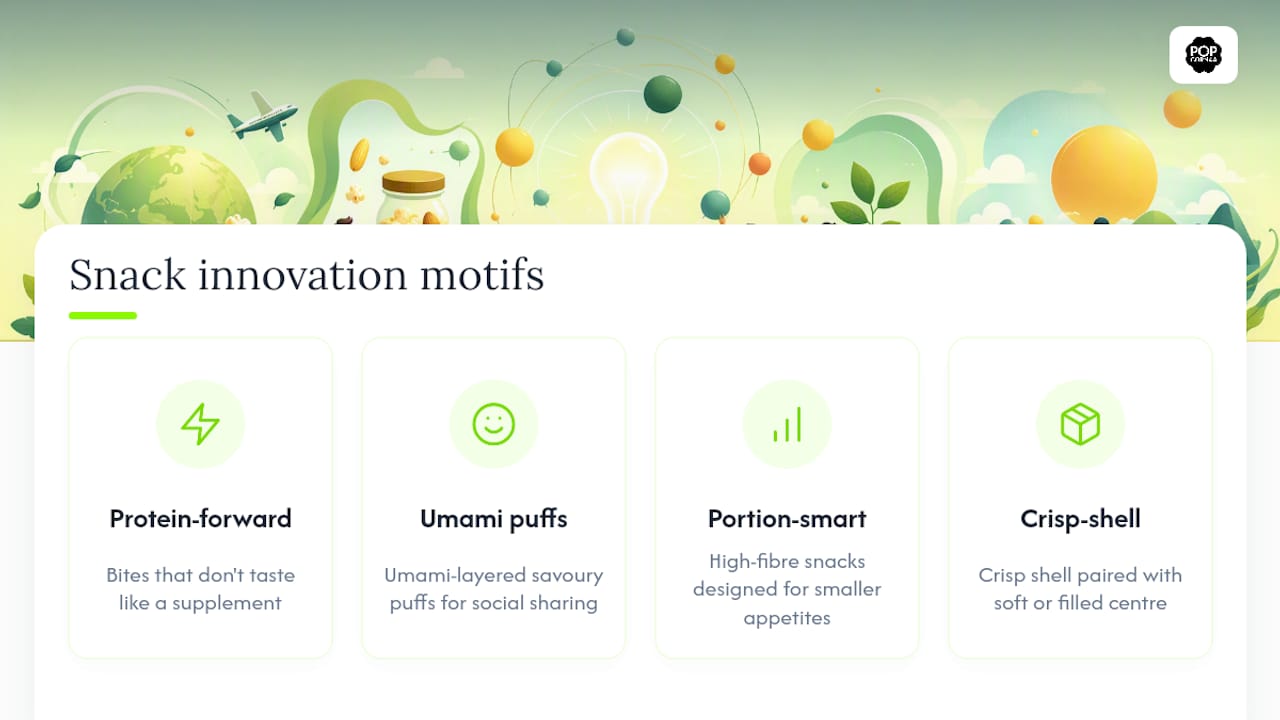
A few motifs keep showing up across the category: protein-forward bites that don’t taste like a supplement, umami-layered savoury puffs built for social sharing, portion-smart high-fibre snacks designed for smaller appetites, and texture-contrast treats that pair a crisp shell with a soft or filled centre.
Format innovation matters just as much as ingredients. Taster boxes, sharing buckets, drinkable snacks and single-serve trial packs each solve a different commercial problem, from first-try risk to party-size value. For a closer look at how these motifs play out in gourmet popcorn specifically, Popcornaa’s flavour innovation list for 2026 and its piece on how taste trends are reshaping popcorn both walk through real product examples.
How does Popcornaa apply snack innovation to vegan popcorn?
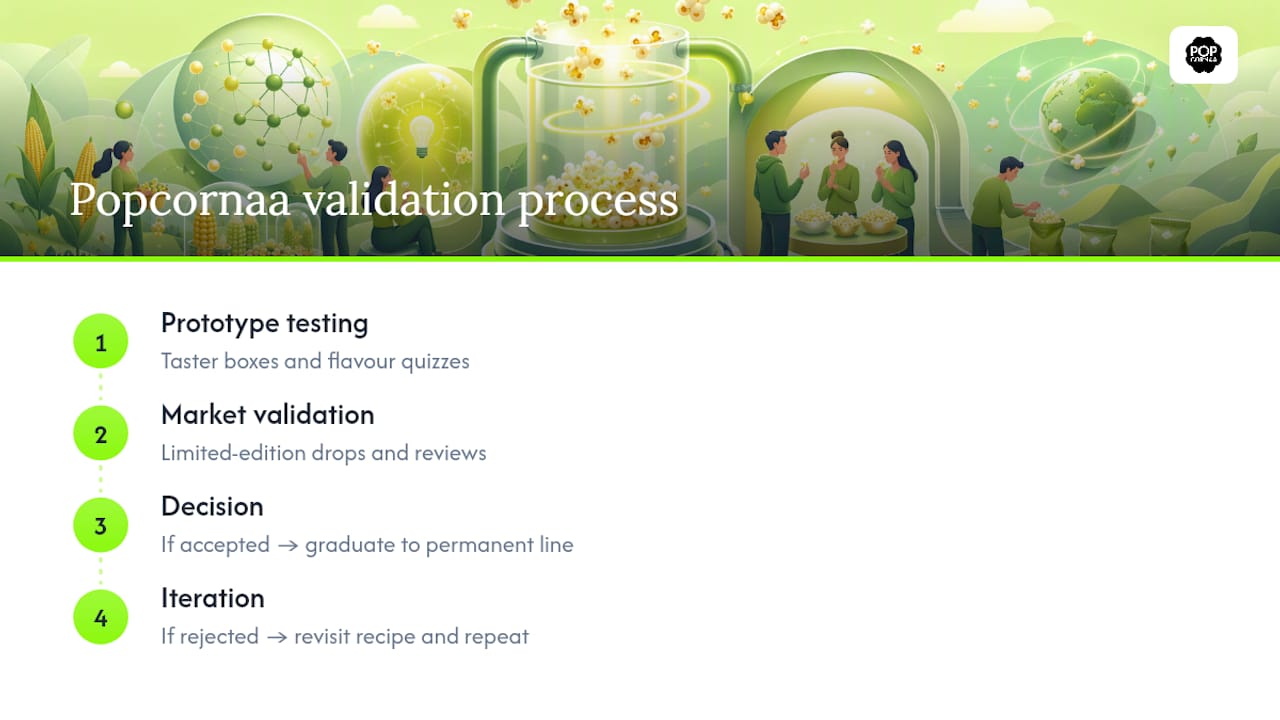
Taster boxes can be used as testing tools, not just gift items. Sending out small-format flavour selections and using flavour quizzes can gather feedback on new combinations before full production runs.
Customer reviews and limited-edition drops do the rest of the validation work. If a flavour lands, it graduates to a permanent line; if it doesn’t, the recipe gets revisited. That approach sits behind the reasoning in Popcornaa’s piece on why gourmet popcorn is trending, and it’s the same logic that earned recognition at the Great Taste Awards.
What should product teams prioritise next?
The near-term priority is ingredient-function systems, combinations of fibres, protein isolates and texturants, that protect texture and shelf life rather than chasing a single trending flavour. Concept testing through small-format packs and DTC sampling is cheaper and faster than a full retail launch, and it tells you the truth sooner. Sensory design, texture paired with visual appeal, will keep driving discovery, but only if the claims behind it stay honest and substantiated. Skip that discipline and the reformulation cycle you saved money on early costs you far more later.
— Emily
See how Popcornaa builds better-for-you popcorn in practice
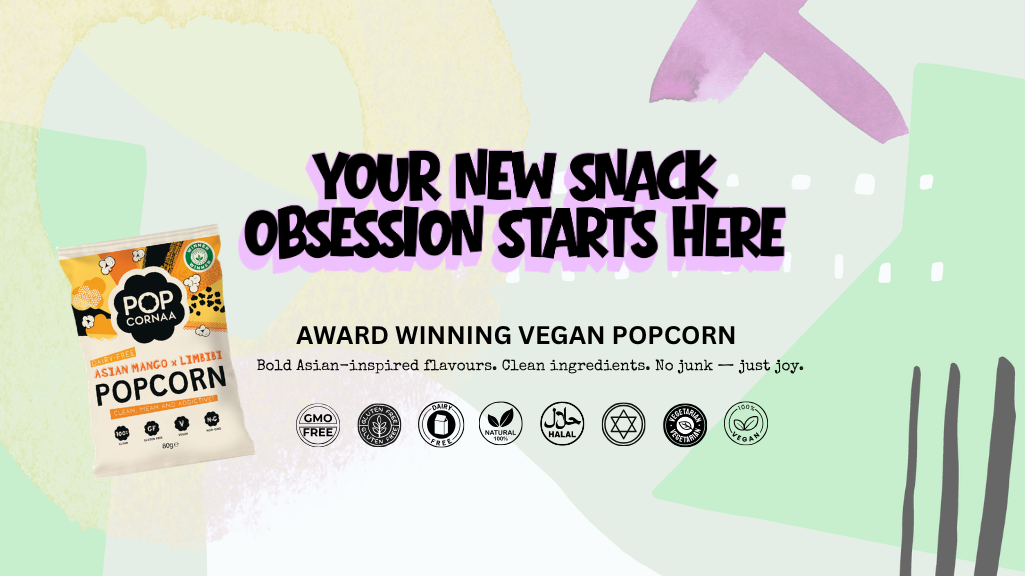
Everything covered here, flavour layering, portion-smart formats, honest claims, shows up directly in how Popcornaa builds its range. The Newbie Asian Fusion Taster Box exists precisely because small-format trial works better than asking someone to commit to a full-size bag of an unfamiliar flavour.
[ ](https://www.popcornaa.com › pages › asian-fusion-taster-box)
Popcornaa’s range runs from that taster box through to 5-litre sharing buckets for events and a build-your-own custom mix for anyone who wants control over their own flavour combination. The Great Taste Award recognition on the awards page reflects the same testing discipline described above, flavours earn their place on the permanent range, they aren’t assumed onto it. If you’re curious whether the layered, better-for-you approach actually holds up on your own taste buds, start with a taster box and judge for yourself. Wholesale and B2B enquiries are welcome for anyone wanting to stock the range.
Sources
For deeper detail on the trends and data behind this piece, see ADM’s 2026 snacking consumer report, FoodNavigator’s reporting on relevance-led innovation, Bakery & Snacks on reformulation trade-offs, and Food Business News on the better-for-you opportunity. For sensory and flavour inspiration beyond snacking, Wild Foodz’s 2026 gastronomy trends is worth a read too.
- The new rules of snack innovation: More demands, less compromise
- Snack and bakery innovation shifts from reinvention to relevance
- Breaking down the better-for-you snacking opportunity
FAQ
What products does snack innovation actually make?
It spans bars, chips, puffed legumes, popcorn, drinkable snacks and single-serve pouches, each engineered around a specific need-state like satiety, energy or portion control rather than a generic snack occasion.
What are some examples of food innovation more broadly?
Beyond snacks, food innovation includes plant-based protein alternatives, fermented functional drinks, and reformulated staples with reduced sugar or added fibre, all following the same logic of solving a consumer need rather than chasing novelty alone.
What defines snack innovation compared with a simple new flavour launch?
A genuine innovation solves a formulation or need-state problem, better texture, added function, smarter portioning, not just a new taste. A flavour launch alone rarely counts if the underlying product hasn’t changed.
What is the difference between snack innovation and better-for-you snacking?
Better-for-you (BFY) is one output of snack innovation, focused specifically on nutrition and clean-label attributes, while snack innovation is the broader process covering flavour, format, function and commercial design together.
How does a small brand like Popcornaa test new snack ideas?
Popcornaa uses taster boxes, flavour quizzes and limited-edition drops to gather real customer feedback quickly, letting a flavour prove itself before it earns a permanent place in the range.