

What makes a snack genuinely craft, not just marketed that way
A craft snack is one made in small batches by a skilled producer, using whole, traceable ingredients, and shaped by deliberate sensory choices rather than industrial shortcuts. It is a definition built on maker, method, and material, not on packaging language. Brands like Popcornaa build their identity around exactly this triangle: sourced ingredients, hands-on batch production, and flavour combinations designed for taste, not just shelf life.
TL;DR:
- Craft snacks prioritize small-batch production, visible recipe evolution, and techniques like slow roasting and hand-coating to produce unique textures and aromas.
- They use short ingredient lists with recognizable, whole items, often sourced locally or seasonally, resulting in flavor variation between batches.
- Certification is informal; HACCP and awards like the Great Taste Awards are key indicators of production safety and quality authenticity.
- Mainstream craft snack categories include gourmet popcorn, small-batch crisps, artisan chocolates, and cured meats, all emphasizing ingredient integrity and regional storytelling.
- Higher costs stem from using whole ingredients, limited batches, and shorter shelf lives, while sustainability benefits come from local sourcing and minimal packaging.
What Makes Snacks Craft: A Definition That Actually Holds Up
Food academics have been arguing over “artisan” for decades, and the most useful framework comes down to four things: place, product, passion, and personality. That framing, developed through work at The School of Artisan Food, treats craft food as something rooted in a specific location, made from a specific product with visible skill, driven by a maker who cares, and stamped with a recognisable identity. Nothing there mentions certification or price point. It is about how the thing is made and who is making it.
Small-scale production sits at the centre of this. A craft producer works in limited quantities, often with non-mechanised or semi-mechanised methods, and improves the recipe over repeated batches rather than locking it once and scaling forever. That iterative process is what separates a maker refining a chilli caramel recipe over eighteen months from a factory line running the same formula for a decade.
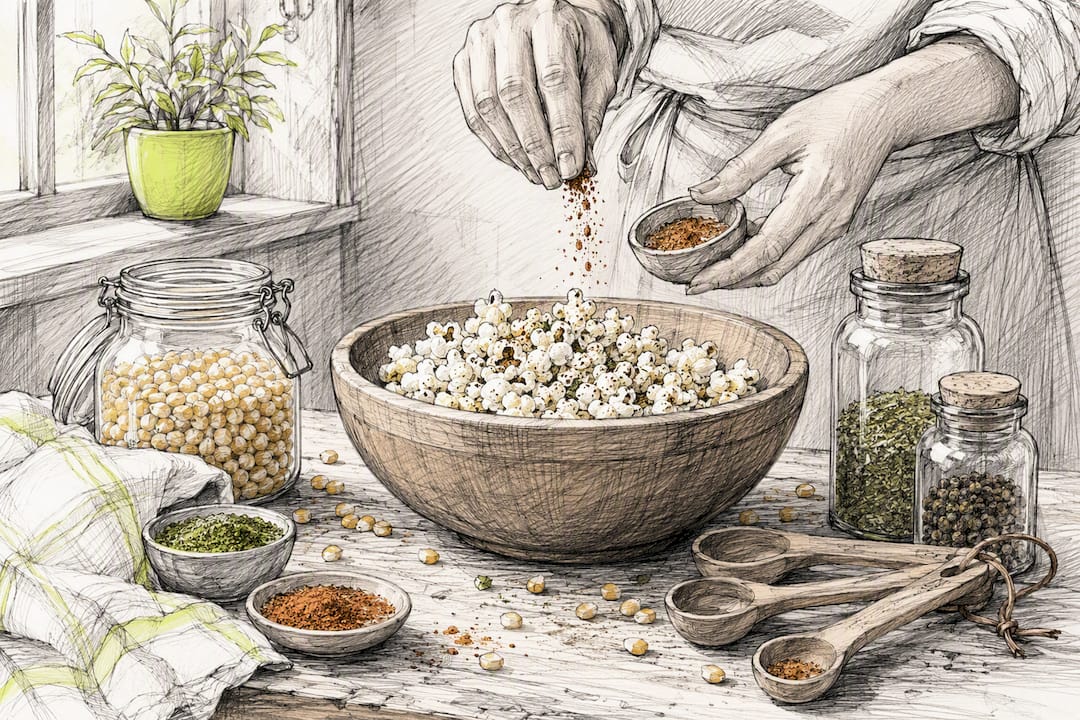
The catch is that “craft” and “artisan” carry no legal weight in most markets, which opens the door to what food writers call craft-washing: large manufacturers borrowing artisan language without the small-batch practice behind it. Genuine craft producers tend to show their work.
Signs worth checking for:
- A named maker or small team, not just a brand logo
- Batch sizes disclosed somewhere on the packaging or website
- A recipe that visibly evolves between releases
- Language that describes technique, not just adjectives like “premium”
What Should Be in a Craft Snack’s Ingredient List
Pick up two bags of popcorn, one industrial and one craft, and the ingredient panels tell most of the story before you taste anything. Factory snacks are formulated to survive months on a warehouse shelf, which means humectants, stabilisers, and preservatives doing work that fresh ingredients can’t. Craft snacks skip most of that, favouring recognisable items you could name yourself: real oils, actual spices, cane sugar rather than syrup blends engineered for cost.
Sourcing is the other half of the equation. Research comparing artisanal and commercial food production finds that artisan makers consistently prioritise traceable ingredients and seasonal availability over year-round uniformity. That is why a good craft snack brand can usually tell you where a key ingredient came from, and why the flavour of a seasonal batch might shift slightly from one run to the next. That variation is a feature, not an inconsistency.
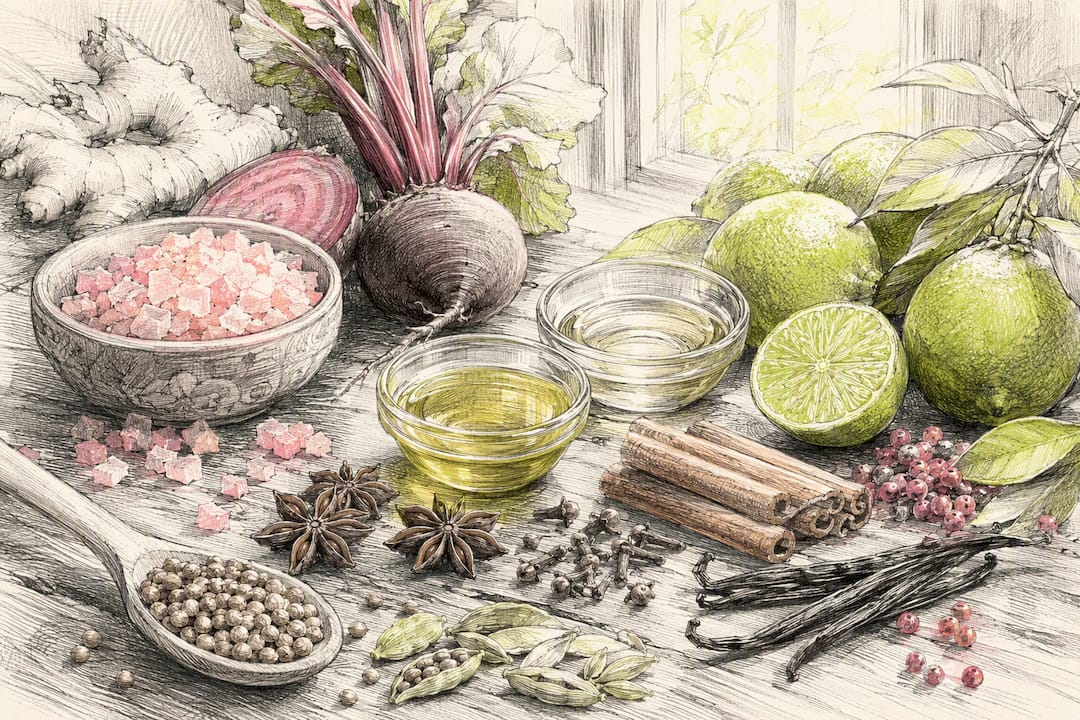
None of this comes free. Whole ingredients, smaller purchasing volumes, and shorter shelf lives all push production costs up, which is the honest explanation for why craft snacks sit at a higher price point than supermarket equivalents.
Craft ingredient checklist:
- Short ingredient list with items you recognise
- Named source region or supplier where relevant
- Natural fats and sugars rather than engineered substitutes
- Batch-to-batch flavour variation acknowledged, not hidden
The same research found that shoppers who buy artisan products cite flavour, health, and ethical sourcing as their top three motivations, well ahead of price or convenience.
How Small-Batch Techniques Change Texture and Aroma
Batch size is not just a production detail. It changes the physical outcome. A small kettle of popcorn coated by hand develops a different sugar crystallisation pattern than a continuous industrial coating drum, and that difference shows up as texture on the tongue.
Three techniques that separate craft from mass production:
- Slow roasting or toasting — extended, lower-temperature exposure develops deeper aromatic compounds than a fast industrial roast, particularly with nuts, spices, and coated grains.
- Cold infusion — steeping flavour elements (citrus zest, tea, chilli) at low temperature preserves volatile aromatics that heat-based flavouring destroys.
- Hand-coating — applying glazes or seasoning in small, controlled passes gives uneven, characterful coverage rather than the machine-uniform layer you get from tumble coating at scale.
Timing matters as much as method. A five-minute difference in cooling time before packaging can change whether a coating sets crisp or turns tacky, and that level of control is only realistic at small batch volumes.
Pro Tip: If you’re experimenting with craft snacks at home, resist the urge to double a recipe to save time. Coating and roasting techniques that work in small batches often fail at scale because heat and moisture don’t distribute evenly in a bigger pan or oven.
Why Terroir and Storytelling Shape a Snack’s Flavour
Terroir isn’t just a wine word. Ingredient provenance genuinely changes flavour, and craft producers lean into that rather than smoothing it out. A chilli grown in one region carries different heat and fruitiness than the same variety grown elsewhere, and a skilled snack maker treats that variation as raw material for creativity.
This shows up in a few consistent ways:
- Seasonal flavour releases built around what’s actually available, not a fixed year-round catalogue
- Unexpected pairings that draw on regional or cultural reference points rather than safe, tested-to-death combinations
- Packaging or product copy that explains the inspiration behind a flavour, not just its name
Storytelling matters here because flavour is partly memory and expectation. Knowing a caramel popcorn draws on a specific regional dessert changes how you taste it, and that context is something a factory formulation, optimised purely for consistency, rarely bothers to offer.
Do Craft Snack Makers Need Food Safety Certification?
Small-batch does not mean unregulated, and a responsible craft producer treats food safety as non-negotiable. The accepted framework is HACCP, short for Hazard Analysis and Critical Control Points, which identifies where contamination risk is highest in a process and puts controls at those exact points. HACCP guidance makes clear that even micro-producers can apply these principles alongside prerequisite hygiene programmes.
For a snack producer, typical critical control points include cooking temperature, cooling time, and packaging seal integrity. None of that requires industrial scale to manage properly.
What you can actually check as a shopper:
- A batch code or production date printed on the pack
- Clear storage instructions (ambient, refrigerated, or use-by guidance)
- Allergen information stated plainly, not buried in small print
- Packaging that looks properly sealed, not just decoratively wrapped
How Popcornaa Puts Craft Principles Into Practice
Popcornaa builds its range around curated flavour collections rather than a single mass formula. The Our Asian Flavourz and Brit-Core Flavourz lines each draw on distinct culinary traditions, and the custom box option lets shoppers build a mix around their own taste rather than accepting a fixed assortment.
Trust signals worth noticing on the site:
- Recognition through the Great Taste Awards, a UK-based accolade judged on flavour
- Ingredient transparency on product pages rather than vague marketing copy
- A documented custom popcorn creation process showing how batches are built
Formats like taster boxes and build-your-own mixes reflect small-batch thinking directly. They let a shopper sample several flavours before committing to a larger format, which is exactly the kind of experiential, low-risk introduction genuine craft producers tend to offer.
Eight Checks to Spot Genuine Craft Snacks While Shopping
Standing in front of a shelf or scrolling a product page, here’s a fast way to separate real craft from craft-washing:
- Count the ingredients. Fewer than ten, mostly recognisable, is a good sign.
- Look for a named maker, team, or kitchen, not just a logo.
- Check for a batch code or production date.
- Read for technique language (“slow roasted”, “hand coated”) rather than vague adjectives.
- See if provenance is mentioned for at least one key ingredient.
- Check whether flavours rotate seasonally or stay fixed year-round.
- Look for any food safety or hygiene accreditation mentioned on the site.
- Notice if the price reflects the ingredient quality, not just the packaging design.
Red flags include ingredient lists longer than a phone number, “artisan” used as the only descriptor with nothing to back it up, and flavour names that promise provenance (“Yorkshire honey”) without naming an actual source.
Pro Tip: When you’re unsure, buy the smallest available format first. A taster box or single bag tells you more about genuine craft quality than a large bucket ever will, and it costs far less to find out you don’t love a flavour.
Where Did Craft Snacks Come From?
Snack food itself is not new. Roasted nuts, dried fruit, and popped grains have fed travellers and market crowds for centuries across most food cultures. What’s newer is the split between industrial and craft as distinct categories, which really only emerged in the twentieth century once mass manufacturing made cheap, shelf-stable snacks possible at scale.
The craft food movement, as we understand it today, grew out of a broader backlash against industrial food production that gathered pace from the 1970s onwards. Craft beer led the charge in the UK and US, followed by artisan bread, small-batch cheese, and eventually snack categories like popcorn, crisps, and confectionery. Commentary on the craft revival points out that this wasn’t simple nostalgia. Craft producers weren’t trying to recreate the past exactly. They were applying traditional, hands-on methods to new flavour ideas, equipment, and markets.
Popcorn’s own craft turn fits this pattern closely. Once a cinema and fairground staple made from a handful of standard flavours, it has become a genuine gourmet category in recent decades, with small producers experimenting with global flavour influences, unusual coatings, and premium ingredients that would have seemed odd on a traditional popcorn stand. The shift mirrors what happened with beer and coffee: a commodity product gets reimagined by makers who treat it as a craft rather than a filler snack.
Craft Snacks Versus Mass-Produced Snacks: The Real Differences
The gap between craft and mass-produced snacks isn’t really about quality in the abstract. It’s about what each approach optimises for. Industrial snack formulation is fundamentally a shelf-life and palatability engineering exercise, built to survive distribution networks and hit consistent flavour targets across millions of units. Craft production optimises for something else entirely: immediate flavour, ingredient integrity, and freshness, usually at the cost of a shorter shelf life.
That difference cascades through nearly every decision a producer makes:
| Factor | Mass-produced snacks | Craft snacks |
|---|---|---|
| Batch size | Large, continuous runs | Small, limited batches |
| Ingredient list | Long, includes preservatives and stabilisers | Short, mostly whole ingredients |
| Flavour consistency | Uniform across all units and time | Can vary slightly batch to batch |
| Production method | Highly mechanised | Hand-finished or semi-mechanised |
| Shelf life | Extended (months to years) | Shorter, freshness-focused |
| Pricing | Lower, driven by scale | Higher, reflecting ingredient cost |
Consistency is the trade-off most shoppers underestimate. A mass-produced snack tastes identical whether you buy it in January or August, which is genuinely useful for some shopping habits. A craft snack might taste slightly different between batches because the maker isn’t smoothing out natural ingredient variation. Neither approach is wrong, but they’re solving different problems, and knowing which one you actually want changes what you should be buying.
Are There Official Certifications for Craft Snacks?
Here’s the uncomfortable truth: there is no single, legally protected “craft snack” certification in most markets, unlike terms such as Protected Designation of Origin, which apply to specific regional foods like Champagne or Parmigiano Reggiano. “Craft” and “artisan” remain largely unregulated descriptors, which is precisely why craft-washing is possible in the first place.
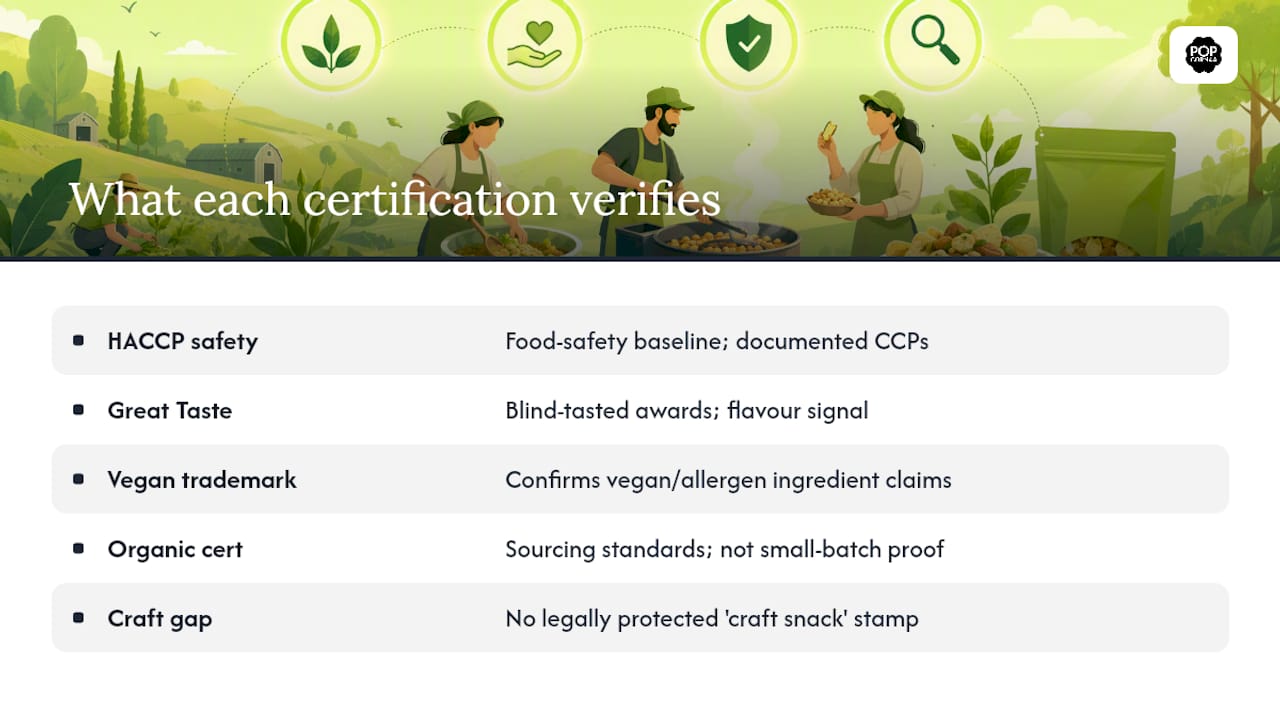
That doesn’t mean there’s no accountability at all. Several adjacent standards and accolades do carry real weight:
Food safety certification through HACCP-based systems is the closest thing to a universal baseline, and any producer, however small, should be operating with documented critical control points. Award schemes like the Great Taste Awards, judged purely on flavour by blind tasting panels, function as a de facto quality signal in the absence of formal craft certification. Vegan and allergen certifications (such as the Vegan Society trademark) confirm specific ingredient claims, even though they say nothing about batch size or production scale.
Organic certification, where relevant, confirms sourcing standards but again doesn’t address whether something is genuinely small-batch. The result is a patchwork rather than a single stamp of approval, which puts more weight on the buyer checklist covered earlier in this article than on any single logo.
What Are the Most Popular Types of Craft Snacks?
Craft snacking spans far more than one category, though certain formats have become particularly associated with artisan reinvention.
Gourmet popcorn sits near the front of this movement, with flavour ranges moving well beyond butter and sweet into spiced, savoury, and globally inspired territory. Small-batch crisps, often cooked in smaller kettles at lower volumes than industrial chip lines, deliver thicker cuts and more pronounced seasoning. Artisan chocolate and confectionery, frequently bean-to-bar or small-batch tempered, showcase origin-specific cacao in ways mass chocolate rarely attempts.
Craft jerky and dried meats, typically slow-cured with whole spice blends rather than liquid smoke flavouring, represent another growing category. Small-batch nut and trail mixes, roasted and blended in limited runs rather than pre-mixed industrially, round out the field, alongside artisan crackers and flatbreads made with heritage grains or slow fermentation.
Popcorn deserves particular attention here because it lends itself unusually well to craft treatment. It has a neutral base flavour that takes on coatings and seasonings cleanly, a naturally low-cost core ingredient that leaves room in the budget for premium flavourings, and a production process (popping, coating, drying) that scales down to small-batch kitchens far more easily than, say, extruded snack production.
Is Craft Snack Production Better for the Environment?
Small-batch production carries genuine sustainability trade-offs, and it’s worth being honest about both sides rather than assuming craft automatically means greener.
On the positive side, craft producers sourcing locally and seasonally typically shorten supply chains, which can reduce transport-related emissions compared with ingredients shipped globally for year-round uniformity. Smaller production runs also tend to generate less packaging waste from unsold stock, since batches are made closer to demand rather than forecast months in advance. Many craft producers, driven by the same ingredient-first values that shape their recipes, also lean towards recyclable or minimal packaging rather than the multi-layer barrier films common in long-shelf-life industrial snacks.
On the other side, small-batch production is often less energy-efficient per unit than large-scale manufacturing, since industrial lines benefit from economies of scale that a small kitchen simply can’t match. A craft producer roasting five kilograms of nuts uses more energy per kilogram than a factory roasting five tonnes.
The honest picture is that craft snacks tend to win on ingredient sourcing and packaging waste, while mass production tends to win on per-unit energy efficiency. Vegan craft snacks, popcorn included, do sidestep the resource intensity associated with animal-derived ingredients, which is a separate but genuine sustainability point worth factoring in regardless of batch size.
Why Is Demand for Craft Snacks Growing?
Consumer appetite for craft snacks has been climbing for reasons that go beyond simple novelty-seeking. Shoppers report buying artisan and craft food primarily for flavour, health, and ethical reasons, a pattern documented consistently in research on artisanal purchasing behaviour, and that motivation set explains a lot about where the category is heading.
Health-consciousness plays a real part. Shoppers scrutinising ingredient panels more closely than a decade ago are increasingly put off by long lists of stabilisers and preservatives, which pushes them towards the shorter, more recognisable ingredient lists typical of craft production. The rise of dietary identities such as veganism has also created demand for snacks that satisfy both ethical sourcing and genuine flavour ambition, rather than treating “free-from” as an excuse for blandness.
Cultural curiosity is another driver. Global flavour influences, once confined to specialist restaurants, now show up routinely in mainstream snack aisles, and craft producers are typically faster to experiment with unfamiliar flavour combinations than large manufacturers constrained by mass-market testing cycles. Gift-buying culture has shifted too, with curated boxes and taster sets replacing generic hampers as a more personal, story-driven gifting option.
Underlying all of this is a broader shift in what shoppers value. Provenance, regional food culture, and traceability have moved from niche interests to mainstream purchase drivers, and craft snack producers are simply the segment of the food industry best positioned to answer that demand directly.
Why Craft Snacks Matter More Than the Label Suggests
The real value of craft snacking has never been the word “craft” itself. It’s the accountability that comes with small-batch, ingredient-first production, the kind where a maker can actually tell you what’s in the bag and why. That matters more in 2026, not less, as shoppers grow sharper about spotting marketing dressed up as substance.
Craft also happens to align sustainability and flavour rather than forcing a trade-off between them. That’s worth exploring through Popcornaa’s own curated collections, built on exactly this logic.
— Emily
Try Popcornaa’s Craft Popcorn Collections Today
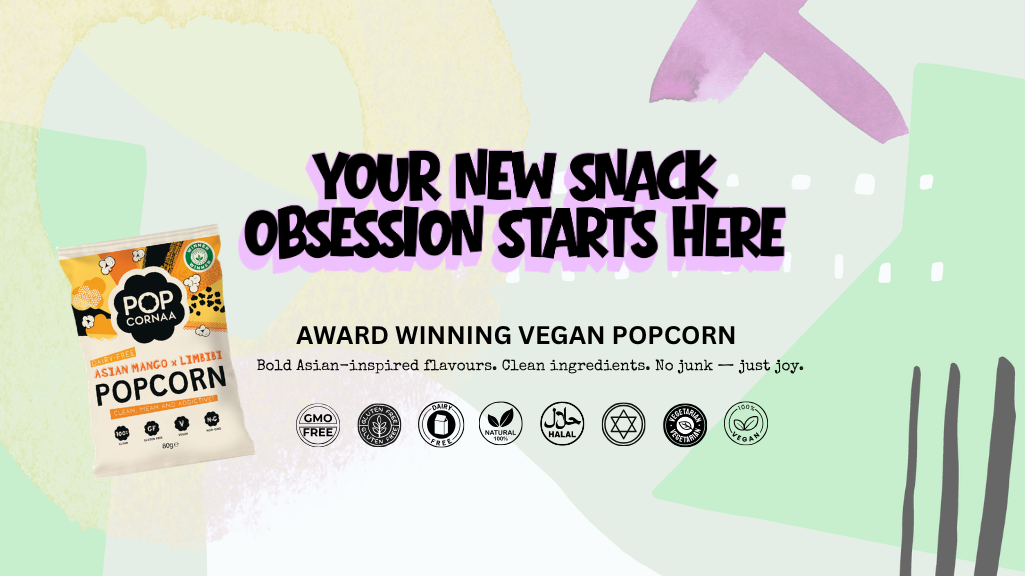
Reading about craft principles is one thing. Tasting the difference is another, and Popcornaa makes that easy without committing to a full-size bag before you know what you like. The Newbie Asian Fusion Taster Box packs five distinct flavours into one sampler, which is exactly the low-risk way to test craft claims for yourself rather than taking a brand’s word for it.
[ ](https://www.popcornaa.com › pages › asian-fusion-taster-box)
If you already know your flavour direction, the Custom Popcorn Box lets you build a mix around your own preferences rather than accepting a fixed assortment, and it’s worth checking the Great Taste Awards recognition that backs the flavour credentials behind it. For gifting or events, the 5-litre sharing buckets scale that same small-batch, vegan, ingredient-first approach up to a crowd. Every format ships with international delivery, so start with a taster box and see which flavour direction earns a full-size order next.
Sources
- Artisan food production: What makes food ‘artisan’?
- The chemical and attitudinal differences between commercial and artisanal products | npj Science of Food
- HACCP guidance
- Why Homemade-Style Snacks Are Better Than Factory Food - Nutramore
FAQ
What Ingredients Should I Look For In A Craft Snack?
Look for a short list of whole, recognisable ingredients rather than stabilisers, humectants, or artificial preservatives, ideally with at least one traceable, named source.
Is Craft Snack Food Safer Than Mass-Produced Snacks?
Both should follow HACCP-based food safety systems; small-batch producers can apply the same hazard controls as large manufacturers, just at a smaller scale.
Why Do Craft Snacks Cost More Than Supermarket Brands?
Whole ingredients, smaller production runs, and shorter shelf lives all increase per-unit costs compared with industrially optimised snacks made for long-term storage.
How Can I Tell If A Brand Is Craft-Washing Its Products?
Check for a named maker, disclosed batch sizes, and technique-specific language; vague “artisan” branding with a long, industrial-style ingredient list is a clear warning sign.
Does Popcornaa Make Craft Popcorn?
Popcornaa builds its range around curated flavour collections, custom small-batch mixes, and ingredient transparency, backed by Great Taste Award recognition for flavour quality.