

Why eco-friendly snacks matter for conscious snackers
Choosing eco-friendly snacks reduces environmental harm, supports fairer supply chains, and often means cleaner ingredients on your plate. That is the short answer. The longer one involves farming practices, packaging materials, certification marks, and a UK consumer landscape that is shifting faster than most people realise.
Here are the core reasons to make the switch:
- Lower greenhouse gas footprint, particularly for plant-based and pulse-based snacks
- Less single-use plastic when packaging uses recycled or compostable materials
- Support for regenerative and fair-trade farming
- Greater ingredient transparency and fewer synthetic additives
- Alignment with your values without sacrificing taste
Three things you can do right now:
- Check the packaging for a recycled-content percentage (look for PCR figures, not just the word “recyclable”).
- Favour snacks made from pulses, oats, nuts, or whole grains over heavily processed alternatives.
- Buy from local suppliers, refill shops, or brands with traceable sourcing and credible certifications.
Key takeaways
Eco-friendly snacks reduce environmental impact, support fairer supply chains, and tend to carry cleaner ingredient lists, making them a meaningful choice for UK consumers who want their values reflected in what they eat.
| Point | Details |
|---|---|
| Consumer interest is substantial | Around 64% of British snackers care about sustainability to some degree, per YouGov. |
| Packaging claims need scrutiny | Look for a stated PCR percentage; 55% post-consumer recycled content is the UK benchmark. |
| Certifications vary in scope | Soil Association, Fairtrade, and Rainforest Alliance each cover different dimensions; none is a catch-all. |
| Food miles are not the whole story | Farming method and processing often matter more than transport distance for total carbon footprint. |
| Popcornaa as a starting point | Popcornaa’s award-winning, dairy-free vegan popcorn range offers plant-based snacking with transparent credentials and Great Taste 2024 recognition. |
What actually makes a snack eco-friendly?
Not every snack with a leaf on the label earns the title. Genuine sustainability runs through the whole supply chain, from the field to your kitchen bin.
- Plant-forward ingredients. Snacks built around pulses, oats, nuts, seeds, or whole grains tend to carry a lower land and water footprint than those relying on animal-derived inputs.
- Low-impact or regenerative farming. Look for brands that reference soil health, reduced synthetic inputs, or partnerships with certified farms. The SAI Platform publishes frameworks that brands use to verify these claims.
- Minimal processing. Fewer manufacturing steps generally mean lower energy use and shorter ingredient lists.
- Fair labour and traceable sourcing. The Ethical Trading Initiative provides guidance on how brands can verify labour conditions across a supply chain. Traceability statements on a brand’s website are a good starting signal.
- Credible certifications. Organic (Soil Association in the UK), Fairtrade, and Rainforest Alliance marks each cover different dimensions: soil health, farmer income, and biodiversity respectively. None is a catch-all, but each is independently audited.
- Packaging with real recycled content. Food Manufacture reports that using a substantial percentage of post-consumer recycled (PCR) film is emerging as a credible benchmark for UK snack brands. “Recyclable” without a PCR percentage is a much weaker claim.
- Reduced food waste in the supply chain. Brands using upcycled ingredients (spent grain, vegetable offcuts) or offering bulk formats cut waste at source.
Pro Tip: When scanning a label quickly, look for the certification body’s name, not just its logo. “Certified organic by the Soil Association” is verifiable; a generic green leaf is not. If disposal instructions are absent from the packaging, that is itself a red flag.
What are the real benefits of eco-friendly snacks?
The advantages stack up across three areas: the planet, other people, and you personally.
Environmental benefits
Plant-based snacks generally carry a lower greenhouse gas footprint than meat or dairy-heavy alternatives, though the margin varies by ingredient and farming method. Packaging is where the most visible gains happen for consumers. Food Manufacture’s research shows that around 40% of crisp consumers say recycled materials make them more likely to buy a product, and brands using 55% PCR content in their film packaging are already demonstrating that circularity is achievable at scale. The European Green Deal adds regulatory momentum: its circular economy and farm-to-fork targets are pushing snack manufacturers across Europe to reduce packaging waste and lower-carbon sourcing, which filters through to UK shelves even post-Brexit.
Social benefits
Certifications like Fairtrade and Rainforest Alliance are not just marketing tools. They set minimum price floors for farmers and require environmental audits, meaning your purchase directly supports more stable livelihoods in producing countries. Brands with published traceability statements go further, letting you follow an ingredient back to a named farm or cooperative. According to Tastewise’s guidance on the UK market, retailers now treat sourcing clarity as a baseline expectation, not a premium feature.
Personal benefits
Clean-label snacks tend to have shorter ingredient lists with fewer synthetic additives, which many people find easier to digest and easier to trust. Mintel’s UK sustainability in food research finds that half of UK adults view eco-friendly food choices as important to their self-image. That is not vanity; it reflects a genuine alignment between purchasing habits and personal values that tends to make eating feel more intentional.
Statistic to note: YouGov’s snacking research finds that a substantial majority of British snackers are engaged with or care about sustainability to some degree, placing the UK among the more sustainability-aware snacking markets globally.
What does UK data say about sustainable snacking trends?
The numbers tell a clear story. British consumers are not just curious about sustainable snacks; a substantial majority already factor sustainability into their choices, even when price and taste remain the primary purchase drivers.
| Metric | Figure | Source |
|---|---|---|
| British snackers engaged with sustainability | ~64% | YouGov |
| UK consumers who view sustainable food positively | 68% | Sodexo Barometer 2025 |
| Crisp consumers swayed by recycled packaging | ~40% | Food Manufacture |
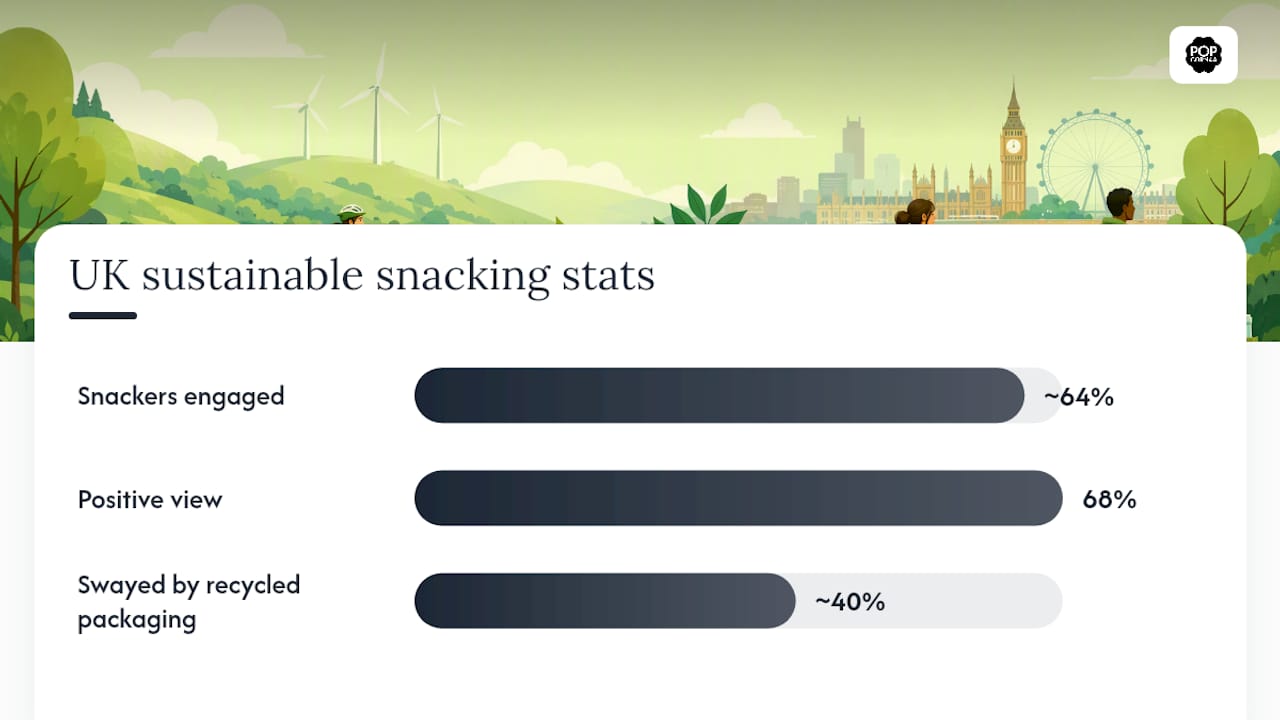
Sodexo’s Sustainable Food Barometer 2025 is particularly useful here: 68% of consumers view sustainable food positively, yet price and taste remain the most cited barriers to choosing it more often. That gap between attitude and behaviour is where practical buying guidance matters most.
Three trends shaping the UK snack market right now:
- Clean labels and traceability. Shoppers want to know what is in their snack and where it came from. Vague ingredient lists are losing shelf space to brands that name their farms or cooperatives.
- Recycled and low-carbon packaging. Brands are moving from “recyclable” claims toward stated PCR percentages, driven partly by Euromonitor’s identification of packaging innovation as a principal market opportunity in the snacks category.
- Plant-based and upcycled ingredients. Pulse-based crisps, oat clusters, and snacks made from spent grain are growing in UK retail, reflecting both consumer demand and GII Research’s observations on functional and alternative-ingredient launches.
For foodservice operators, Wild Foodz’s 2026 sustainability guide offers practical steps for integrating sustainable snack options into catering and hospitality settings, where bulk purchasing and low-waste formats make the biggest difference.
How do you choose genuinely eco-friendly snacks and avoid greenwashing?
Greenwashing is common in the snack aisle. Here is a practical checklist you can run through at the shelf or online in under two minutes.
Checklist:
- Does the packaging state a PCR percentage? Aim for 30% or above; 55% is the emerging UK benchmark.
- Is there a named, independently audited certification (Soil Association, Fairtrade, Rainforest Alliance)?
- Are the ingredients plant-forward, with a short list and no unfamiliar additives?
- Does the brand publish a sourcing or traceability statement on its website?
- Is there a clear disposal instruction on the pack (home compostable, kerbside recyclable, return scheme)?
- For portion packs versus bulk: does the per-portion packaging weight justify the convenience, or would a larger format reduce waste?
Red flags to watch for:
- “Eco” or “green” in the product name with no supporting certification or data
- Decorative leaf or earth imagery without any certification body named
- “Recyclable packaging” with no stated recycled-content percentage
- No disposal instructions anywhere on the pack
- Sustainability claims buried in small print while the front of pack leads with unrelated health claims
Pro Tip: “Compostable” and “industrially compostable” are not the same thing. Home compostable packaging breaks down in a garden compost bin; industrially compostable packaging requires a commercial composting facility, which most UK kerbside collections do not support. If a pack says “compostable” without specifying which type, ask the retailer or check the brand’s website before assuming it will break down at home.
Quick eco-friendly snack swaps, recipes and storage ideas
Small changes to what you buy and how you store it add up quickly.
Three simple recipe ideas
- Spiced roasted chickpeas. Drain and dry a tin of chickpeas, toss with olive oil, smoked paprika, and cumin, then roast at 200°C for 25 minutes. Store in a glass jar for up to four days.
- Oat and nut energy balls. Combine rolled oats, peanut butter, a tablespoon of maple syrup, and mixed seeds. Roll into balls and refrigerate. No baking needed, and the ingredients are easy to source in bulk.
- Seasonal vegetable crisps. Thinly slice beetroot, parsnip, or kale, brush lightly with oil, and bake at 160°C until crisp. Seasonal sourcing cuts food miles and tends to mean better flavour.
Reusable storage checklist
- Wide-mouth glass jars for bulk nuts, seeds, and dried fruit
- Vacuum-seal containers for items you want to keep fresh longer
- Washable silicone bags for portion-sized snacks on the go
- Beeswax or plant-based wax wraps for cut fruit and cheese alternatives
Pro Tip: UK refill shops such as those listed on the Refill app or Zero Waste Scotland’s directory let you buy nuts, oats, and dried fruit without any packaging at all. Bring your own jar, weigh it empty at the till, and fill it. The per-100g cost is often lower than branded pre-packaged alternatives, and the quality is frequently better.
Common myths and trade-offs worth knowing
Sustainable snacking comes with genuine trade-offs. Knowing them helps you make better decisions rather than feeling misled.
- Myth: plant-based snacks are always cheaper. Not reliably. Certified organic or Fairtrade ingredients carry a cost premium that is passed on to the consumer. The price gap is narrowing as demand grows, but budget-conscious shoppers will find that conventional pulses and oats bought in bulk are the most affordable plant-based option.
- Myth: local always means lower emissions. Transport (food miles) accounts for a smaller share of a food’s carbon footprint than farming method and processing. A locally grown product raised with high synthetic-input farming can carry a larger footprint than an imported product from a regenerative farm. The honest answer is that both origin and method matter.
- Myth: eco-friendly snacks taste worse. Sodexo’s barometer confirms taste remains a key barrier, but this reflects perception more than reality. Award-winning plant-based snacks, including those recognised by the Great Taste Awards, demonstrate that clean-label and sustainable can also mean genuinely delicious.
- Prioritisation when budget is tight. If you cannot afford to switch everything, focus on packaging first (it is the most visible lever and often costs nothing extra to choose a better-packaged alternative) and on one or two certified ingredients that matter most to you personally, such as Fairtrade chocolate or Soil Association-certified oats.
How Popcornaa demonstrates credibility and what to look for in a brand
When you are trying to decide whether a snack brand genuinely walks the talk, a few things cut through the noise quickly.
Popcornaa is a useful reference point. The brand specialises in gourmet vegan popcorn with Asian-inspired and British flavour profiles, all dairy-free and plant-based by design. Its product range includes themed gift boxes, large sharing buckets, and custom snack mixes, which means lower packaging-per-portion for occasions where you would otherwise buy multiple individual bags. The brand holds Great Taste Awards 2024 recognition, an independently judged quality signal that goes beyond self-promotion.
For vetting any brand, apply this checklist:
- Check the awards page: Great Taste, Guild of Fine Food, and similar bodies judge blind, so a win there is meaningful.
- Read the ingredient list: short, recognisable ingredients are a stronger signal than a long list with a certification badge on the front.
- Look for a traceability or sourcing statement on the website, not just a values page.
- Read customer reviews on third-party platforms, not only the brand’s own site.
- Check whether the brand publishes content on sustainable snacking and vegan snack trends, which signals genuine engagement with the topic rather than a one-off marketing claim.
The part of this conversation most guides skip
Something about the sustainable snacking debate has always struck me as slightly off. Most guides lead with the environmental argument, as if the planet is the only reason a person might care.
The conventional advice says “pay the premium, it is worth it.” That framing puts the entire burden on the individual consumer and quietly ignores the fact that sustainable snacks are not uniformly more expensive. Bulk buying from a refill shop, choosing own-label certified oats, or picking a plant-based popcorn over a meat-flavoured crisp can all be cost-neutral or cheaper. The premium exists at the premium end of the market, not across the category.
What I think matters most, and what most articles understate, is the packaging question. Farming method is important but largely invisible to a shopper. Packaging is right there in your hand. Choosing a brand that states a PCR percentage over one that just says “recyclable” is a decision you can make in five seconds with zero extra cost. That single habit, applied consistently, has more measurable impact than agonising over food miles.
The other thing worth saying plainly: taste is not a sacrifice. The Great Taste Awards exist precisely because independent judges have confirmed, repeatedly, that clean-label and plant-based can be genuinely excellent. If a sustainable snack you tried once was disappointing, that was a product problem, not a category problem.
Popcornaa: plant-based snacking with something to say
If you have read this far, you already know what to look for: plant-based ingredients, credible certifications, honest packaging claims, and a brand that publishes its credentials rather than hiding behind a leaf logo.
[ ](https://www.popcornaa.com › pages › asian-fusion-taster-box)
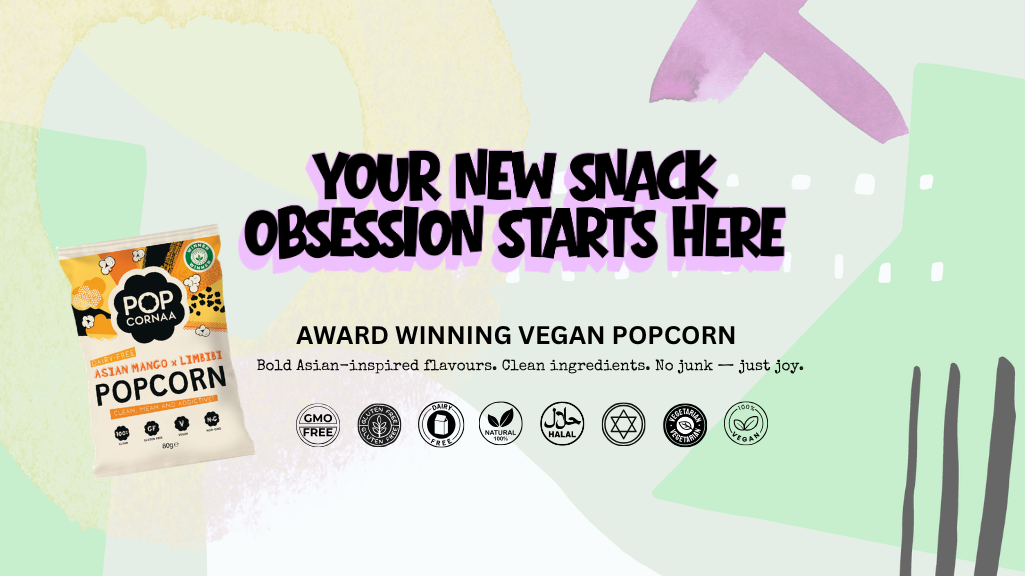
Popcornaa’s gourmet vegan popcorn range is dairy-free, plant-based, and Great Taste 2024 awarded. The flavours span Asian-inspired profiles and British classics, all made without the additives that tend to clutter conventional crisp packets. For anyone wanting a low-effort entry point, the Asian Fusion Taster Box brings five curated bags together in one order, which cuts down on repeat packaging compared to buying individual bags from multiple brands. If you are buying for a group or a low-waste occasion, the 5-litre sharing buckets offer a better packaging-per-portion ratio. Head to Popcornaa’s full range to browse flavours, read ingredient lists, and check the awards page for yourself.
Sources
The following sources informed this article and are worth reading further if you want to go deeper on any of the topics covered.
FAQ
What are eco-friendly snacks?
Eco-friendly snacks are food products made with plant-forward ingredients, low-impact farming, minimal processing, and packaging that uses recycled content or compostable materials. They typically carry independently audited certifications such as Fairtrade, Soil Association organic, or Rainforest Alliance.
What makes a snack genuinely sustainable?
A genuinely sustainable snack combines traceable sourcing, credible third-party certification, a short ingredient list, and packaging with a stated recycled-content percentage. Vague claims like “eco” or “natural” without supporting evidence are not sufficient.
Are eco-friendly snacks healthier?
They often carry cleaner ingredient lists with fewer synthetic additives, which many people find preferable. However, “eco-friendly” and “healthy” are separate claims; a snack can be sustainably produced and still be high in sugar or salt, so reading the nutrition label remains worthwhile.
What are five examples of eco-friendly snack choices?
Roasted chickpeas, oat-based energy balls, seasonal vegetable crisps, plain mixed nuts bought in bulk, and plant-based popcorn such as Popcornaa’s dairy-free range are all solid options. Each uses plant-forward ingredients and can be sourced with minimal or recycled packaging.
Why do 64% of British snackers care about sustainability?
YouGov’s snacking research attributes this to growing awareness of environmental issues, cleaner-label preferences, and the influence of social values on purchasing decisions. Price and taste remain the primary barriers to acting on that interest more consistently, as Sodexo’s 2025 barometer also confirms.