

Why matcha popcorn works: flavour, health, and how to make it
Why matcha popcorn is worth the hype
Matcha popcorn earns its place in the gourmet snack world for two reasons that rarely overlap: it tastes genuinely interesting, and it carries real nutritional value. The earthy, slightly bitter flavour of matcha green tea cuts through the neutral base of popcorn in a way that vanilla or caramel simply cannot. You get depth, a faint sweetness, and that unmistakable grassy warmth, all in one bite.
Beyond flavour, matcha brings a naturally vibrant green colour with no artificial dyes, plus a functional ingredient profile that few snacks can match. The combination of caffeine and L-theanine delivers calm, sustained energy rather than the spike-and-crash cycle of coffee. Matcha is also rich in EGCG, an antioxidant linked to cardiovascular and metabolic health.
- Earthy, umami-forward flavour that complements popcorn’s crunch and neutral base
- Natural vivid green colour without artificial additives
- L-theanine and caffeine together support focus without jitters
- EGCG antioxidants offer anti-inflammatory and metabolic benefits
- Aligns with clean-label, plant-based snack trends growing strongly in 2025 and 2026.
- Visually striking, making it popular for gifting and sharing
Matcha features in 12% of new functional snack launches in 2025–2026, a clear sign that food makers are taking its culinary potential seriously.
What ingredients do you actually need?
Getting the ingredients right matters more than most recipes admit. The quality and type of each component shapes both the flavour and the colour of the finished snack.
- Matcha grade: Culinary-grade matcha suits popcorn far better than ceremonial grade. Its flavour compounds are more heat-resistant, and its stronger, earthier taste holds up once mixed with fat and seasoning. Ceremonial grade is too delicate and expensive for this application.
- Fat: Butter, ghee, or a neutral coconut oil all work. Ghee adds a subtle nuttiness and has a higher smoke point, which helps when coating warm popcorn. The fat is not optional; it is what binds the matcha powder to the kernels.
- White chocolate: For a sweeter version, melted white chocolate acts as both the coating and the fat carrier. It softens matcha’s bitterness and creates a confectionery-style finish.
- Sugar and salt: A small pinch of fine sea salt sharpens the matcha flavour. Icing sugar, added lightly, balances bitterness without overwhelming the green tea character.
- Popcorn base: Plain, air-popped or stovetop-popped kernels work best. Pre-salted or heavily buttered popcorn will compete with the matcha seasoning.
One note on matcha quality: Japanese ceremonial grade matcha powder gives you a benchmark for what fresh, properly processed matcha should smell and taste like, even if culinary grade is what you use for cooking.
How to make matcha popcorn step by step
Stovetop method
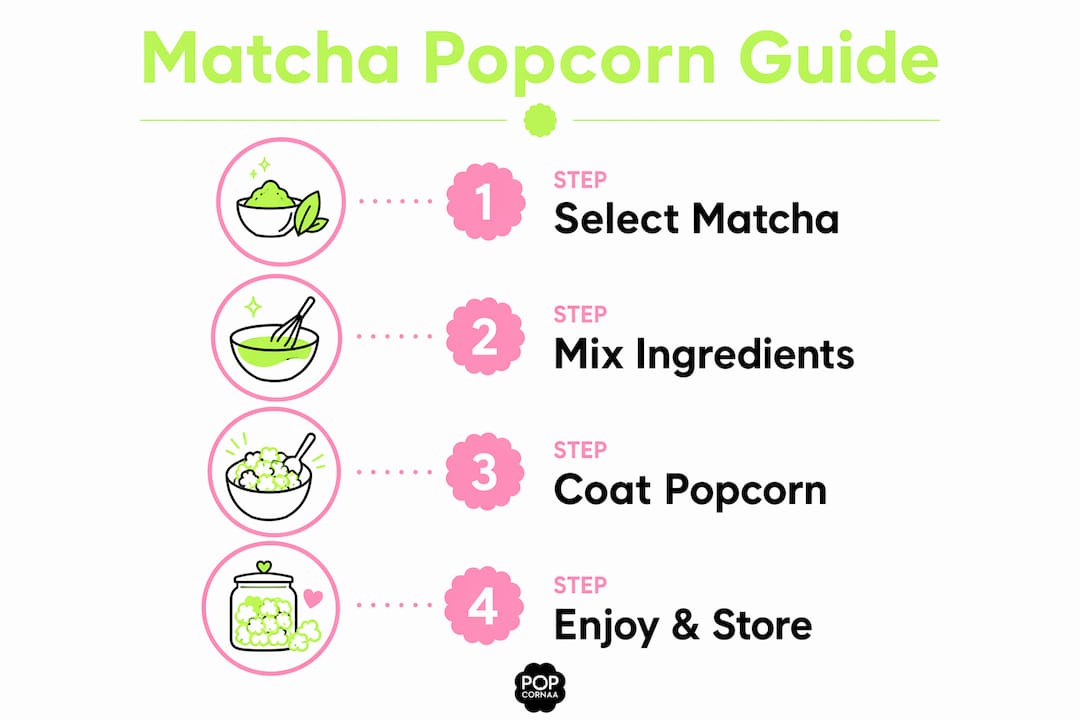
- Pop your kernels in a large, lidded pan with a neutral oil over medium heat. Once popping slows, remove from heat immediately and transfer to a large bowl.
- Melt two tablespoons of ghee or unsalted butter gently in a small saucepan. Do not let it brown.
- Whisk one to two teaspoons of culinary-grade matcha powder directly into the melted fat until fully dissolved and smooth. This step is the one most home cooks skip, and it is the most important.
- Pour the matcha fat over the warm popcorn in a thin, even stream, tossing constantly to coat every kernel.
- Dust with a small amount of icing sugar and a pinch of fine sea salt. Toss again and taste.
White chocolate coating method
- Melt good-quality white chocolate in a heatproof bowl set over barely simmering water, stirring until smooth.
- Sift one teaspoon of culinary matcha into the melted chocolate and whisk until the colour is uniform and no streaks remain.
- Pour over a tray of freshly popped, cooled kernels. Spread quickly with a spatula before the chocolate sets.
- Allow to cool at room temperature, or refrigerate for ten minutes for a firmer snap.
Pro Tip: Always mix matcha into a melted fat or chocolate before it touches the popcorn. Dusting dry matcha powder directly onto kernels causes uneven coating, a powdery texture, and a noticeably more bitter result. Lipid encapsulation of the matcha also slows oxidation, keeping the colour brighter for longer.
Storing and serving matcha popcorn well
Storage is where most homemade batches go wrong. Matcha is sensitive to air, moisture, and light, all of which degrade both its colour and its antioxidant content.
- Keep matcha popcorn in an airtight container, ideally glass or a sealed tin, away from direct sunlight.
- Consume within two to three days for the best texture. The popcorn softens noticeably after that, especially in the white chocolate version.
- Serve at room temperature. Cold popcorn mutes the flavour, and the white chocolate coating can become too firm to enjoy properly.
- Pair with a light green tea, a yuzu lemonade, or a mild oat milk drink. The earthiness of matcha clashes with strongly flavoured coffees.
- For gifting or events, portion into small paper bags or clear boxes immediately after cooling. Matcha popcorn makes a genuinely beautiful gift, and the colour alone draws attention.
Why matcha popcorn has become so popular
The rise of matcha snacks is not a passing trend. Consumer demand for plant-based, clean-label snacks has grown steadily, and matcha sits at the centre of that shift. It is naturally vegan, free from artificial preservatives, and visually distinctive in a way that photographs well and travels well across social media.
The EGCG and L-theanine in matcha support cardiovascular health and mental clarity, giving health-conscious snackers a functional reason to choose it over crisps or standard flavoured popcorn. Research published in PMC also found that matcha supplementation reduced hepatic lipid accumulation and inflammatory markers in animal models, pointing to genuine metabolic benefits beyond the antioxidant headline.
Baking with matcha does reduce some catechin content. A study in Foods found that baking decreases total catechins by around 19%, though meaningful antioxidant activity remains. Coating rather than baking, as in most popcorn methods, preserves more of those compounds.
Where did matcha popcorn come from?
Matcha itself originated in China before becoming central to Japanese culture through Zen Buddhism and the tea ceremony known as chanoyu. For centuries, it was consumed only in its pure, whisked form. The idea of matcha as a food ingredient, used in confectionery, ice cream, and baked goods, is a relatively modern development, accelerating as Japanese food culture spread globally through the late twentieth century.
Matcha popcorn sits at the intersection of two trends: the Western appetite for Japanese-inspired flavours, and the gourmet popcorn movement that took hold in the UK and US from the 2010s onwards. As PBS News reported, global matcha demand has pushed supply chains hard, with the powder’s aesthetic appeal and health associations driving interest far beyond traditional tea drinkers. Popcorn, as a blank-canvas snack, became a natural vehicle for that curiosity.
Creative variations worth trying
Once you have the basic method, the combinations open up considerably. Here are some directions worth exploring:
- Matcha and toasted sesame: Add a teaspoon of toasted sesame oil to the melted ghee before mixing in the matcha. The nutty depth pairs beautifully with the green tea bitterness.
- Matcha and miso caramel: Make a simple caramel with white miso stirred in, then whisk matcha into it before coating. Sweet, salty, and complex.
- Matcha and yuzu zest: A little dried yuzu zest added after coating lifts the whole thing with citrus brightness.
- Spiced matcha: A pinch of ground ginger or cardamom alongside the matcha adds warmth, particularly good in cooler months.
- Matcha and dark chocolate drizzle: Use the white chocolate base coat, then drizzle melted dark chocolate over the top once set. The contrast in colour and flavour is striking.
For more ideas on where gourmet popcorn flavours are heading, the range of Asian-inspired combinations continues to grow.
Dietary considerations and allergens
Matcha popcorn can suit a wide range of diets, but a few points are worth knowing before you make or buy it.
Matcha itself is naturally vegan, gluten-free, and contains no dairy. The allergen profile of matcha popcorn depends entirely on what else goes into it. White chocolate contains milk solids and often soy lecithin, making it unsuitable for those with dairy or soy allergies. Ghee is clarified butter and still contains milk proteins, so it is not suitable for those with a dairy allergy, though some people with lactose intolerance tolerate it well.
Matcha contains caffeine, roughly 35mg per gram of powder. For most adults, one to two teaspoons in a full batch of popcorn is a modest amount spread across servings. Children, pregnant women, and those sensitive to caffeine should factor this in. Matcha also has a mild natural laxative effect in larger quantities, worth noting if you are serving it to guests with sensitive digestion.
Try matcha-inspired gourmet popcorn from Popcornaa
[ ](https://www.popcornaa.com › pages › asian-fusion-taster-box)
If you love the idea of matcha popcorn but want to skip the kitchen experiment, Popcornaa’s Asian Fusion Taster Box brings together a curated selection of Asian-inspired vegan popcorn flavours, crafted with the same care for clean ingredients and bold taste. Every bag is vegan, made without artificial additives, and built for people who take their snacking seriously.
Key takeaways
Matcha popcorn works because it combines genuine flavour complexity with functional health benefits, making it one of the most interesting gourmet snack choices available in 2026.
| Point | Details |
|---|---|
| Use culinary-grade matcha | It has better heat stability and stronger flavour than ceremonial grade for cooking. |
| Mix matcha into fat first | Lipid encapsulation prevents powdery coating, reduces bitterness, and preserves colour. |
| Baking reduces catechins by 19% | Coating methods preserve more antioxidants than baking matcha into a product. |
| Store airtight, consume within days | Air and moisture degrade both the flavour and the antioxidant quality quickly. |
| Matcha features in 12% of new functional snack launches (2025–2026) | Its rise in functional snack products reflects genuine consumer demand, not just trend. |
FAQ
Why does matcha work so well with popcorn?
Matcha’s earthy, slightly bitter flavour contrasts with popcorn’s neutral crunch, creating a layered taste that sweet or salty coatings alone cannot achieve. The fat-soluble coating method also means the flavour distributes evenly across every kernel.
Is matcha popcorn actually healthy?
Matcha retains meaningful antioxidant activity even when used as a coating, with EGCG supporting cardiovascular and metabolic health. The overall healthfulness depends on what else is in the recipe, particularly the amount of sugar or chocolate used.
Why has matcha become so popular recently?
Social media, the visual appeal of its bright green colour, and growing consumer interest in functional, plant-based foods have all driven matcha’s rise, as noted by PBS News. Its combination of calm energy from L-theanine and caffeine also sets it apart from other trending ingredients.
Can matcha popcorn affect your digestion?
Matcha contains caffeine and has a mild natural laxative effect in larger amounts, so those with sensitive digestion should start with a small portion. The popcorn itself provides gut-friendly fibre, which most people find beneficial.
Is matcha good for liver health?
Research published in PMC found that matcha supplementation reduced hepatic lipid accumulation and inflammatory markers in animal studies, suggesting a hepatoprotective effect. Human trials are still limited, so these findings are promising rather than conclusive.