

Why popcorn is perfect for sharing at events
TL;DR:
- Popcorn is the perfect shared snack because it is inexpensive, easy to prepare, and suits diverse group settings. Its mild aroma, minimal mess, and portability foster social bonding at cinemas, parties, and home gatherings. However, it is unsuitable for children under five due to choking risks, and safety guidelines should be followed.
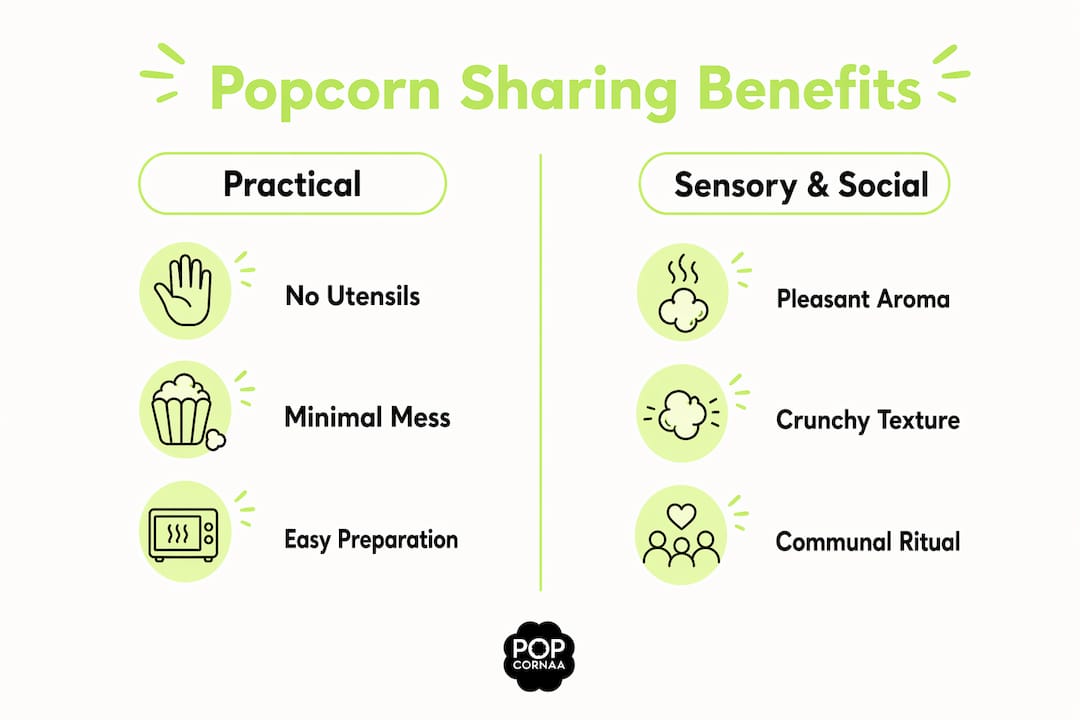
Popcorn is the ideal snack for sharing because it combines low cost, effortless preparation, and a sensory profile that suits almost any group setting. It needs no utensils, produces minimal mess, and its mild aroma fills a room with warmth rather than division. Whether you are at a cinema, a birthday gathering, or a casual film night at home, popcorn travels well, portions generously, and invites everyone in without fuss. That combination is genuinely rare in the snack world.
Here is a quick summary of what makes popcorn so well suited to communal eating:
- Lightweight and portable — easy to carry in bags, buckets, or bowls without spilling
- No utensils needed — eaten by hand, which keeps things relaxed and informal
- Mild, pleasant aroma — agreeable in shared spaces without overpowering others
- Low noise when eaten — does not disrupt conversation or audio in cinema environments
- Economical at scale — raw kernels expand dramatically when popped, making large portions affordable
- Endlessly customisable — sweet, savoury, spiced, or plain, there is a flavour for every palate
- Safe for most adults — though specific age-related guidance applies for young children (covered below)
How convenience and sensory appeal make popcorn great for sharing
Popcorn’s practicality is not accidental. It was shaped over decades by the demands of feeding large, diverse crowds quickly and cleanly.
Preparation is fast and requires minimal equipment or training. A simple popping machine, a heat source, and a handful of kernels are all it takes to produce enough for a crowd within minutes. That speed matters enormously at events where queues form and patience runs thin.
The sensory qualities reinforce the practical ones. Popcorn’s mild, pleasant aroma creates a warm atmosphere without clashing with other scents or preferences in a shared room. Its crunch is satisfying but short-lived, producing low, non-continuous noise that blends into background sound rather than cutting through it. There are no wrappers to crinkle, no sauces to drip, and no plates to balance in the dark.
Key convenience and sensory points at a glance:
- No deep frying, plating, or assembly required
- Containers are lightweight and easy to pass between people
- The crunch blends naturally into ambient noise in cinemas and event spaces
- Flavour variety — from lightly salted to bold spiced blends — means one snack can satisfy a whole group
- Long shelf life reduces waste at events where timing is unpredictable
Pro Tip: If you are hosting a film night, decant popcorn into a wide, shallow bowl rather than a tall bucket. It is easier for everyone to reach, and you will find it gets passed around far more naturally.
Why popcorn became the UK’s go-to communal snack
The story of popcorn as a shared snack is rooted in economic necessity as much as pleasure. During the Great Depression, popcorn’s low cost made it one of the few treats most people could still afford, making it an accessible luxury for many. Cinema owners, struggling financially, eventually embraced it as a revenue source after initially banning it from their “high-class” auditoriums. Once talking pictures arrived and audiences widened, popcorn followed them inside.
Cinema history scholars note that the scent and crunch of popcorn form a multisensory ritual that is now inseparable from the film-going experience. The smell alone signals “the show is about to begin” in a way no other snack replicates. That emotional conditioning has carried across generations and across the Atlantic, embedding popcorn firmly in British cinema culture.
Market analysts point to popcorn’s clean convenience and mild sensory footprint as the practical reasons it outlasted every rival snack in shared spaces. Passing a bucket around a darkened cinema or a crowded living room is a small act, but it fosters camaraderie in a way that eating individually packaged snacks simply does not.
Cultural and social dynamics worth noting:
- Popcorn’s working-class origins made it accessible and unpretentious from the start
- The act of passing a shared bucket creates a bonding ritual among groups
- UK cinemas and events have adopted large sharing formats as a standard offering
- Nostalgia plays a genuine role — the smell triggers fond memories for most adults
You can explore more of this history in Popcornaa’s guide to popcorn as a social snack, which covers the sensory and social dimensions in depth. The social meaning of movie moments also sheds light on how communal snacking shapes the emotional experience of watching films together.
Health and safety considerations when sharing popcorn
Popcorn is safe and well-tolerated by most people, but there is one firm guideline you should know before sharing it with young children. Both the NHS and the UK Food Standards Agency advise against giving popcorn to children under 5 years old due to the risk of choking. This applies to all popcorn, regardless of size or flavour.
Safety note: The UK Food Standards Agency lists popcorn explicitly as a food not to give to babies and young children. The NHS echoes this in its safe weaning guidance. If children under 5 are present at your gathering, keep the popcorn out of their reach and offer an age-appropriate alternative.
Beyond the under-5 rule, a few other considerations make shared popcorn safer and more enjoyable for everyone:
- Check for allergens, particularly if flavoured varieties contain nuts, dairy, or gluten
- Use separate serving scoops or individual portions at larger gatherings to maintain hygiene
- Be mindful of added salt for guests managing blood pressure or sodium intake
- Vegan and plant-based popcorn, like Popcornaa’s range, removes dairy allergen concerns entirely
Being aware of these points does not complicate the experience. It simply means everyone at your gathering can enjoy it without worry.
Tips to get the most from sharing popcorn at UK events
Getting the communal popcorn experience right comes down to a few practical choices.
- Choose the right container. A 5-litre sharing bucket works well for groups of four to six. Wide openings make passing easier and reduce the chance of spills.
- Offer two or three flavours. Not everyone wants the same thing. A mix of sweet, savoury, and lightly spiced options means no one feels left out, and it naturally sparks conversation.
- Keep it fresh. Popcorn loses its crunch quickly once exposed to air. Seal bags or buckets until the moment you serve, and avoid leaving open containers for more than an hour.
- Match quantity to group size. A rough guide: plan for roughly one large handful per person per hour of viewing or socialising. Under-catering is the most common mistake at film nights.
- Think about access. Place the popcorn centrally so everyone can reach it without leaning across others. At cinema-style events, individual smaller bags can work better than one shared bucket.
Pro Tip: For a gathering with mixed tastes, try a flavour taster selection with several small bags rather than one large flavour. It turns snacking into a shared discovery, and people tend to try things they would never pick individually.
Why popcorn remains the perfect shared snack in 2026
Popcorn’s status as the go-to communal snack is not nostalgia. It is earned, repeatedly, by a combination of qualities no other snack fully replicates.
- Physical qualities: lightweight, no utensils, no mess, easy to portion and pass
- Economic value: raw kernels are inexpensive and expand into generous servings
- Sensory appeal: mild aroma, satisfying crunch, and a wide flavour range suit diverse groups
- Cultural weight: decades of cinema tradition have made sharing popcorn a genuine social ritual in the UK
- Safety: well-regulated guidance from the NHS and Food Standards Agency means you can share it confidently, provided children under 5 are catered for separately
- Convenience: minimal preparation, fast serving, and long shelf life make it practical at any scale
Whether you are at a multiplex in Manchester or a living room in Leeds, popcorn works because it gets out of the way and lets the experience take centre stage. That is a quality worth holding on to.
Key takeaways
Popcorn is the ideal snack for sharing because its physical, sensory, and cultural qualities combine in a way no other snack matches, particularly in UK group settings.
| Point | Details |
|---|---|
| No utensils or mess | Popcorn is eaten by hand with no sauces, plates, or wrappers needed. |
| Mild aroma suits shared spaces | Its scent is warm and pleasant without overpowering others’ preferences. |
| Under-5 safety rule applies | NHS and Food Standards Agency advise against giving popcorn to children under 5. |
| Cultural ritual in UK cinemas | Passing a shared bucket fosters camaraderie and is embedded in British film-going culture. |
| Economical for large groups | Kernels expand greatly when popped, making generous portions affordable at any gathering. |
FAQ
Why is popcorn considered such a good snack for sharing?
Popcorn requires no utensils, produces minimal mess, and has a mild aroma that suits shared spaces. Its low cost allows generous portions, and the act of passing a bucket around naturally encourages social bonding.
Why can’t children under 5 have popcorn?
Both the NHS and the UK Food Standards Agency list popcorn as a choking hazard for children under 5. The size and texture of popped kernels pose a genuine risk for young children, regardless of flavour or preparation method.
What does sharing popcorn mean in a social or cinema setting?
Sharing popcorn is a communal ritual that strengthens bonds between people watching a film or attending an event together. Cinema history scholars describe the scent and crunch as a multisensory experience that is culturally embedded across generations.
What is the significance of popcorn at UK events and cinemas?
Popcorn became embedded in cinema culture during the Great Depression, when its low cost made it one of the few affordable treats available. That history, combined with its practical qualities, has made it the default communal snack at UK cinemas and social gatherings ever since.