

Wasabi popcorn: why this fiery snack deserves a try
Wasabi popcorn is worth trying because it delivers a sharp, nasal-clearing hit of heat that vanishes almost as fast as it arrives, leaving your palate refreshed rather than scorched. That heat comes from a compound called allyl isothiocyanate, which behaves nothing like chilli. It pairs naturally with umami seasonings such as soy and seaweed, giving each handful a savoury depth that plain salted popcorn simply can’t match.
You can make it at home in minutes or buy it ready-made from a gourmet seller if you’d rather skip the kitchen experiment. Because the burn fades so quickly, it doesn’t build up the way chilli heat does, so you can keep reaching for more without your mouth staging a protest.
- Nasal-clearing heat that clears fast, not tongue-burning heat that lingers
- Umami-forward flavour that plays well with soy, seaweed and a touch of sweetness
- Easy to buy or make, with room to adjust the intensity to your own taste
- A good starting point for anyone curious about spicy snacks but wary of chilli burn
TL;DR:
- Wasabi’s nasal-clearing heat from allyl isothiocyanate peaks quickly and dissipates within seconds, avoiding the buildup associated with chili peppers.
- Proper seasoning involves mixing wasabi powder into oil after the popcorn cools slightly, ensuring maximum aroma retention and flavor intensity.
- The snack is ideal for film nights, drinks parties, and tasting platters because its heat resets fast, encouraging continuous tasting without mouth fatigue.
- Commercially available wasabi popcorn may contain extra sodium and fat, so checking labels and ingredient authenticity is important for health-conscious consumers.
- Making or buying vegan options like PopCornaa’s Seaweed, Wasabi & Soy popcorn offers a consistent, balanced flavor experience without heavy or artificial additives.
What wasabi popcorn tastes like
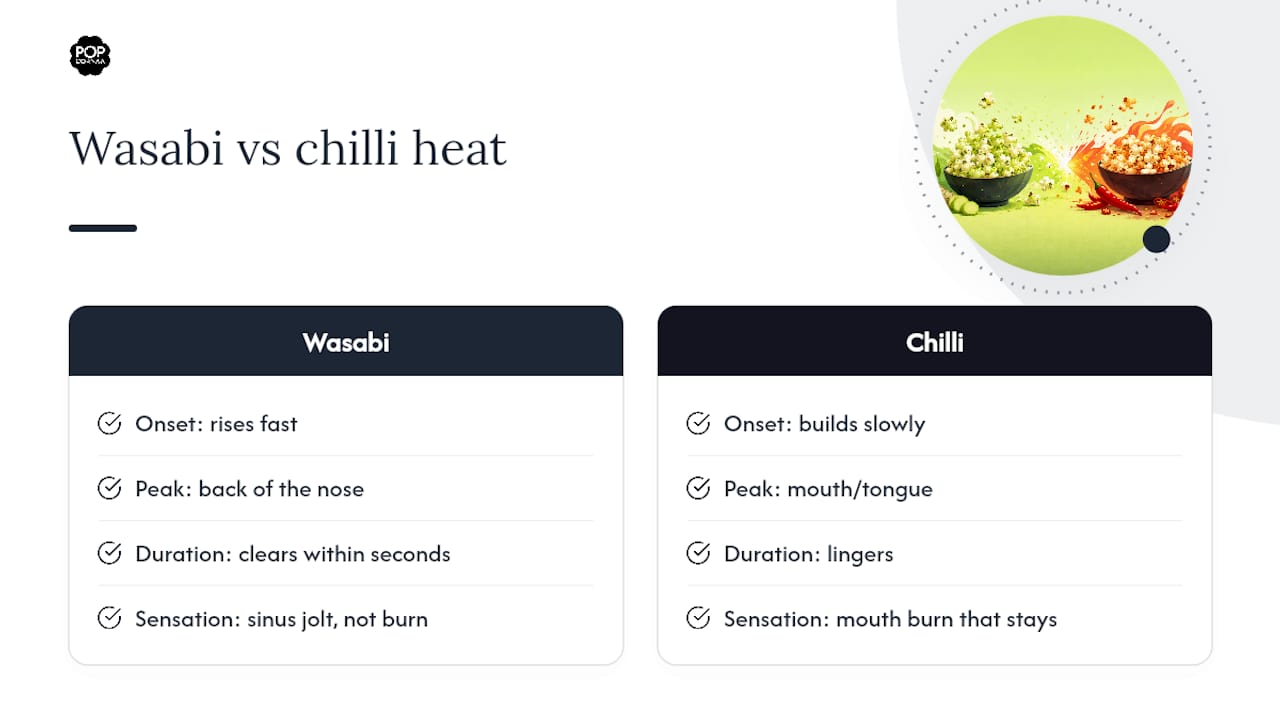
Wasabi’s kick doesn’t come from your tongue at all. It comes from allyl isothiocyanate (AITC), a volatile compound that travels up through the back of your nose and triggers the same receptors that respond to strong ammonia or mustard fumes. That’s why a mouthful of real wasabi feels like a jolt to your sinuses rather than a slow burn spreading across your tongue, and why wasabi heat behaves so differently from chilli pepper heat, which is driven by capsaicin binding to receptors in the mouth itself.
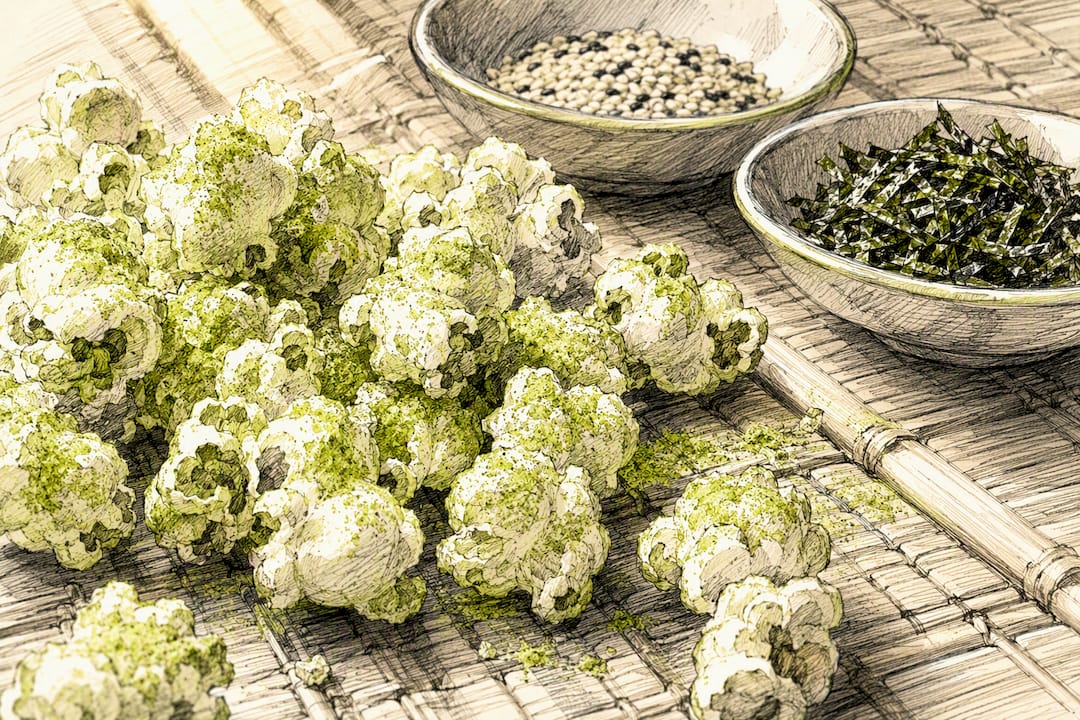
That distinction shapes how wasabi popcorn is seasoned. A good blend leans on salt to sharpen the wasabi’s edge, umami from soy sauce powder or seaweed flakes to round it out, and sometimes a whisper of sugar or garlic to stop the whole thing tasting one-note. Culinary experts argue wasabi’s real job is to accent a dish rather than dominate it, refreshing the palate so each handful tastes as lively as the first.
The sensation itself is intense but brief. It rises fast, peaks somewhere around the back of your nose, and clears within seconds, which is exactly why people find themselves reaching back into the bowl. A chilli snack asks you to brace for a heat that builds and lingers; wasabi popcorn resets almost instantly, so successive handfuls each land fresh rather than piling heat on top of heat.
Pro Tip: If you’re testing wasabi popcorn for the first time, eat a few kernels alone before mixing them into a bigger snack spread. Isolating the flavour first helps you calibrate how much heat you actually enjoy before committing a whole bowlful.
Why try it: the best occasions and who will love it
Wasabi popcorn earns its place at a specific kind of gathering. It works brilliantly at film nights, where its self-resetting heat means you can snack steadily through a two-hour runtime without your mouth giving up halfway through. It’s equally at home on a drinks table or a tasting platter, where its role as a palate-cleanser between richer bites (cheese, cured meats, fatty dips) actually improves how the next thing tastes.
Compare that to a chilli-dusted snack, where the heat accumulates the more you eat. Wasabi popcorn dissipates its punch almost immediately, which invites more frequent tasting rather than a slow retreat to a glass of milk.
- Film nights and long snacking sessions, where heat that resets keeps things interesting
- Drinks parties and tasting boards, where it doubles as a palate-cleanser
- Anyone who already enjoys horseradish, English mustard, or wasabi with sushi
- Fans of umami-forward snacks who want more complexity than a plain salted bowl offers
If you already reach for horseradish sauce on your roast or pile extra wasabi onto your sushi, this snack sits squarely in familiar territory. It’s also a natural next step for anyone bored of the usual sweet-or-salty popcorn binary and curious about broader flavour trends shaping modern snacking, where bold, umami-led profiles keep showing up on menus.
Quick wasabi popcorn: a simple, reliable recipe
You don’t need specialist equipment for this, just a bit of care with timing. Wasabi’s flavour compounds are volatile, meaning they evaporate under heat, so the trick to a good batch is adding them at the right moment rather than the earliest one.
Ingredients:
- 80g popping corn (or roughly 8 cups of popped corn)
- 2 tablespoons wasabi powder, or 1 to 2 teaspoons prepared wasabi paste
- 3 tablespoons light oil (avocado or sunflower work well) or melted vegan butter
- 1 tablespoon soy sauce powder or nutritional yeast for extra umami
- ½ teaspoon garlic powder
- ½ teaspoon sugar
- Salt to taste
Method:
- Pop the corn using your usual method, stovetop, air popper, or microwave, and tip it into a large bowl.
- Let it sit for one to two minutes so it’s warm rather than scorching. This step matters more than it sounds.
- In a small dish, whisk the wasabi powder into the oil (or melted butter) until it forms a smooth, thin paste, or dilute prepared wasabi paste with a spoonful of the oil.
- Stir in the soy powder, garlic powder, sugar and a pinch of salt.
- Drizzle the mixture over the slightly cooled popcorn and toss thoroughly, working from the bottom of the bowl to distribute it evenly.
- Taste a kernel, adjust the salt or wasabi to your preference, and serve within the hour for the sharpest hit.
Adding wasabi to piping-hot popcorn drives off much of the aroma before it ever reaches your mouth. Mixing the powder into oil first, then folding it through popcorn that’s cooled slightly, preserves far more of that nose-clearing punch.
This batch makes roughly four generous servings. Flavour peaks within the first hour and holds reasonably well for a day if stored in an airtight container, though the sharpest nasal kick softens as the volatile compounds continue to dissipate over time. If it’s gone a little flat by day two, a light spritz of oil and a fresh pinch of wasabi powder tossed through will bring it back close to its original bite.
Variations and pairings worth trying
Once you’ve got the base recipe down, there’s plenty of room to play. A sweet-and-spicy kettle-corn version, made by adding an extra teaspoon of sugar to the wasabi and oil mix, gives you a sharper contrast between heat and sweetness that works especially well for parties. Leaning further into umami with extra seaweed flakes and soy powder creates something closer to a Japanese snack-bar profile.
- Toasted sesame seeds for crunch and a nuttier background flavour
- A pinch of ground ginger to echo wasabi’s aromatic side rather than fight it
- A light drizzle of chilli-infused honey for those who want sweetness alongside two kinds of heat
- Nutritional yeast or soy sauce powder in place of dairy-based cheese seasonings, keeping the whole mix vegan-friendly
For drinks, wasabi popcorn holds its own next to a crisp lager, a dry cider, or a citrus-forward cocktail, anything with enough acidity or carbonation to reset your palate between handfuls. It also sits well on a shared snack board alongside plain rice crackers or edamame, giving guests something milder to fall back on between hits of wasabi.
Health, nutrition and safety notes
A typical serving of prepared wasabi paste runs to roughly 19 calories with trace minerals, which tells you how little of it you actually need to transform a bowl of popcorn. Snack applications use small amounts by design; the seasoning is there for flavour, not bulk.
Fresh wasabi rhizome contains isothiocyanates that lab and animal research has linked to antibacterial and anti-inflammatory potential, but that evidence base is still thin in humans, and the compound levels in commercial popcorn coatings are far lower than in fresh root. Treat wasabi popcorn as a flavourful treat, not a health food.
Two practical cautions worth flagging. Commercial wasabi popcorn blends can carry more added sodium and fat than a plain batch, so check the label if you’re watching either. And if a recipe leans on soy sauce powder for its umami base, that’s a potential allergen for anyone with a soy sensitivity, so a soy-free seasoning swap is worth having on hand for guests.
Pro tips and troubleshooting for the best flavour
Getting wasabi popcorn right comes down to timing and technique more than ingredients. Bind the wasabi powder into a light oil or thin paste first, then add it once the popcorn has cooled for a minute or two. Mixing powder directly into piping-hot kernels drives off the volatile oils before you get to taste them.
- Toss in a wide metal bowl using a gentle folding motion, not vigorous shaking, to coat kernels evenly without crushing them
- If a batch has gone slightly stale, a light spray of oil followed by a fresh pinch of wasabi powder brings the aroma back
- Store in an airtight container away from humidity, since moisture is popcorn’s enemy and dulls wasabi’s sharpness fast
- Eat within one to three days for the strongest flavour; after that, the nasal-clearing kick fades noticeably
Pro Tip: Keep your seasoning mix in a small shaker jar rather than a bag. It makes topping up a slightly stale batch far quicker, and you’ll waste less powder along the way.
PopCornaa’s take on umami and heat
We built our Seaweed, Wasabi & Soy popcorn around exactly the balance this article describes: enough wasabi to deliver that nasal-clearing lift, enough soy and seaweed to keep it savoury rather than harsh. Every batch is vegan.
- Read our fuller explainer on wasabi popcorn flavour and technique for more detail
- Browse other gourmet vegan popcorn flavours if wasabi turns out to be your gateway snack
Where wasabi popcorn came from
Wasabi popcorn sits at the intersection of two separate food stories. Wasabi itself, from the plant Wasabia japonica, has flavoured Japanese cooking for centuries, prized alongside raw fish for its ability to cut through richness and, historically, its mild antibacterial qualities. Growing it is notoriously difficult, since the plant demands cool running water and shaded, specific conditions, which is why most wasabi sold outside Japan is actually imitation, made from horseradish, mustard powder and green colouring rather than the real rhizome.
Flavoured popcorn, meanwhile, is a much more recent invention, riding the boom in gourmet and artisanal snack brands that took off through the 2000s and 2010s as consumers grew bored of plain butter or cheese varieties. Asian-inspired flavour profiles, wasabi among them, followed the same trajectory as sriracha and yuzu: ingredients that started in specialist grocers and ended up as mainstream snack seasonings within a decade.
Wasabi popcorn specifically emerged from that crossover, as snack makers looked for a way to bring the sinus-clearing sensation of wasabi peas and wasabi-coated nuts to a lighter, crunchier base. Popcorn’s neutral flavour and large surface area turned out to be ideal for carrying a seasoning that needs to coat evenly without being drowned out, which explains why it caught on faster than heavier snack formats. It’s a genuinely modern hybrid: an old ingredient meeting a much newer snacking format.
The real benefits of giving it a go
The most obvious benefit is the flavour experience itself. There’s nothing else in the savoury snack aisle that clears your sinuses one second and settles into savoury umami the next, and that contrast is precisely what makes wasabi popcorn memorable rather than forgettable.

There’s a culinary curiosity angle too. Trying wasabi popcorn is a low-risk way to explore a flavour most people only encounter alongside sushi, without booking a restaurant table or committing to a full meal built around it. It’s an easy entry point into a much wider world of umami-forward, Asian-inspired snacking, and for many people it becomes the flavour that reframes what they expect from popcorn generally.
It also broadens your palate in a genuinely useful way. Once you’ve calibrated your tolerance for wasabi’s nasal heat, other bold flavours, horseradish sauces, strong mustards, even other Japanese seasonings like yuzu kosho, become far easier to appreciate on their own terms. And because the heat resets so quickly, it’s a forgiving way to build confidence with spicier snacks generally, without the lingering burn that puts a lot of people off chilli-based options for good.
Finally, there’s the social element. A bowl of wasabi popcorn on a table tends to spark conversation in a way a plain bowl of crisps never does, precisely because it’s unexpected.
Where to find good wasabi popcorn
If you’d rather buy than make, look for specialist snack retailers and gourmet food halls over supermarket own-brand ranges, since the seasoning technique described earlier (binding wasabi to oil, adding it post-pop) tends to separate the better producers from the rest. Asian grocers often stock wasabi peas and wasabi-coated snacks that give you a useful flavour benchmark before you try the popcorn version.
Online gourmet snack retailers are usually your best bet for consistency, since small-batch producers can control seasoning application far more precisely than mass-market lines. Reading ingredient lists matters here: a shorter list with real wasabi powder or paste, rather than artificial flavouring alone, generally signals a more authentic product. Vegan shoppers should double-check that any butter-based coating has been swapped for a plant oil, since not every gourmet wasabi popcorn on the market is dairy-free by default.
My first bite of wasabi popcorn
The first handful genuinely surprised me. That nasal hit arrives faster than you expect, then it’s gone, and you’re just left with a savoury, umami-rich popcorn that tastes better than it has any right to.
Start with a small handful rather than diving into a full bowl, and maybe sample a small retail pack before committing to a big batch of your own. If you try it, we’d genuinely love to hear whether the heat landed where you expected.
— Emily
Ready to try PopCornaa’s wasabi flavour
Making your own batch is satisfying, but getting the wasabi-to-oil ratio and umami balance consistently right takes a few attempts. PopCornaa has already done that calibration for you: our Seaweed, Wasabi & Soy popcorn delivers the same nasal-clearing lift and savoury depth described throughout this article, batch after batch, with entirely vegan ingredients.
[ ](https://www.popcornaa.com › pages › asian-fusion-taster-box)
If you’re new to wasabi popcorn, a taster pack or one of our curated gift boxes is the lowest-risk way to find out whether the flavour suits you, without committing to a full-size bag on a guess. It also makes a genuinely interesting gift for anyone who claims to have “tried everything” in the snack aisle. Head to our Seaweed, Wasabi & Soy popcorn page to pick your size and get it delivered straight to your door.
Key Takeaways
Wasabi popcorn works because allyl isothiocyanate creates a fast, nasal-clearing heat that pairs naturally with umami seasoning and fades before it overwhelms the palate.
| Point | Details |
|---|---|
| Heat behaves differently | AITC triggers nasal receptors rather than the tongue, so the burn peaks fast and clears within seconds. |
| Timing makes the recipe | Mix wasabi powder into oil and add it after popcorn cools slightly to preserve its aroma. |
| Best for shared snacking | Its self-resetting heat suits film nights, drinks parties and tasting platters better than lingering chilli burn. |
| Treat it as a treat | Isothiocyanate benefits are modest in snack-sized servings, so enjoy it for flavour, not as a health food. |
| Try a ready-made version | PopCornaa’s Seaweed, Wasabi & Soy popcorn offers a vegan, pre-balanced way to sample the flavour without a kitchen experiment. |
Sources
- Why wasabi heat feels different from chilli pepper heat — Lifehacker
- Is wasabi good for you? — Cleveland Clinic
FAQ
Is wasabi healthy or unhealthy?
Wasabi itself is low in calories and contains isothiocyanates linked to modest antibacterial and anti-inflammatory potential, but it’s best viewed as a flavourful addition rather than a health food, especially in processed snack form.
How do you make popcorn with wasabi?
Pop your corn, let it cool for a minute or two, then toss it with wasabi powder mixed into a light oil along with salt, a little sugar and soy powder for umami; adding wasabi to hot popcorn burns off much of its aroma.
Is popcorn the unhealthiest snack?
No. Plain air-popped corn is a whole grain and relatively low in calories; it’s the butter, sugar and heavy salt often added afterwards, not the popcorn itself, that push a serving into less healthy territory.
Why do Japanese people eat wasabi?
Wasabi has traditionally been paired with raw fish in Japanese cooking both for its sharp, palate-cleansing flavour and its mild antibacterial properties, which made it a natural partner for sushi and sashimi long before it became a global snack seasoning.