

Why vegan snacks for allergies aren't always safe
TL;DR:
- Vegan snacks only exclude animal ingredients and do not guarantee safety for individuals with food allergies. Common allergens like soya, gluten, nuts, and sesame can still be present due to shared manufacturing environments. Careful label reading, understanding allergen controls, and choosing brands with strict allergen management are essential for safe snacking.
Vegan snacks exclude all animal-derived ingredients, but this does not make them allergen-safe for people with food allergies or sensitivities. As Anaphylaxis UK clearly states, vegan foods may still contain allergens or traces of allergens through shared factories or kitchens. This distinction matters enormously if you are managing a nut allergy, a soya intolerance, or a gluten sensitivity. Understanding why vegan snacks for allergies require careful label reading, not just a vegan badge, is the first step toward snacking safely and confidently.
Why vegan snacks for allergies can still be risky
Vegan labelling tells you one thing only: the product contains no animal-derived ingredients. It says nothing about whether the snack was made on shared equipment with milk, egg, or shellfish. Anaphylaxis UK confirms that vegan labels do not guarantee freedom from allergens or cross-contamination, a point that surprises many people who assume plant-based automatically means safer.

The confusion is understandable. Vegan branding often uses clean, wholesome imagery that feels reassuring. But a vegan crisp made in a factory that also processes peanuts carries real risk for someone with a peanut allergy, regardless of how the packet looks. The ingredients themselves may be entirely plant-based, yet the manufacturing environment introduces allergen exposure that no vegan label can rule out.
This is why the term “allergen-safe” or “free-from” carries a completely different legal and practical weight than “vegan.” Knowing the difference is not a minor technicality. For someone with anaphylaxis risk, it is the difference between a safe snack and a medical emergency.
What allergens commonly appear in vegan snacks
Many allergens are naturally plant-based, which means they appear frequently in vegan products. The following are the most common ones to watch for:
- Soya appears in tofu, tempeh, edamame snacks, and many plant-based protein bars. Soya allergy affects both children and adults and can cause severe reactions.
- Gluten is present in seitan, which is made almost entirely from wheat protein, as well as in many crackers, pretzels, and flavoured popcorn coatings.
- Tree nuts are used widely in vegan dairy alternatives such as almond milk, cashew cheese, and macadamia-based spreads, as well as in trail mixes and energy balls.
- Sesame is a growing allergen concern. The US FDA mandated sesame declaration as a major allergen from 2023, reflecting its increasing prevalence in snack products including hummus, tahini, and seeded crackers.
- Peanuts are used in many vegan snacks as a protein source and flavouring base, particularly in Asian-inspired products.
- Milk and egg can appear in vegan snacks not through intentional ingredients but through cross-contact during manufacturing, particularly in facilities that produce both vegan and non-vegan lines.
Your individual allergy profile determines which of these matters most to you. Someone with a sesame allergy faces different risks from someone managing coeliac disease, even when both are reaching for the same vegan snack.
How vegan labelling differs from free-from labelling
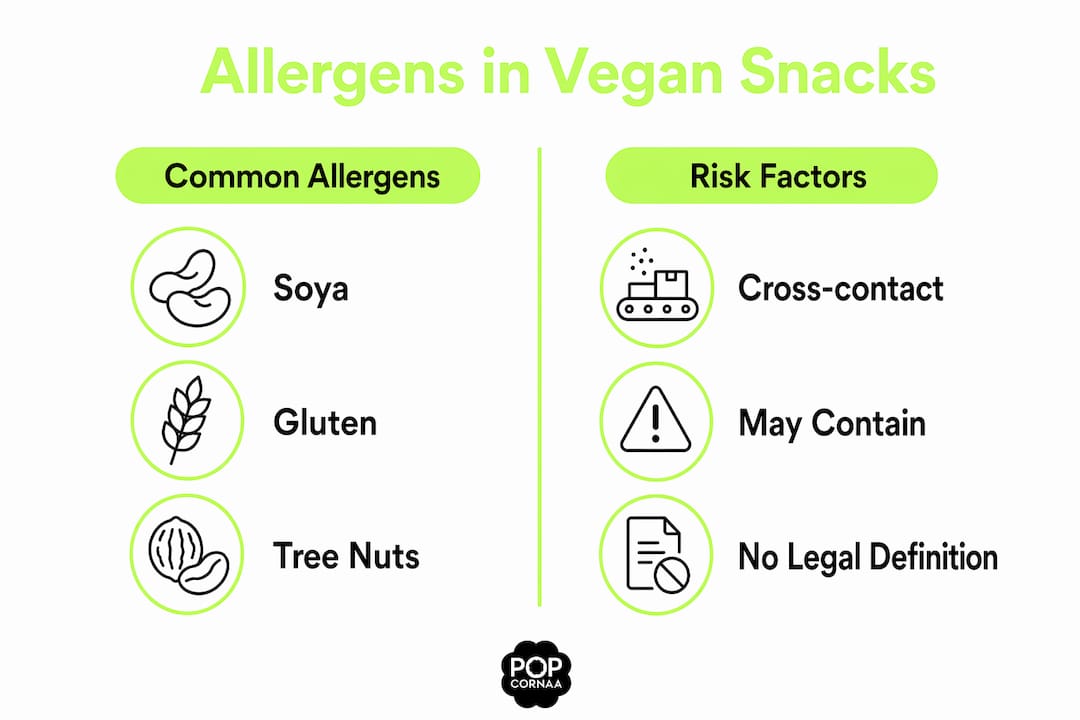
The distinction between vegan and free-from labelling is one of the most misunderstood areas in allergy management. As Allman Hall explains, vegan labelling focuses on the absence of animal content, while free-from labelling promises allergen absence through rigorous testing and dedicated allergen controls. These are fundamentally different commitments from a manufacturer.
There is currently no legal UK definition of “vegan” in food law. A brand can apply a vegan label without meeting any standardised allergen testing criteria. Free-from labelling, by contrast, sits within a stricter regulatory framework that requires manufacturers to demonstrate allergen control through their production processes. This means a “gluten-free” label carries legal accountability that a “vegan” label simply does not.
| Label type | What it means | Allergen safety implication |
|---|---|---|
| Vegan | No animal-derived ingredients | Does not guarantee allergen absence |
| Free-from | Specific allergen absent or below legal threshold | Legally controlled and tested |
| May contain | Possible unintentional cross-contact | Risk indicator, not a marketing phrase |
| Allergen-friendly | Varies by brand | Check individual brand’s allergen controls |
The “may contain” statement deserves particular attention. These precautionary allergen labels are voluntary in the UK, meaning manufacturers choose whether to include them. Their absence does not mean the product is safe. Their presence means the manufacturer has identified a genuine cross-contact risk in their facility. Treat “may contain” as a serious signal, not a legal formality.
Pro Tip: When you see a vegan snack with no allergen statement at all, contact the manufacturer directly to ask about their production environment before purchasing.
How to safely choose vegan snacks if you have food allergies
Safe snack selection for allergy sufferers is a skill that becomes second nature with practice. Here is a reliable process to follow:
- Read the full ingredient list first. Do not rely on front-of-pack claims. The ingredient list on the back or side panel is the legally required disclosure. Look for your specific allergens listed by their common names and any derivatives.
- Check the allergen statement separately. This is usually printed in bold within the ingredient list or as a separate “Contains:” declaration. Both sections matter.
- Assess the precautionary label. If the product says “may contain” your allergen, treat this as a risk rather than a technicality. Anaphylaxis UK advises interpreting these statements as genuine manufacturing risk signals.
- Research the brand’s allergen controls. Some brands operate dedicated allergen-free production lines. Others share equipment across multiple product types. This information is often available on the brand’s website or by contacting their customer service team directly.
- Ask staff when eating out. Cross-contact risk in vegan snacks can arise at preparation stages as well as during manufacturing. When buying ready-to-eat vegan snacks from a café or market stall, ask directly about shared utensils, surfaces, and preparation methods.
- Build a trusted snack list. Once you have verified a product is safe for your specific allergy profile, keep a note of it. This reduces the cognitive load of label reading every time and helps you snack with confidence.
For a structured approach to choosing vegan snacks safely, it helps to match your selection process to your individual triggers rather than applying a one-size-fits-all rule.
Pro Tip: If you have multiple allergies, create a personal allergen checklist and photograph it on your phone. Use it every time you assess a new product, particularly when shopping in unfamiliar stores or online.
Vegan snack ingredients to watch for with allergies
Plant-based snacks for allergies require awareness of ingredients that are common in vegan cooking but carry significant allergen risk. These are the ones that most frequently catch people off guard:
- Soya and its derivatives. Soya lecithin, soya protein isolate, and soya flour appear in a wide range of processed vegan snacks, from protein balls to flavoured popcorn coatings. Soya allergy is one of the nine major allergens recognised by the FDA and is similarly classified under UK food law.
- Seitan. This wheat-based meat alternative is almost pure gluten. It appears in vegan jerky, deli-style slices, and some savoury snack products. Anyone with coeliac disease or wheat allergy must avoid it entirely.
- Nut-based dairy alternatives. Almond, cashew, and macadamia milks are used in vegan chocolate coatings, cream-style dips, and baked snacks. Tree nut allergy sufferers need to check these carefully.
- Seeds as protein sources. Hemp seeds, chia seeds, sunflower seeds, and pumpkin seeds are popular in vegan snack bars and granola. Sesame seeds in particular require close attention given their increasing use in Asian-inspired flavourings and coatings.
- Egg replacers in processed snacks. Products like aquafaba (chickpea water) and flaxseed gel are common vegan egg substitutes. While these are not egg, they introduce legume proteins that may trigger reactions in people with chickpea or legume allergies.
- Hidden allergens in flavourings. Artificial and natural flavourings in vegan snacks can contain derivatives of allergens. Worcestershire-style flavourings, for example, sometimes include fish-derived ingredients even in otherwise plant-based products.
Exploring allergen-friendly gourmet snack alternatives can help you identify products that are both genuinely plant-based and produced with allergy safety in mind.
What nutritional benefits do vegan snacks offer when chosen carefully?
When selected with care, plant-based snacks for allergies offer genuine nutritional advantages alongside the practical benefit of avoiding animal-derived ingredients. Whole vegan snacks are typically rich in fibre, antioxidants, and healthy fats, all of which support long-term health. This means that careful selection rewards you twice: once with safety, and once with nutrition.
| Nutritional benefit | Source in vegan snacks | Health implication |
|---|---|---|
| Gut-friendly fibre | Popcorn, legume crisps, fruit-based bars | Supports digestion and sustained energy |
| Antioxidants | Berries, dark chocolate, vegetable-based snacks | Protects cells from oxidative stress |
| Healthy fats | Nuts, seeds, avocado-based products | Supports heart and brain function |
| Plant protein | Edamame, roasted chickpeas, seed mixes | Aids muscle repair and fullness |
The key is matching nutritional benefit to allergen safety. A snack rich in healthy fats from cashews is nutritionally excellent but dangerous for someone with a tree nut allergy. A high-fibre popcorn snack made on a dedicated production line, free from the major allergens relevant to you, delivers both benefits without compromise. The role of vegan snacks in a balanced diet is genuinely positive, provided the selection process is informed by your specific allergy needs.
Key takeaways
Vegan snacks are not inherently allergen-safe; allergy sufferers must read ingredient lists, precautionary labels, and brand allergen policies independently of any vegan claim.
| Point | Details |
|---|---|
| Vegan does not mean allergen-free | Vegan labels confirm no animal ingredients, not the absence of allergens or cross-contact risk. |
| Free-from labelling is legally distinct | Free-from products meet tested allergen thresholds; vegan products do not carry this legal requirement. |
| “May contain” is a genuine risk signal | Treat precautionary allergen labels as manufacturing risk indicators, not optional disclaimers. |
| Common allergens hide in plant-based foods | Soya, gluten, tree nuts, and sesame appear frequently in vegan snacks and require active checking. |
| Nutrition and safety can coexist | Carefully chosen vegan snacks provide fibre, antioxidants, and healthy fats without compromising allergy management. |
My honest view on vegan snacking with allergies
I have spent a lot of time thinking about this, both as someone who cares deeply about food and as someone who has watched people assume that a vegan label is a green light for allergy safety. It stopped me in my tracks the first time I realised how widespread that assumption is.
The honest truth is that vegan branding can create a false sense of security. The clean packaging, the plant-based messaging, the wholesome ingredients list. All of it can make you feel safe when the real risk lies in the production environment, not the recipe. I have seen this catch people out repeatedly, and it is entirely avoidable with the right knowledge.
What I would encourage is this: do not let the complexity put you off vegan snacking altogether. The benefits of vegan snacks are real, and there are genuinely allergen-conscious brands out there producing products with transparent manufacturing practices. The work is in finding them and verifying their processes. Once you have built your trusted list, snacking becomes a pleasure again rather than an anxiety. You deserve both safety and enjoyment. With the right approach, you can absolutely have both.
— Emily
Discover allergen-aware vegan snacking with PopCornaa
If you are looking for vegan snacks that take allergen awareness seriously without sacrificing flavour, PopCornaa is worth exploring. At PopCornaa, every product is crafted with transparency at its core, from the ingredient list to the production process. The range spans Asian-inspired and British-influenced flavours, all made with the kind of care that allergy-conscious snackers genuinely need.
[ ](https://www.popcornaa.com › pages › asian-fusion-taster-box)
A brilliant starting point is the Newbie Asian Fusion Taster Box, a curated five-bag selection of gourmet vegan popcorn that lets you explore bold flavours with full ingredient transparency. If you prefer to build your own selection, the custom vegan snack pack lets you choose exactly what goes into your box. Safe snacking, your way.
FAQ
Are vegan snacks safe for people with food allergies?
Not automatically. Vegan snacks exclude animal-derived ingredients but may still contain allergens such as soya, gluten, tree nuts, or sesame, and can carry cross-contact risk from shared manufacturing equipment.
What is the difference between vegan and free-from labelling?
Vegan labelling confirms the absence of animal ingredients only. Free-from labelling indicates that a specific allergen is absent or below a legal threshold, backed by allergen testing and controlled production processes.
What does “may contain” mean on a vegan snack?
“May contain” is a precautionary allergen label indicating a genuine cross-contact risk identified by the manufacturer. It is voluntary in the UK and should be treated as a serious risk signal, not a formality.
Which allergens are most common in vegan snacks?
Soya, gluten, tree nuts, peanuts, and sesame are the allergens most frequently found in plant-based snacks. Sesame in particular has gained greater regulatory attention, with the FDA classifying it as a major allergen since 2023.
How can I find genuinely allergen-safe vegan snacks?
Look for brands with dedicated allergen-free production lines, transparent ingredient declarations, and clear precautionary labelling. Contact manufacturers directly if allergen information is unclear, and build a personal list of verified safe products for your specific allergy profile. Guides on allergen-sensitive vegan snacks can also help narrow your search.