

Your guide to Asian-inspired popcorn flavours
TL;DR:
- Asian-inspired popcorn features bold Asian flavors like soy, nori, furikake, and wasabi, creating umami-rich snacks bridging street food and gourmet levels. Proper moisture control, staged seasoning, and baking are essential for achieving crispness and balanced flavors, with variations like sushi, furikake, and Pad Thai styles offering diverse taste experiences. This snack’s versatility, plant-based ingredients, and cultural authenticity position it as a popular, flexible, and accessible choice within the broader gourmet popcorn scene.
Asian-inspired popcorn is defined as popcorn seasoned with traditional Asian flavour profiles, including soy sauce, nori, furikake, wasabi powder, and sesame oil, to produce umami-rich snacks that sit somewhere between street food and gourmet snacking. This style of flavoured popcorn has moved well beyond novelty. Producers like Popsmith, The Kitchn, and Popcornaa have each developed distinct approaches to the Asian-inspired popcorn making process, proving that the combination of a light, airy kernel with bold, layered Asian seasonings is genuinely compelling. What makes it so appealing is the balance. You get salt, umami, a whisper of heat, and sometimes a sweet note, all in a single handful. If you have been curious about what Asian-inspired popcorn actually involves and how to make it well at home, this guide covers everything you need.
What is Asian-inspired popcorn and what are its main flavour profiles?
Asian-inspired popcorn is the broader culinary category for popcorn seasoned with ingredients drawn from Japanese, Thai, Korean, and other East and South-East Asian cooking traditions. The term covers a wide range of styles, from purely savoury to sweet-savoury fusions, and the flavour-building logic differs meaningfully from Western gourmet popcorn.
The three most widely made styles are sushi popcorn, furikake popcorn, and Pad Thai-inspired popcorn. Each one uses a different seasoning language and produces a noticeably different eating experience.
| Style | Key ingredients | Flavour character |
|---|---|---|
| Sushi popcorn | Soy sauce, sesame oil, rice vinegar, wasabi powder, nori | Sharp, umami-forward, savoury |
| Furikake popcorn | Toasted sesame seeds, nori, bonito flakes, butter-sugar syrup | Sweet-savoury, nutty, crisp |
| Pad Thai popcorn | Coconut sugar, lime zest, peanuts, Thai chili crisp, fish or soy sauce | Tangy, spicy, layered |
Sushi-inspired popcorn uses a drizzle of soy sauce, sesame oil, rice vinegar, wasabi powder, nori, and toasted sesame seeds to create a fresh, umami-forward snack. The result is clean and savoury without any sweetness, which makes it a strong option for people who prefer their snacks firmly in the savoury camp.
Furikake is a Japanese seasoning mix of toasted sesame seeds, nori, salt, sugar, and sometimes bonito flakes that adds umami and texture. Treating furikake as a seasoning language allows you to develop variations between purely savoury or sweet-savoury styles, depending on whether you add a butter-sugar syrup binder. This flexibility is one reason furikake popcorn has become a favourite among home cooks experimenting with Asian popcorn recipes.
Pad Thai-inspired popcorn is the most complex of the three. It uses melted coconut oil with coconut sugar, lime zest, and chili crisp, topped with peanuts and fresh cilantro for a layered snack that mimics the sweet, sour, and spicy notes of the noodle dish. This style is highly customisable, which we will come back to shortly.
- Sushi popcorn: serve immediately to keep nori crisp and the seasoning bright
- Furikake popcorn: bake after coating for crunch and to set the syrup
- Pad Thai popcorn: add peanuts and herbs after baking to preserve texture contrast
Pro Tip: If you are new to Asian-inspired flavours, start with furikake popcorn. The butter-sugar syrup binder makes it forgiving for beginners, and the sweet-savoury balance tends to win over even cautious snackers.
How is popcorn prepared for Asian-inspired seasonings?
The Asian-inspired popcorn making process depends as much on technique as it does on ingredients. Getting the texture right before you add a single drop of soy sauce is what separates a genuinely crisp, well-coated result from a soggy disappointment.
-
Preheat your oil properly. Preheat oil and test with a single kernel to confirm it is at the correct temperature before adding all kernels. This prevents uneven popping and burning. Use a neutral oil with a high smoke point, such as sunflower or coconut oil, for a clean base that will not compete with your Asian seasonings.
-
Pop on the stovetop, not in a microwave. Stovetop popcorn gives you control over kernel size and moisture content. Remove from heat when popping slows to 2 to 3 seconds between pops for ideal crispness. Keeping the pot covered for an additional minute captures remaining kernels and reduces waste.
-
Keep the popcorn warm before seasoning. Warm popcorn absorbs wet seasonings more readily than cold popcorn. This is particularly relevant for soy sauce and sesame oil, which need to coat the kernel surface rather than pool at the bottom of the bowl.
-
Apply wet seasonings in stages. Drizzling wet seasonings on hot popcorn in stages and tossing immediately helps prevent clumping and sogginess. Pour a little, toss thoroughly, then repeat. This keeps the coating light and even across every kernel.
-
Bake after coating for sweet-savoury styles. Sweet-savoury Japanese-style popcorn requires an oven drying and cooling step to crisp the coating properly. Bake at around 120°C (250°F) for approximately 30 minutes, stirring once or twice, then cool for five minutes before serving. Skipping this step causes a tacky, sticky texture that most people find unpleasant.
The most common mistake is adding too much liquid at once. Moisture balance is the biggest pitfall in Asian-inspired popcorn. Precise measurement of wet ingredients and careful serving timing are what keep the texture right.
Pro Tip: For sushi-style popcorn, make it just before you plan to eat it. Nori softens within 20 to 30 minutes of contact with moisture, so this is genuinely a make-and-eat snack rather than a prep-ahead one.
What practical tips can improve your Asian popcorn recipes?
Once you understand the basics, the real pleasure of Asian-inspired popcorn lies in customisation. These popcorn seasoning ideas and substitution options give you a clear path to making each batch your own.
-
Adjust soy sauce carefully. Soy sauce must be used sparingly as it is both salty and wet, risking sogginess if over-applied. Around 1½ tablespoons is the recommended quantity for a standard batch. Taste before adding more, because the saltiness intensifies as the popcorn cools.
-
Use tamari for a gluten-free version. Tamari is a Japanese soy sauce made with little or no wheat, and it delivers the same depth of flavour without the gluten. Gluten-free furikake blends are also widely available and work identically in recipes.
-
Add crunch with mix-ins. Puffed quinoa, rice crackers, and toasted cashews or peanuts all add textural contrast without competing with the seasoning. These are particularly effective in Pad Thai-inspired versions, where the layered texture is part of the appeal. For more ideas on creative popcorn mix-ins, there is a wealth of inspiration available for adventurous home cooks.
-
Finish with fresh herbs. Coriander (cilantro), Thai basil, and fresh mint all add brightness to Pad Thai-inspired popcorn. Add these after baking, not before, or they will wilt and lose their freshness.
-
Store with care. Nori-topped popcorn loses its crispness within a few hours due to moisture absorption. If you are making a batch ahead of time, store the popcorn and nori separately and combine just before serving. For furikake popcorn without fresh toppings, an airtight container at room temperature keeps it crisp for up to two days.
-
Balance your seasoning notes. The sweet-spicy-salty triangle is the backbone of most Asian-inspired snack flavours. If your batch tastes flat, add a small squeeze of lime juice. If it is too sharp, a pinch of coconut sugar rounds it out. If it lacks depth, a few drops of sesame oil will bring it together.
Pro Tip: When making furikake popcorn, home cooks benefit from an incremental drizzle and tossing approach to keep coatings light and even. Resist the urge to pour the syrup all at once.
How does Asian-inspired popcorn compare with other gourmet styles?
Gourmet popcorn has expanded significantly as a category, and it helps to understand where Asian-inspired versions sit within that broader picture. The differences are meaningful, not just cosmetic.
| Feature | Western gourmet popcorn | Asian-inspired popcorn |
|---|---|---|
| Primary flavour driver | Cheese, caramel, herb blends | Umami (soy, nori, sesame, miso) |
| Sweet-savoury balance | Usually one or the other | Frequently combined in a single batch |
| Vegan-friendly | Often contains dairy or butter | Many recipes are naturally plant-based |
| Ingredient specificity | Broad and familiar | Precise: furikake, wasabi, bonito, chili crisp |
| Texture approach | Coating or dusting | Layered: baked coating plus fresh toppings |
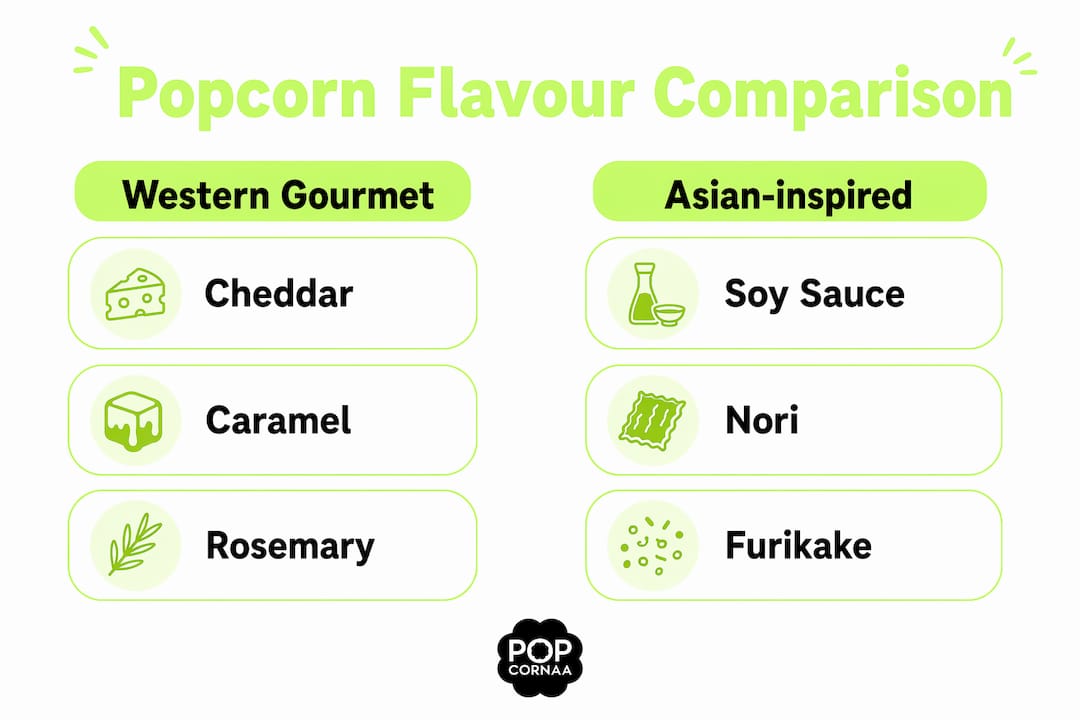
Western gourmet popcorn tends to rely on familiar flavour anchors. Cheddar, sea salt caramel, and rosemary butter are crowd-pleasers precisely because they are recognisable. Asian-inspired popcorn takes a different approach. The umami focus and ingredient specificity create a more complex eating experience, one where the flavour evolves across the mouthful rather than hitting all at once.
The fusion flexibility is also worth noting. Many Asian-inspired popcorn recipes draw from street food traditions, including Taiwanese crispy snacks, Japanese rice crackers, and Thai chili-lime seasonings, which means the flavour references are grounded in real culinary contexts rather than invented combinations. For a broader look at artisan fusion popcorn and how it sits within the gourmet snack world, the category is growing with genuine momentum.
Vegan and gluten-free suitability is another area where Asian-inspired popcorn has a natural advantage. Soy sauce, nori, sesame oil, and most furikake blends are plant-based by default. Popcornaa has built its entire product range around this principle, offering Asian-inspired vegan snacks that are dairy-free, clean-ingredient, and genuinely flavourful without compromise. That combination of dietary accessibility and bold flavour is what sets this style apart from most Western gourmet alternatives.
Key takeaways
Asian-inspired popcorn achieves its distinctive character through precise moisture control, layered seasoning, and the right baking technique applied after coating.
| Point | Details |
|---|---|
| Moisture is the critical variable | Use soy sauce sparingly and apply wet seasonings in stages to prevent sogginess. |
| Baking sets sweet-savoury coatings | A 30-minute low-temperature bake removes moisture and crisps furikake-style coatings properly. |
| Flavour profiles vary widely | Sushi, furikake, and Pad Thai styles each use distinct ingredients and produce different results. |
| Vegan and gluten-free by default | Most Asian-inspired seasonings are plant-based, making this style naturally accessible. |
| Serve timing matters | Nori-topped popcorn softens quickly; make and eat immediately for the best texture. |
What I have learnt from making Asian-inspired popcorn
I will be honest: the first time I tried to make sushi-style popcorn at home, I used too much soy sauce and ended up with a soggy, slightly sad bowl of kernels. It stopped me in my tracks, because the idea had seemed so simple. What I did not appreciate then was how unforgiving moisture can be when you are working with something as delicate as popcorn.
What changed everything was understanding that the technique matters as much as the ingredients. Once I started applying wet seasonings in small stages and tossing between each addition, the results improved dramatically. The baking technique for furikake popcorn was another revelation. That low, slow oven step is not optional. It is what transforms a sticky, coated kernel into something genuinely crisp and satisfying.
I also think people underestimate how much creative freedom this style of snacking offers. You are not locked into one recipe. Swap bonito flakes for toasted nori strips if you want a fully vegan version. Add crispy chickpeas instead of peanuts. Use Thai basil instead of coriander. The flavour framework is solid enough to absorb a lot of experimentation without falling apart.
The broader trend toward vegan and fusion snacking feels real to me, not as a passing moment but as a genuine shift in how people think about what they eat between meals. Asian-inspired popcorn sits right at the centre of that shift. It is light, it is flavourful, and it does not rely on dairy or refined sugar to taste good. That combination, in my experience, is what keeps people coming back to it.
— Emily
Explore Popcornaa’s Asian fusion popcorn range
If making your own batch sounds appealing but you want to taste the benchmark first, Popcornaa has done the work for you.
[ ](https://www.popcornaa.com › pages › asian-fusion-taster-box)
The Newbie Asian Fusion Taster Box brings together five distinct vegan popcorn flavours inspired by Asian seasoning traditions, including bold umami profiles built around seaweed, wasabi, and soy. Every bag is dairy-free, clean-ingredient, and made without refined sugar. It is a genuinely useful starting point for understanding what well-executed Asian-inspired popcorn tastes like before you start experimenting in your own kitchen. If you prefer to build your own selection, the custom snack box lets you mix and match flavours to suit your palate or create a thoughtful gift for a fellow food enthusiast.
FAQ
What is Asian-inspired popcorn?
Asian-inspired popcorn is popcorn seasoned with traditional Asian ingredients such as soy sauce, nori, furikake, sesame oil, and wasabi powder to create umami-rich, savoury or sweet-savoury snacks. It draws from Japanese, Thai, and other East Asian culinary traditions.
Why does my Asian-inspired popcorn go soggy?
Sogginess is almost always caused by applying too much wet seasoning at once. Use soy sauce in small quantities (around 1½ tablespoons per batch), drizzle in stages, and toss thoroughly between each addition to keep the coating light and even.
Do I need to bake furikake popcorn after coating it?
Yes. Baking furikake popcorn at a low temperature for around 30 minutes removes excess moisture from the butter-sugar syrup binder and creates a crisp, set coating. Skipping this step results in a tacky texture that does not improve on cooling.
Is Asian-inspired popcorn suitable for vegans?
Most Asian-inspired popcorn recipes are naturally vegan, as the core seasonings (soy sauce, nori, sesame oil, and many furikake blends) are plant-based. Check furikake labels for bonito flakes if you require a fully vegan version, and substitute tamari for standard soy sauce if you also need a gluten-free option.
How long does Asian-inspired popcorn stay fresh?
Furikake popcorn without fresh toppings keeps well in an airtight container for up to two days. Sushi-style popcorn with nori should be eaten immediately, as nori absorbs moisture and softens within 20 to 30 minutes of being added.