

Wasabi popcorn explained: how it tastes and how to make it
TL;DR:
- Wasabi popcorn has a nasal heat from isothiocyanates that quickly fades, offering a surprising, bold flavor.
- Homemade versions are affordable and best eaten within 48 hours for optimal aroma and crunch.
- PopCornaa provides a vegan, artisan alternative with ready-made options shipped across the UK.
Wasabi popcorn is popcorn seasoned with wasabi, either freshly grated Eutrema japonicum, paste, or wasabi powder, to produce a short, sinus-clearing heat that is nothing like chilli. If you are curious but cautious, start with a small air-popped batch using a mild wasabi powder blend. If you would rather skip the kitchen entirely, PopCornaa offers a ready-made, Asian-inspired option shipped across the UK.
Quick things to know before you dive in:
- Wasabi popcorn gets its heat from isothiocyanates, volatile compounds that travel through the nose rather than burn the tongue.
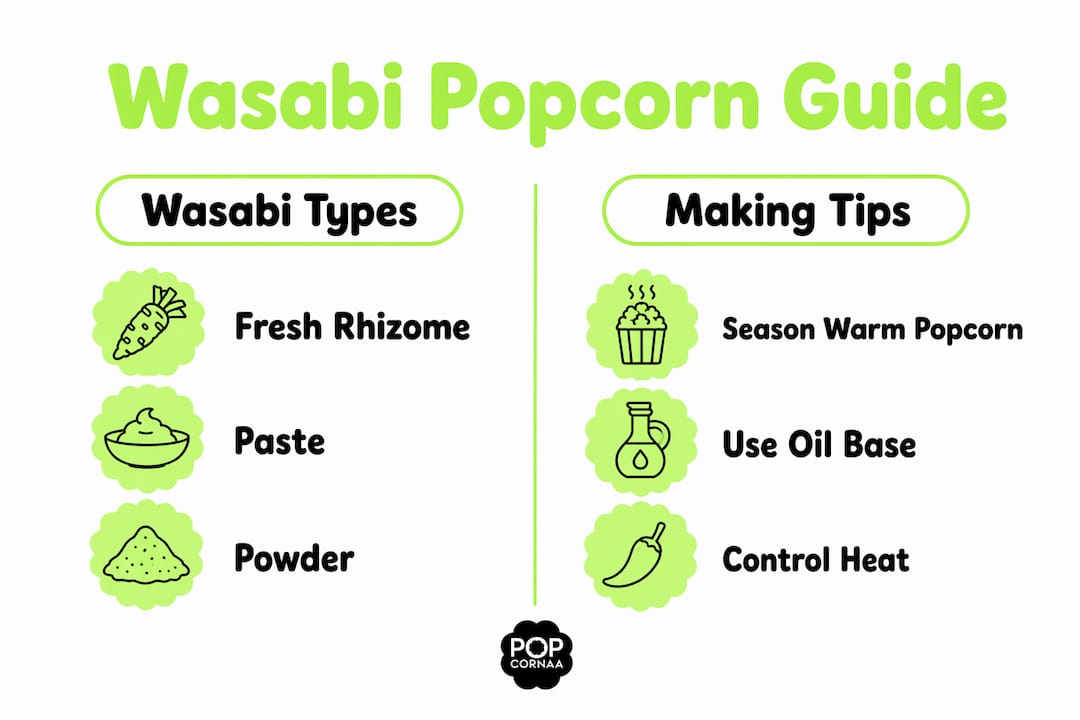
- Three forms of wasabi are used in recipes: fresh Eutrema japonicum rhizome, neri-wasabi paste (often horseradish-based), and wasabi powder.
- PopCornaa’s Asian-inspired range is a UK option if you want an artisan bag without any prep.
What does wasabi popcorn actually taste like?
The heat arrives fast and high, right up through the nasal passages, then fades within seconds. That is the isothiocyanate effect: volatile compounds that evaporate quickly rather than linger the way capsaicin does on the tongue. It is closer to the sensation of strong mustard or horseradish than anything you would get from a chilli-dusted crisp.

On popcorn, that nasal heat sits on top of a savoury, slightly sweet base. The light, airy texture of the kernel means the seasoning coats every surface, so each bite delivers the full flavour hit at once. Buttery or oil-drizzled popcorn softens the sharpness slightly; dry-seasoned versions tend to feel more intense.
Common additions that balance the profile:
- Soy sauce adds umami depth and a salty backbone.
- Sesame oil or toasted sesame seeds bring a nutty warmth.
- Nori flakes reinforce the Japanese character and add a faint oceanic note.
- A pinch of sugar creates a sweet-savoury contrast that stops the wasabi from feeling one-dimensional.
The result, when the proportions are right, is a snack that feels genuinely surprising. Bold, but not punishing.
Real wasabi versus paste and powder: which should you use?
Fresh wasabi (Eutrema japonicum) is rare and expensive outside Japan. The plant requires cool, clean running water and takes over a year to mature, which makes mass cultivation almost impossible. In the UK, you are unlikely to find a fresh rhizome outside specialist Japanese grocers or high-end restaurants.
| Form | Aroma | Heat profile | Shelf life | Typical UK price |
|---|---|---|---|---|
| Fresh rhizome | Bright, floral, complex | Short, sharp nasal burst | Minutes once grated | High (specialist only) |
| Neri-wasabi paste | Milder, sometimes earthy | Moderate, slightly duller | Weeks (refrigerated) | Moderate |
| Wasabi powder | Pungent when reconstituted | Adjustable by quantity | Months (sealed) | Low to moderate |
Processed forms are more shelf-stable and far more affordable, which is why most UK home cooks and commercial producers rely on them. The catch is that many pastes labelled “wasabi” contain little or no actual Eutrema japonicum; the primary ingredient is often horseradish, mustard, and green colouring. Check the label for “hon-wasabi” or a percentage of Eutrema japonicum if the genuine article matters to you.
For popcorn specifically:
- Fresh wasabi is worth the effort for a dinner-party showpiece, but grate it at the last moment and season the popcorn immediately, because the aroma oxidises within minutes.
- Wasabi paste (tube or sachet) is the most convenient everyday option and blends easily into melted butter.
- Wasabi powder gives the most control over heat intensity and is the best choice for batch cooking.
Treat these three as distinct ingredients rather than interchangeable forms. The flavour gap between a freshly grated rhizome and a horseradish-heavy paste is significant.
How to make wasabi popcorn at home
This recipe makes enough for 2–4 people and takes under 15 minutes from start to finish.
Ingredients:
- 60g popcorn kernels (yields roughly 8 cups popped)
- 2 teaspoons wasabi powder or 1½ teaspoons prepared wasabi paste
- 3 tablespoons unsalted butter or neutral oil (such as sunflower)
- 1 tablespoon soy sauce
- ½ teaspoon fine sea salt
- ½ teaspoon caster sugar (optional, for sweet-savoury balance)
- ½ teaspoon garlic powder (optional)
Steps:
- Pop the corn. Use an air popper for a lighter base, or heat 1 tablespoon of oil in a large lidded pan over a medium-high heat, add the kernels, cover, and shake until popping slows to one pop every two seconds. Tip into a large bowl.
- Make the wasabi emulsion. If using powder, mix it with 2 teaspoons of cold water into a thick paste and leave for five minutes, covered, to let the heat develop. Melt the butter gently (do not boil it), then whisk in the wasabi paste and soy sauce until fully combined.
- Season and toss. Drizzle the wasabi butter over the warm popcorn in three or four passes, tossing between each addition to coat evenly. Sprinkle over the salt, sugar, and garlic powder if using, then toss once more.
- Serve immediately. The volatile aroma fades fast, so eat straight away for the full nasal-heat effect.
Approximate cost for a homemade batch: under £2 using supermarket wasabi powder and standard kernels. A comparable artisan bag from a UK retailer typically costs between £3 and £6.
Pro Tip: Season the popcorn while it is still warm. Cold popcorn repels oil-based coatings and the wasabi aroma will not penetrate as well.
Where to buy wasabi popcorn in the UK
Most UK supermarkets stock wasabi-flavoured snacks, though dedicated wasabi popcorn is less common on the main shelves than in specialist or online retailers. Industry commentary notes that popcorn remains under-innovated as a vehicle for bold global flavours, which is precisely why artisan brands are moving into this space. That gap is also part of a broader 2026 gastronomy trend towards bolder, globally inspired snack profiles.
When reading a label, check for:
- Hon-wasabi or Eutrema japonicum listed as an ingredient (not just “wasabi flavouring”).
- Horseradish in the ingredients, which signals a substitute blend.
- Sodium content, particularly if you are watching salt intake.
- Vegan certification if that matters to you; most wasabi powders are naturally plant-based, but some pastes contain dairy or fish-derived ingredients.
PopCornaa’s Asian-inspired popcorn range is a UK-based option for those who want a gourmet, vegan-certified bag without the prep. The brand ships across the UK and its products are made without refined sugars or artificial additives.
Variations and serving ideas worth trying
Once you have the basic recipe down, the flavour is easy to personalise. A few directions that work particularly well:
- Sweet-savoury kettle style: double the sugar to 1 teaspoon and add a small drizzle of honey after tossing. The sweetness makes the wasabi heat feel rounder.
- Sesame and nori: toss with toasted sesame seeds and crumbled nori sheets for a more complete Japanese snack profile.
- Lime zest: a fine grating of lime over the finished bowl adds brightness that cuts through the butter.
- Chilli oil finish: a few drops of togarashi-style chilli oil after seasoning layers a slow tongue burn on top of the wasabi’s nasal hit.
For drinks, dry cider or a cold lager work well because the carbonation resets the palate between bites. Green tea is the obvious non-alcoholic pairing and genuinely complements the umami notes. A light, unoaked white wine such as Picpoul de Pinet also holds up well against the heat.
The key balance point is salt versus sweetness. Too much salt and the wasabi aroma disappears; a touch of sugar lets it come forward.
Storage, shelf life and allergy notes
Homemade wasabi popcorn is best eaten within 24–48 hours. After that, the popcorn softens and the volatile wasabi aroma fades noticeably. Store in an airtight container at room temperature, away from direct light.
Sealed retail packs last considerably longer; follow the use-by date on the packaging. Resealable bags preserve crunch better than twist-tied ones once opened.
Allergy notes to be aware of:
- Horseradish is present in most wasabi pastes and powders; those with Brassicaceae sensitivities should check labels carefully.
- Soy sauce contains gluten and soy, both common allergens. Use tamari for a gluten-free version.
- Sesame is a declared allergen in the UK; label it clearly if serving to guests.
- Sodium can be high in seasoned popcorn; reduce the soy sauce quantity if you are monitoring salt intake.
Most wasabi popcorn recipes are naturally vegan when made with oil rather than butter, and vegan-friendly seasoning mixes are widely available. One practical note on the heat: wasabi vapour can feel intense in an enclosed space, particularly for children or anyone with respiratory sensitivity. Start with a small quantity and build up.
Key takeaways
Wasabi popcorn delivers a short, nasal heat from isothiocyanates that fades quickly, making it bolder than chilli-seasoned snacks but far less lingering.
| Point | Details |
|---|---|
| Flavour character | Nasal, volatile heat from isothiocyanates; not a tongue burn like chilli. |
| Best form for home cooking | Wasabi powder gives the most control; paste is the most convenient. |
| Homemade method | Air-pop, make a wasabi butter emulsion, toss warm and serve immediately. |
| Storage window | Eat homemade batches within 24–48 hours for best aroma and crunch. |
| UK ready-made option | PopCornaa’s Asian-inspired range is a vegan, artisan alternative to making your own. |
Why wasabi and popcorn belong together
There is a tendency to treat wasabi as a sushi condiment and nothing else. That framing undersells it. The reason wasabi works so well on popcorn is precisely because the heat is airborne rather than coating. Popcorn is already a textural experience; the crunch, the lightness, the way it dissolves quickly. Wasabi’s isothiocyanates ride that same sensory wave. You get the hit, the crunch, and then it is gone, which is exactly what a snack should do.
What I find genuinely interesting is how the volatile nature of wasabi actually rewards the format. A slow-cooked dish would lose most of the aroma before it reached the table. Popcorn, seasoned at the last moment and eaten fast, is one of the few vehicles where wasabi’s fleeting quality becomes a feature rather than a limitation. The snack is designed to be eaten quickly. So is the flavour.
For anyone experimenting at home, my honest tip is to resist the urge to add more wasabi than the recipe suggests on the first attempt. The nasal heat feels mild when you are tossing the bowl, then arrives properly once you start eating. Give it a moment before you reach for the powder again.
PopCornaa’s Asian sampler: a ready-made starting point
If making your own batch feels like a project for another day, PopCornaa’s Ultimate Asian Sampler Box is a practical way to explore Asian-inspired popcorn flavours without any prep. The box brings together a curated selection of bold, vegan flavours from PopCornaa’s Asian range, including profiles that sit in the same sinus-tingling, umami-forward territory as wasabi seasoning.
[ ](https://www.popcornaa.com › pages › asian-fusion-taster-box)
PopCornaa ships across the UK, and the sampler is a popular gift option as well as a personal treat. The brand has received customer recognition and awards for its gourmet vegan approach, and all products are free from refined sugars and artificial additives.
Browse the sampler box on the PopCornaa website and see which flavours catch your attention.
Useful sources
- Wasabi root: heat and flavour, The Well (Northwell): used for the isothiocyanate chemistry and sensory explanation throughout.
- Wasabi, Nippon.com: cultivation history, fresh versus processed forms, and availability context.
- Wild wasabi proves a warrior ingredient, The Japan Times: cultural preference for fresh wasabi and price signals.
- Wasabi Popcorn Recipe, Cooking with Curls: tested ingredient proportions and practical tossing technique.
- Food & Drink Technology, June issue: industry commentary on wasabi snack trends and popcorn as an under-innovated format.
- Wasabi, Wikipedia: botanical classification, substitution notes, and snack applications.
FAQ
What is wasabi popcorn?
Wasabi popcorn is popcorn seasoned with wasabi, either fresh Eutrema japonicum, paste, or powder, to produce a short, nasal heat and savoury flavour. The heat comes from isothiocyanates rather than capsaicin, so it fades quickly.
Is wasabi popcorn very spicy?
The heat is intense but brief. It travels through the nasal passages rather than burning the tongue, so most people find it more surprising than painful, especially when made with a measured amount of wasabi powder.
Can you make wasabi popcorn without fresh wasabi?
Yes. Wasabi powder or paste works well and is far easier to source in the UK. Powder gives the most control over heat level; paste blends smoothly into melted butter for an even coating.
Is wasabi popcorn vegan?
It can be. Use oil rather than butter and check that your wasabi paste contains no fish-derived ingredients. Most wasabi powders are naturally plant-based. PopCornaa’s Asian-inspired popcorn is certified vegan.
Where can I buy wasabi popcorn in the UK?
Specialist online retailers are the most reliable source. PopCornaa offers an Asian-inspired sampler box with bold, vegan flavours and ships across the UK.