
The healthiest way to make popcorn (and how to keep it that way)
Air-popping is the healthiest way to make popcorn, full stop. No oil, no butter, just hot air agitating a kernel until it turns itself inside out, which keeps a bowlful at roughly 30 calories per cup compared with 35 to 80 calories per cup once oil or butter gets involved. You still get the whole grain, the fibre, and that satisfying crunch. If you don’t own an air popper, a paper bag in the microwave gets you almost the same result.
- Healthiest method: air-popping (or microwave paper bag, or dry stovetop with constant shaking)
- Calorie benchmark: around 30 kcal per cup, plain
- Portion cue: 25 to 30 grams of raw kernels per serving
- Start now: pop a tablespoon of kernels in a plain brown paper bag, fold the top twice, microwave in 30 second bursts until the pops slow
Key Takeaways
The healthiest way to make popcorn is air-popping or another oil-free method, kept to a 25 to 30 gram serving and seasoned with spices rather than butter or sugar.
| Point | Details |
|---|---|
| Air-popping wins on calories | Around 30 kcal per cup versus 35 to 80 kcal per cup for oil-popped or buttered versions. |
| Stick to portion guidance | Keep servings to 25 to 30 grams of raw kernels, roughly three cups popped. |
| Season with moisture, not oil | Mist lightly with water or diluted vinegar, then shake seasoning through in a closed bag. |
| Use heavy cookware for stovetop popping | A cast-iron or thick-base pan spreads heat evenly and cuts down on scorched duds. |
| Buy ready-made when time is tight | PopCornaa’s vegan snack ranges and gift cards offer a low-additive option for evenings you’d rather not cook. |
Oil-free popcorn making methods compared
Every method below gets you to the same destination: a puffed, edible kernel. What changes is the calorie count you’re adding on top, and how much fuss is involved.
- Air popper. Hot air blows through the kernels until they pop and fall into a catch bowl, with nothing else added. This is the cleanest route because there’s no fat medium at all, which is why it consistently lands at the bottom of the calorie table. It’s also the most consistent for anyone who wants the same result every time without babysitting a pan.
- Microwave paper bag. Drop a tablespoon or two of plain kernels into a brown paper bag, fold the top over twice, and microwave on high in short bursts, listening for the pops to slow to a couple of seconds apart. This is the fastest oil-free method going, though it punishes distraction. Leave it running once the pops have thinned out and you’ll end up with a bag of char rather than snacks. Medical News Today lists this alongside air-popping as one of the two cleanest ways to prepare it at home.
- Stovetop, dry. A heavy-bottomed pot, no oil, lid on, constant shaking over medium heat. Thin pans overheat unevenly and leave you with scorched kernels and duds, so cast iron or a thick-base stainless pot matters more here than in any other method.
- Oven popping. Spread kernels thinly on a lined tray, cover loosely with foil, and roast at a high, steady heat, shaking the tray halfway through. Slower than the alternatives and easy to scorch at the edges, so treat it as a fallback rather than your default.
- Low-oil stovetop. If you want the classic stovetop texture and a little insurance against sticking, a single teaspoon of olive or avocado oil across a full batch adds only around 40 extra calories overall, not per cup, which is a fair trade if it’s the difference between you popping corn at home or reaching for a bag of crisps instead.
Pro Tip: Test your microwave’s wattage before committing to a full bag. Start with 90 second bursts and adjust down, because a 1,200 watt microwave will scorch a bag that a 700 watt one handles fine.
Homemade wins over shop-bought regardless of which oil-free method you choose, because you’re the one deciding what touches the kernel, not a factory line. Nutritionists consistently point to homemade popcorn as the better choice precisely because you control the salt, sugar and fat that go on afterwards, and our own guide on air-popped popcorn walks through the technique in more detail if you’re setting up your kitchen for the first time.
How much popcorn should you eat, and what’s actually in it?
A sensible serving is 25 to 30 grams of raw kernels, which pops out to roughly three cups. That’s enough to genuinely satisfy a snack craving without tipping you into second-bag territory.
Air-popped, plain, per cup: around 30 kcal, close to zero fat, and a meaningful contribution to your daily fibre intake as a whole grain. Buttered or oil-popped versions climb to 35 to 80 kcal per cup once fat enters the picture, and that’s before any salt or sugar coating.
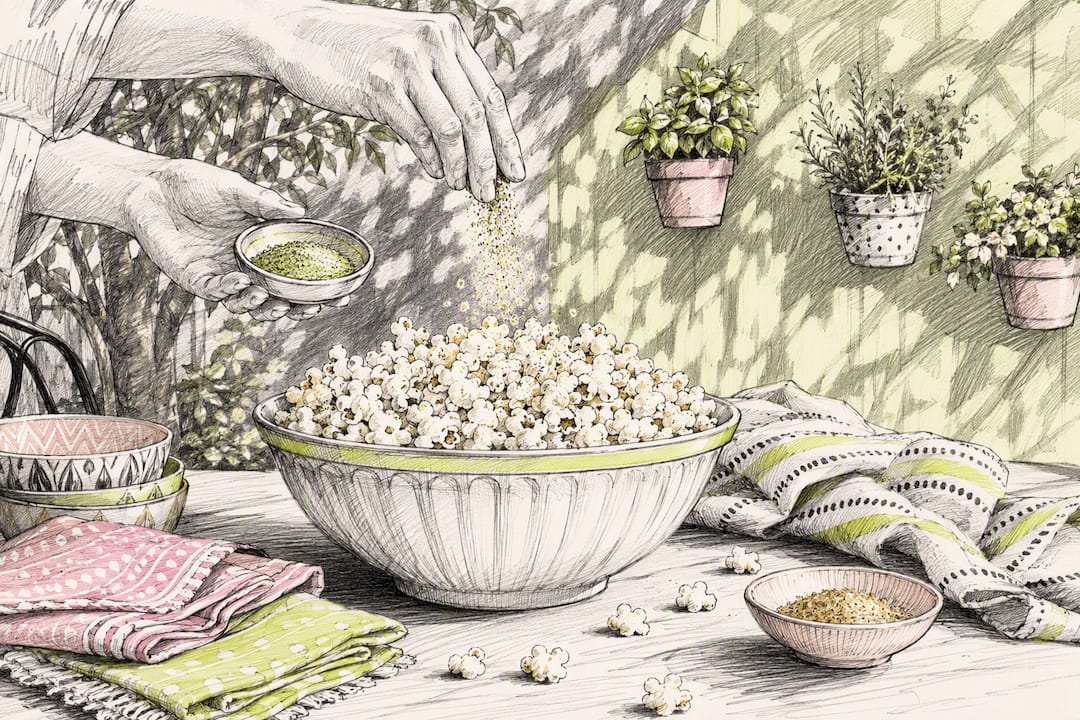
Toppings are where most home-poppers accidentally undo their good work. A generous knob of butter or a heavy oil drizzle can double the calorie count of an otherwise lean bowl, and pre-flavoured microwave bags often carry more sodium than a packet of crisps. Swap melted butter for a spray of water and a spice blend, and swap table salt for a pinch of smoked paprika or nutritional yeast, and you keep the fibre-rich, low-calorie profile intact while still getting real flavour. Our piece on sweet or salted popcorn breaks down exactly how each seasoning style shifts the nutrition.
Seasoning ideas that stick without a drop of oil
Flavour is where oil-free popcorn usually falls down, because dry spices need something to cling to. The fix isn’t fat, it’s moisture and technique.
- Light mist, not a drizzle. A fine spray of water or diluted vinegar across the popcorn, followed by a quick toss, gives spices something to grip without adding extra fat.
- Shake, don’t sprinkle. Add your seasoning to a closed paper bag or lidded container with the popcorn already inside, then shake vigorously. This distributes flavour far more evenly than scattering it over a bowl.
- Fine powders work best. Nutritional yeast, garlic powder, smoked paprika and ground cinnamon all adhere better than coarse flakes or crystals, which simply fall to the bottom of the bowl.
Three quick blends worth keeping in small jars by the stove:
- Savoury: smoked paprika, garlic powder, nutritional yeast, a pinch of black pepper.
- Spicy: chilli powder, cumin, a little lime zest, cracked pepper.
- Sweet: ground cinnamon, a hint of nutmeg, orange zest.
These misting and shaking techniques are the same ones recommended by Forks Over Knives for keeping seasoning stuck without oil or butter, and they’re detailed further in our vegan flavour mixes guide.
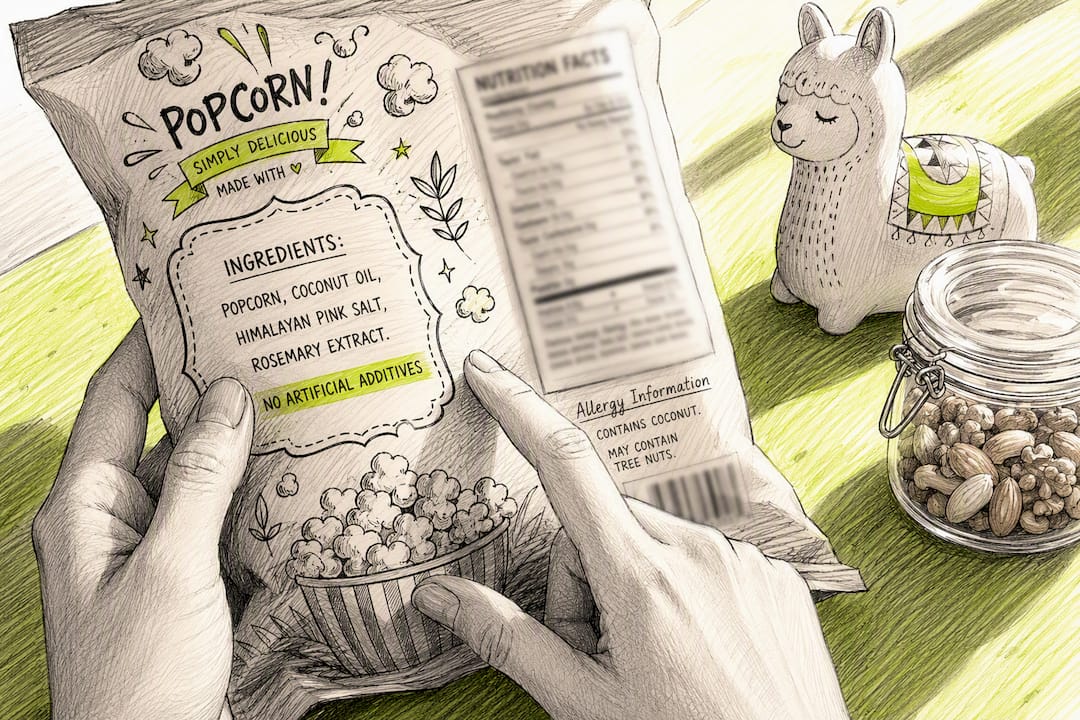
Pro Tip: Check the small print on flavoured microwave bags before you buy. Trans fats have largely disappeared from UK shelves, but flavour emulsifiers and added sugars still turn up in “buttery” or “caramel” varieties more often than you’d expect.
Equipment and safety for oil-free popping at home
The kit matters more than people expect. A thin aluminium pan heats unevenly, scorches kernels at the edges, and can warp under the constant high heat that dry stovetop popping demands. A heavy cast-iron pot or thick-base stainless pan spreads heat evenly and cuts down on burnt duds considerably.
- Use a heavy-bottomed pan for stovetop popping, lid on, and keep it moving.
- An air popper or microwave-safe popper gives you the most consistent result with the least supervision.
- Lift lids away from your face. The steam vent releases fast and hot the moment the last kernels finish popping.
- Stop when the pops slow to two or three seconds apart. Anything left in the pan after that is nearing burnt, not popped.
- Supervise young children closely. Whole or partially popped kernels are a choking risk, and popcorn is generally not recommended for children under four.
Getting the technique right isn’t complicated, but it rewards patience. A heavy pot, a steady shake, and knowing when to pull it off the heat make the difference between a bowl of golden popcorn and one full of scorched duds.
For more on technique and ingredients, our step by step popcorn recipes and popcorn benefits guide go into more depth than we’ve room for here.
Three healthy popcorn recipes to try tonight
- Smoked paprika and lemon. Air-pop a 25 to 30g serving, mist lightly with water, then shake through a mix of smoked paprika, nutritional yeast, and fresh lemon zest. Salt-free, and the citrus does more flavour work than you’d expect.
- Cinnamon and dark chocolate. Pop the same serving size, mist with a whisper of maple syrup diluted in water, and toss with ground cinnamon. Grate a small amount of dark chocolate over the top while it’s still slightly warm so it clings rather than clumps.
- Pumpkin seed and dried fruit snack mix. Combine popped corn with a handful of toasted pumpkin seeds and a small portion of dried cranberries or apricot, keeping the fruit to no more than a fifth of the mix by volume so sugar doesn’t creep up on you. If you want another spice pairing for the savoury route, a cinnamon hazelnut blend makes a nice warm alternative to the citrus version above.
Each of these keeps a single serving well within the 25 to 30 gram raw kernel guideline, so you get flavour without quietly doubling your portion.
Why homemade, oil-free popcorn is the snack I keep coming back to
There’s something genuinely satisfying about a snack that costs almost nothing, takes minutes, and still counts as a whole grain. What strikes me most researching this is how little separates a “diet snack” from a proper treat once you take oil out of the equation and let spices do the work instead. The gap between virtuous and boring simply isn’t there if you season it properly.
That’s exactly the space PopCornaa sits in for me: minimally processed, vegan-friendly, flavour-forward without leaning on fat or refined sugar to get there. If tonight’s batch turns out well, our recipe blog has plenty more combinations worth trying next.
— Emily
Prefer it ready-made? PopCornaa does the oil-free work for you
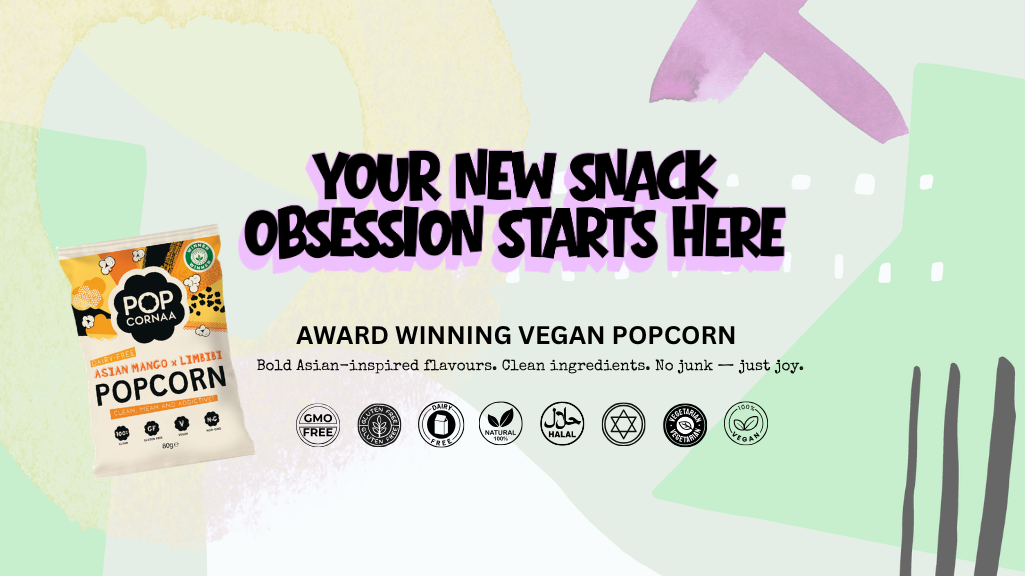
Making your own is cheaper and lets you control every ingredient, but some evenings you just want a bowl sorted without the paper bag, the shaking, or the washing up. That’s where a curated, vegan popcorn assortment earns its place, particularly when it’s built around the same low-additive principles this article has walked through: real seasoning, no hidden trans fats, no unnecessary sugar loading.
[ ](https://www.popcornaa.com › pages › asian-fusion-taster-box)
PopCornaa’s Asian-inspired and British flavour ranges are built for exactly that gap between “I want something healthy” and “I don’t want to cook it myself.” If you’re buying for someone else, a PopCornaa digital gift card lands instantly and lets the recipient pick their own flavours rather than guessing what they’ll like. Browse the gift card collection now if a ready-made vegan snack fits your evening better than a stovetop tonight.
Sources
- Is popcorn healthy? | BBC Good Food
- Is popcorn healthy? Everything you need to know | Women’s Health UK
- Popcorn nutrition | Popcorn Board
- How to make popcorn without oil or butter | Forks Over Knives
FAQ
What is the healthiest way to make popcorn?
Air-popping is the healthiest method, since it needs no oil or butter and keeps a serving to around 30 kcal per cup, roughly a third of what an oil-popped or buttered batch costs.
How much popcorn is a healthy serving?
A sensible portion is 25 to 30 grams of raw kernels, which pops out to about three cups.
Can you make popcorn without oil on the stovetop?
Yes, using a heavy-bottomed pan with the lid on and constant shaking; a thin pan overheats unevenly and produces more burnt kernels.
How do you get seasoning to stick to popcorn without oil?
Mist the popcorn lightly with water or diluted vinegar first, then shake it with your chosen spices in a closed bag or container so the seasoning clings evenly.
Is microwave popcorn from a bag as healthy as air-popped?
Plain popcorn popped in a paper bag at home is close to air-popped in calories, but most commercial flavoured microwave bags carry extra sodium, sugar, or flavour emulsifiers that plain homemade popcorn avoids.