

Popcorn flavour profiles explained for home cooks
TL;DR:
- Popcorn flavour profiles fall into four main categories: sweet, savory, spicy, and umami, each shaped by specific ingredients and chemical reactions. Understanding kernel types, coating techniques, and seasonings enables deliberate flavor creation and enhances overall taste. Applying seasonings while popcorn is warm and mastering caramelisation processes are essential for achieving optimal texture and flavor depth.
Popcorn flavour profiles are the distinct combinations of taste, aroma, and texture that define each popcorn style, from a simple salted kernel to a complex gochujang caramel glaze. Understanding these profiles is what separates a forgettable bowl of popcorn from one that stops conversation. The four primary categories are sweet, savoury, spicy, and umami, and each one is shaped by specific chemical reactions, kernel types, and seasoning techniques. Whether you are experimenting with flavoured popcorn recipes at home or simply curious about what makes certain combinations so satisfying, this guide covers the science and the craft in equal measure.
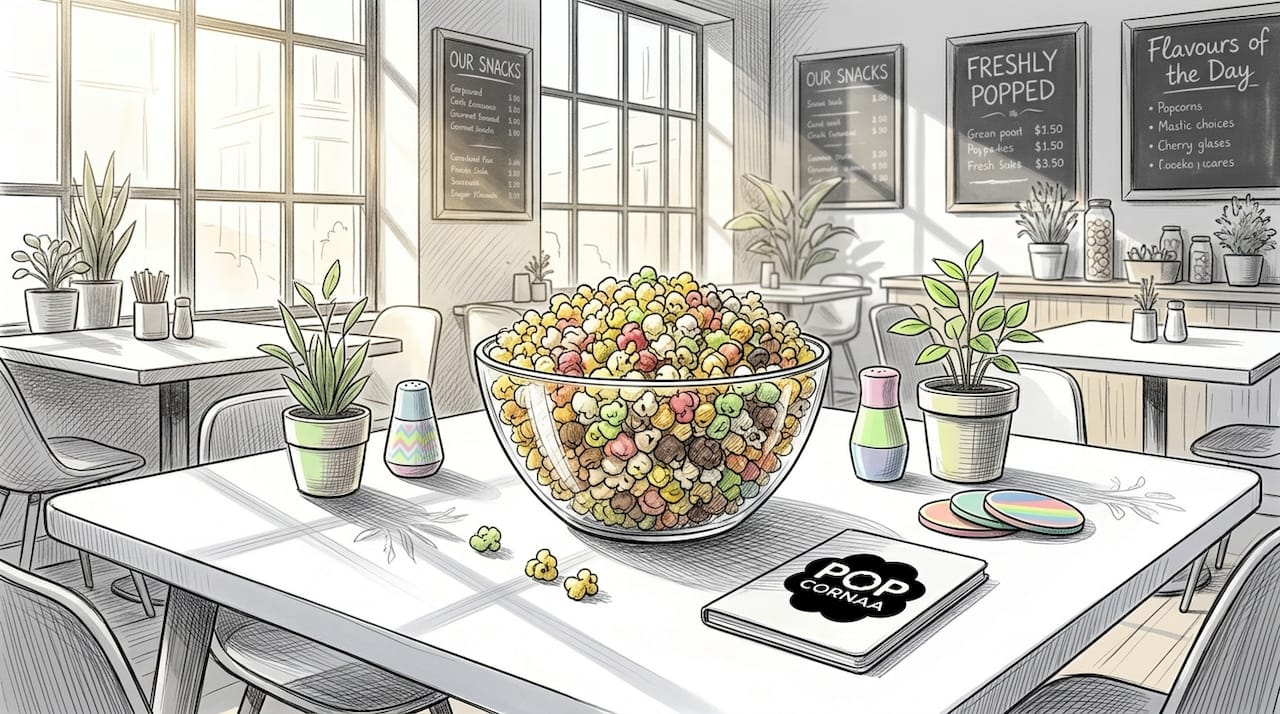
What are the main popcorn flavour types and their characteristics?
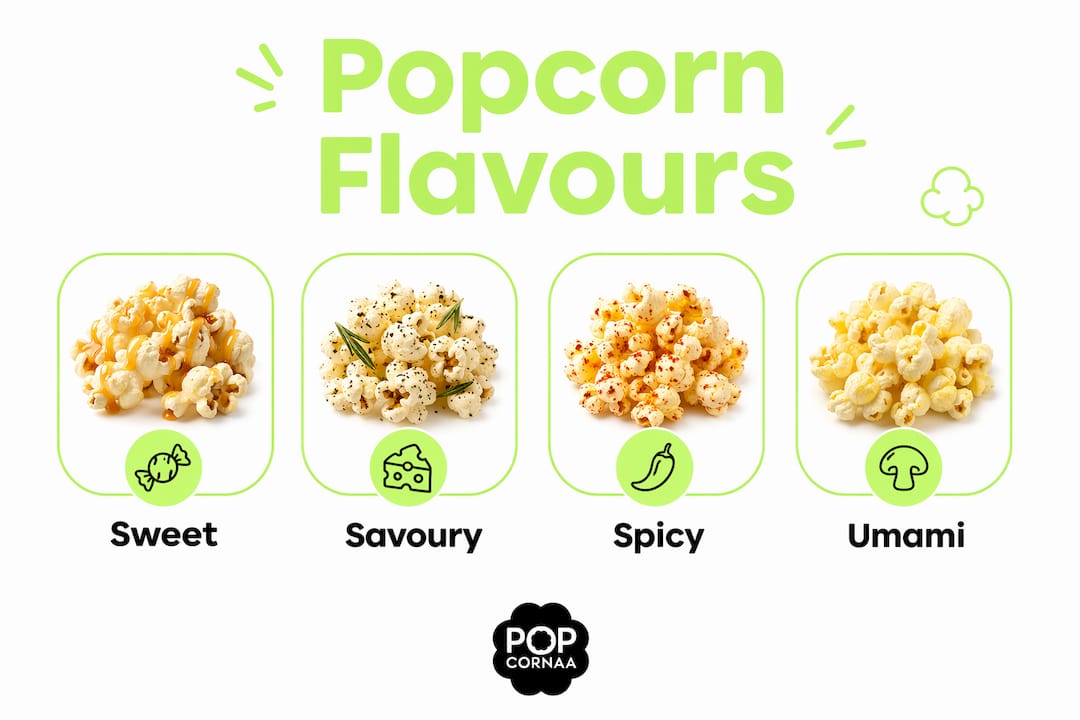
Popcorn taste profiles fall into four clear categories, and knowing each one helps you make deliberate choices rather than guessing at seasoning. Regional preferences vary considerably: salted and buttered styles dominate in the United States, while sweet and caramel varieties are more popular in Germany. This tells us that flavour expectation is partly cultural, which is worth remembering when you are cooking for a mixed crowd.
Sweet flavour profiles are built on caramelised sugar, honey, or chocolate coatings. Kettle corn sits at the lighter end of this spectrum, using a fine balance of sugar and salt to create a delicate sweetness. Caramel popcorn pushes further into rich, toasty territory, while chocolate-drizzled varieties layer fat and cocoa bitterness over the base kernel. These profiles work well as dessert snacks or gifts.
Savoury profiles are the most versatile category for everyday snacking:
- Classic salted: fine sea salt applied immediately after popping for clean, sharp flavour
- Herb-infused: rosemary, thyme, or za’atar blended with olive oil or vegan butter
- Cheese-style: nutritional yeast, vegan cheddar powder, or aged parmesan for depth
- Buttery: clarified butter delivers richer flavour and maintains crispness longer than standard melted butter
Spicy profiles rely on heat compounds like capsaicin from cayenne, chipotle, or Korean gochujang. A well-known sweet and spicy recipe from The Washington Post combines caramel, gochujang, and brown sugar to create a layered heat that builds slowly rather than hitting all at once. This approach shows how spice works best when it is woven into a broader flavour structure rather than applied as a standalone dusting.
Umami profiles are the most underexplored category in home kitchens. Ingredients like nutritional yeast, mushroom powder, miso, and parmesan create a savoury depth that lingers. Umami seasoning adheres best when applied to warm popcorn, since the surface receptivity of the kernel declines once it cools. This is a small detail that makes a significant difference to the finished result.
How do kernel types affect flavour absorption and texture?
Not all popcorn kernels are equal, and the shape a kernel takes when it pops directly affects how well it holds a coating. The two dominant commercial varieties are mushroom and butterfly, and they behave very differently in the bowl.
| Kernel type | Shape after popping | Best for | Coating performance |
|---|---|---|---|
| Mushroom | Round, compact, ball-like | Caramel, chocolate, heavy coatings | Excellent: holds thick coatings without breaking |
| Butterfly (snowflake) | Irregular, wing-like extensions | Butter, light seasonings, salt | Good for light coatings; wings can trap seasoning unevenly |
| Yellow kernel | Large, robust flake | All-purpose | Standard absorption |
| White kernel | Smaller, tender flake | Delicate seasonings, herb blends | Absorbs fine powders well due to softer surface |
| Purple or mauve kernel | Dense, slightly nutty flavour | Artisan and gourmet applications | Holds colour and flavour compounds distinctively |
Mushroom popcorn is the professional choice for caramel and chocolate coatings because its round surface allows liquid coatings to wrap evenly without pooling in crevices. Butterfly popcorn, by contrast, has those characteristic wing-like extensions that create more surface area for fine seasonings like salt or nutritional yeast to cling to, though they also make the kernel more fragile under heavy coatings.
Kernel colour also carries subtle flavour nuance. Purple and mauve varieties have a slightly denser, nuttier base taste compared to standard yellow kernels, which makes them well-suited to gourmet popcorn applications where the kernel itself contributes to the overall profile. White kernels pop smaller and more tender, making them ideal for delicate herb or floral seasonings where you want the seasoning to lead rather than the kernel.
What is the science behind caramelisation and the Maillard reaction in popcorn?
Two chemical reactions are responsible for most of the complex flavours in seasoned popcorn: caramelisation and the Maillard reaction. Understanding both gives you real control over what ends up in the bowl.
Caramelisation occurs when sugar is heated to around 160°C (320°F), breaking down sucrose molecules into hundreds of new flavour compounds. The result is the signature amber sweetness of caramel popcorn. Crucially, cooking sugar to a deep amber stage over 8 to 12 minutes creates the desired toasty, complex caramel flavour. Deviations in either direction cause problems: undercooking produces weak, cloying sweetness, while overcooking tips into bitter, acrid territory. Colour is your most reliable guide here, not a timer.
The Maillard reaction is a separate process that occurs between amino acids and reducing sugars at high heat, typically above 140°C. It is responsible for the browned, savoury notes in roasted or dry-popped kernels and in butter-coated popcorn cooked at high temperatures. Where caramelisation is purely about sugar, the Maillard reaction requires both protein and sugar, which is why buttered popcorn develops a more complex, rounded flavour than plain salted popcorn.
Salt plays a supporting role that is easy to underestimate. Fine salt balances sweetness in kettle corn and enhances other flavours across all profiles. The salt-to-sugar ratio in kettle corn is a precise calculation, not a rough estimate. Too little salt and the sweetness becomes flat; too much and the balance tips into savoury territory entirely.
Pro Tip: Work quickly when coating popcorn with caramel. Caramel sets fast once it reaches the right amber stage, so use a wide bowl and toss the popcorn immediately. Hesitation leads to clumping and uneven coverage.
Timing also governs seasoning application more broadly. Applying flavour while popcorn is warm promotes uniform coating and better perceived flavour quality than dusting after the kernels have cooled. This single habit accounts for much of the difference between home popcorn that tastes flat and the kind you cannot stop eating.
How to create unique popcorn flavour profiles at home
Building your own popcorn seasoning ideas from scratch is more straightforward than most recipes suggest. The key is understanding the layering principle: fat first, then seasoning, then finishing salt.
- Pop your kernels using a stovetop pan with a neutral oil like coconut or sunflower. Avoid olive oil for high-heat popping as it can impart a bitter note at popping temperatures.
- Apply your fat base immediately. For savoury profiles, use clarified vegan butter or a flavoured oil. For sweet profiles, have your caramel or sugar syrup ready before the kernels finish popping.
- Add your primary seasoning while the popcorn is still warm. Toss continuously to distribute evenly. For umami profiles, combine 3 tablespoons of vegan butter with 1 tablespoon of umami seasoning per one-third cup of kernels, then toss straight away.
- Layer your secondary flavours. This is where creativity lives. Add smoked paprika over a cheese base, or a pinch of cinnamon over caramel. Explore creative mix-ins like toasted sesame seeds, dried chilli flakes, or freeze-dried fruit for texture contrast.
- Finish with flaky sea salt. Even sweet profiles benefit from a final scatter of flaky salt. It sharpens the overall flavour and adds a satisfying crunch.
For sweet and savoury popcorn combinations, the ratio that works consistently is roughly two parts sweet to one part savoury seasoning. A gingerbread-spiced caramel popcorn, for instance, uses brown sugar and cinnamon as the sweet base with a pinch of sea salt and white pepper to create contrast. The pepper is barely detectable on its own but removes the cloying quality that pure sweet coatings can develop.
Pro Tip: Store flavoured popcorn in an airtight container lined with a sheet of baking parchment to absorb excess moisture. Caramel and chocolate-coated varieties keep well for up to five days; lightly seasoned savoury popcorn is best eaten within two days for optimal crunch.
For vegan home cooks, nutritional yeast is one of the most useful ingredients in the popcorn seasoning toolkit. It delivers genuine umami depth and a cheesy quality without any dairy, and it adheres well to warm kernels coated in a light oil. Combine it with garlic powder and smoked paprika for a profile that rivals any cinema-style seasoning.
Key takeaways
Mastering popcorn flavour profiles requires understanding four core taste categories, the chemistry behind each, and the timing of seasoning application.
| Point | Details |
|---|---|
| Four core flavour categories | Sweet, savoury, spicy, and umami each require different techniques and ingredients to develop properly. |
| Kernel shape determines coating success | Mushroom kernels hold heavy coatings like caramel; butterfly kernels suit light seasonings and fine powders. |
| Temperature is non-negotiable | Caramelisation begins at 160°C; cooking to deep amber over 8 to 12 minutes creates the best flavour. |
| Season while warm | Applying seasoning to warm popcorn produces uniform coating and significantly better flavour quality. |
| Salt is a flavour amplifier | Fine salt balances sweetness and enhances all other flavour profiles, not just savoury ones. |
Why I think most home cooks underestimate the basics
I spent a long time chasing complex flavour combinations before I realised the real issue was timing. Most of the popcorn I made at home tasted fine but never quite reached that point where you eat the whole bowl without noticing. The answer, when I finally found it, was embarrassingly simple: I was seasoning too late.
Once I started applying fat and seasoning the moment the kernels came off the heat, everything changed. The flavour bonded to the surface rather than sitting on top of it. That one shift, more than any exotic ingredient, is what made the difference.
I also think the umami category is genuinely underappreciated. Most people default to sweet or salty, which are both excellent, but a mushroom powder and miso glaze on warm popcorn is something else entirely. It has that quality where you cannot quite identify what you are tasting, only that you want more of it. If you have not tried it, start there.
The other thing worth saying honestly: burnt caramel is not a failure. It is a sign you are pushing the process far enough to matter. The difference between deep amber and burnt is about thirty seconds at the right temperature. Once you have burnt a batch, you understand the cues in a way no recipe can fully convey. Embrace the learning.
— Emily
Discover Popcornaa’s gourmet flavour collections
If exploring flavour profiles has sparked your curiosity, Popcornaa has done a great deal of the work for you already.
[ ](https://www.popcornaa.com › pages › asian-fusion-taster-box)
Popcornaa specialises in 100% vegan, plant-based gourmet popcorn with collections spanning Asian-inspired and British flavour traditions. The Asian Fusion Taster Box is a brilliant starting point if you want to experience umami, spice, and sweet profiles side by side without committing to a single flavour. For those who prefer to build their own experience, the custom snack box lets you mix and match flavours to suit your palate exactly. Several of Popcornaa’s flavours have received recognition at the Great Taste Awards 2024, which is a useful shortcut when you want quality assurance before you buy.
FAQ
What are the four main popcorn flavour profiles?
The four main popcorn flavour profiles are sweet, savoury, spicy, and umami. Each is defined by specific ingredients and chemical reactions, from caramelised sugar in sweet profiles to mushroom powder and miso in umami varieties.
Why does popcorn taste better when seasoned warm?
Applying seasoning to warm popcorn allows fat and flavour compounds to bond directly to the kernel surface, producing more uniform coating and stronger perceived flavour. Once popcorn cools, the surface texture changes and seasoning adhesion declines noticeably.
What is the difference between mushroom and butterfly popcorn kernels?
Mushroom kernels pop into a compact, round shape ideal for holding heavy coatings like caramel or chocolate. Butterfly kernels produce irregular, wing-like flakes that suit lighter seasonings such as salt, herb blends, or fine spice powders.
At what temperature does sugar caramelise for popcorn coatings?
Granulated sugar caramelises at around 160°C (320°F), creating the signature sweet coating used in caramel and kettle corn recipes. Cooking to a deep amber stage over 8 to 12 minutes produces the most complex, toasty flavour.
How do I stop caramel popcorn from clumping together?
Work quickly once the caramel reaches the amber stage, toss the popcorn in a wide bowl immediately, and spread it onto a lined baking tray to cool in a single layer. Caramel sets fast, so speed and a wide surface area are the two most effective tools against clumping.