

Vegan vs regular popcorn: what's really different?
TL;DR:
- Vegan popcorn uses plant-based oils and flavorings, while regular popcorn often contains dairy-based ingredients.
- Reading labels carefully is essential to identify hidden animal derivatives and ensure a vegan choice.
The difference between vegan and regular popcorn comes down to one thing: what gets added after the kernel pops. Popcorn kernels are naturally vegan and plant-based, making plain popped corn suitable for anyone avoiding animal products. The problem starts with toppings, oils, and flavourings. Regular popcorn products frequently include butter, milk powder, whey, casein, and cheese powders. Vegan popcorn excludes all of these, relying instead on plant-based oils and flavourings. Understanding this distinction helps you shop with confidence, whether you are reading a label in a supermarket or ordering at a cinema. Popcornaa is built around this very principle: great flavour with no animal ingredients in sight.
What is the difference between vegan and regular popcorn ingredients?
The base kernel is identical in both vegan and regular popcorn. The split happens entirely at the flavouring and preparation stage.
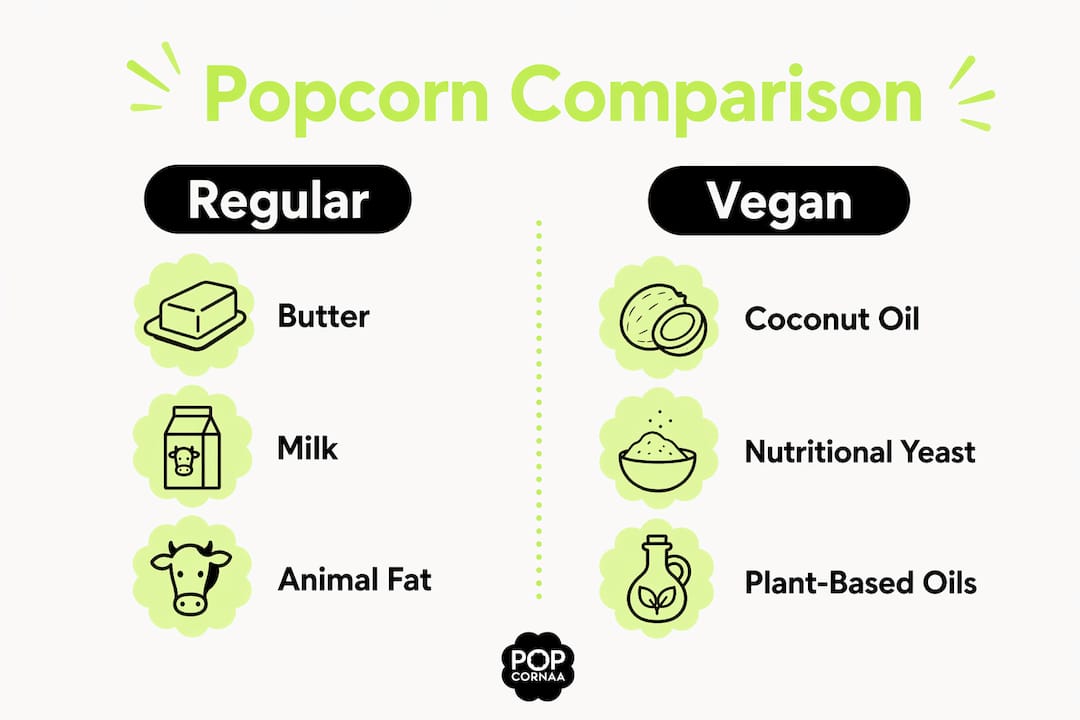
Regular popcorn products commonly include:
- Butter or ghee for richness and flavour
- Milk powder, whey, or casein in cheese and cream varieties
- Lactose as a sweetener or texture agent
- Cheese powders derived from dairy in savoury flavours
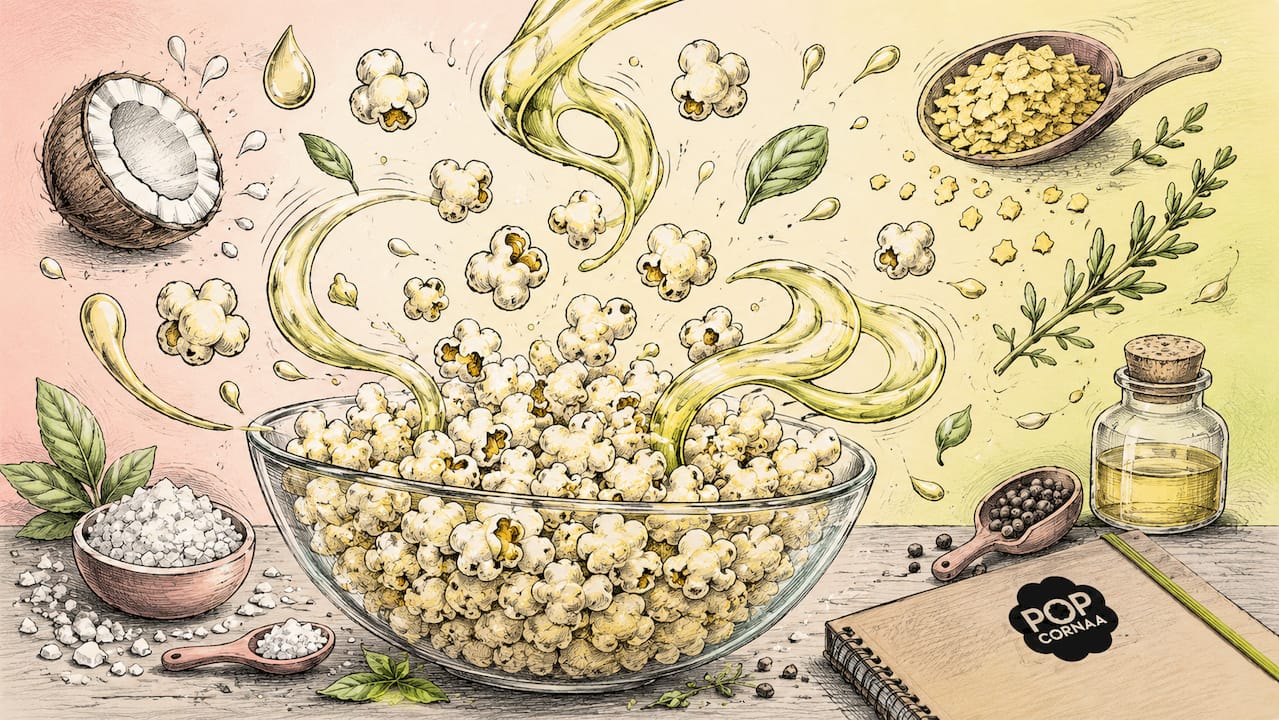
Vegan popcorn replaces all of these with plant-based alternatives. Common vegan popcorn ingredients include coconut oil, extra virgin olive oil, canola oil, nutritional yeast, smoked paprika, garlic powder, and dried herbs. Nutritional yeast is particularly popular because it delivers a savoury, umami flavour that mimics the richness of cheese without any dairy.
One ingredient category deserves special attention: “natural flavours.” This term appears on many popcorn labels and sounds harmless. In practice, natural flavours can legally include dairy extracts or other animal-sourced compounds. A product labelled “natural butter flavour” may contain actual dairy derivatives. This is why vegan certification matters more than a quick visual scan of the front of the packet.
| Ingredient category | Regular popcorn | Vegan popcorn |
|---|---|---|
| Cooking oil | Butter, ghee, or refined oils | Coconut, olive, or canola oil |
| Flavouring | Cheese powder, milk powder, whey | Nutritional yeast, herbs, spices |
| Sweetener | Lactose, butter caramel | Maple syrup, coconut sugar |
| Coating | Dairy caramel or toffee | Coconut cream caramel |
| Certification | No specific dietary claim | “Suitable for vegans” label |
Pro Tip: Scan the allergen section of any popcorn label first. UK regulations require milk and its derivatives to be clearly highlighted, usually in bold, making it the fastest way to spot non-vegan ingredients.
How do taste and nutrition compare between vegan and regular popcorn?
Vegan popcorn does not taste like a compromise. It tastes different, and often in ways that surprise people who expect it to be bland.
Regular popcorn leans on dairy fats for its signature richness. Butter creates a coating that carries flavour and adds a creamy mouthfeel. Cheese powders deliver sharpness and depth. These are genuinely satisfying flavour profiles, which is why so many people assume vegan popcorn cannot compete.
The vegan approach works differently. Nutritional yeast provides cheesy, savoury umami without any dairy. Smoked paprika adds warmth and colour. Coconut oil brings a subtle sweetness and a clean finish. Brands experimenting with herbs, spices, and global flavour profiles are finding that plant-based popcorn can satisfy traditional taste expectations while offering something genuinely new.
Nutritionally, the differences are meaningful:
- Saturated fat: Plain air-popped or olive oil vegan popcorn carries significantly less saturated fat than butter-coated regular varieties.
- Calories: Plain air-popped popcorn is a low-fat, high-fibre snack. Regular commercial popcorn with butter toppings and added sugars is considerably more calorie-dense.
- Fibre: Both vegan and regular popcorn share the same whole-grain kernel, so fibre content is similar when toppings are the only variable.
- B vitamins: Nutritional yeast, a staple vegan flavouring, is a notable source of B vitamins, including B12 in fortified varieties.
- Additives: Regular commercial popcorn often includes artificial colours and preservatives not found in cleaner vegan products.
Pro Tip: To get a buttery flavour without dairy, melt a small amount of vegan butter (look for coconut oil-based varieties) and toss it with your popped corn before adding nutritional yeast and a pinch of sea salt. The result is genuinely rich.
For a deeper look at nutrition and flavour compared, Popcornaa has a dedicated guide worth reading alongside this one.
How can you identify vegan popcorn on a label?
Reading a popcorn label confidently takes practice, but the process is straightforward once you know what to look for.
- Check the allergen section first. UK regulations require allergens, including milk, to be emphasised in the ingredient list, typically in bold or a contrasting colour. If milk appears, the product is not vegan.
- Look for a “Suitable for vegans” declaration. Products with this label are increasingly common in the UK market and remove most of the guesswork.
- Scrutinise “natural flavours.” This catch-all term can hide animal-derived compounds. If a product carries no vegan certification and lists “natural flavours,” contact the manufacturer before buying.
- Watch for hidden dairy terms. Whey, casein, lactose, ghee, and milk solids all indicate animal-derived ingredients. Some consumers miss these because they are looking only for the word “butter.”
- Trust vegan-certified brands. Ethical brands emphasise traceability and certification, ensuring their products meet the animal welfare and environmental standards that vegan consumers expect.
- Verify with the manufacturer when in doubt. If a product sits in a grey area, a quick email or website check is worth the effort. Responsible brands respond clearly.
The ingredient differences between vegan and dairy popcorn are well documented, and Popcornaa’s blog covers the labelling landscape in practical detail.
What ethical and environmental factors set vegan popcorn apart?
Choosing vegan popcorn is not only a dietary decision. For many people, it reflects a broader set of values around animal welfare and environmental responsibility.
Dairy farming, which supplies the butter, milk powder, and cheese used in regular popcorn, carries a notable environmental footprint. Greenhouse gas emissions, land use, and water consumption associated with dairy production are substantially higher than those linked to plant-based oil crops. Switching to popcorn made with coconut or olive oil reduces that footprint, even in small ways.
Ethical considerations go further than emissions. Many vegan consumers object to the conditions of industrial dairy farming on animal welfare grounds. Choosing certified vegan popcorn is a direct expression of that position.
Wholefood distributors like Suma supply certified organic vegan popcorn to meet the growing demand from consumers who want their snack choices to reflect ethical sourcing and environmental care.
The trend towards plant-based snacking is also reshaping product development. Brands are investing in new vegan popcorn flavours, sourcing organic kernels, and pursuing Fairtrade certification. This is not a niche movement. It reflects a genuine shift in how people think about everyday food choices, including snacks they might once have considered trivial.
For those curious about how vegan popcorn fits into a broader plant-based lifestyle, seasonal vegan menu ideas offer useful context on building flavour-forward plant-based eating habits throughout the year.
How do you make or choose vegan popcorn at home and when eating out?
Making vegan popcorn at home gives you complete control over every ingredient. The method is simple.
- Choose your popping method. An air popper requires no oil at all and produces the lightest result. Stovetop popping works well with a tablespoon of coconut or olive oil in a heavy-bottomed pan over medium heat.
- Add kernels and pop. Use a lid and shake the pan gently to prevent burning. Once popping slows to a few seconds between pops, remove from heat.
- Season immediately. Toss with your chosen toppings while the popcorn is still warm so flavourings stick. Popular home toppings include nutritional yeast, smoked paprika, garlic powder, dried rosemary, and vegan butter substitutes.
- Avoid commercial microwave popcorn. Most microwave varieties contain butter flavouring that includes dairy derivatives. Always read the label before assuming a microwave product is vegan.
- At cinemas, order plain. Cinema popcorn is usually vegan if plain, since it is typically popped in coconut or canola oil. The butter-flavoured topping pumps, however, almost always contain whey or casein. Ask for no topping and you are safe.
Pro Tip: For a sweet vegan option at home, drizzle warm popcorn with a tablespoon of maple syrup and a pinch of sea salt, then spread on a baking tray and bake at 160°C for eight minutes. It sets into a light, crunchy caramel without a drop of dairy.
Popcornaa’s step-by-step home cook guide covers these methods in full, with flavour combinations worth trying.
Key takeaways
Vegan popcorn and regular popcorn share the same kernel but differ entirely in what is added: vegan versions use plant-based oils and flavourings, while regular popcorn frequently contains dairy-derived butter, milk powder, and cheese.
| Point | Details |
|---|---|
| The kernel is always vegan | Animal ingredients enter only through toppings, oils, and flavourings added after popping. |
| Dairy hides in many forms | Whey, casein, lactose, and ghee all appear in regular popcorn and are easy to miss on labels. |
| “Natural flavours” needs scrutiny | This term can legally include animal-derived compounds; vegan certification is the safest guide. |
| Nutrition favours vegan versions | Air-popped or olive oil vegan popcorn is lower in saturated fat and free from dairy additives. |
| Cinema popcorn is a grey area | Plain popped corn is usually vegan; butter topping pumps almost always contain dairy derivatives. |
Why I think the label is the most important part of the bag
When I first started paying close attention to what was actually in my popcorn, I was genuinely surprised. I had assumed that anything without obvious cheese or butter on the front of the packet was fine. Then I started reading the small print and found whey in a “sea salt” variety and casein in something labelled “lightly seasoned.” That stopped me in my tracks.
What I have come to appreciate is that label reading is not a chore. It is a skill that becomes second nature quickly, and it puts you in control of what you eat in a way that feels genuinely satisfying. Once you know that “natural flavours” can mean almost anything, and that milk derivatives appear under at least half a dozen different names, you start to see the label as the real product description.
The other thing I have learnt is that vegan popcorn does not ask you to give anything up. Nutritional yeast genuinely delivers on flavour. Plant-based caramel made with coconut cream is rich and satisfying. The range of options available now, including Popcornaa’s Asian-inspired and British flavour collections, shows how far vegan snacking has come. I would encourage you to experiment at home, read every label, and trust brands that are transparent about their ingredients. The flavour is there. You just have to know where to look.
— Emily
Popcornaa’s vegan popcorn range: flavour without compromise
If reading ingredient lists has made you hungry for something you can trust straight away, Popcornaa has done the work for you.
[ ](https://www.popcornaa.com › pages › asian-fusion-taster-box)
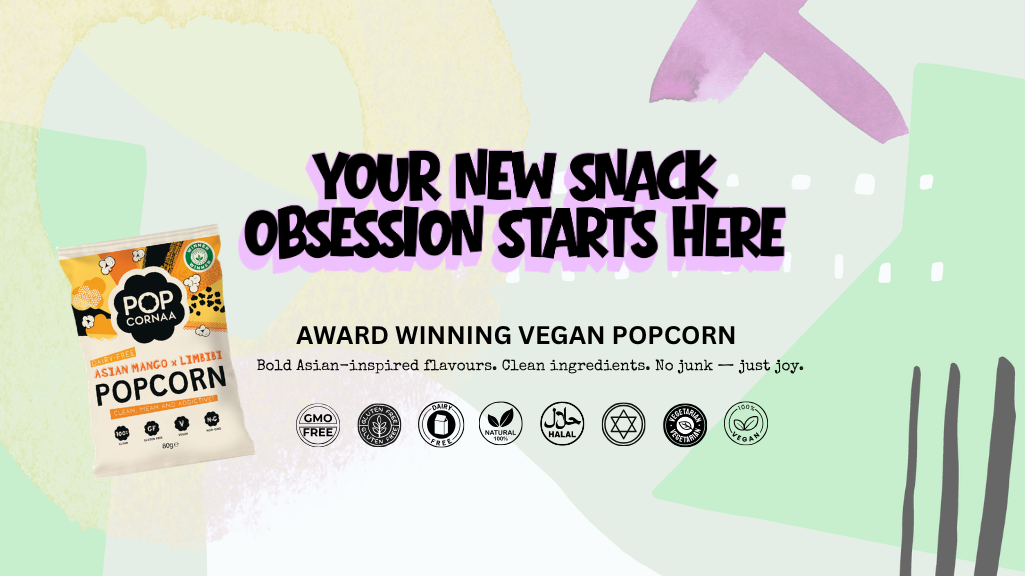
Every product in the Popcornaa range is plant-based, clearly labelled, and crafted with flavour at the centre. The Ultimate Asian Sampler Box brings together nine bold vegan flavours inspired by Asian culinary traditions, all in one curated collection. It is a genuinely good way to experience what vegan popcorn can taste like when the focus is on quality ingredients rather than dairy shortcuts. Whether you are snacking solo, sharing with friends, or looking for a gift that reflects your values, Popcornaa’s range delivers flavour and integrity in equal measure.
FAQ
Is plain popcorn always vegan?
Plain popped corn made from kernels and a plant-based oil is vegan. The kernel itself is naturally plant-based, and no animal products are involved in basic popping.
Can vegans eat cinema popcorn?
Plain cinema popcorn is usually vegan, as most cinemas pop their corn in coconut or canola oil. Butter-flavoured toppings almost always contain dairy derivatives such as whey or casein, so it is best to skip them.
What makes a popcorn product officially vegan?
A product is vegan when it contains no animal-derived ingredients and carries a recognised “Suitable for vegans” declaration or third-party vegan certification. Certification removes the ambiguity created by terms like “natural flavours.”
Is vegan popcorn healthier than regular popcorn?
Vegan popcorn made with plant-based oils tends to be lower in saturated fat than butter-coated regular varieties. Air-popped vegan popcorn is among the lowest-calorie whole-grain snack options available.
What is nutritional yeast and why is it used in vegan popcorn?
Nutritional yeast is a deactivated yeast with a savoury, cheesy flavour profile. It is widely used in vegan popcorn flavourings as a plant-based substitute for cheese powders, and fortified varieties also provide B vitamins.