

Vegan vs vegetarian popcorn: key ingredient differences
TL;DR:
- The kernel itself is always vegan and plant-based, but toppings determine whether popcorn is vegan or vegetarian.
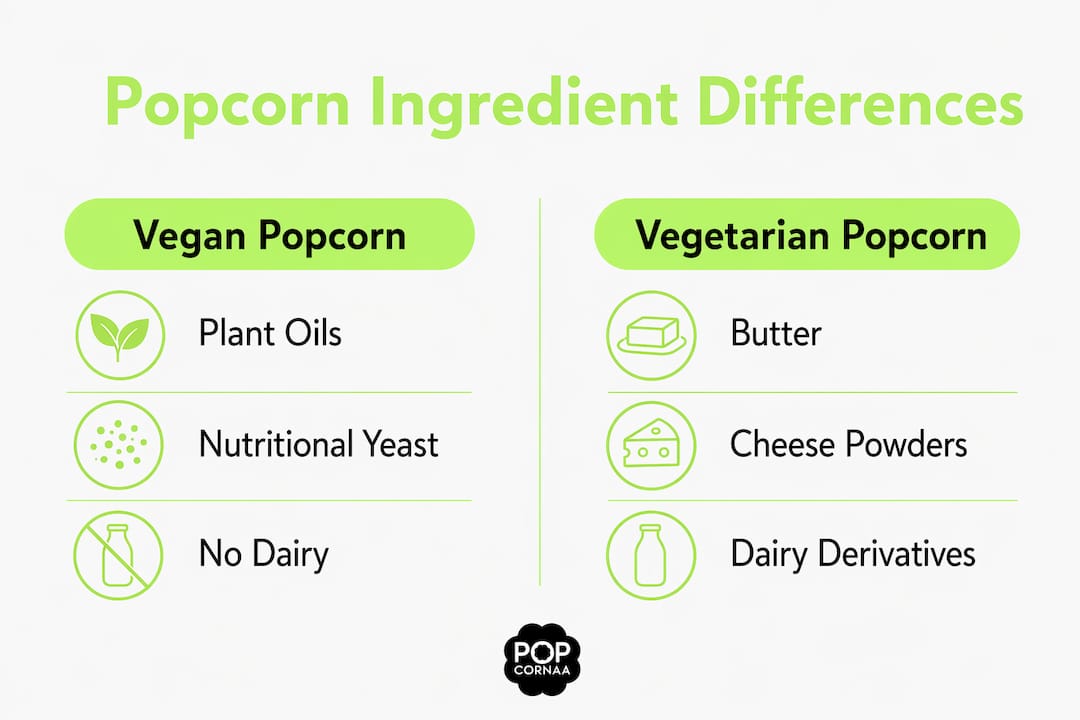
- Vegetarian popcorn may contain dairy ingredients like cheese powders, butter, or whey, while vegan popcorn relies on plant-based oils and flavorings such as nutritional yeast.
The difference between vegan and vegetarian popcorn is determined entirely by the toppings and processing agents used, not the kernel itself. The popcorn kernel is 100% plant-based and inherently vegan. What separates the two dietary categories is whether animal-derived ingredients such as butter, cheese powders, whey, or buttermilk powder are added during preparation. Vegetarian popcorn may include dairy-based toppings like cheddar or parmesan cheese powder. Vegan popcorn excludes all animal products entirely, relying instead on plant-based oils such as canola or coconut oil, and flavourings like nutritional yeast.
Which ingredients make popcorn vegetarian versus vegan?
Vegetarianism includes dairy while veganism excludes all animal products. This single distinction creates a clear dividing line when it comes to popcorn toppings and flavourings.
Vegetarian popcorn commonly uses:
- Butter (including clarified butter and ghee)
- Buttermilk powder and milk solids
- Cheddar or parmesan cheese powder
- Whey protein as a binding or flavouring agent
- Casein, a milk-derived protein found in some cheese-flavoured coatings
Vegan popcorn replaces all of the above with plant-based alternatives. Nutritional yeast and plant-based oils such as olive, coconut, and avocado oil are the most common substitutes. Nutritional yeast delivers a savoury, umami-rich flavour that closely mimics the taste of cheese without any dairy. Vegan butter, made from sunflower or coconut oil, replicates the richness of traditional butter.
The challenge is that many flavourings are not obviously animal-derived. The term “natural flavours” on a label can legally include animal-sourced compounds. Processed cheese-style coatings often contain whey or casein even when the product does not appear to be dairy-heavy at first glance.

Pro Tip: When reading a popcorn label, scan specifically for whey, casein, buttermilk powder, and lactose. These four ingredients confirm a product is vegetarian but not vegan, regardless of how it is marketed.
Does kernel type affect vegan or vegetarian status?
Kernel type does not affect whether popcorn is vegan or vegetarian. That classification rests entirely with the toppings and preparation. However, kernel type impacts texture and suitability for different coatings, which matters when you are choosing a vegan or vegetarian product.
There are two main kernel types used commercially: butterfly and mushroom.
| Feature | Butterfly Kernels | Mushroom Kernels |
|---|---|---|
| Shape | Irregular, wing-like | Round, compact ball |
| Texture | Light and crispy | Dense and chewy |
| Best for | Butter, salt, light seasonings | Chocolate, caramel, thick vegan coatings |
| Common use | Cinemas, home popping | Gourmet and artisan popcorn |
| Vegan suitability | Works well with light plant-based oils | Ideal for thick vegan caramel or chocolate coatings |
Butterfly kernels appear in 99% of cinemas due to their light texture and compatibility with butter and salt toppings. Mushroom kernels are the preferred choice for commercial gourmet coatings because their sturdy structure holds thick layers without crumbling. If you are making vegan caramel popcorn or chocolate-coated popcorn at home, mushroom kernels will give you a far better result.
Understanding this distinction helps you choose the right base for your preparation style, whether you are buying ready-made or making vegan popcorn at home.
Pro Tip: For light vegan seasoning with nutritional yeast or smoked paprika, choose butterfly kernels. For thick vegan chocolate or caramel coatings, mushroom kernels hold the coating far better and give a more satisfying bite.
Is cinema and microwave popcorn vegan or vegetarian?
This is where many people get caught out. Plain cinema popcorn is often vegan, but the toppings tell a different story.
Most major cinema chains pop their corn in plant-based oils. Chains such as AMC, Regal, and Cinemark use canola or coconut oil for popping, which is vegan-friendly. The seasoning salt used in many cinemas, including Flavacol, is also vegan. Flavacol contains synthetic butter flavouring without any animal products, making it suitable for vegans.
The problem arises with the buttery topping dispensed at the counter. This is almost always dairy-based. Requesting plain popcorn without the topping is the safest approach for vegans. Here is how to navigate cinema and microwave popcorn confidently:
- Ask staff directly what oil is used for popping and whether the buttery topping contains dairy.
- Request plain popcorn without any added topping to avoid dairy-based sauces.
- Check microwave popcorn labels carefully. Butter-flavoured microwave varieties usually contain dairy or non-vegan natural flavourings.
- Look for plain or lightly salted microwave options, which are more likely to be vegan, but still require label verification.
- Be aware of cross-contamination. Variable formulations and shared equipment at cinemas mean that even plain popcorn carries a small cross-contamination risk.
Microwave popcorn is particularly inconsistent. Some brands use entirely plant-based ingredients, while others include dairy derivatives even in products that appear simple. The phrase “butter flavour” on a microwave bag does not confirm the presence of actual butter, but it does not rule it out either. Reading the full ingredient list is the only reliable method.
Pro Tip: If you are buying microwave popcorn and want to be certain it is vegan, look for products that carry a certified vegan logo from organisations such as The Vegan Society. This removes any guesswork around natural flavourings.
How to identify vegan versus vegetarian popcorn when shopping
Spotting the difference between vegan and vegetarian popcorn options on a shop shelf takes a little practice, but the signals are consistent once you know what to look for.
The clearest indicator is a certified vegan logo. In the UK, the Vegan Society’s sunflower logo and the Vegan Trademark are the most recognised. A product carrying either mark has been independently verified to contain no animal products. You can find a broader breakdown of vegan popcorn flavour options to understand which styles typically align with vegan diets.
When no logo is present, check the ingredient list for these red flags:
- Butter, buttermilk powder, or milk fat (confirms dairy presence)
- Whey or whey powder (a dairy by-product)
- Casein or sodium caseinate (milk protein)
- Cheese powder of any variety, including cheddar, parmesan, or nacho
- Natural flavours (requires further investigation or a call to the manufacturer)
- Lactose (milk sugar, often used as a carrier for flavourings)
Vegan popcorn will instead list ingredients such as sunflower oil, coconut oil, nutritional yeast, sea salt, and plant-based flavourings. The rise of vegan popcorn has been driven by replacing butter with nutritional yeast and avocado oil to replicate a rich, buttery flavour without any animal products. These substitutes have become genuinely good. Many people cannot tell the difference in a blind taste test.
For UK shoppers specifically, the guide to buying vegan popcorn online covers how to assess brands and products before purchasing, which saves time and avoids disappointment.
Key takeaways
The single most reliable way to distinguish vegan from vegetarian popcorn is to check for dairy-derived ingredients like whey, casein, and butter in the toppings and flavourings, not the kernel.
| Point | Details |
|---|---|
| Kernel is always vegan | The popcorn kernel itself contains no animal products; toppings determine dietary classification. |
| Dairy defines the divide | Whey, casein, butter, and cheese powders make popcorn vegetarian but not vegan. |
| Kernel type affects coating | Mushroom kernels suit thick vegan coatings; butterfly kernels work best with light seasonings. |
| Cinema popcorn needs checking | Plain cinema popcorn is often vegan, but buttery toppings almost always contain dairy. |
| Labels are your best tool | Look for certified vegan logos or scan for whey, casein, and buttermilk powder on ingredient lists. |
Why i think people overcomplicate this
I have spent years thinking about what goes into food, and the vegan versus vegetarian popcorn question is one that genuinely stopped me in my tracks when I first started paying close attention to labels. My honest view is that people overcomplicate it.
The kernel is never the issue. It is always the topping. Once you accept that, the whole thing becomes much simpler. You are not evaluating a complex food system. You are asking one question: does this bag contain butter, cheese, or whey? If yes, it is vegetarian at best. If no, and the oils are plant-based, it is vegan.
Where I see people go wrong is trusting marketing language over ingredient lists. A product labelled “plant-based flavour” or “dairy-free taste” is not the same as a certified vegan product. Those phrases describe a sensory experience, not a formulation. I have picked up bags in supermarkets that used phrases like “buttery goodness” only to find buttermilk powder listed as the third ingredient.
My advice is to treat the ingredient list as the only source of truth. Logos help, but they are not universal. If you are ever unsure, a quick search for the brand’s allergen information usually clarifies things. And if you enjoy making your own, experimenting with nutritional yeast, smoked paprika, and coconut oil at home is genuinely one of the most satisfying ways to snack. You know exactly what is in it, and the flavour is often better than anything from a packet.
— Emily
Discover popcornaa’s vegan popcorn range
If you are ready to move beyond label-checking and simply enjoy popcorn you can trust, Popcornaa has done the work for you.
[ ](https://www.popcornaa.com › pages › asian-fusion-taster-box)
Every product in the Popcornaa range is crafted with vegan certification and bold, artisanal flavour profiles. The Newbie Asian Fusion Taster Box is a brilliant starting point if you want to explore Asian-inspired flavours without compromising your dietary choices. For something more personal, the Custom Popcorn Box lets you build your own vegan snack selection from a full range of flavours. Whether you are snacking solo, sharing with friends, or looking for a thoughtful gift, Popcornaa makes it easy to choose popcorn that is both delicious and completely free from animal products.
FAQ
Is plain popcorn always vegan?
Plain popcorn made from kernels and a plant-based oil is vegan. The kernel itself is entirely plant-based, so the only concern is what is added during preparation.
Can vegans eat cinema popcorn?
Plain cinema popcorn is often vegan when popped in canola or coconut oil, but buttery toppings typically contain dairy. Always request plain popcorn and ask staff about the oil used.
What makes popcorn vegetarian but not vegan?
Popcorn becomes vegetarian but not vegan when it contains dairy-derived ingredients such as butter, whey, casein, or cheese powder. These ingredients are acceptable in a vegetarian diet but excluded from a vegan one.
Is microwave popcorn suitable for vegans?
Many microwave popcorn products contain dairy or animal-derived natural flavourings, so reading labels carefully is necessary. Plain or lightly salted varieties are more likely to be vegan, but certification is the safest confirmation.
What is nutritional yeast and why is it used in vegan popcorn?
Nutritional yeast is a deactivated yeast that delivers a savoury, cheesy flavour without any dairy. It is one of the most popular vegan substitutes for cheese powder in gourmet popcorn seasoning.